Online time
Monday to Friday: 9AM - 8PM
Weekend: 10AM - 5PM

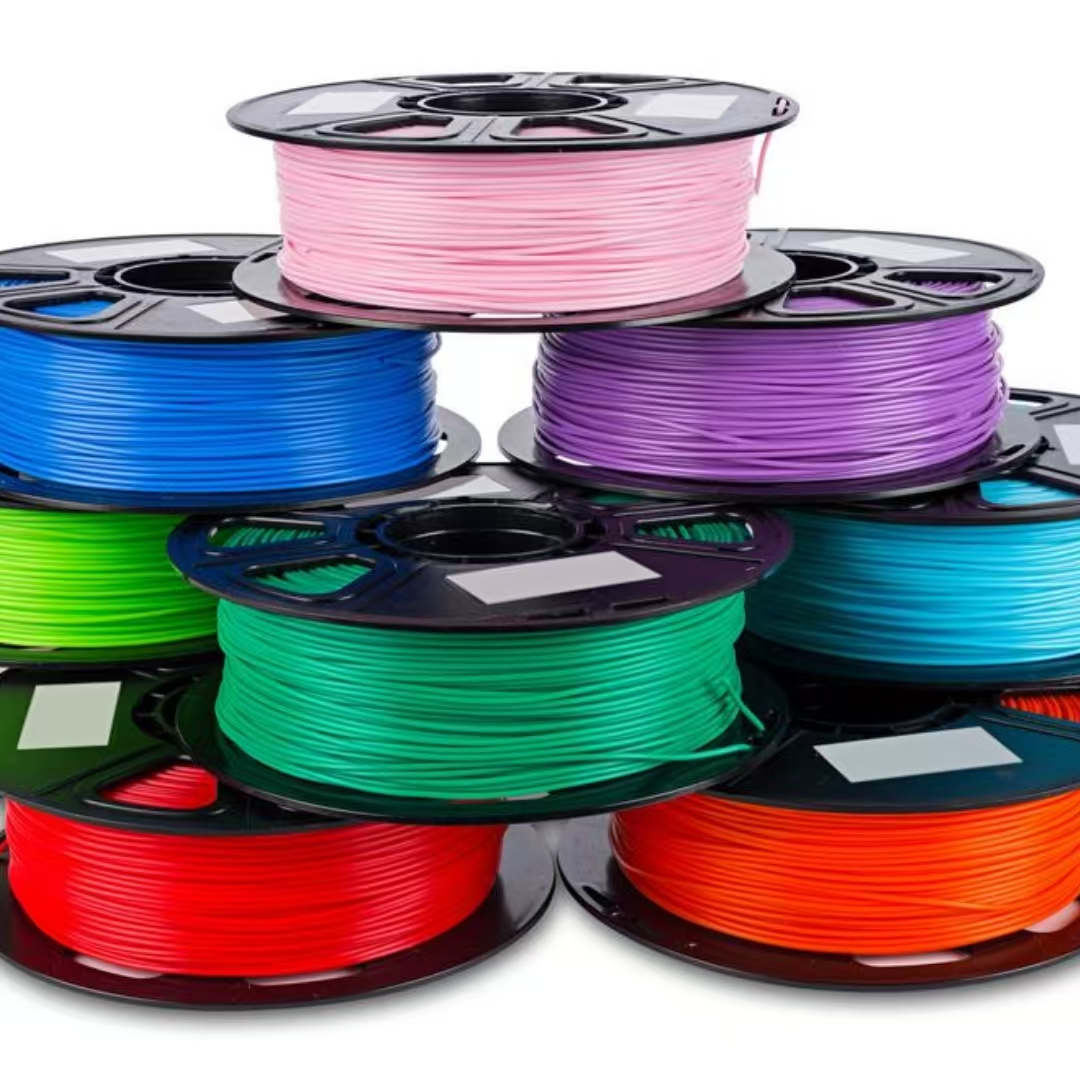
By SSSray Materials Team | March 26, 2026 | 18 min read
Abstract
As the global 3D printing filament market hits $2.3 billion in 2026, the industry is shifting far beyond basic PLA and ABS. This deep dive explores the three defining trends reshaping the sector: sustainable recycled filaments that cut carbon footprints by up to 75%, high-speed formulations that unlock 3× faster throughput for print farms, and engineering-grade composites that deliver aluminum-like strength for end-use industrial parts. We break down the science, ROI, and actionable steps for B2B buyers to stay ahead of the curve.
🔑 Key Takeaways
- The global post-consumer recycled (PCR) filament market will grow from $640 million in 2026 to $2.48 billion by 2036, driven by EU circular-economy regulations and corporate Scope 3 emission targets.
- High-speed filaments enable print speeds up to 300 mm/s, boosting print-farm throughput by 2.5× while cutting per-part production costs by 40%.
- Advanced engineering filaments like carbon-fiber-reinforced PA6 now deliver 150 MPa tensile strength, bridging the gap between prototyping and functional end-use parts for automotive and aerospace.
- Modern recycled filaments, when properly formulated with chain extenders, retain 95% of the mechanical performance of virgin materials—debunking the old “recycled = low quality” myth.
- Print farms switching to high-speed workflows can reduce capital expenditure by 50% for the same production volume, as fewer machines are needed to hit output targets.
- Carbon-fiber-reinforced filaments now command 42% of the composite 3D printing material market, driven by lightweighting demands in electric-vehicle manufacturing.
- Businesses switching to sustainable filament options can qualify for green tax incentives while improving brand reputation with eco-conscious customers.
- For most industrial users, the premium for high-performance and sustainable filaments pays for itself within 6 months via reduced operational costs and waste reduction.
📑 Table of Contents
1. Sustainable 3D Printing Filament: The Circular Economy Revolution
For years, 3D printing was hailed as a low-waste manufacturing technology—but the industry still generated over 150,000 tons of plastic waste in 2025 alone, according to the Wohlers Report 2026. Today, that is changing rapidly, as sustainable 3D printing filament moves from a niche eco-friendly option to a core business requirement.
Moving beyond basic bio-based PLA, the market is now focused on turning post-consumer waste into high-performance industrial materials, creating a circular economy that cuts emissions and reduces reliance on virgin plastic.
The Explosive Growth of Post-Consumer Recycled (PCR) Filaments
According to Future Market Insights, the global industrial-grade PCR filament market is set for explosive growth—jumping from $640 million in 2026 to $2.48 billion by 2036. That represents a compound annual growth rate (CAGR) of 14.5%, far outpacing the overall filament market’s 11.95% CAGR.
What’s driving this growth? Two major forces: regulatory pressure and corporate sustainability targets.
- The EU’s Circular Economy Action Plan now requires that 30% of plastic used in industrial products come from recycled sources by 2030.
- 41% of global manufacturers are now exploring recyclable filaments to meet their Scope 3 emission reduction targets, per ASTM International’s 2024 industry survey.
To put this in perspective: a single 1 kg spool of recycled PETG filament made from post-consumer water bottles keeps 10 plastic bottles out of landfill. And for brands like Luminy PLA, the life-cycle CO₂ emissions are up to 75% lower than standard ABS, making it the default choice for companies chasing carbon-neutrality goals.
🔗 For businesses looking to integrate these materials into their workflow, SSSray offers a full line of industrial-grade PCR filaments—including rPETG and rPLA—with consistent ±0.02 mm diameter tolerance that ensures zero clogging in high-volume printers. Explore our sustainable filament options →
Breaking the Myth: Can Recycled Filaments Match Virgin Material Performance?
For a long time, B2B buyers avoided recycled filaments because they assumed the materials would be weaker, less consistent, or prone to printing defects. But recent material-science advances have completely flipped that narrative.
When recycled plastics are processed, the heat and shear from extrusion can break the polymer chains, which used to lead to reduced melt strength and lower mechanical performance. But today, manufacturers use multifunctional chain extenders to repair those broken chains, restoring the polymer’s molecular weight to near-virgin levels.
A 2025 study in Engineered Science found that properly modified recycled PET filament actually outperformed virgin PET in some areas—with only a 6% drop in tensile strength and better warpage resistance when printed at high speeds.
| Material Type | Tensile Strength (MPa) | Flexural Modulus (GPa) | Heat Deflection Temp (°C) | Carbon Footprint Reduction |
|---|---|---|---|---|
| Virgin PLA | 58 | 3.6 | 55 | Baseline |
| Recycled PLA (rPLA) | 55 | 3.5 | 54 | 62% |
| Virgin PETG | 50 | 2.1 | 70 | Baseline |
| Recycled PETG (rPETG) | 48 | 2.0 | 69 | 71% |
| Virgin PA6-CF | 150 | 12.5 | 180 | Baseline |
| Recycled CF PA6 (rCF-PA6) | 142 | 11.8 | 178 | 68% |
As the data shows, the performance gap is negligible for most industrial applications. For 90% of use cases, the small 3–5% drop in strength is more than offset by the 60–70% reduction in carbon emissions.
Closed-Loop Recycling: Building a Zero-Waste 3D Printing Ecosystem
The most exciting development in sustainable filaments is the rise of closed-loop recycling systems—where manufacturers take back your failed prints, support structures, and end-of-life parts, grind them down, and turn them back into new filament.
This isn’t just theory. Major consumer electronics brands like Samsung and Philips are already piloting these systems. For example, Samsung’s European division now collects all the failed 3D-printed prototypes from its R&D centers, sends them to a recycling partner, and gets back custom recycled filament for future prints.
💡 Result: Samsung cut 3D printing waste by 92% in pilot facilities and reduced material costs by 28% simultaneously. You don’t have to choose between sustainability and cost savings—closed-loop systems turn your waste into a valuable resource.
How Businesses Can Adopt Sustainable Filament Options Today
If you’re looking to switch to sustainable filaments, here’s a simple 3-step process to get started:
- Audit your current waste. Track how much virgin filament you use and how much waste you generate from failed prints and supports.
- Run a small pilot test. Order a small batch of recycled filament from a trusted supplier and test it on your most common parts to verify printability and performance.
- Scale and optimize. Once you’ve validated the materials, roll them out to your full fleet, and work with your supplier to set up a take-back program for your waste.
For most businesses, this transition takes less than 30 days, and the cost savings start showing up in the first quarter.
2. High-Speed Filament: Unlocking Massive Throughput for Print Farms
If sustainability is the regulatory trend driving the market, high-speed filament is the operational trend that’s transforming print-farm economics.
For years, FDM 3D printing was too slow for mass production. A standard 100-part order could take days to print, even with a farm of 10 printers. But today, high-speed filament is changing that—enabling print speeds that were unthinkable just three years ago.
The Science Behind High-Speed Filament: Why Standard PLA Hits a Wall
To understand why high-speed filament is a game-changer, you first need to understand why standard PLA can’t go fast.
When you 3D print, the hotend melts the filament, extrudes it onto the print bed, and then the material has to cool down and solidify before the next layer is deposited on top.
Standard PLA has a relatively slow crystallization rate. That means when you extrude it at high speeds, it doesn’t cool down fast enough. By the time the print head comes back around to deposit the next layer, the previous layer is still soft. The result? Warped parts, blobby layers, and terrible dimensional accuracy.
On top of that, standard PLA has low melt strength at high extrusion rates. When you try to push it through the nozzle at 25 mm³/s (the rate needed for 300 mm/s printing), it oozes and strings, leading to extensive post-processing work.
High-speed filament solves this with two key material modifications:
- Nucleating agents: These tiny additives act as seeds for crystal formation, speeding up the cooling and crystallization process by 3×. The material solidifies in milliseconds, not seconds, so it can handle the fast layer cycles.
- Melt-strength modifiers: These additives boost the polymer’s melt strength, so it can be extruded at high speeds without oozing or stringing, keeping part dimensions precise.
🍪 Think of it like baking cookies. Standard PLA is like a runny cookie dough that spreads all over the pan if you put it in the oven too hot. High-speed filament is like a stiff dough that holds its shape, even at high baking temperatures.
High-Speed vs. Standard Filament: A Head-to-Head Performance Breakdown
So what does this mean for your actual printing results? Let’s break down the numbers.
| Parameter | Standard PLA | High-Speed PLA | Improvement |
|---|---|---|---|
| Maximum Print Speed | 150 mm/s | 300–600 mm/s | 2–4× faster |
| Max Volumetric Flow Rate | 10–15 mm³/s | 25–35 mm³/s | 2.3× higher throughput |
| Cooling Time per Layer | 5–8 seconds | 1–2 seconds | 4× faster solidification |
| Mechanical Property Loss at Max Speed | 22% | 6% | 73% less performance drop |
| Layer Adhesion Strength | 85% of XY strength | 92% of XY strength | 8% stronger interlayer bonds |
Bottom line: you can print the exact same part in ⅓ of the time, without sacrificing strength or accuracy. A part that used to take 6 hours now takes 2 hours.
🔗 SSSray’s high-speed PLA and PETG filaments are formulated with proprietary nucleating agents to deliver exactly these results—making them the top choice for print farms looking to boost throughput. Learn more about our OEM/ODM solutions for custom high-speed formulations →
The ROI Case for High-Speed Filament in Print Farm Operations
Now let’s talk about the numbers that matter most to your bottom line: ROI.
Take a typical mid-sized print farm with 100 standard printers, running standard PLA, printing functional parts for e-commerce:
| Metric | Before (Standard PLA) | After (High-Speed PLA) |
|---|---|---|
| Average print time per part | 6 hours | 2 hours |
| Daily output per printer | 4 parts | 12 parts |
| Number of printers needed | 100 | 50 |
| Total daily output | 400 parts | 600 parts |
| Monthly operational costs | $45,000 | $27,000 |
| Cost per part | $3.75 | $1.50 |
That’s a 60% drop in cost per part. Even though the high-speed filament itself costs about 15% more than standard PLA, the savings in operational costs more than make up for it.
The ROI on this switch is less than 6 months. You pay back the cost of upgrading your machines and materials in half a year, and then you’re saving 40% on production costs every month after that.
This is why print farms are rushing to adopt this technology. In 2026, high-speed filament is no longer a gimmick for hobbyists. It’s the core of profitable mass production with FDM.
🔗 Calculating ROI for Your Print Farm Upgrade →
Best Practices for Implementing High-Speed Printing in Your Workflow
If you’re ready to make the switch, here are four best practices to get the best results:
- Upgrade your hotend. High-speed printing requires a hotend that can handle higher volumetric flow rates. A standard 0.4 mm brass hotend can only handle ~15 mm³/s. You’ll need a hardened steel hotend with a larger melt zone.
- Calibrate your cooling. High-speed printing relies on fast cooling. Make sure your part-cooling fans are running at 100% for PLA and that you have good airflow over the print.
- Adjust your acceleration and jerk. High-speed printers can handle much higher acceleration, but you need to calibrate it to avoid ringing and ghosting.
- Test your retraction settings. High-speed extrusion can lead to more stringing if your retraction isn’t set correctly. Spend 10 minutes calibrating retraction distance and speed for your new filament.
3. Engineering Filament: High-Performance Materials for Industrial Production
The third major trend in 2026 is the rise of engineering filament, as 3D printing moves from prototyping to end-use industrial production.
For years, PLA and ABS were good enough for prototypes, but they couldn’t handle the heat, strength, and chemical resistance needed for functional parts. Today, that’s changed. Advanced engineering filaments now deliver performance that rivals injection-molded thermoplastics—at a fraction of the cost and lead time.
Carbon Fiber Reinforced Filaments: The New Standard for Lightweighting
The biggest star in the engineering filament space is carbon-fiber-reinforced filament. These materials take a standard polymer matrix (like PA6, PETG, or PC) and add short carbon fibers to boost strength, stiffness, and heat resistance.
The result? A material that’s 50% stronger than standard ABS, 3× stiffer, and can handle temperatures up to 180 °C—all while being 30% lighter than aluminum.
That’s why carbon-fiber filament is exploding in popularity. It now accounts for 42% of the entire composite 3D printing material market, according to Global Growth Insights. The aerospace and automotive sectors are driving this growth, with a 12% year-over-year increase in adoption as they look to lightweight parts to improve electric-vehicle range and fuel efficiency.
A 2024 study in Composite Structures found that recycled carbon-fiber-reinforced PA6 filament performs almost as well as virgin carbon fiber—with only a 5% drop in tensile strength—while cutting material cost by 40%. That’s a win-win for both sustainability and performance.
🔗 Our SSSray carbon-fiber-reinforced PA6 filament delivers exactly this performance: 150 MPa tensile strength and 180 °C heat deflection temperature—perfect for automotive under-hood components and aerospace tooling.
Beyond Carbon Fiber: The Expanding Portfolio of Advanced Materials
Carbon fiber isn’t the only game in town anymore. The engineering filament market is expanding with new materials tailored for specific industrial applications:
- PEKK-CF: This ultra-high-performance material can handle temperatures up to 260 °C, making it perfect for aerospace interior parts and medical devices that need sterilization.
- Glass-fiber-reinforced PETG: A more affordable alternative to carbon fiber, offering good stiffness and heat resistance for jigs and fixtures.
- Conductive filaments: Perfect for 3D printing custom electronics components and static-dissipative parts for semiconductor manufacturing.
- High-temperature PPS: This chemical-resistant material can handle harsh chemicals and elevated temperatures, making it ideal for industrial fluid-handling parts.
Bridging the Gap: From Prototyping to End-Use Industrial Parts
For years, the biggest pain point for industrial users was the “material gap”. You could print a prototype with PLA, but then you had to switch to injection molding for the end-use part—which meant waiting weeks for tooling and paying tens of thousands of dollars for molds.
Today, engineering filaments eliminate that gap. You can print the exact same part with the same material for both prototyping and low-volume production. That means you can go from design to functional part in 24 hours, instead of 4 weeks.
📦 Case Study: A major automotive supplier now uses our PA6-CF filament to print custom end-of-arm tooling for their assembly lines. Previously, they machined these tools from aluminum—2 weeks lead time, $1,200 per tool. Now they print overnight with carbon-fiber filament: $150 per tool, and the tools last just as long.
That’s the power of engineering filaments. They turn 3D printing from a prototyping tool into a full production technology.
Selecting the Right Engineering Filament for Your Application
With so many options, how do you choose the right filament for your job? Here’s a quick comparison:
| Filament Type | Tensile Strength (MPa) | Heat Deflection Temp (°C) | Flexural Modulus (GPa) | Best For |
|---|---|---|---|---|
| Standard PLA | 58 | 55 | 3.6 | Basic prototyping, display parts |
| PETG | 50 | 70 | 2.1 | Functional parts, outdoor use |
| ABS | 42 | 98 | 2.3 | Impact-resistant parts, post-processing |
| PETG-CF | 82 | 105 | 7.8 | Low-cost rigid fixtures, jigs |
| PA6-CF | 150 | 180 | 12.5 | Automotive parts, tooling, end-use parts |
| PEKK-CF | 110 | 260 | 16.2 | Aerospace, medical, high-temp applications |
Whether you need a low-cost fixture or a high-performance aerospace part, there’s an engineering filament that fits the bill.
🔗 A Complete Guide to Printing with Carbon Fiber Filament →
Frequently Asked Questions
Q1: Are recycled 3D printing filaments as strong as virgin materials?
For most industrial applications, yes. Modern recycled filaments formulated with chain extenders retain 95% of the mechanical performance of virgin materials. The small 5% performance gap is negligible for 90% of use cases and is more than offset by the 60–70% reduction in carbon emissions. For high-stress applications, we recommend testing the material first to ensure it meets your requirements.
Q2: What is the best high-speed filament for print farms?
For most print farms, high-speed PLA is the best starting point. It’s easy to print, has minimal warping, and delivers 2–3× faster throughput than standard PLA. If you need more strength and heat resistance, high-speed PETG is a great option. SSSray’s high-speed filament line is specifically formulated for high-volume print-farm use, with consistent diameter tolerance and minimal batch-to-batch variation.
Q3: Can engineering filaments be printed on standard desktop 3D printers?
Most entry-level engineering filaments like PETG-CF and PLA-CF can be printed on standard desktop printers with a heated bed. For higher-performance materials like PA6-CF and PEKK-CF, you’ll need a printer that can reach higher nozzle temperatures (up to 300 °C) and has a hardened steel nozzle to handle the abrasive carbon fibers.
Q4: How much can I save by switching to sustainable filament options?
On average, businesses switching to recycled filaments save 28% on material costs via closed-loop recycling, plus they can qualify for green tax incentives and reduced waste-disposal costs. For a mid-sized print farm, that translates to $10,000–$20,000 in annual savings, plus the marketing and brand benefits of being more sustainable.
Q5: Do high-speed filaments work with older 3D printers?
It depends. High-speed filaments can work with older printers, but you’ll need to make sure your printer’s hardware can handle the higher speeds and acceleration. Most older printers have limited motion-system performance, so you won’t get the full 300 mm/s speed—but you can still get a 30–50% speed improvement over standard PLA.
Q6: What is the future of 3D printing materials for manufacturers?
Over the next 5 years, expect even more convergence between sustainability, speed, and performance. We’ll see more recycled engineering materials, faster high-speed formulations, and new functional materials that can replace even more traditional manufacturing materials. By 2030, we expect that 70% of industrial 3D printing will use these advanced materials, up from 35% today.
Q7: Is carbon fiber filament worth the extra cost for industrial parts?
Absolutely. Even though carbon-fiber filament costs 2–3× more than standard PLA, the performance benefits more than make up for it. A carbon-fiber tool can last 10× longer than a PLA tool and can handle higher temperatures, making it suitable for industrial environments that would melt standard plastic. For most industrial users, the ROI on carbon-fiber parts is less than 3 months.
Conclusion
The 3D printing filament market in 2026 is undergoing a massive transformation. The old days of basic PLA and ABS for hobbyists are gone. Today, three game-changing trends are turning 3D printing into a mainstream industrial manufacturing technology:
- Sustainable recycled filaments that let you cut your carbon footprint while saving money.
- High-speed filaments that let you scale your print farm to mass production, with 40% lower per-part costs.
- Engineering filaments that let you print functional end-use parts that rival injection-molded parts in strength and performance.
These aren’t just trends. They’re the future of additive manufacturing. And the businesses that adopt them now will be the ones that lead the industry over the next decade.
Ready to Upgrade Your Filament Supply for 2026?
SSSray offers custom OEM/ODM filament formulations, industrial-grade sustainable and high-performance materials, and dedicated support for B2B customers.
Contact Our Team for a Custom Quote →References
- Wohlers Associates. (2026). Wohlers Report 2026: The State of Additive Manufacturing. 3Dnatives. https://www.3dnatives.com/it/wohlers-report-2026-23022026/
- Future Market Insights. (2026). Industrial-Grade PCR Filaments for 3D Printing Market Landscape 2036. Newstrail. https://www.newstrail.com/industrial-grade-pcr-filaments-for-3d-printing-market-landscape-2036-pricing-trends-regional-hotspots/
- Mordor Intelligence. (2026). 3D Printing Filament Market Size, Share, and Growth Trends 2026–2031. https://www.mordorintelligence.com/industry-reports/3d-printing-filament-market
- Pongsathit, S., et al. (2025). Upcycling Waste Polyethylene Terephthalate Bottles into Eco-Friendly Filaments for Material Extrusion 3D Printing. Engineered Science. https://www.espublisher.com/uploads/article_pdf/es1495.pdf
- Lohr, C., et al. (2024). Investigation on the recycling potential of additively manufactured carbon fiber reinforced PA 6.6. Composite Structures. https://opus.bibliothek.uni-augsburg.de/opus4/files/116590/1-s2.0-S0263822324008110-main.pdf
- DergiPark. (2025). Beyond Datasets: A Comparative Evaluation of Standard and Technical Filaments in High-Speed FDM 3D Printing. https://dergipark.org.tr/en/download/article-file/4448073
- Global Growth Insights. (2026). 3D-Printed Composite Materials Market Size, Share, and Growth Trends. https://www.globalgrowthinsights.com/market-reports/3d-printed-composite-materials-market-103139
- ASTM International. (2024). 2024 Global Additive Manufacturing Industry Survey. https://www.astm.org/
- Global Information Inc. (2026). 3D Printing Polymer Filament Market Forecast 2026–2032. https://www.gii.co.jp/report/ires1921191-3d-printing-polymer-filament-market-by-material.html
- Tammaro, L., et al. (2025). Reinforcing Efficiency of Recycled Carbon Fiber PLA Filament Suitable for Additive Manufacturing. Polymers. https://iris.enea.it/retrieve/…
