Online time
Monday to Friday: 9AM - 8PM
Weekend: 10AM - 5PM

Quick Search
Ready to discuss your filament project? Talk to our team about OEM/ODM.
Recent Posts
- By: SSSray Editorial Team
- Date: 03/04/2026
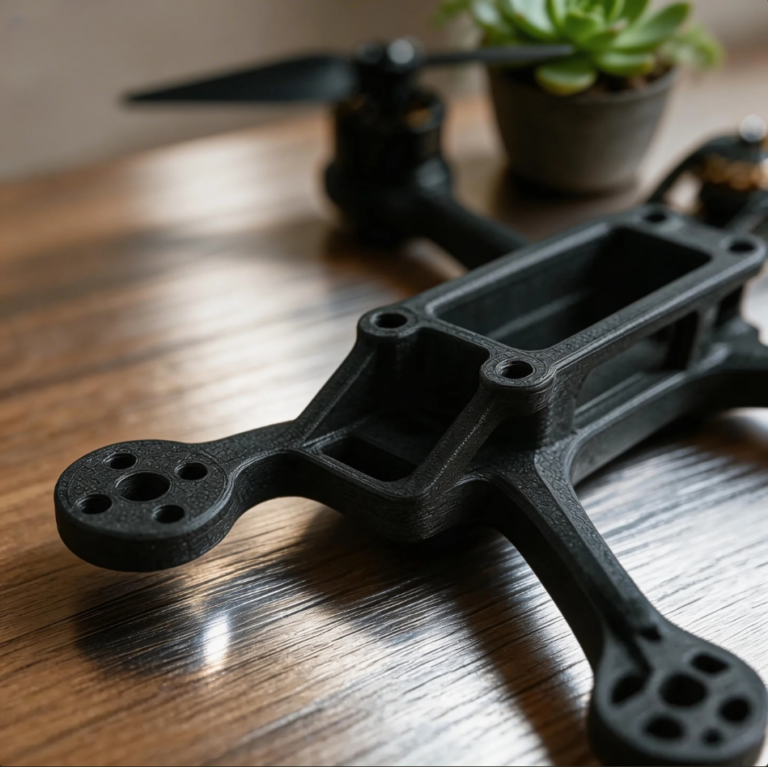
2026 Ultimate Guide to Carbon Fiber Filament: PA6-CF vs PA12-CF for Industrial Applications
- 22 min read
- 0 comment
Choosing the right carbon fiber filament for industrial 3D printing comes down to one core decision: PA6-CF or PA12-CF. Both are carbon fiber reinforced nylon....
- By: SSSray Editorial Team
- Date: 02/04/2026
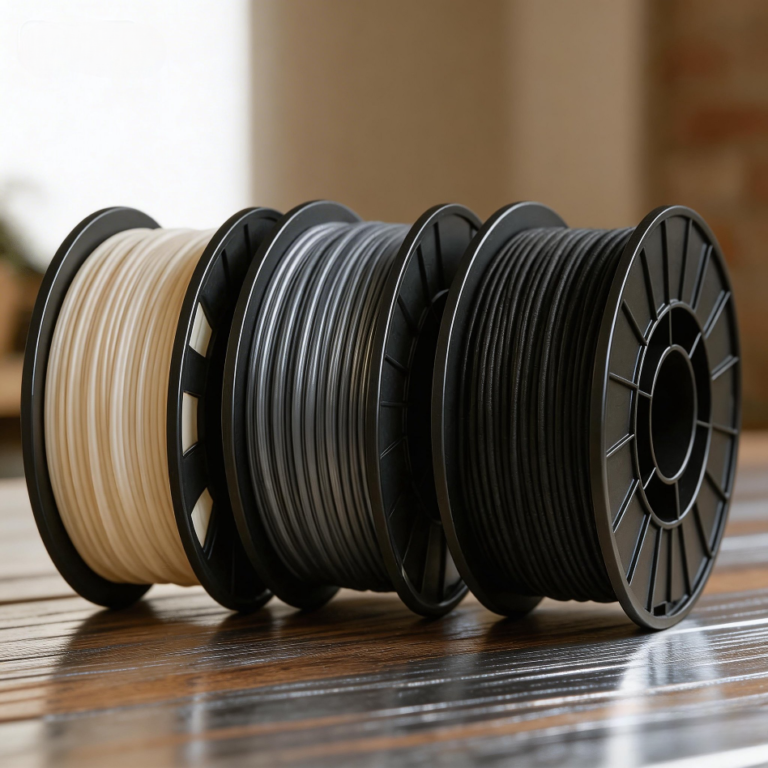
2026 Guide: 10 Key Insights to Master PETG Filament & PLA vs PETG
- 17 min read
- 0 comment
April 02, 2026 Abstract — If your printed parts need to survive real-world use, PETG filament is usually where the conversation starts. It sits between...
- By: SSSray Editorial Team
- Date: 01/04/2026
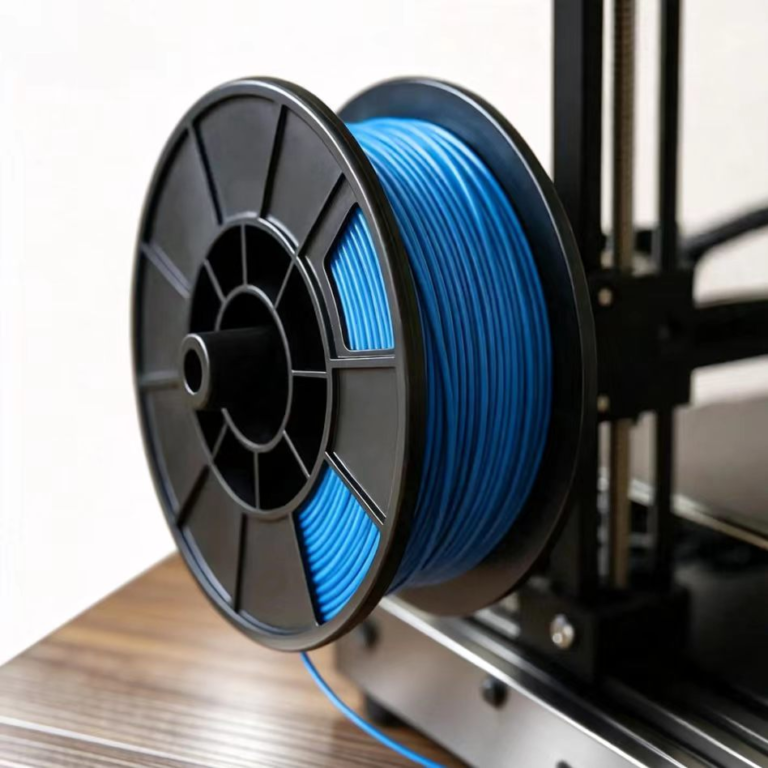
2026 Complete Guide to PLA+ Industrial-Grade Filament: Properties, Settings & Supplier Selection
- 19 min read
- 0 comment
📅 April 01, 2026 ⏱️ 18 min read 👨💼 B2B Technical Guide PLA+ filament has become the most widely used material in professional 3D printing...
3D Printing Filament FAQ: OEM, Quality, MOQ, Shipping & Technical Support
Find answers about filament materials, OEM/ODM customization, MOQ, quality control, packaging, shipping, and technical support. If you need a quotation or sample recommendation, contact our team.
Section 1. Top Questions
Q1-1:What Filament Materials Are Available for OEM/ODM Orders?
A:We offer a wide range of filament materials for OEM/ODM cooperation, including:
PLA+ / PLA Pro
PLA Series
PETG Series
ABS / ASA
TPU 95A
CF Series
GF Series
PA Series
PC
PVA / HIPS
Specialty Engineering Filaments
Material recommendations can be provided based on your application, printer compatibility, and market positioning.
Q1-2:How Do You Ensure Filament Quality and Dimensional Consistency?
A:We focus on stable production control and practical quality inspection throughout the manufacturing process.
Our filament is produced with strict control of:
- Diameter tolerance: ±0.03 mm
- Raw material consistency
- Winding quality
- Drying and moisture control
- Color consistency between batches
Each batch is inspected before shipment to ensure smooth feeding, stable extrusion, and reliable printing performance.
Q1-3: Do you offer custom color matching based on Pantone or RAL?
A:Yes, we support custom color development based on Pantone codes, RAL codes, or physical samples.Before mass production, we will confirm the target color with you and arrange sample verification to minimize color deviation.For custom colors, MOQ and lead time may vary depending on the material and color complexity.
Q1-4:What certifications or test reports can you provide?
A:We can provide RoHS, MSDS/SDS, and TDS for most filament materials. For selected flame-retardant or engineering-grade products, UL 94 test reports are also available upon request. If your project requires additional verification, we support third-party testing through qualified laboratories before shipment.
These documents help distributors, brands, and importers with compliance review, product qualification, and market entry. The exact document package depends on the material type, color formulation, and application. For EU-related projects, RoHS is commonly requested for restricted substances, while UL 94 is relevant for flammability-rated plastic materials. We recommend confirming your target market and compliance requirements before mass production so we can match the right material and documentation package.
Q1-5:What is your typical lead time?
A: For standard orders, lead time is approximately 15–25 business days from order confirmation to shipment, depending on quantity and customization requirements.custom colors, private label packaging, and new material formulations may require longer lead times.
Q1-6:What types of 3D printing filament do you supply?
A:We manufacture high-performance materials such as PLA, PLA+, PETG, ABS, ASA, TPU, nylon, carbon fiber-reinforced materials, and specialty engineering plastics. We primarily offer 1.75 mm diameter filaments, but other diameters can be customized upon request.
Q1-7:What is your MOQ, and can I order samples first?
A:MOQ depends on product type and customization level. For standard products, MOQ can start as low as 100 rolls. For fully customized OEM packaging, MOQ is typically 500–1,000 units.We also offer flexible tiered pricing for larger volumes.Sample evaluation is available before bulk production,for clients we have vetted, we can provide three free sample rolls; any additional rolls will be charged at the standard rate. ODM/OEM projects are subject to a prototyping fee.
Q1-8:What filament diameters, spool weights, and tolerances do you offer?
A:Our standard filament diameters are:
1.75 mm
2.85 mm (available for selected products or upon request)
Our standard diameter tolerance is ±0.03 mm.
The standard net weight is 1 kg per spool.
Specifications and packaging can be adjusted for OEM orders after confirmation.
Q1-9:How do you control moisture and packaging during shipping?
A:We control moisture through pre-shipment drying and sealed export packaging. Standard materials are packed in vacuum bags with desiccant, then placed in individual paper boxes. Moisture-sensitive engineering materials are packed in vacuum aluminum foil bags for better barrier protection.
Before shipment, filament goes through drying and dehumidification processes to reduce bubbling, stringing, and unstable extrusion caused by absorbed moisture. For export orders, especially sea freight, we use an outer master carton with inner product boxes. Pallet shipments can also be protected with stretch wrap and corner guards. OEM options such as aluminum foil bags and color boxes are available. This is especially important for hygroscopic materials like PA, PC, PVA, and some TPU grades, which are widely recognized in FDM printing as more sensitive to humidity during storage and transport.
Q1-10:Can your filaments work with major FDM printers such as Bambu Lab, Prusa, and Creality?
A:Yes, our 1.75 mm filaments are compatible with most mainstream open-material FDM printers when the correct settings are used, including many models from Bambu Lab, Prusa, and Creality.
PLA, PLA+, and PETG usually print well on standard FDM machines. ABS and ASA generally require an enclosed chamber. PA and PC need higher nozzle and bed temperatures. CF- and GF-reinforced filaments should use hardened nozzles because they are abrasive. We support AMS or automatic material systems for suitable materials, but TPU is not recommended for AMS use. To help customers reduce trial and error, we can provide recommended baseline print settings, printer profiles, drying guidance, and storage recommendations for different filament materials.
Q1-11:How do you handle quality issues or claims after delivery?
A:We handle claims based on batch traceability and technical verification. If there is a delivery or quality issue, claims should normally be submitted within 7 to 14 days after receipt. Customers need to provide the batch number, photos or videos, printer model, and printing parameters.
After review, verified quality issues can be handled through technical support, discounts, or replacement in the customer’s next order, depending on the case. We also accept third-party inspection when needed. For shipping damage, responsibility is handled according to the agreed Incoterms, mainly EXW or FOB. Because each batch is traceable, we can check production and packing records to support investigation. Our goal is to resolve issues quickly and support long-term OEM, ODM, and distributor cooperation.
Section 2. About Products & Applications
Q2-1:What types of 3D printing filament do you supply and what applications are they suited for?
A:We supply a full range of FDM filaments for general, industrial, and OEM applications. Our portfolio includes PLA, PLA+, PETG, ABS, ASA, TPU, PA (PA6, PA12, PA66), PC, PC-ABS, CF- and GF-reinforced grades, PVA, HIPS, ESD, FR, wood-filled, silk, PLA-CF, and PETG-CF.
Different materials fit different applications. PLA and PLA+ are widely used for prototypes, education, and fast-turn models. PETG suits functional parts requiring chemical resistance and toughness. ABS and ASA are common for housings and outdoor parts, with ASA offering better UV resistance. TPU is used for flexible parts such as grips and seals. PA, PC, and reinforced composites are suitable for jigs, fixtures, mechanical parts, and engineering applications. Support materials such as PVA and HIPS are used for complex dual-extrusion printing. Typical performance data is based on internal TDS and common ASTM or ISO test methods.
Q2-2:What are the differences between PLA, PETG, ABS, TPU, and PA filaments?
A:These materials differ mainly in stiffness, toughness, heat resistance, flexibility, and moisture sensitivity. PLA is the easiest to print and offers good stiffness, but it has lower heat resistance and is better for prototypes and visual parts. PETG is tougher than PLA, with better chemical resistance and layer adhesion, making it suitable for functional parts. ABS provides better heat resistance and machinability, while TPU is flexible and used for impact-absorbing or elastic parts.
PA (nylon) is generally stronger and more wear-resistant than standard consumer filaments, making it a common choice for gears, jigs, and engineering parts. However, PA is also more moisture-sensitive and usually requires careful drying. Typical tensile and thermal values vary by formulation, but these differences are commonly evaluated using standards such as ASTM D638, ASTM D790, ASTM D256, and ISO 75 or ISO 527 in material data sheets.
Q2-3:What mechanical properties matter most in filament selection for functional parts?
A:The most important properties depend on the end-use, but for functional parts, buyers usually focus on tensile strength, impact resistance, stiffness, heat resistance, and wear performance. Tensile strength indicates how much pulling force a part can withstand. Flexural modulus or stiffness matters for structural rigidity. Impact resistance is critical for parts exposed to shock or repeated handling. Heat deflection temperature (HDT) matters when parts work near motors, enclosures, or warm environments.
For moving or load-bearing parts, friction and wear resistance are also important, especially for PA, CF, or GF materials. Elongation at break helps show whether a part is brittle or ductile. In filament selection, no single number is enough; a balanced property profile is usually more useful than maximum strength alone. These properties are commonly measured by ASTM D638, ASTM D790, ASTM D256, ASTM D648, or equivalent ISO methods used in professional TDS documentation.
Q2-4:What filament should I choose for outdoor parts or mechanical loads?
A:For outdoor parts, ASA is usually the better choice; for mechanical loads, PA, PC, or reinforced composites are often better. ASA is preferred for outdoor use because it offers stronger UV and weather resistance than ABS, making it suitable for covers, housings, and exterior components. ABS can also be used, but ASA is generally more stable under sunlight and temperature exposure.
For mechanical loads, the best material depends on whether you need toughness, stiffness, or wear resistance. PA is widely used for gears, fixtures, and moving parts because of its toughness and abrasion resistance. PC offers high impact strength and better heat resistance. CF- or GF-reinforced grades improve rigidity and dimensional stability, but they are more abrasive and require hardened nozzles. Final selection should consider load type, temperature, humidity, and printer capability. Typical thermal and mechanical comparisons are usually based on ASTM and ISO material test standards.
Q2-5:Which filament is strongest for functional or engineering parts?
A:There is no single strongest filament for every application; the best choice depends on whether you need strength, stiffness, impact resistance, heat resistance, or wear resistance. For high stiffness and dimensional stability, CF- or GF-reinforced materials are often strong options. For toughness and wear resistance, PA-based filaments are widely used in functional parts. For impact strength and heat resistance, PC and PC blends are strong candidates.
In practice, “strongest” should be matched to the real working condition. A rigid CF material may outperform standard plastics in stiffness, while PA may perform better under repeated stress or friction. PC may be better for impact-loaded parts, and FR or ESD grades may be required for specialized industrial uses. Because formulation, reinforcement ratio, and print conditions all affect results, material comparison should be based on TDS values such as tensile strength, flexural modulus, HDT, and impact resistance rather than a single marketing claim.
Q2-6:Can your filaments work with a wide range of FDM printers globally?
A:Yes, our filaments are designed for compatibility with most open-material FDM/FFF 3D printers worldwide. We primarily supply 1.75 mm filament, which is the mainstream standard in the global desktop and prosumer FDM market. Selected products are also available in 2.85 mm, and additional diameters can be arranged for volume orders.
Compatibility depends on matching the material to the printer’s hardware capability. PLA, PLA+, and PETG work on most standard FDM printers. ABS and ASA usually need an enclosed chamber. PA, PC, and high-performance composites require higher nozzle and bed temperatures, while CF- and GF-filled filaments should use hardened nozzles. AMS or automatic material systems are supported for suitable materials, but TPU is generally not recommended. For B2B customers, we can provide baseline print settings, drying guidance, and storage recommendations to improve global deployment and reduce testing time.
Section 3. About OEM/ODM & Customization
Q3-1: Do you offer OEM / private label services?
A:Yes. We can produce filaments bearing your brand logo, including custom spool designs, packaging, logo printing, barcode labeling, and instruction manuals. The minimum order quantity for neutral-label orders is determined by your SKU purchase list.
Q3-2:Is custom color & OEM labeling available, and what are usual MOQ limits?
A:Yes, we offer 3D printing filaments in custom colors as well as OEM/ODM services.
For standard filament with neutral packaging, the MOQ typically starts from 100 rolls. Mixed colors can be discussed based on stock availability. For custom labels, branded boxes, or other OEM packaging, the MOQ usually ranges from 500 to 1,000 rolls, depending on the level of customization.If you are developing a new brand, we can suggest a practical starting solution based on your target market, packaging requirements, and order plan.Contact us with your target market and packaging plan for an efficient MOQ proposal.
Q3-3:Do you offer custom color matching based on Pantone or RAL?
A:Yes, we support custom color development based on Pantone codes, RAL codes, or physical samples. Before mass production, we will confirm the target color with you and arrange sample verification to minimize color deviation. For custom colors, MOQ and lead time may vary depending on the material and color complexity.
PS:Color deviation may vary slightly by resin system, additives, and surface finish
Q3-4:Can you customize spool size, labels, cartons, or packaging?
A:Yes, we support a wide range of OEM packaging customization for B2B buyers. We can customize spool labels, branded boxes, master cartons, barcode labels, Amazon FNSKU labels, insert cards, user manuals, vacuum bags, aluminum foil bags, pallet marks, and shipping marks. Spool material can also be customized, including paper spool options for selected projects.
Our standard net weight is 1 kg, which is the most common format in the global FDM filament market. Other spool weights and carton sizes can be discussed based on order volume and packaging requirements. We also have standard master carton specifications, but custom carton dimensions may be arranged for larger-volume orders. Final packaging plans are confirmed according to product type, shipping method, and brand needs. Send us your packaging files or target specification, and we can quote MOQ and lead time accordingly.
Q3-5:Can you support special engineering grades such as FR, ESD-safe, or reinforced materials?
A:Yes, we can supply special engineering-grade filaments for OEM, ODM, and industrial applications. Our available product range includes FR materials, ESD-related grades, CF- and GF-reinforced filaments, PA6, PA12, PA66, PC-ABS, PLA-CF, and PETG-CF, along with other high-performance formulations for specific end-use requirements.
These materials are commonly selected when standard PLA or PETG cannot meet functional, thermal, electrical, or structural demands. For example, FR grades are used where flame-retardant behavior is required, ESD materials are used in electronics-related environments, and CF or GF grades are chosen for higher stiffness and dimensional stability. Because performance varies by resin system and formulation, engineering grades should be matched to the application, printer capability, and compliance requirement. For projects involving special material selection, we recommend sharing your target use case so we can suggest the right grade, MOQ, and lead time.
Q3-6:What is the expected lead time for custom orders?
A:Lead time depends on material type, customization level, and order quantity.
Section 4. About Ordering, MOQ & Samples
Q4-1:What is your MOQ, can I mix colors, and do you offer samples?
A:Yes, we offer flexible MOQ options for B2B buyers, and samples are available before bulk orders. For standard filament with neutral packaging, MOQ usually starts from 100 rolls. For fully customized OEM packaging, MOQ typically ranges from 500 to 1,000 rolls, depending on the packaging level and SKU complexity.
Mixed colors can be arranged in many cases, but normally only within the same material type and under neutral packaging or factory-brand packaging. This helps maintain production efficiency, packaging consistency, and more practical shipping costs. For qualified business customers, we can provide up to 3 free sample spools for evaluation, while additional samples are charged at the standard rate. Shipping cost is usually covered by the buyer. If you already have a target material, color plan, or packaging requirement, ask us for a quote and lead time.
Q4-2:How can I get a sample kit for testing?
A:We do not use one fixed sample kit for all customers. Instead, we offer sample testing options based on your target material, application, and purchasing plan. This is usually more practical for B2B buyers because different projects may require different filament types, colors, or packaging standards.
To arrange samples, please send us your target materials, colors, estimated order quantity, application, and whether you need OEM, ODM, or neutral packaging. For qualified business inquiries, we can provide up to 3 free sample spools for evaluation; additional samples are charged at the standard rate, and shipping is paid by the buyer. Based on your request, we can recommend the most suitable sample combination for print testing, material comparison, and market validation. Contact us for a sample recommendation, quotation, and lead time.
Q4-3:Can I mix different materials or colors in one order?
A:In many cases, yes. Mixed colors or SKUs can be arranged based on:
- Material type
- Packaging method
- Stock or production plan
- Total order quantity
For customized projects, we will suggest the most practical combination to balance MOQ, production efficiency, and shipping costs.
Mixed orders are easier to arrange when the material family, spool format, and packaging specification are consistent.
Q4-4:What payment methods do you accept?
A:
Payment Methods:
T/T (bank transfer) — primary method for all orders
PayPal — available for small trial orders
Trade Terms:
FOB Ningbo/EXW — you arrange freight, or we can recommend reliable logistics partners
Standard terms for new customers: 30% deposit, 70% balance before shipment. As our partnership develops, terms can be adjusted accordingly.
Q4-5:Do you accept L/C for large orders?
A:Yes, but only for selected large-volume orders after evaluation. In practice, L/C is not our standard payment method. It may be considered for large orders from existing customers, especially when the destination market, transaction history, and overall risk profile are acceptable.
For most new customers and regular orders, T/T remains the primary payment method because it is faster and more practical for production scheduling. If L/C is requested, the order amount, country risk, payment terms, and banking conditions all need to be reviewed in advance. We generally take a conservative approach to reduce transaction risk and avoid delays caused by document discrepancies, which are common issues in international L/C practice under UCP 600 rules. If you are planning a large-volume order, contact us first with your order details so we can evaluate the available payment options.
Q4-6:How can I get a quotation?
A:Getting a quotation is simple. You can submit the inquiry form on our contact page, send us an email, or message us on WhatsApp. Once we receive your basic project details, we can usually reply with an initial quotation within 24 hours.
To make the quotation more accurate, please include the target material, color, diameter, spool weight, estimated quantity, packaging type, destination country, trade term such as EXW or FOB, and whether you need wholesale, OEM, or ODM service. If your project involves custom colors, Amazon FNSKU labels, private-label packaging, FR, ESD, or reinforced materials, please mention that in your first message. For qualified business inquiries, we can also offer up to 3 free sample spools, while shipping is paid by the buyer. Send us your requirements now to get a quote and lead time.
Q4-7:What information do you need for an accurate quotation?
A: Include the following in your first message so we can reply with an accurate quote within 24 hours:
- Target material(s) and color(s)
- Estimated order quantity
- Whether you need OEM, ODM, or wholesale
- Your destination country (for freight estimation)
- Filament diameter, such as 1.75 mm or 2.85 mm
- Spool weight or net weight per roll
- Packaging type, such as neutral packing, private label, color box, vacuum bag, or aluminum foil bag
- Trade term, such as EXW or FOB
- Whether you need samples first or a direct bulk order
- Any special requirements, such as Pantone matching, barcode labels, Amazon FNSKU, FR, ESD, CF, or GF materials
The more complete your information is, the faster and more accurately we can quote MOQ, unit price, and lead time. Send us your requirement list to get started.
Section 5. About Quality Control & Certifications
Q5-1:What is the dimensional accuracy and tolerance of your filaments?
A:Our standard filament diameter tolerance is controlled to a minimum precision level of ±0.03 mm. This tolerance is designed to support stable feeding, consistent extrusion, and reliable print quality in mainstream FDM printing applications.
In practical use, dimensional consistency is critical because variation in filament diameter directly affects flow rate, layer uniformity, and nozzle pressure. For most 1.75 mm products, we control production within this tolerance range through in-line monitoring and final inspection before packing. For some filled or specialty materials, actual performance can still vary slightly depending on formulation, additives, and printer setup, so print parameters should be matched accordingly. In the filament industry, diameter tolerance is one of the most common quality indicators, and many manufacturers reference similar control standards for commercial FDM materials. Contact us if you need the tolerance standard for a specific material or OEM project.
Q5-2:How do you ensure consistent quality control for filament reels?
Q5-2:How do you ensure consistent quality control for filament reels?
A32:A:We maintain consistent filament quality through multi-step production control and batch-based inspection. Our quality process includes drying and dehumidification, online laser diameter monitoring, winding inspection, visual inspection, batch coding, traceability control, final sampling before shipment, and print or extrusion testing.
This combination helps reduce common issues such as diameter fluctuation, poor winding, moisture-related defects, and unstable extrusion during printing. Each reel is produced under controlled process conditions, and every batch can be traced back through production records if technical review is needed later. For B2B buyers, this is especially important for repeatability across multiple shipments and SKU programs. In the filament industry, stable dimensional control, moisture management, and batch traceability are widely recognized as key factors for print consistency and OEM reliability. If needed, we can also discuss quality points based on your application, printer platform, and packaging requirements.
Q5-3:What certifications and safety or environmental documents can you provide?
A:We can provide standard technical and compliance documents for most filament products, including TDS, MSDS/SDS, and RoHS reports. For selected flame-retardant materials, UL 94-related test documentation may also be available. If your market or customer requires additional verification, third-party laboratory testing can be arranged upon request.
These documents are commonly used for importer review, distributor qualification, and project approval in international B2B trade. The exact document set depends on the material type, formulation, and application. For example, RoHS is commonly referenced for restricted substances in electrical and electronic supply chains, while UL 94 is relevant only for applicable flame-retardant plastic grades. To avoid unnecessary cost and lead-time delays, we recommend confirming your target market and compliance requirements before mass production. Contact us with your material list and target market to check document availability.
Q5-4:How do you control filament diameter during extrusion?
A:We control filament diameter during extrusion through online laser diameter monitoring and batch-based inspection. This helps us maintain stable dimensional consistency for smooth feeding and reliable extrusion performance. Every batch is checked before packaging, and full batch traceability is maintained for all orders.
We also use virgin raw materials to improve melt consistency and reduce variation caused by unstable feedstock. Because filament behavior can still vary slightly depending on material type, filler content, and diameter specification, final printing results should be matched with suitable printer settings. If needed, we can discuss tolerance expectations for specific materials or OEM programs.
Q5-5:How do you control color consistency between batches?
A:We control color consistency through approved color references, stable raw material sourcing, and batch-based verification before shipment. Our process includes fixed color masterbatch suppliers, approved color chips or signed samples, small-batch verification before mass production, and retained reference samples for each batch.
This helps reduce visible color variation across repeat orders and OEM programs. In custom color projects, we first confirm the target color using Pantone, RAL, or a physical sample, then compare production output against the approved reference before bulk manufacturing. Because final appearance can still be affected by resin type, additives, filler content, gloss level, and print settings, slight visual variation may occur between different materials or surface finishes. This is normal in polymer color matching and is widely recognized in plastics manufacturing. If color consistency is critical for your brand, we recommend sample approval before full production. Send us your target color and packaging plan for evaluation.
Q5-6:Do you use virgin materials or recycled content?
A:We use virgin raw materials and do not use recycled content in our standard filament production. This approach helps us maintain more stable melt flow, cleaner color control, better inter-batch consistency, and more predictable printing performance for OEM, wholesale, and repeat-order customers.
For filament manufacturing, raw material consistency directly affects extrusion stability, diameter control, mechanical performance, and surface quality. Virgin resins are commonly preferred in applications where repeatability and appearance matter, especially for branded retail programs and engineering-grade products. This is also important for moisture-sensitive and reinforced materials, where formulation consistency has a strong influence on print results. If your project has specific performance, compliance, or market requirements, we can recommend suitable material options based on the application. Contact us if you need guidance on material selection, available grades, or documentation for your target market.
Q5-7:Do you offer dimensional and material test reports with shipments?
A:Yes, we can provide selected technical and compliance documents with shipments or on request, depending on the product and order type. Commonly available documents include TDS, MSDS/SDS, and RoHS reports. Third-party laboratory reports can also be arranged when required by the project or customer.
For regular B2B orders, document availability is usually confirmed during quotation or order confirmation, because different materials and markets require different document sets. Some customers need only standard technical data, while others may request additional compliance support for distributor approval or end-customer review. To avoid overcommitting unnecessary documentation and lead time, we recommend confirming report requirements before production begins. If you need specific dimensional data, material documents, or third-party test support for an OEM order, send us your material list and market requirements, and we will advise what can be provided.
Section 6. About Technical Printing & Material Performance
Q6-1:What printing parameters do you recommend for PLA, PETG, ABS, TPU, PA, and CF filaments?
A:Recommended printing parameters should be treated as starting points, not fixed settings. Typical baseline ranges are: PLA 190–220°C nozzle / 45–60°C bed, PETG 220–250°C / 70–90°C, ABS 230–260°C / 90–110°C, TPU 95A 210–240°C / 40–60°C, and PA 240–280°C / 70–100°C. CF-filled filaments depend on the base resin, but common ranges are about 220–300°C with a heated bed and wear-resistant nozzle.
Actual settings vary with printer model, hotend capacity, enclosure, speed, cooling, and moisture condition. ABS and ASA generally benefit from an enclosed chamber, while PA, PC, and composites need stronger thermal control. Because printability changes by formulation, these values should be fine-tuned during testing. We can provide baseline print settings, drying guidance, and material recommendations for your target application. Contact us for the suggested parameter range for a specific filament grade.
Q6-2:Is your CF filament compatible with standard 0.4 mm brass nozzles?
A:Short-term printing may be possible, but standard 0.4 mm brass nozzles are not recommended for regular use with carbon-fiber-filled filaments. CF grades are abrasive, so brass nozzles wear faster and may also face higher clogging risk, especially with small nozzle openings, inconsistent drying, or higher fiber loading.
For PLA-CF, PETG-CF, PA-CF, and PC-CF, a wear-resistant nozzle such as hardened steel or alloy is the safer option for stable long-run printing. In many cases, a nozzle size of at least 0.4 mm is the minimum practical choice, while 0.6 mm or larger is often preferred to improve flow and reduce clogging risk. Final compatibility still depends on the base resin, fiber content, printer path, and extrusion system. If you are selecting a CF filament for production or resale, ask us for the recommended nozzle setup and print conditions before testing.
Q6-3:Are your filaments compatible with Bambu Lab AMS?
A:Many of our mainstream filaments are generally compatible with Bambu Lab AMS, but compatibility depends on both material type and spool format. PLA, PLA+, PETG, ABS, and ASA are usually the most suitable choices for AMS use when the spool size, winding quality, and print settings are appropriate. TPU is generally not recommended for AMS because flexible materials can cause feeding issues.
For PA, PC, and CF- or GF-filled materials, AMS performance depends more heavily on filament dryness, spool fit, extrusion resistance, and printer setup. Cardboard spool size and spool dimensions may also affect AMS handling depending on the specific AMS model. Because AMS compatibility can vary by printer generation and material condition, we recommend confirming spool specifications and application needs before bulk purchase. If needed, we can help suggest more AMS-friendly material options for your SKU plan or target market.
Q6-4:What is the difference between PLA+ and standard PLA?
A:PLA+ is generally designed to be tougher and less brittle than standard PLA, while still keeping the easy-printing characteristics that make PLA popular. In many formulations, PLA+ also offers better layer adhesion, improved print stability, and more balanced mechanical performance for functional parts and daily-use models.
However, PLA+ is not one universal standard. Its exact formulation varies by manufacturer and may include impact modifiers, flow enhancers, or other additives to improve printability or strength. Because of this, the real difference between PLA and PLA+ should be judged by the supplier’s TDS and print performance rather than the name alone. For OEM projects, PLA+ can also be adjusted to emphasize specific priorities such as toughness, surface finish, or printing speed. If you are comparing grades for retail or industrial use, contact us for the recommended PLA or PLA+ option for your application.
Q6-5:Does color customization affect mechanical properties?
A:Yes, color customization can affect mechanical properties slightly, but in most standard applications the impact is usually limited when the formulation is properly controlled. Differences may come from pigment type, loading level, opacity, additive package, and the interaction between colorant and the base polymer.
In practice, some colors may influence flow behavior, layer bonding, gloss, stiffness, or impact performance more than others. For example, high pigment loading, special effects, or filled color systems can change print behavior compared with a natural or standard grade. The effect is usually more noticeable in engineering materials or tightly specified functional parts than in general visual printing. This is a normal consideration in polymer compounding and color matching. If your project requires both strict color matching and stable mechanical performance, we recommend sample validation before mass production. Send us your Pantone, material type, and use case for evaluation.
Q6-6:Are additives such as CF or pigments weakening the filament?
A:Not necessarily. Additives can improve some properties while reducing others, so the result depends on the additive type, loading level, and base polymer. Carbon fiber and glass fiber often increase stiffness, dimensional stability, and heat performance, but they can also reduce impact toughness, increase brittleness, and raise nozzle wear during printing.
Pigments usually have only a limited effect at normal loading levels, but high pigment content or special additive systems may change flow, layer adhesion, gloss, or strength. In other words, additives do not simply make a filament better or worse; they change the property balance. That is why engineering filaments should be selected based on the final application, not only on marketing terms like “reinforced” or “high strength.” We recommend comparing TDS values such as tensile strength, impact resistance, and HDT before making a material decision. Contact us if you need help selecting the right performance profile.
Q6-7:Which filaments require drying before printing, and why?
A:Moisture-sensitive filaments should be dried before printing, especially PA, PA-CF, PVA, TPU, PC, and many CF- or GF-filled engineering grades. PETG, ABS, ASA, and even PLA may also benefit from drying if they have been exposed to humid air for too long. The reason is simple: absorbed moisture can turn into steam during extrusion, causing bubbles, stringing, rough surfaces, poor layer bonding, and unstable flow.
Among common FDM materials, nylon-based filaments are well known for absorbing moisture quickly, which can strongly affect print quality and mechanical performance. TPU and PC can also show clear moisture-related defects. Drying is a standard part of polymer handling and is widely recommended in material processing practice. If your filament has been stored unsealed or shows signs of popping, inconsistent extrusion, or surface defects, drying is usually the first corrective step. Ask us for material-specific drying guidance before printing.
Q6-8:How to dry wet TPU/PA/CF filament effectively before printing?
A:Wet filament should be dried with controlled heat, not overheated. As a typical starting guide, TPU can be dried at about 50–60°C for 4–6 hours, while PA and PA-CF grades are often dried at about 70–90°C for 4–12 hours, depending on moisture exposure, spool size, and material formulation. PETG commonly uses around 60–65°C, and PLA is usually kept lower, around 40–50°C.
A filament dryer or temperature-controlled drying oven is generally safer than uncontrolled heating. Avoid excessive temperature that could deform the spool or damage packaging materials. After drying, the filament should be used promptly or stored again in a sealed bag with desiccant to prevent reabsorption. Because exact drying conditions vary by resin system and spool heat resistance, these values are practical reference ranges rather than fixed rules. Contact us if you need drying recommendations for a specific material grade or OEM program.
Q6-9:How does moisture affect filament quality and printing performance?
A:Moisture can significantly reduce print stability and surface quality, especially for hygroscopic filaments such as PA, TPU, PVA, PC, and many reinforced engineering grades. When wet filament passes through the hotend, absorbed water can vaporize and create bubbling, popping sounds, stringing, rough surfaces, poor layer adhesion, dimensional inconsistency, and weaker printed parts.
In severe cases, moisture can also cause unstable extrusion and make quality control difficult in functional printing. Nylon-based materials are especially sensitive, but even PLA, PETG, ABS, and ASA can show performance loss after long exposure to humidity. This is well understood in polymer processing and filament handling practice. That is why drying, sealed packaging, and controlled storage are important for both distributors and end users. If your prints suddenly show more stringing, foam-like extrusion, or reduced strength, moisture is one of the first factors to check. Ask us for drying and storage guidance for your material type.
Q6-10:How should I store filament to maximize shelf life?
A:Filament should be stored sealed, dry, and away from heat and sunlight. The most practical method is to keep unused spools in airtight packaging with desiccant and reseal them after each use. This helps reduce moisture absorption, dust contamination, and surface degradation during storage.
For hygroscopic materials such as PA, PVA, TPU, PC, and many reinforced grades, low-humidity storage is especially important. Even less sensitive materials like PLA or PETG can gradually absorb moisture if left exposed for long periods. To maximize shelf life, store spools in a cool place, avoid direct UV exposure, and keep ambient humidity below about 50% RH whenever possible. For opened reels, resealing immediately after printing is strongly recommended. Proper storage is a standard best practice in polymer handling and can noticeably reduce print defects and material waste. If needed, we can provide storage guidance for different filament families and packaging formats.
Q6-11:What is the shelf life of your unopened filament spools?
A:Under proper sealed storage conditions, the typical shelf life of our unopened filament spools is 12 months. This assumes the product remains in its original sealed packaging, is protected from moisture, and is stored away from direct sunlight, high heat, and unstable humidity.
Actual usable life may vary by material type and storage environment. Hygroscopic materials such as PA, PVA, TPU, and some reinforced engineering grades are generally more sensitive to storage conditions than standard PLA or PETG. In many cases, even after long storage, filament can still be usable if it is dried correctly before printing, but print consistency may depend on the condition of the material and packaging. For B2B inventory planning, we recommend first-in, first-out stock management and moisture-controlled storage. If you need guidance for warehouse storage, export inventory, or distributor stock rotation, contact us for recommendations.
Section 7. About Packaging, Shipping & Delivery
Q7-1:What kind of packaging options do you offer to prevent moisture during sea freight?
A:We use moisture-protective export packaging designed for sea freight conditions. Standard filaments are packed in vacuum-sealed bags with desiccant, then placed in individual paper boxes and outer master cartons. For moisture-sensitive engineering materials, we use vacuum aluminum foil bags to provide stronger barrier protection during long-distance shipping.
Before shipment, filament goes through drying and dehumidification processes to reduce moisture-related printing issues such as bubbling, stringing, and unstable extrusion. For sea freight orders, extra outer protection may also be added depending on route, shipment volume, and pallet configuration. Pallet loads can be secured with stretch wrap and corner guards for better transport stability. Proper moisture control is especially important for hygroscopic materials such as PA, PC, PVA, and some TPU grades. If you are planning ocean shipment to a humid destination, send us your order plan and we can suggest a suitable packaging solution and lead time.
Q7-2:How do you handle shipping logistics and Incoterms to [target region]?
A:We mainly support EXW and FOB Ningbo, and shipping logistics are arranged according to the destination, cargo volume, and delivery schedule. For most B2B orders, we can work with your nominated forwarder or help coordinate shipment through our logistics partners based on the agreed Incoterm and order plan.
Bulk filament orders are usually shipped by sea, either as FCL or LCL depending on volume, while urgent samples are more commonly sent by express courier. Final routing, transit time, and cost depend on destination port, season, carrier space, and customs conditions. Unless otherwise agreed, local import clearance, duties, and destination-side requirements are normally handled by the buyer under EXW or FOB terms. This follows standard international trade practice under Incoterms rules published by the ICC. If you send us your destination, quantity, and shipping preference, we can help suggest the most practical logistics option.
Q7-3:What is your standard lead time and how do you ship to Europe and North America?
A:Our standard lead time depends on product type, packaging level, and order quantity, but for regular B2B orders it is usually aligned with our standard production schedule. In general, standard or neutral-pack orders are faster, while OEM packaging and custom-color orders require more time after specification and artwork confirmation.
For Europe and North America, bulk shipments are mainly arranged by sea freight, either FCL or LCL depending on the order volume. Sample orders and urgent replenishment requests are usually shipped by express courier. Final transit time depends on the destination port, customs clearance, shipping season, and carrier schedule. Under FOB or EXW terms, destination-side import procedures are normally handled by the buyer unless otherwise agreed. For more accurate planning, send us your material list, quantity, packaging requirement, and destination so we can quote lead time and recommend the most suitable shipping method.
Q7-4:What spool and carton weights do you provide for logistics planning?
A:Our standard net weight is 1 kg per spool, which is the most common format in the global FDM filament market. Exact gross weight, carton dimensions, and packing quantity depend on the spool type, material density, packaging method, and whether the order uses neutral or OEM packaging.
In practical export planning, gross weight can vary because different materials such as PLA, PA, PC, or reinforced grades may not package exactly the same way, and spool or carton customization can also affect final logistics data. We have standard carton specifications for regular orders, while larger-volume OEM projects may use customized carton sizes based on packing efficiency and shipping requirements. For warehouse planning, freight quotation, or container loading, we can provide packing list details after confirming the SKU mix and packaging standard. Send us your product list and destination, and we can help prepare the relevant logistics information.
Q7-5:What Incoterms and Shipping Options Do You Support?
A:We mainly support EXW and FOB Ningbo for international B2B orders. These are the most practical trade terms for most filament shipments and give buyers flexibility in freight planning, customs arrangement, and destination-side logistics.
Shipping options include sea freight for bulk orders, air freight for urgent cargo, and express courier for samples or small trial orders. We can work with your nominated forwarder or help coordinate shipment through our logistics partners based on your destination, cost target, delivery timeline, and cargo volume. Final routing and service availability depend on the agreed Incoterm, destination, and shipment conditions. Under EXW or FOB, import clearance and destination-side charges are normally handled by the buyer unless otherwise agreed. Send us your destination and order quantity to get a logistics suggestion and lead time.
Q7-6:Do you ship to distributors, warehouses, or Amazon FBA/3PL?
A:Yes, we can ship to distributors, importer warehouses, 3PL facilities, and Amazon FBA-related destinations, provided that packaging, labeling, and shipment requirements are confirmed in advance. We support practical B2B packaging elements such as master cartons, shipping marks, barcode labels, and Amazon FNSKU labeling for suitable projects.
For warehouse and platform shipments, it is important to confirm receiving rules before production and shipment, because carton labeling, pallet requirements, appointment procedures, and outer-box standards can vary by region, warehouse operator, or marketplace policy. Unless otherwise agreed, buyers are responsible for confirming local receiving and import requirements on the destination side. This is especially important under EXW or FOB terms. If you plan to ship to a distributor warehouse, retail fulfillment center, or Amazon-related address, send us your packaging and labeling requirements early so we can quote the correct MOQ, packing method, and lead time.
Section 8. About After-Sales & Support
Q8-1:What happens if there is a quality problem?
A:If there is a quality problem, we first handle it through batch traceability and technical review. Claims should normally be submitted within 7 to 14 days after receipt, with the batch number, photos or videos, and basic printing information. This helps us distinguish between material-related issues and factors such as storage, transport, or printer setup.
After review, we normally provide technical troubleshooting first. If the issue is verified as a product-quality problem, we can discuss a practical solution such as replacement in the next order, a discount, or another reasonable arrangement based on the case. Our approach is to solve issues efficiently while supporting long-term B2B cooperation. Because filament performance can be affected by moisture, nozzle condition, and print settings, a structured review is important before conclusions are made. Contact us with the batch details and issue description so we can assist promptly.
Q8-2:How do you handle quality disputes if a batch has clogging issues?
A:We treat clogging issues as a technical case that requires both batch review and printing-condition analysis. Clogging can be caused by multiple factors, including material condition, moisture absorption, nozzle wear, contamination, print temperature, extrusion path, or printer setup. For that reason, we do not assume the cause based on one symptom alone.
To investigate efficiently, we ask for the batch number, order information, photos or videos, printer model, nozzle size, print settings, material and color, and storage condition after receipt. We then compare this with our production and inspection records. If the issue is confirmed to be related to the product batch, we can discuss a practical solution such as replacement in the next order, technical support, or a commercial adjustment. This is the most stable way to handle filament quality disputes in B2B supply. Send us the case details and we will help review it step by step.
Q8-3:What if I receive brittle, tangled, or defective rolls?
A:If you receive brittle, tangled, or visibly defective rolls, please contact us within 7 to 14 days after receipt and keep the original label and packaging for traceability. We will normally ask for the batch number, order number, photos or videos of the spool and packaging, printer model, nozzle size, print settings, and a brief description of the issue.
If transit damage is suspected, photos of the outer carton at arrival are also important for review. After checking the evidence and batch records, we will determine whether the issue is related to transport, storage, or product quality. For verified product-related problems, we can discuss technical support, replacement in the next order, or another reasonable solution based on the case. Early reporting helps us investigate more efficiently and reduce delays. If needed, send us clear photos and a short feeding or printing video for faster support.
Q8-4:Do you provide technical support if we have printing issues?
A:Yes, we provide practical technical support for common filament printing issues. This usually includes basic print parameter recommendations, drying and storage guidance, material selection advice, and troubleshooting support based on the printer model, nozzle size, and print settings you are using. If needed, we can also support communication through video meetings for more efficient problem review.
Our goal is to help customers identify whether the issue is related to material choice, moisture, printer setup, extrusion conditions, or application mismatch. Because FDM printing results depend on both material and machine conditions, technical review is often the fastest way to reduce trial and error. We do not treat all printing problems as product defects without checking the process first. For faster support, please send us the material type, color, printer model, print settings, and clear photos or videos of the issue. Contact us and we will assist with a practical troubleshooting path.
Q8-5:What information do you need to investigate a claim?
A:To investigate a claim efficiently, we normally need the batch number, order number, material type, color, photos or videos of the issue, printer model, nozzle size, print settings, and a short description of the problem. We also recommend keeping the original label and packaging, because this helps us check batch traceability and packing records.
Depending on the issue, we may also ask about storage conditions after receipt, drying history, and whether the outer carton showed any signs of shipping damage on arrival. For clogging, feeding, or extrusion-related cases, a short video is often more useful than photos alone. This information helps us compare the complaint with our production and inspection records and determine whether the cause is related to the material, transport, storage, or printer setup. Sending complete details early usually shortens the review time. If needed, send us your case file and we will review it step by step.
Q8-6:Can I visit your factory or arrange a third-party inspection?
A:Yes, factory visits and third-party inspections can be arranged, but advance appointment is required. This helps us coordinate production schedules, personnel, and site access so the visit or inspection can be handled efficiently and professionally. For customers who cannot travel, video meetings and remote factory presentations can also be arranged.
Third-party inspection before shipment is supported for projects that require additional review, and we can cooperate with agreed inspection procedures within the confirmed schedule. For OEM or private-label projects, some production or packaging areas may also be subject to confidentiality arrangements, which is normal practice in contract manufacturing. We recommend confirming the visit purpose, product scope, and preferred timing in advance so we can prepare accordingly. If you would like to arrange a factory visit, video audit, or pre-shipment inspection, contact us with your project details and expected schedule.
