Online time
Monday to Friday: 9AM - 8PM
Weekend: 10AM - 5PM

By SSSray Materials Team | March 28, 2026 | 15 min read
Abstract
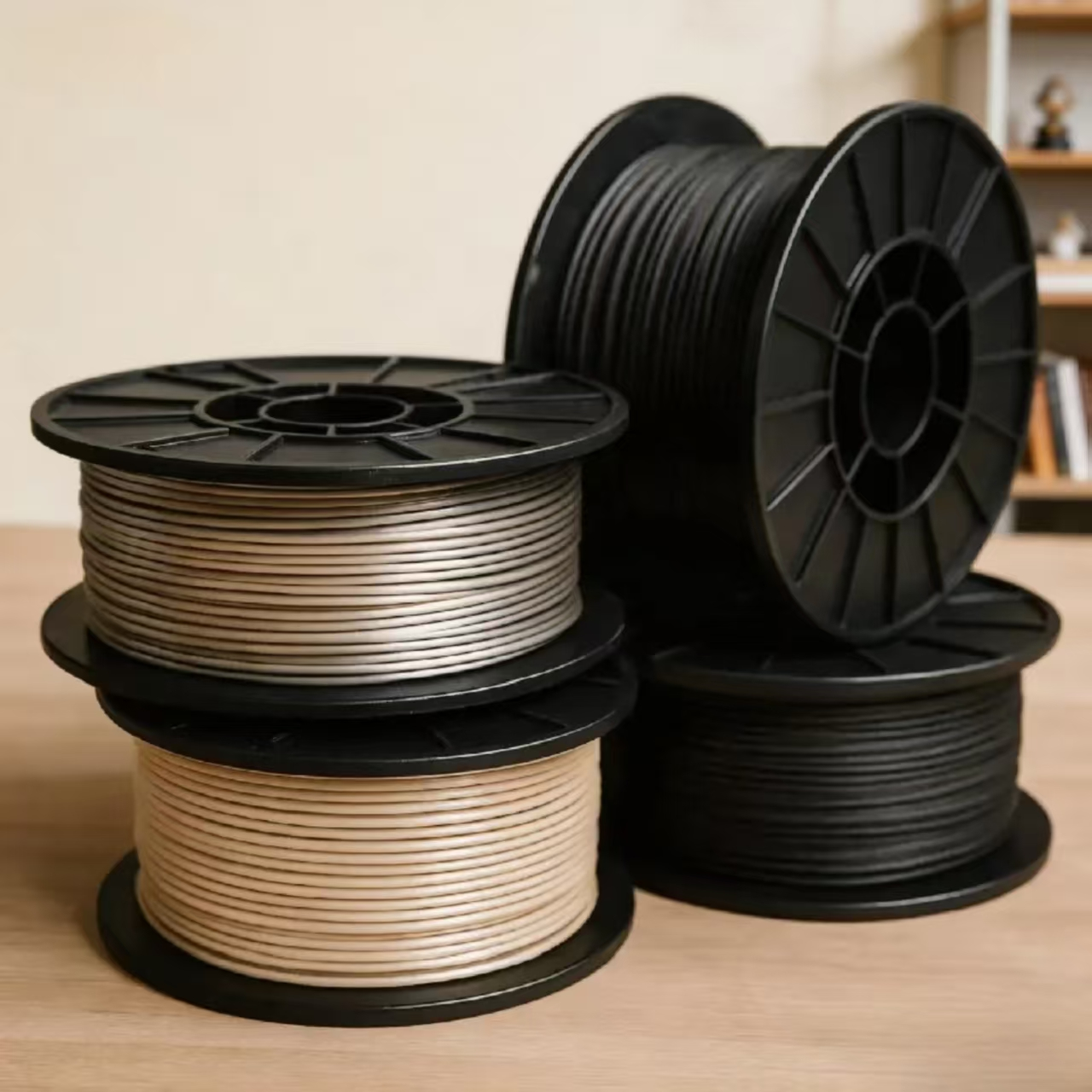
I talk to B2B buyers every single day, and the #1 question I get is: which carbon fiber filament should I actually buy? There’s so much hype around these materials right now, it’s easy to get overwhelmed. In this guide, we break down the three most popular options—carbon fiber nylon, carbon fiber PETG, and carbon fiber PLA. We compare their strength, heat resistance, printability, and real total cost, so you can pick the right one for your jigs, fixtures, end-use parts, or prototypes—no guesswork needed.
Key Takeaways
- Don’t just buy the strongest one—you probably don’t need it. Carbon fiber nylon is great for high-stress parts, but it’s overkill for most jigs.
- Carbon fiber PETG is the unsung hero for most shops. It hits the perfect sweet spot of printability and performance—which is why it’s our top seller for jigs and fixtures.
- Carbon fiber PLA is the easiest to print, perfect for fast, low-cost functional prototypes—don’t use it for long-term parts though.
- Pick the right material, and you can cut your total operational costs by up to 30% just by reducing failed prints and rework.
- Nylon-CF needs a lot more work—heated chambers, drying, the whole thing. PETG-CF and PLA-CF work on most standard desktop printers.
- For most industrial users, the extra cost for high-performance CF materials pays for itself within 6 months, because the parts last way longer.
- If you need tight tolerances? Go PETG-CF. It has the best dimensional stability of the three—no warping, no surprises.
Table of Contents
- Why Carbon Fiber Reinforcement Is Transforming 3D Printing
- The Material Science Behind Carbon Fiber Reinforcement
- Head-to-Head: Mechanical & Thermal Performance Breakdown
- Printability & Workflow Compatibility
- Hardware Requirements for Carbon Fiber Printing
- Post-Processing & Storage Needs
- Application-by-Application: Which Material Fits Your Business?
- The Hidden Costs: Total Cost of Ownership Analysis
- 3 Steps to Choose the Right Carbon Fiber Filament
- Frequently Asked Questions
- Conclusion
- References
Why Carbon Fiber Reinforcement Is Transforming 3D Printing
For years, standard PLA and PETG were good enough for hobbyist prints and basic prototypes. However, as 3D printing moves into real industrial production, those materials hit a wall.
They’re too soft for functional parts, they warp too easily, and they can’t handle the heat of factory environments. As a result, carbon fiber reinforced filament has blown up over the last few years.
In fact, it’s the fastest-growing segment of the 3D printing materials market, with a CAGR of over 18% through 2030, according to Mordor Intelligence. More importantly, it’s not just a buzzword—it’s letting businesses replace aluminum and steel parts with 3D-printed ones, cutting costs and lead time by 70% or more.
The Material Science Behind Carbon Fiber Reinforcement
So how does it work, anyway?
Think of it like the carbon fiber frame on a high-end mountain bike. The plastic is the base of the frame, and the carbon fibers are what keep it stiff and light—even when you’re hitting rough trails.
We do the exact same thing here. Specifically, we take small, chopped carbon fibers—each one 10× stronger than steel—and mix them into the polymer matrix. Those fibers carry the load, reduce shrinkage, and boost stiffness, without adding much weight.
A 2025 study from Politecnico di Torino found that adding just 20% carbon fiber to a polymer can boost tensile strength by 175% and stiffness by 329%, all while keeping the part 30% lighter than aluminum.
In other words, it turns a basic plastic into an industrial-grade engineering material.
However, not all carbon fiber filaments are created equal. The base polymer you use—nylon, PETG, or PLA—changes everything. A lot of new buyers don’t realize that; they just see “carbon fiber” and assume they’re all the same. That’s a huge mistake.
Head-to-Head: Mechanical & Thermal Performance Breakdown
With that out of the way, let’s get to the numbers you actually care about: strength, stiffness, and heat resistance.
We’re comparing the industry-standard formulations here: 15–20% short carbon fiber content, which is what most B2B buyers use for industrial applications. No hobby-grade blends—just the real stuff.
| Property | CF-PLA | CF-PETG | CF-Nylon (PA6) |
|---|---|---|---|
| Tensile Strength (XY) | 70 MPa | 82 MPa | 150 MPa |
| Flexural Modulus | 5.2 GPa | 7.8 GPa | 12.5 GPa |
| Heat Deflection Temp. | 55 °C | 105 °C | 180 °C |
| Shrink Rate | 0.2% | 0.1% | 1.2% |
| Moisture Absorption | 0.2% | 0.4% | 2.8% |
| Impact Resistance | Low | Medium | High |
What the Numbers Actually Mean
As you can see, carbon fiber nylon blows the other two out of the water when it comes to raw performance.
Specifically, it’s twice as strong as CF-PETG, and more than twice as stiff. On top of that, it can handle temperatures up to 180 °C, which means it can survive under the hood of a car or in a factory oven.
Furthermore, a 2026 study from MDPI found that CF-Nylon even retains one-third of its room-temperature strength at 150 °C—which is unheard of for the other two materials.
But that doesn’t mean it’s always the best choice. A lot of buyers see those numbers and immediately go for Nylon, without stopping to think if they actually need that kind of performance.
In contrast, PLA-CF and PETG-CF have much lower shrink rates, which means they hold their dimensions way better. Moreover, they don’t absorb moisture, which makes them way easier to work with.
Besides, for many applications, you don’t need 150 MPa of strength. A jig that holds a part on a workbench only needs enough stiffness not to bend—not enough to survive a crash.
That’s why it’s so important to match the material to your use case, not just pick the strongest one.
At SSSray, we’ve helped hundreds of B2B clients avoid over-engineering their parts. Our industrial-grade carbon fiber filaments are formulated with consistent ±0.02 mm diameter tolerance, ensuring zero clogging even in high-volume printers. Explore our full line of carbon fiber filament products →
Printability & Workflow Compatibility: Can Your Printer Handle It?
Of course, performance is great, but if you can’t print the material reliably, it doesn’t matter. In fact, I’ve seen so many buyers buy Nylon-CF first, only to realize their printer can’t handle it—and the roll sits on the shelf for months.
Each of these carbon fiber filaments has very different requirements for your printer and your workflow. Let’s break it down.
Hardware Requirements for Carbon Fiber Printing
First, the hardware. Carbon fiber is abrasive, so you’ll need a hardened steel nozzle no matter which material you choose. Brass nozzles will wear out in just a few hours of printing—no way around that.
Beyond that, the requirements change a lot.
| Requirement | CF-PLA | CF-PETG | CF-Nylon |
|---|---|---|---|
| Nozzle Temperature | 190–220 °C | 230–260 °C | 260–290 °C |
| Bed Temperature | 60 °C | 80 °C | 100 °C+ |
| Heated Chamber Required? | No | No | Yes |
| Drying Required? | Rarely | Occasionally | Always |
| Typical Print Failure Rate | 1–2% | 1–3% | 5–8% (new users) |
How Each Material Prints in Practice
Carbon fiber PLA is by far the easiest to print. It works on almost any standard desktop 3D printer. You don’t need a heated chamber, you don’t need to dry it, and it almost never warps. Essentially, it’s just like standard PLA—but stiffer. That’s why it’s so popular for fast prototypes.
Carbon fiber PETG is a little bit pickier, but still very manageable. It needs a slightly hotter nozzle and bed, yet it still doesn’t need a closed chamber. It absorbs a tiny bit of moisture, so if you leave it out for a few weeks, you might want to dry it for a couple of hours before printing. That’s it.
But carbon fiber nylon? That’s a whole different beast.
It needs a very hot nozzle, a very hot bed, and a heated chamber to prevent warping. Without a closed chamber, your parts will curl up at the corners so bad they’ll pop off the bed. I’ve seen it happen a hundred times.
On top of that, it’s extremely hygroscopic. In other words, it absorbs moisture from the air like a sponge. Unless you dry it for 4–6 hours at 80 °C before printing, you’ll get bubbles, stringing, and weak layer adhesion.
It’s like cooking wet pasta—if you don’t dry it first, you end up with a soggy, inconsistent mess.
As a result, many print farms struggle with Nylon-CF at first. It’s not impossible to print, but it requires a lot more work and better hardware.
Post-Processing & Storage Needs
After printing, the differences don’t stop.
PLA-CF parts are ready to go right off the printer. You can sand them if you want, but they don’t need any other post-processing. Similarly, you can store the filament right on your shelf—no special packaging needed.
Likewise, PETG-CF is easy to work with. You can glue it, sand it, or even vapor-polish it if you want a smooth surface. And it stores well, as long as you keep it in a dry box if you live in a humid climate.
In contrast, Nylon-CF needs more work.
You have to store it in a sealed dry box with desiccant, even when you’re not using it. If you leave it out for a week, it will absorb enough moisture to ruin your next print.
Furthermore, post-processing is harder too. Nylon is harder to sand, and it’s almost impossible to glue properly. You have to use special adhesives or weld the parts together with solvent. It’s doable, but it’s extra work.
Application-by-Application: Which Material Fits Your Business?
Now that we’ve covered the specs, let’s talk about real-world use cases. Which material should you pick for your specific project?
I always tell buyers: don’t look at the material first—look at what you need the part to do. Here’s a breakdown of the most common B2B applications:
| Application | Recommended | Why It Works |
|---|---|---|
| Functional Prototyping | CF-PLA | Fast printing, low cost, enough stiffness for form/fit testing |
| Jigs & Fixtures | CF-PETG | Perfect dimensional stability, no warping, enough heat resistance for workshops |
| Low-Volume Production Parts | CF-PETG | Fast print times, low failure rate, consistent quality for high throughput |
| Automotive Under-Hood Parts | CF-Nylon | High heat and chemical resistance; survives engine-bay temperatures |
| Drone & UAV Frames | CF-Nylon | High strength-to-weight ratio; impact resistance for crashes |
| End-of-Arm Tooling | CF-Nylon | Wear resistance, long lifespan, handles repeated cycles |
| ESD / Static-Dissipative Parts | CF-Nylon | Controlled conductivity; ideal for semiconductor manufacturing |
The Sweet Spot: Jigs, Prototypes, and End-Use Parts
The biggest sweet spot here is jigs and fixtures. That’s where carbon fiber PETG dominates, hands down.
For years, shops were using aluminum for jigs, because plastic was too soft. Then they tried PLA, but it was too brittle and couldn’t handle the heat from the workshop.
Eventually, CF-PETG came along. It’s stiff enough not to bend, dimensionally stable so the parts fit perfectly, it can handle up to 105 °C so it doesn’t melt if you leave it near a heat source, and it’s way cheaper and faster to produce than machined aluminum.
We’ve worked with dozens of automotive shops that made the switch—and it’s been a game changer.
Meanwhile, for prototypes, CF-PLA is the way to go. It’s fast, it’s cheap, and it gives you a stiff part you can use to test fit and form without burning through your budget.
Finally, for high-stress end-use parts, CF-Nylon is the only way to go. Nothing else can handle the heat, the strength, and the wear those applications demand.
The Hidden Costs: Total Cost of Ownership Analysis
A lot of buyers look at the price tag first. CF-PLA is ~$35/kg, CF-PETG is ~$40/kg, CF-Nylon is ~$50/kg. So obviously CF-PLA is the cheapest, right?
Wrong.
Here’s the thing: I’ve seen so many buyers get this wrong. They look at the upfront price tag without stopping to think about all the hidden costs that come with the wrong material: failed prints, nozzle replacements, drying time, rework, and—most importantly—replacing parts that break prematurely.
To illustrate, let’s do a real TCO analysis for a mid-sized manufacturing shop that prints 1,000 kg of filament per year.
Scenario A: Short-Term Use (Jigs used for ~3 months, then replaced)
| Cost Factor | CF-PLA | CF-PETG | CF-Nylon |
|---|---|---|---|
| Upfront Material Cost | $35,000 | $40,000 | $50,000 |
| Print Failure & Rework Cost | $700 | $800 | $4,000 |
| Nozzle Replacement Cost | $200 | $300 | $500 |
| Drying & Labor Cost | $0 | $100 | $3,000 |
| Part Replacement Cost | $2,000 | $500 | $0 |
| Total Annual Cost | $37,900 | $41,700 | $57,500 |
In this case, CF-PLA is the cheapest, followed closely by CF-PETG. Therefore, the extra cost of Nylon just isn’t worth it for short-term tools.
Scenario B: Long-Term End-Use Parts (Expected lifespan: 2 years)
| Cost Factor | CF-PLA | CF-PETG | CF-Nylon |
|---|---|---|---|
| Upfront Material Cost | $35,000 | $40,000 | $50,000 |
| Print Failure & Rework Cost | $700 | $800 | $4,000 |
| Nozzle Replacement Cost | $200 | $300 | $500 |
| Drying & Labor Cost | $0 | $100 | $3,000 |
| Part Replacement Cost | $105,000 (replaced 3×) | $40,000 (replaced 1×) | $0 |
| Total Annual Cost | $140,900 | $81,200 | $57,500 |
Clearly, that’s a massive gap—and it’s exactly why so many companies end up overspending or underspending on their materials.
Consequently, CF-Nylon becomes the cheapest option by far, because you don’t have to replace the parts every few months.
3 Steps to Choose the Right Carbon Fiber Filament
So how do you pick the right material for your business? It’s not that complicated—just work through these three steps, in order. Don’t skip ahead; I’ve seen too many people do that.
Step 1: Define Your Application Requirements First
First, ask yourself: what does the part actually need to do? Don’t look at the materials first.
- How hot does it need to get?
- How strong does it need to be?
- What lifespan do you need?
- What tolerances do you need?
A throwaway prototype you’ll test once and discard? Go with CF-PLA.
For a jig you’ll use for a few months, CF-PETG is your best bet.
If you need an end-use part that’s going to last for years, CF-Nylon is worth the investment.
Step 2: Audit Your Printer Fleet
Next, check what printers you have. Can you actually print the material?
If all you have are standard desktop printers without heated chambers, you can’t print CF-Nylon. In that case, you’ll have to stick with CF-PLA or CF-PETG. On the other hand, if you have industrial printers with heated chambers, all three options are on the table.
Step 3: Calculate Your Long-Term TCO
Finally, don’t just look at the price per kilogram. Instead, calculate the total cost of ownership over the life of the part: replacement frequency, failed-print costs, drying labor, post-processing time. Ultimately, that’s the only way to get the real cost.
Not sure where to start?
Our team offers free sample testing so you can try all three materials in your own workflow before you commit. We also offer custom OEM/ODM formulations tailored to your specific application.
Request Free Material Samples →Frequently Asked Questions
Which carbon fiber filament is the strongest?
Carbon fiber nylon (PA6-CF) is by far the strongest of the three, with a tensile strength of up to 150 MPa. That said, don’t automatically buy the strongest one. I’ve seen too many buyers pick Nylon-CF for a simple assembly jig and waste money on material and failed prints. Above all, match the material to the application.
Is carbon fiber PETG better than PLA?
It depends on your application. For functional parts that need to last, yes—CF-PETG is more heat resistant, more durable, and more dimensionally stable. However, for fast, cheap prototypes, CF-PLA is the better choice because it’s faster to print and less expensive.
Can I print carbon fiber filament on a regular 3D printer?
CF-PLA and CF-PETG can be printed on most standard desktop printers, as long as you install a hardened steel nozzle to handle the abrasive carbon fiber. In contrast, CF-Nylon requires a heated chamber and a high-temperature hotend, so it won’t work on most basic desktop machines. Unfortunately, a lot of new buyers learn that the hard way.
Which carbon fiber filament is best for jigs and fixtures?
Carbon fiber PETG is the industry standard for jigs and fixtures. In particular, it offers excellent dimensional stability, virtually no warping, and enough heat resistance for most workshop environments—without the high cost and complexity of nylon.
Does carbon fiber filament wear out nozzles?
Yes, absolutely. Carbon fiber is abrasive; it will wear out standard brass nozzles in just a few hours. Because of this, always use hardened steel nozzles for any carbon fiber printing. This is non-negotiable.
Which carbon fiber filament has the best dimensional stability?
Carbon fiber PETG has the best dimensional stability, with a shrink rate of just 0.1%. As a result, your parts come out exactly the size you designed—no warping, no curling—making it perfect for tight-tolerance tooling.
Is carbon fiber nylon worth the extra cost?
For high-stress, high-temperature end-use parts, absolutely. The extra upfront cost is offset by a longer part lifespan and better performance. Most of our clients see a return on their investment within six months because they stop replacing parts. That said, for short-term tools, it’s usually not worth it. Visit our FAQ page for more answers.
Conclusion
Carbon fiber reinforced filament is transforming industrial 3D printing—but there’s no one-size-fits-all solution.
- Carbon fiber PLA is perfect for fast, low-cost functional prototypes. It’s easy to print, affordable, and works on almost any printer.
- For most industrial users, carbon fiber PETG is the sweet spot. It offers the best balance of performance, printability, and cost—making it the ideal choice for jigs, fixtures, and low-volume production parts.
- When high performance matters most, carbon fiber nylon is the go-to. It’s strong, heat resistant, and built for the toughest environments—even if it’s more complex to print.
Ultimately, the key is to match the material to your application, not just pick the strongest or the cheapest one. Do that, and you can cut your costs by up to 30%, reduce your print failures, and get parts that last exactly as long as you need them.
If you’re still not sure which material is right for you, just reach out. Our team can help you run a quick test or send you free samples to try in your own workflow.
Learn more about SSSray | Browse all filament products
References
- Wohlers Associates. (2026). Wohlers Report 2026: The State of Additive Manufacturing. 3Dnatives.
- Plastics Engineering. (2025). Why Carbon Fiber Reinforcement Works—or Doesn’t—in 3D Printing. plasticsengineering.org
- MDPI. (2026). High-Temperature Tensile Performance of Fused Filament Fabricated Discontinuous Carbon Fiber-Reinforced Polyamide. mdpi.com
- Politecnico di Torino. (2025). Recycled milled carbon fibers in fused filament fabrication of composite filaments. Polymer Composites.
- Upside Parts. (2025). How Strong Is Carbon Fiber Filament for 3D Printing. upsideparts.com
- Siraya Tech. (2026). Nylon vs PETG: Material Comparison Guide for 3D Printing. siraya.tech
- De Gruyter Brill. (2025). A comprehensive approach for the production of carbon fibre-reinforced polylactic acid filaments. e-Polymers.
- Stratasys. (2026). High-Quality 3D Printing Materials Guide. stratasys.com
- Mordor Intelligence. (2026). 3D Printing Filament Market Size, Share, and Growth Trends 2026–2031. mordorintelligence.com
