Online time
Monday to Friday: 9AM - 8PM
Weekend: 10AM - 5PM

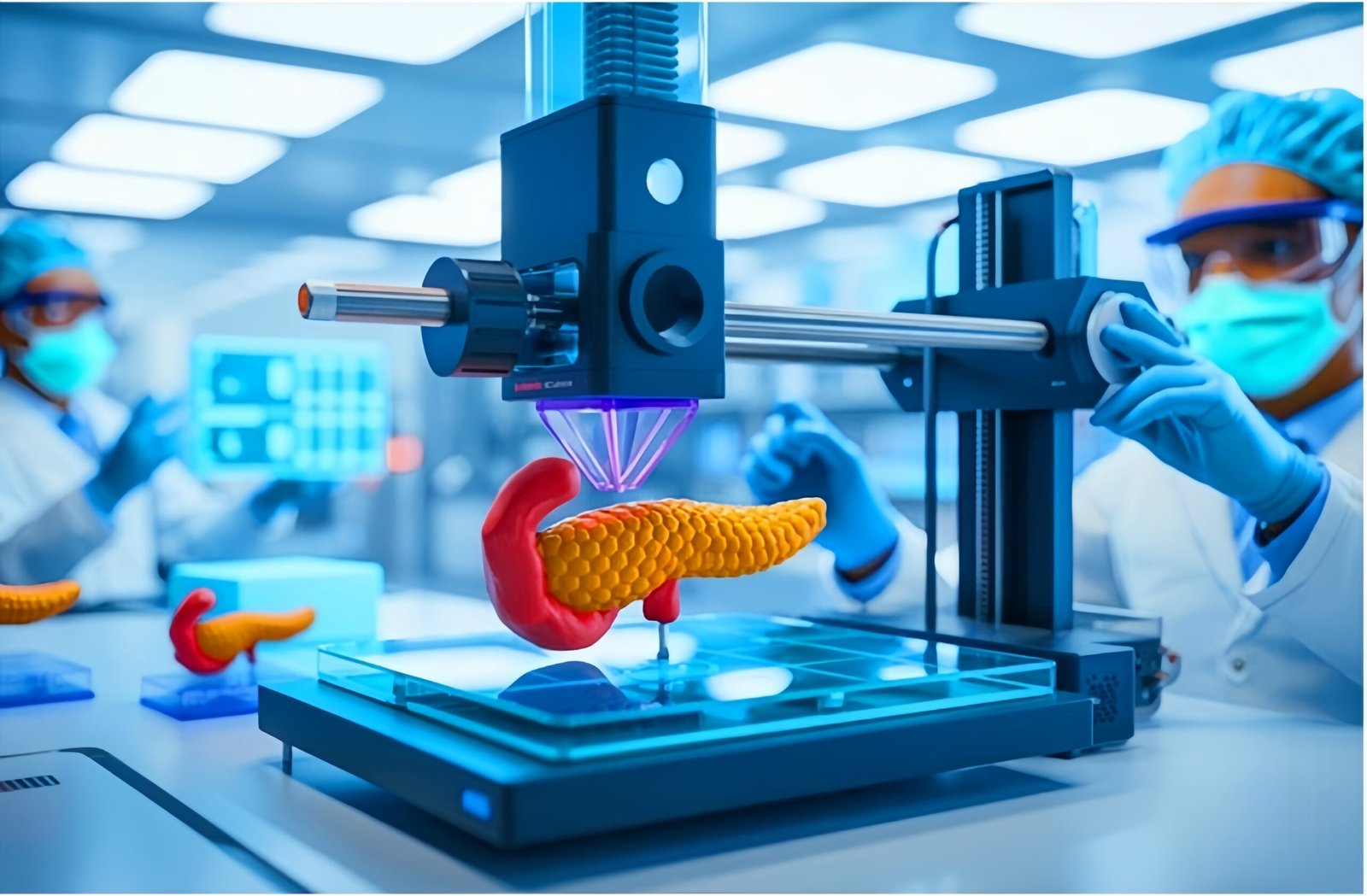
For millions of people with diabetes, daily insulin injections are an unavoidable routine. But that might change soon: scientists have successfully 3D-printed functional human islets—the tiny clusters of cells in the pancreas that produce insulin. This breakthrough could one day free patients from the burden of constant shots.
The work comes from a team at Wake Forest University in the U.S., where researchers developed a special type of “bio-ink.” By combining alginate with material from human pancreatic tissue, they were able to print islet structures that don’t just look real—they actually work. In lab tests, these printed islets could sense glucose levels and release insulin, performing even better than traditional donor islets.
A simpler way to transplant islets
Right now, islet transplants usually involve placing them into the liver, a complicated procedure that carries risks. The new approach is much simpler: implanting the 3D-printed islets under the skin. It’s minimally invasive, can be done under local anesthesia, and could be much safer and more acceptable to patients.
Why are these printed islets so effective?
The secret lies in the custom-designed bio-ink. It gives the cells structural support while mimicking the natural pancreatic environment, ensuring proper nutrient and oxygen flow. As a result, the cells survive better and stay functional after transplantation. In fact, experiments showed over 90% cell survival, with the islets still producing insulin reliably after three weeks.
The printed structures are also naturally porous, which helps nutrients and oxygen pass through and encourages new blood vessels to grow. That’s key for keeping the islets alive and working long-term inside the body.
What does the future look like?
This is one of the few studies in the world to use real human islet cells for 3D bioprinting, bypassing the limitations of animal models. Experts see it as a milestone for regenerative and personalized medicine. The ultimate goal? An “off-the-shelf” cell therapy where diabetes patients could get a quick 3D-printed implant instead of relying on lifelong insulin injections.
In other words, 3D printing isn’t just about gadgets, houses, or toys anymore—it’s becoming a transformative tool for medicine. For people living with diabetes, this could truly be the beginning of a new chapter.
