Online time
Monday to Friday: 9AM - 8PM
Weekend: 10AM - 5PM

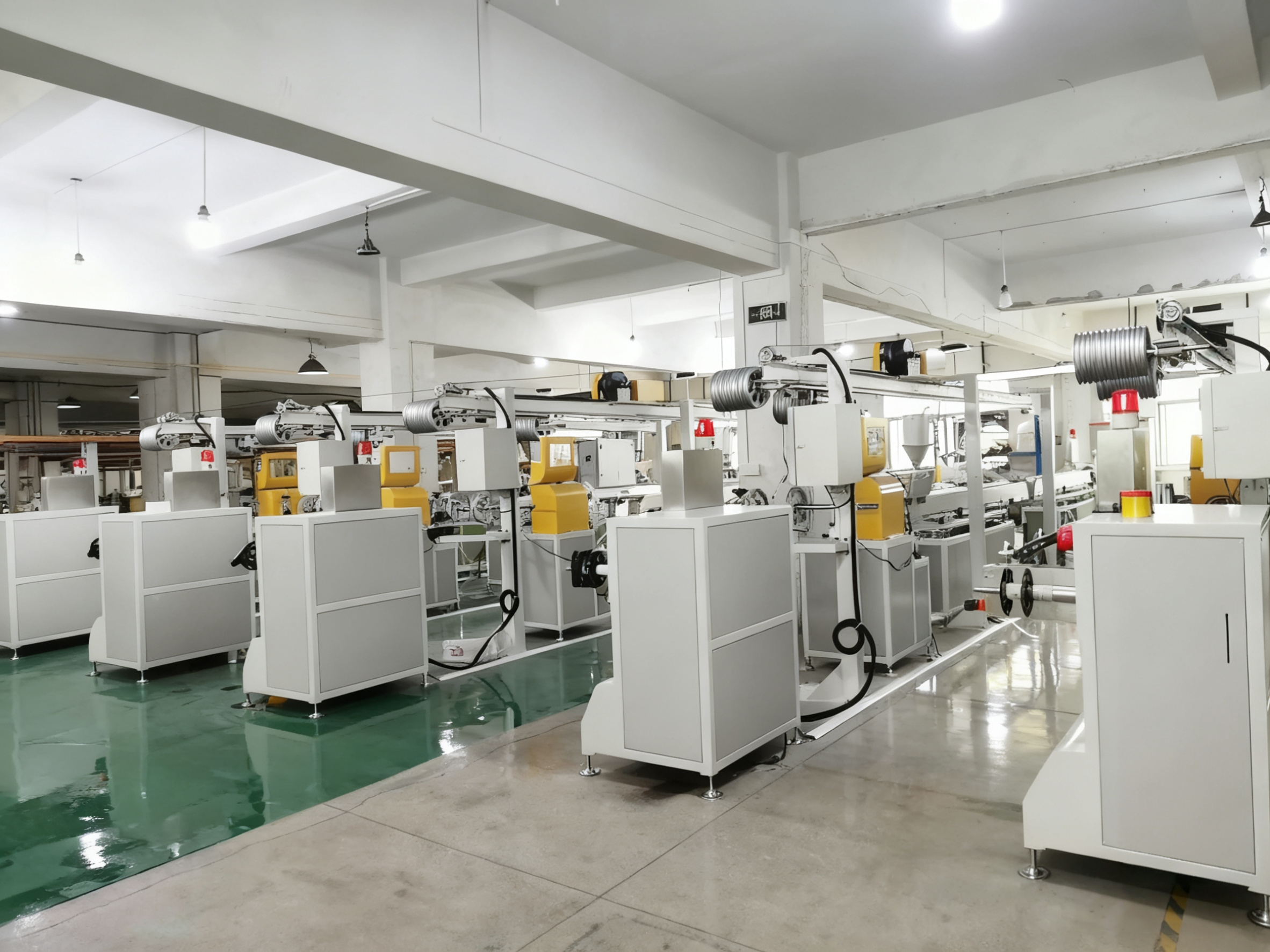
Abstract — Choosing the right 3D printing filament manufacturer in 2026 is no longer just a pricing decision. For distributors, brand owners, industrial users, print farms, and technical buyers, supplier quality directly affects print consistency, downtime, customer complaints, and long-term profitability. This guide explains how to evaluate a 3D filament supplier based on raw materials, drying, extrusion stability, filament diameter tolerance, packaging, certifications, OEM capability, and total cost of ownership. Whether you are sourcing wholesale 3D printing filament, planning an OEM 3D filament program, or launching private label 3D printer filament, the goal is the same: reduce risk and choose a supplier that can support scale, consistency, and brand credibility.
Key Takeaways
- A reliable 3D printing filament manufacturer should be evaluated on process control, not just price.
- Raw material quality, drying, extrusion stability, and packaging all affect print performance.
- Filament diameter tolerance is one of the clearest indicators of manufacturing consistency.
- A strong 3D filament supplier should provide documentation, traceability, and responsive support.
- OEM 3D filament and private label 3D printer filament services can improve margins and market differentiation.
- The best wholesale 3D printing filament partner reduces hidden costs such as failures, returns, and downtime.
- B2B buyers should compare suppliers on both technical metrics and business execution.
- A slightly higher-priced but reliable filament manufacturer often delivers stronger ROI.
Contact SSSray for Samples or a Quote
1. Why Choosing the Right 3D Printing Filament Manufacturer Matters
For a hobby user, a poor spool is frustrating. For a distributor, industrial buyer, or print farm, it can mean returns, downtime, missed delivery dates, and avoidable support costs. That is why selecting the right 3D printing filament manufacturer in 2026 is a business decision, not just a purchasing task.
A spool of filament may look simple, but it reflects a chain of technical variables: polymer selection, formulation, drying, extrusion stability, diameter control, spool winding, moisture protection, and export packaging. If any one of those steps is inconsistent, the end user will see the results in the form of stringing, rough surfaces, weak layer adhesion, dimensional drift, or failed long-duration prints.
Why this matters more in 2026
The market is becoming more demanding. More buyers are moving into engineering materials, reinforced materials, and private-label programs. At the same time, industrial users and print farms are under pressure to improve reliability and reduce intervention. That means supplier inconsistency is more expensive than before.
Why the cheapest spool is not always the lowest-cost option
Many buyers still compare suppliers only by price per spool or per kilogram. But poor quality often creates hidden costs: failed prints, additional labor, machine downtime, more support tickets, more returns, and lower end-customer confidence. In B2B, the real metric is not just price. It is total business outcome.
Think of it like sourcing tires for a commercial fleet. A lower upfront price means very little if failure rates are higher and reliability is lower. Filament sourcing works the same way.
2. How a 3D Printing Filament Manufacturer Controls Material Quality
To understand how to choose a reliable 3D filament supplier, it helps to understand what a good manufacturer actually controls.
A professional filament factory is not simply melting plastic pellets and winding them onto spools. It is managing a process that combines polymer science, extrusion control, moisture management, and packaging discipline.
Raw materials and polymer behavior
Most common filaments are thermoplastics, but each polymer family behaves differently. PLA, PETG, ABS, ASA, Nylon, TPU, and PC all respond differently to heat, moisture, additives, and processing conditions. A capable manufacturer should understand not just the material name, but how the resin behaves during extrusion and printing.
For example, Nylon is highly hygroscopic, which means it absorbs moisture from the air quickly. PETG can suffer hydrolytic degradation if moisture is not controlled during processing. Reinforced grades need stable filler dispersion to avoid uneven stiffness or inconsistent extrusion behavior.
Moisture control: the hidden quality variable
Moisture is one of the most underestimated sources of poor filament performance. In hygroscopic materials, absorbed water can damage polymer chains during heating or create bubbles during printing. This can reduce layer adhesion, surface quality, and mechanical performance.
A reliable 3D printing filament manufacturer with quality control should control drying before extrusion, maintain suitable handling conditions, and use protective packaging after production.
Additives and filler consistency
Modern filament often includes pigments, impact modifiers, UV stabilizers, or reinforced fillers such as carbon fiber or glass fiber. These additives improve performance, but they also increase process complexity. If dispersion is poor, users may see inconsistent color, unstable flow, or uneven mechanical properties.
For B2B buyers comparing suppliers like SSSray, this matters especially when sourcing across multiple materials. Consistency across a broader portfolio is often a sign of stronger process control.
| Manufacturing Variable | If Controlled Well | If Controlled Poorly | Impact on Buyer |
|---|---|---|---|
| Raw Material Grade | Stable flow and predictable performance | Batch inconsistency and variable print quality | Higher complaint risk |
| Drying Process | Lower moisture and cleaner extrusion | Bubbles, rough surfaces, brittle behavior | Lower print reliability |
| Additive Dispersion | Uniform color and mechanical response | Weak zones and uneven appearance | Reduced customer trust |
| Extrusion Stability | Consistent geometry | Diameter drift and flow variation | Print inconsistency |
| Packaging Integrity | Dry, protected filament on delivery | Moisture uptake during transit | Field performance issues |
This is why quality starts upstream. A spool that prints well is usually the result of stable process discipline long before packaging.
3. What to Look for in a 3D Filament Supplier
Many buyers ask the same question: what to look for in a filament supplier? The best way to answer it is to evaluate suppliers in three areas: technical reliability, commercial reliability, and partnership reliability.
Technical reliability
A serious 3D filament supplier should be able to answer technical questions directly. Ask about raw materials, drying process, extrusion monitoring, filament diameter tolerance, packaging method, and quality documentation. If the answers remain vague, that is a warning sign.
Commercial reliability
A strong bulk filament supplier should also be operationally predictable. Buyers should check MOQ, lead times, packaging options, export experience, repeat-order stability, and claim-handling process.
Partnership reliability
The best B2B suppliers do more than ship products. They help buyers solve problems, refine specifications, adapt packaging, and scale over time. This is especially important for distributors, private-label brands, and industrial users who need dependable support over multiple purchase cycles.
Early red flags
- No clear tolerance data
- Poor sample packaging
- No lot traceability
- Weak documentation
- Slow replies during sampling
- No process explanation beyond generic marketing language
- Competing only on price
Explore SSSray OEM & Private Label Services
4. Filament Quality Control and Filament Diameter Tolerance
If there is one technical topic every B2B buyer should understand, it is filament quality control. This is often where a true reliable filament manufacturer separates itself from a basic extrusion shop.
Why process control matters more than final inspection
Weak factories inspect only after production. Strong factories control quality throughout production. That difference matters because many problems are easier to prevent than to detect later, including moisture-related degradation, unstable melt flow, poor additive mixing, or winding defects.
Why filament diameter tolerance matters
Filament feeding is a volume-based process. Even small diameter changes alter cross-sectional area and therefore the amount of material entering the hot end. For nominal 1.75 mm filament, small variation can already affect flow consistency in sensitive applications.
| Filament Diameter | Approx. Cross-Sectional Area | Change vs Nominal | Likely Print Effect |
|---|---|---|---|
| 1.73 mm | 2.350 mm² | About −2.3% | Potential under-extrusion |
| 1.75 mm | 2.405 mm² | Baseline | Expected flow behavior |
| 1.77 mm | 2.460 mm² | About +2.3% | Potential over-extrusion |
| 1.80 mm | 2.545 mm² | About +5.8% | Noticeable inconsistency and print risk |
This is why filament diameter tolerance should never be treated as a decorative specification. It is a practical signal of process capability.
Winding quality and long-print reliability
Even a chemically sound filament can fail commercially if winding quality is poor. Tangles, loose winding, or crossover issues matter a great deal for print farms, overnight jobs, and industrial batch production.
Packaging is also part of quality control
A spool can leave the line in good condition and still arrive in poor condition if packaging is weak. Vacuum sealing, desiccant inclusion, lot coding, and export-ready cartons all matter—especially for hygroscopic and engineering-grade materials.
For many B2B customers evaluating SSSray, packaging quality becomes especially important when products pass through multiple warehouses, climates, and freight stages before reaching the end user.
5. OEM 3D Filament and Private Label 3D Printer Filament
For many B2B buyers, the real opportunity is not only sourcing filament. It is building a brand, improving margin, and creating product differentiation. That is where OEM 3D filament and private label 3D printer filament become commercially valuable.
Why private label matters
Private label can help distributors and brand owners build market identity, improve pricing power, avoid direct comparison with open-market brands, and tailor product presentation to local channels.
What a capable OEM supplier should support
A professional OEM private label 3D printer filament manufacturer should provide more than simple logo replacement. Strong support may include custom labels, custom cartons, barcode integration, multilingual packaging, SKU planning, and repeatable approval workflows.
Why custom filament packaging is operationally important
Custom filament packaging is not just about visual design. It affects carton efficiency, shelf presentation, traceability, warehouse handling, and damage rate. A distributor may need retail-ready packaging, while an industrial buyer may prefer simplified bulk cartons with clearer lot coding.
| Capability Area | Basic Supplier | Strong OEM Supplier | Why It Matters |
|---|---|---|---|
| Label Customization | Simple sticker replacement | Full branding, barcode, multilingual support | Supports stronger market positioning |
| Box Customization | Limited options | Retail-ready or channel-specific boxes | Improves presentation and usability |
| SKU Planning | Buyer handles alone | Supplier supports launch planning | Reduces rollout mistakes |
| Repeat Consistency | Unclear standards | Controlled through packaging and batch workflows | Protects brand reputation |
| Documentation | Minimal | TDS, SDS, approval workflow, packaging specs | Supports compliance and sales |
6. Wholesale 3D Printing Filament: Cost, Margin, and ROI
The best wholesale 3D printing filament partner is not always the one with the lowest quotation. For B2B buyers, total cost of ownership is often a better metric than material price alone.
Direct cost vs hidden cost
Visible costs include spool price, packaging cost, freight, and tariffs. Hidden costs often include print failures, operator time, rework, machine downtime, support tickets, warranty claims, and lower customer retention.
A simple ROI scenario
Imagine a print farm buying 1,000 spools per year. One supplier charges $11 per spool and another charges $12. On paper, the first supplier saves $1,000. But if that lower-priced product causes just a small increase in failure rate, troubleshooting time, or claim volume, the savings can disappear quickly.
In B2B operations, reliability compounds. So does inconsistency.
| Cost Dimension | Low-Price Supplier | Reliable Supplier | Likely Outcome |
|---|---|---|---|
| Quoted Price | Lower | Slightly higher | Short-term saving only |
| Failure Rate | More variable | More stable | Better uptime with reliable supplier |
| Support Burden | Higher | Lower | Lower operating cost |
| Inventory Predictability | Less stable | More stable | Fewer stock issues |
| Brand Impact | Higher complaint risk | Better consistency | Stronger customer trust |
| Long-Term ROI | Often weaker | Usually stronger | Better business value |
What distributors should actually track
Instead of focusing only on unit cost, distributors should monitor reorder rate, claim rate, support load, carton damage rate, and on-time delivery. Those metrics reveal whether a supplier is really helping the business grow.
Request a Quote or Sample from SSSray
7. How Different B2B Buyers Should Evaluate a Filament Factory
Not every buyer should use the same scorecard. The right answer to what to look for in a filament supplier depends on your business model.
Distributors
Distributors should prioritize broad SKU coverage, stable packaging, predictable replenishment, solid claim handling, and margin structure. For them, the best wholesale 3D printing filament supplier for distributors is usually the one that reduces friction across the whole sales chain.
Brand owners
Brand owners should focus on OEM 3D filament support, private-label packaging, repeat consistency, color control, and long-term SKU planning.
Industrial users
Industrial buyers should prioritize process repeatability, traceability, drying discipline, technical data, engineering-grade options, and strong filament quality control.
Print farms
Print farms should care deeply about winding quality, stable flow, low moisture exposure, low tangle risk, and fast restocking. Their core metric is uptime economics.
Technical decision-makers
Engineers and technical managers usually want evidence: realistic print guidance, property data, tolerance information, and documentation from a certified 3D printing filament supplier.
8. A Practical 12-Step Supplier Audit Process
If you want a practical answer to how to choose a reliable 3D filament manufacturer, use a structured audit process instead of relying on first impressions.
1. Define the use case
Know whether you are buying for distribution, private label, industrial use, print-farm production, or e-commerce retail.
2. Shortlist relevant suppliers
Choose suppliers based on fit, export experience, materials, and OEM capability—not just search rankings.
3. Request technical documentation
Ask for TDS, SDS, packaging specs, tolerance details, and available compliance documents.
4. Evaluate communication quality
Fast, clear replies are a good sign. Vague or delayed communication at the sample stage often predicts future problems.
5. Test multiple materials
Do not test only one easy material. If you want a long-term partner, check consistency across a wider range.
6. Use a controlled print method
Test on the same printer, with the same model and settings, to compare results fairly.
7. Inspect packaging physically
Check vacuum sealing, desiccant, lot coding, carton quality, and shelf-readiness.
8. Ask about process control
A true 3D printing filament manufacturer with quality control should explain drying, extrusion monitoring, diameter measurement, and final inspection.
9. Compare MOQ and flexibility
MOQ affects cash flow and launch speed, especially for distributors and private-label brands.
10. Run a pilot order
Before scaling, place a test order and evaluate delivery performance, consistency, and support responsiveness.
11. Build a supplier scorecard
Score suppliers on quality, consistency, packaging, documentation, lead time, pricing, and OEM flexibility.
12. Choose a partner, not only a vendor
The best supplier helps you grow, solve technical issues, and reduce downstream friction. For many buyers, this is where SSSray can fit naturally as a scalable sourcing and OEM partner.
FAQ
1. How do I know if a 3D printing filament manufacturer is reliable?
A reliable supplier should provide stable quality, clear process control, lot traceability, strong packaging, and responsive communication. Reliability is shown through repeatability, not just one good sample.
2. What should I check first in a 3D filament supplier?
Start with consistency. Ask about raw materials, drying process, filament diameter tolerance, packaging quality, and documentation.
3. Why is filament diameter tolerance so important?
Because printers feed material by volume. Small changes in diameter alter the extrusion rate and can affect layer bonding, dimensions, and surface finish.
4. What should distributors prioritize in a wholesale 3D printing filament supplier?
Distributors should prioritize product range, packaging quality, repeatability, lead-time stability, claim handling, and OEM/private-label support.
5. What does an OEM private label 3D printer filament manufacturer provide?
A strong OEM supplier can support custom labels, custom packaging, barcode integration, documentation, and standardized repeat production for branded sales.
6. Is the cheapest wholesale 3D printing filament usually the best deal?
Not necessarily. Low price can be offset by higher failure rates, support costs, returns, and lower customer trust. Total cost of ownership matters more.
7. What documents should a certified 3D printing filament supplier provide?
Common documents include TDS, SDS, specifications, packaging details, and relevant compliance files depending on the market and application.
8. How should I test a new bulk filament supplier?
Use a structured process: compare samples under consistent print conditions, inspect packaging, place a pilot order, and track communication and delivery quality.
Conclusion
Choosing a reliable 3D printing filament manufacturer in 2026 requires more than comparing quotations. The best supplier should control raw materials, drying, extrusion stability, filament diameter tolerance, winding, packaging, and documentation with real consistency. For global B2B buyers, that consistency leads to lower failure rates, stronger customer trust, and better long-term ROI.
Whether you are sourcing from a 3D filament supplier for distribution, industrial use, wholesale 3D printing filament, OEM 3D filament, or private label 3D printer filament, the right partner is the one that reduces risk across the full supply chain and supports long-term growth.
Talk to SSSray About Your Filament Sourcing Project
References
- ISO/ASTM 52900 – Additive manufacturing fundamentals and vocabulary
- ASTM International – Additive manufacturing standards
- NIST – Additive manufacturing research resources
- UL Solutions – Materials and compliance resources
- Wohlers Associates – Additive manufacturing industry analysis
- BASF Forward AM – Engineering filament and material resources
- Covestro – Polymer and additive manufacturing material resources
- ScienceDirect – Peer-reviewed polymer and AM literature
- SpringerLink – Research on polymers, extrusion, and AM
- ECHA – REACH regulatory information
