Online time
Monday to Friday: 9AM - 8PM
Weekend: 10AM - 5PM


SSSray Filament Qualification Program
Run the test that
Run the test that
decides the first order.
Put SSSray filament on your printers, in your real parts and side by side with your current supplier’s filament. Let the result decide whether our factory earns a place on your shortlist.
We help distributors, print farms, schools, industrial users and OEM/private-label brands turn a sample print into a written bulk-purchase decision—before you commit to production volume.
4 gates10 buyer checks
50 spoolsMOQ after approval
1 / 3 / 5kgPLA spool options
10–20 daysTypical bulk production*
*Confirm by material, color, packaging, quantity and production schedule.
Tell us what would make you reject a supplier. We will build the test around that risk.
Set the pass line ↓
Start with the buying risk
Test the problem that could cost you the next order.
A reseller does not buy like a print farm, and a private-label launch should not be approved like a classroom spool. Start with the commercial risk, then choose the material, printer and evidence.
DISTRIBUTORWill customers reorder it?
Check repeatable printing, finish, color, retail pack and whether the SKU is simple for your sales team to support.
PRINT FARMWill the fleet stay productive?
Run your real G-code long enough to expose feeding, winding, restart and machine-to-machine problems.
OEM / PRIVATE LABELCan the product and pack launch together?
Approve filament first, then spool, bag, label, box, barcode and document scope before artwork enters production.
SCHOOL / LABCan different users repeat it?
Use shared printers and clear handling rules so one successful print is not tied to one experienced operator.
INDUSTRIAL USERWill the part do its job?
Print the actual geometry, inspect the required result and request only the documents your approval process uses.
Wholesale product-line planning
Approve the SKUs your customers are most likely to reorder first.
We supply our material range for wholesale, but a stronger launch starts with a focused range. Qualify core volume before adding effect colors, engineering grades or extra packaging combinations.
01 · CORE VOLUMEProve the everyday range
Start with the materials, colors and spool sizes your market already sells or consumes repeatedly.
02 · GROWTH RANGEAdd a clear buying reason
Validate high-speed, outdoor, flexible or aesthetic routes only when each SKU has a customer and use case.
03 · SPECIALIST RANGEQualify engineering grades by application
Match the grade, drying route, printer, part and document need before carrying specialist inventory.
Send one useful buying brief
Tell us what must go right before we suggest a spool.
Send us the application, printer, target order and rejection risk. We can then point you to the right wholesale material route instead of sending a generic catalog.
01Buying goal and rejection riskResale, fleet, OEM/private label, classroom or end-use part—and what would stop the PO.
02Exact sample identityMaterial, grade, diameter, color, net weight and sample source.
03Printer and processPrinter, nozzle, slicer, G-code, drying, environment and operator.
04Representative challengeThe real part, duration, speed and difficulty expected after purchase.
05Acceptance ruleMethod, sample size, target, warning line, rejection line and retest rule.
06RFQ baselineQuantity, spool size, packaging, destination, required files, Incoterm and target date.
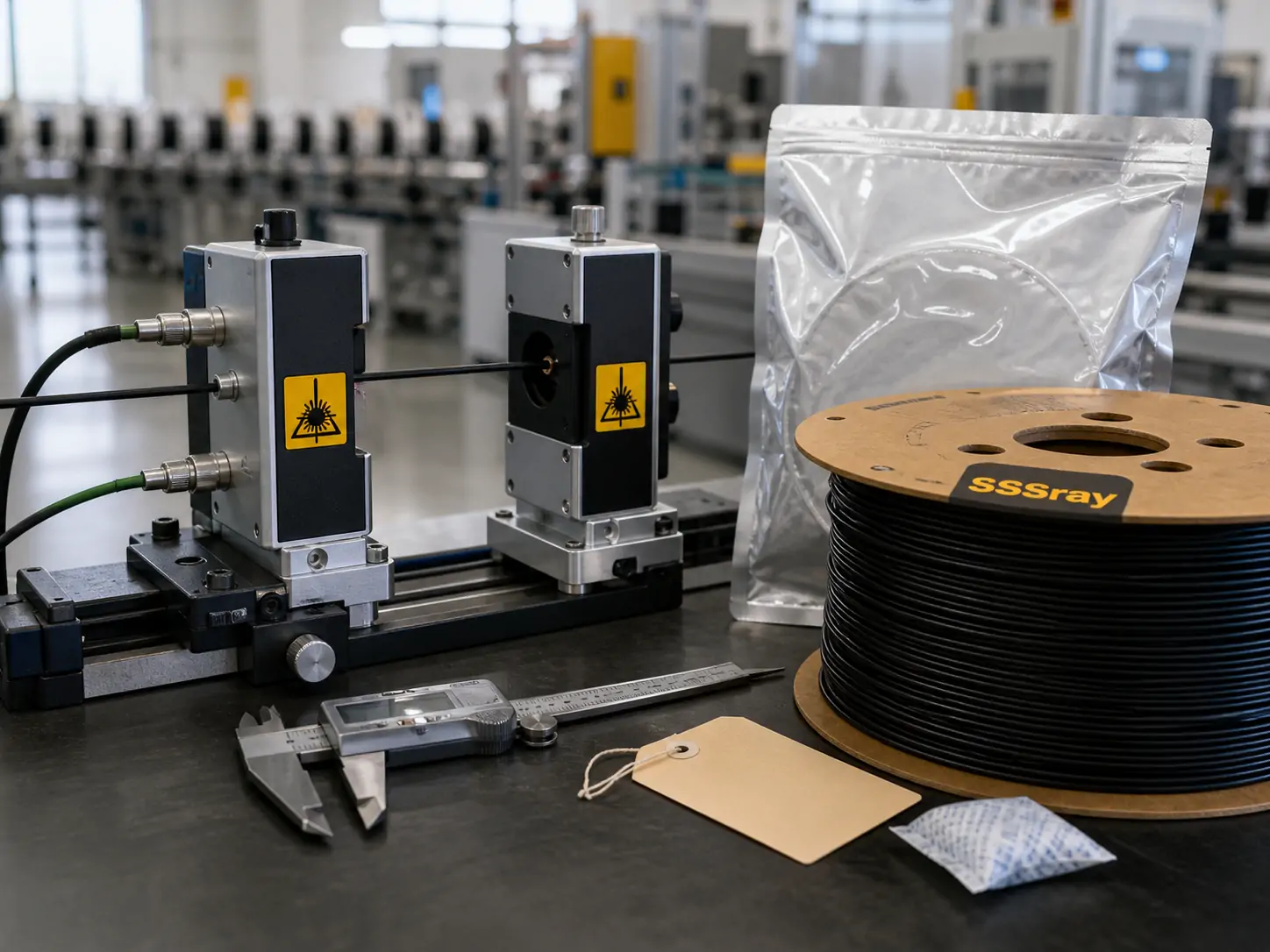
Approve the format you plan to buy.
We supply PLA in 1kg, 3kg and 5kg spool formats. Test the spool, bag and handling route that will appear in your RFQ—not a convenient substitute.
4 approval gates · 10 buyer checks
A sample earns the PO one gate at a time.
Keep one simple record so the spool, settings and result never get separated. Use the same protocol for our filament and every supplier you want to compare.
GATE 1 · 01 RECEIPTPhotograph the unopened sample
Keep the carton, bag, seal, desiccant, spool, label and any visible damage in the same arrival record.
GATE 1 · 02 IDENTITYMatch the spool to the files
Check material, grade, diameter, color, net weight and sample or batch reference before the first print.
GATE 1 · 03 CONDITIONDo not let moisture hide the answer
Record seal condition, storage and any drying time, temperature and equipment used for that material.
GATE 2 · 04 DIMENSIONMeasure diameter and ovality
Use one agreed pattern and record every reading. Do not compare one supplier’s average with another supplier’s worst point.
GATE 2 · 05 SPOOLCheck winding on your equipment
Inspect flange condition, hub fit, filament restraint and feeding through the holder, dryer or material system you use.
GATE 3 · 06 BASELINEFind a stable starting window
Start from the applicable SSSray guidance, then save the profile that works repeatedly on your printer.
GATE 3 · 07 REAL PARTPrint the job your customer buys
Use the geometry, speed, support strategy and duration that expose failures you cannot afford after launch.
GATE 3 · 08 REPEATRepeat with the settings locked
Run the same file again. For fleets, include representative machines and record interruptions, yield and part variation.
GATE 4 · 09 REVIEWPut print, pack and paperwork together
Review the print record, dimensional checks, packaging, agreed specification and applicable COA or compliance files as one case.
GATE 4 · 10 DECIDELock what the first PO will buy
Write down the SKU, color, spool, packaging, documents, approved settings, retest rule, quantity and RFQ basis.
Side-by-side supplier test
Give every supplier the same chance. Then buy the better result.
Keep the printer, nozzle, build plate, slicer, G-code, environment, drying route and inspection method fixed. If something changes, write it down and repeat that run.
Do not tune one supplier more than another. Give each material the same documented tuning allowance, then compare performance inside the approved window.

On mobile, swipe horizontally to review the complete record.
| Control | Record before test | Evidence to keep | Decision |
|---|---|---|---|
| Sample identity | Grade, color, diameter, pack, reference | Arrival photos and label record | Match / Hold |
| Conditioning | Storage, drying, room conditions | Time, temperature and equipment record | Ready / Recondition |
| Dimension | Method, positions, axes, limits | All readings and instrument ID | Pass / Retest / Fail |
| Print process | Printer, nozzle, file, settings | G-code, profile, run log and photos | Stable / Tune / Stop |
| Part result | Appearance, dimensions, function, yield | Parts, photos and measurement sheet | Pass / Conditional / Fail |
| First-order decision | SKU, pack, files, quantity, destination | Approval record and comparable RFQ | Quote / Retest / Stop |
Acceptance rules
Set the pass line before you see our result.
There is no honest universal limit for PLA, PETG, TPU, ASA and reinforced engineering materials. Your part and use matter too. Agree the method, target and rejection rule first—then hold every supplier to it.
TargetThe result you want for production confidence.
Warning lineThe result that triggers review, conditioning or controlled retest.
Rejection lineThe result that blocks purchase approval.
Retest ruleWho may retest, what may change and which evidence must be retained.
What happens after the print
Send us the result—even if it fails.
A failed sample should produce an answer, not a sales argument. Send the photos, profile, printer details and failure point so the next action is clear.
PASSMove to a comparable RFQ
Confirm the approved material, color, spool, packaging, document scope, quantity, destination and Incoterm before pricing.
CONDITIONAL / RETESTChange one known variable
Review drying, temperature, speed, printer route or material choice. Record the change and repeat only the affected check.
FAILStop the wrong route
We review the evidence and, where appropriate, suggest a different SSSray grade or process. If it does not fit the application, do not approve it.
Factory evidence behind the sample
Do not approve a hand-picked spool. Approve the route that must repeat it.
At SSSray, sample approval is backed by the same production, color, packaging, warehouse and document controls we use for bulk and OEM/private-label orders.
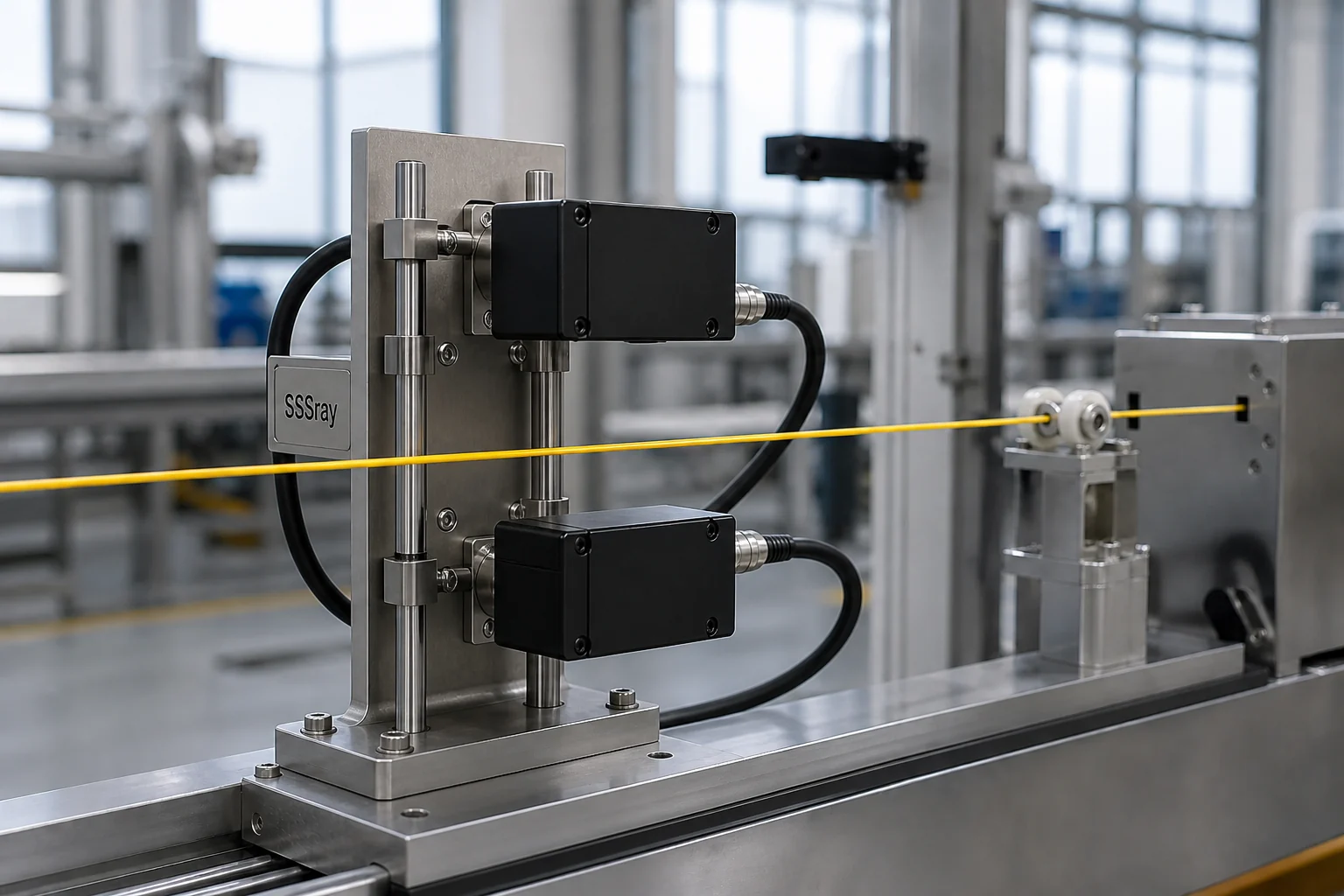 Inline diameter controlSee how inline monitoring supports our ±0.03 mm diameter control.
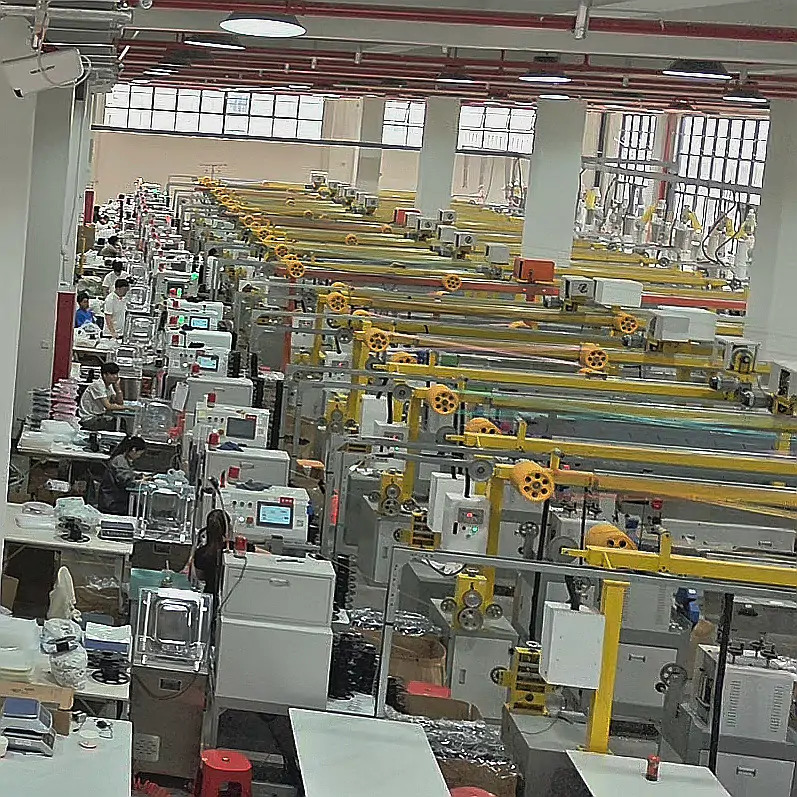 Dedicated production linesSee the dedicated lines we use for bulk and OEM production.
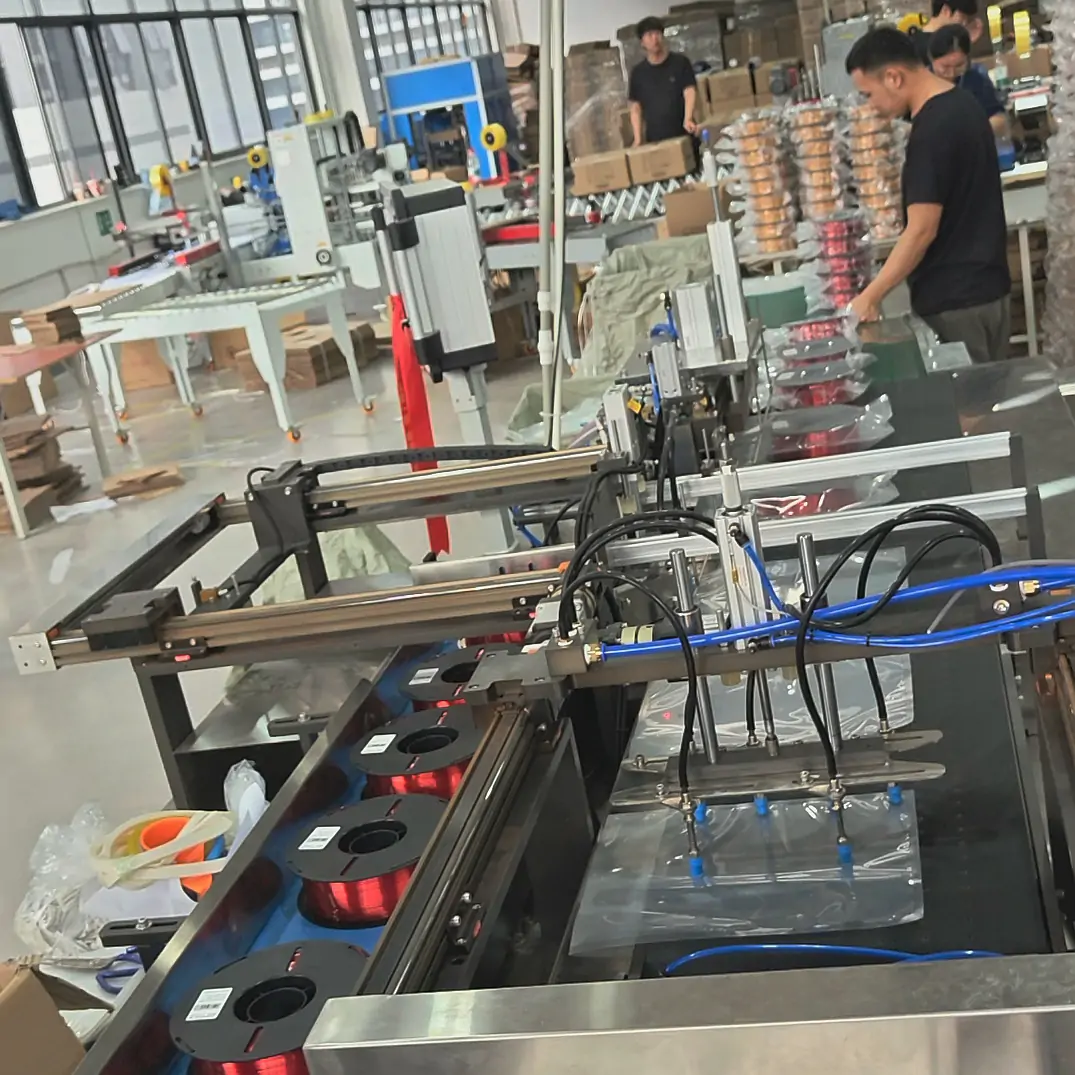 Packing controlApprove the bag, seal, desiccant and retail pack planned for the PO.
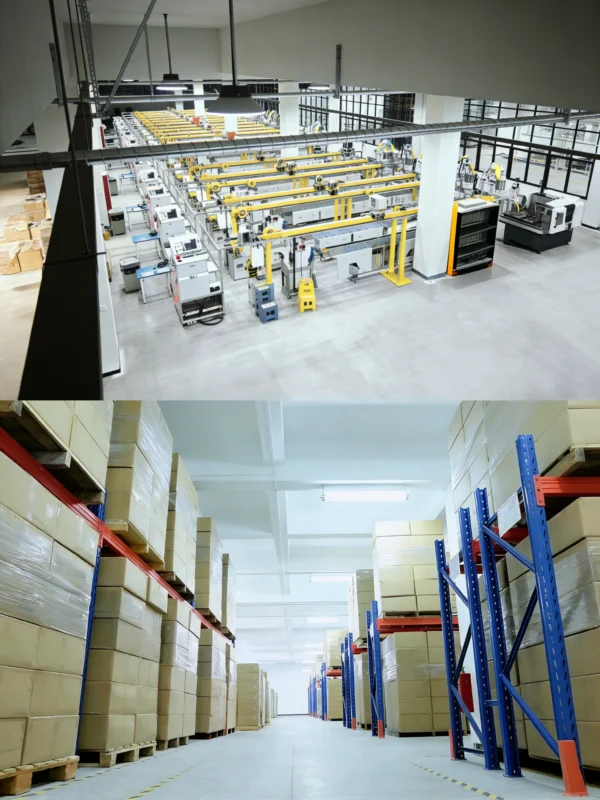 Warehouse handlingSee how we store and prepare finished filament for bulk dispatch.
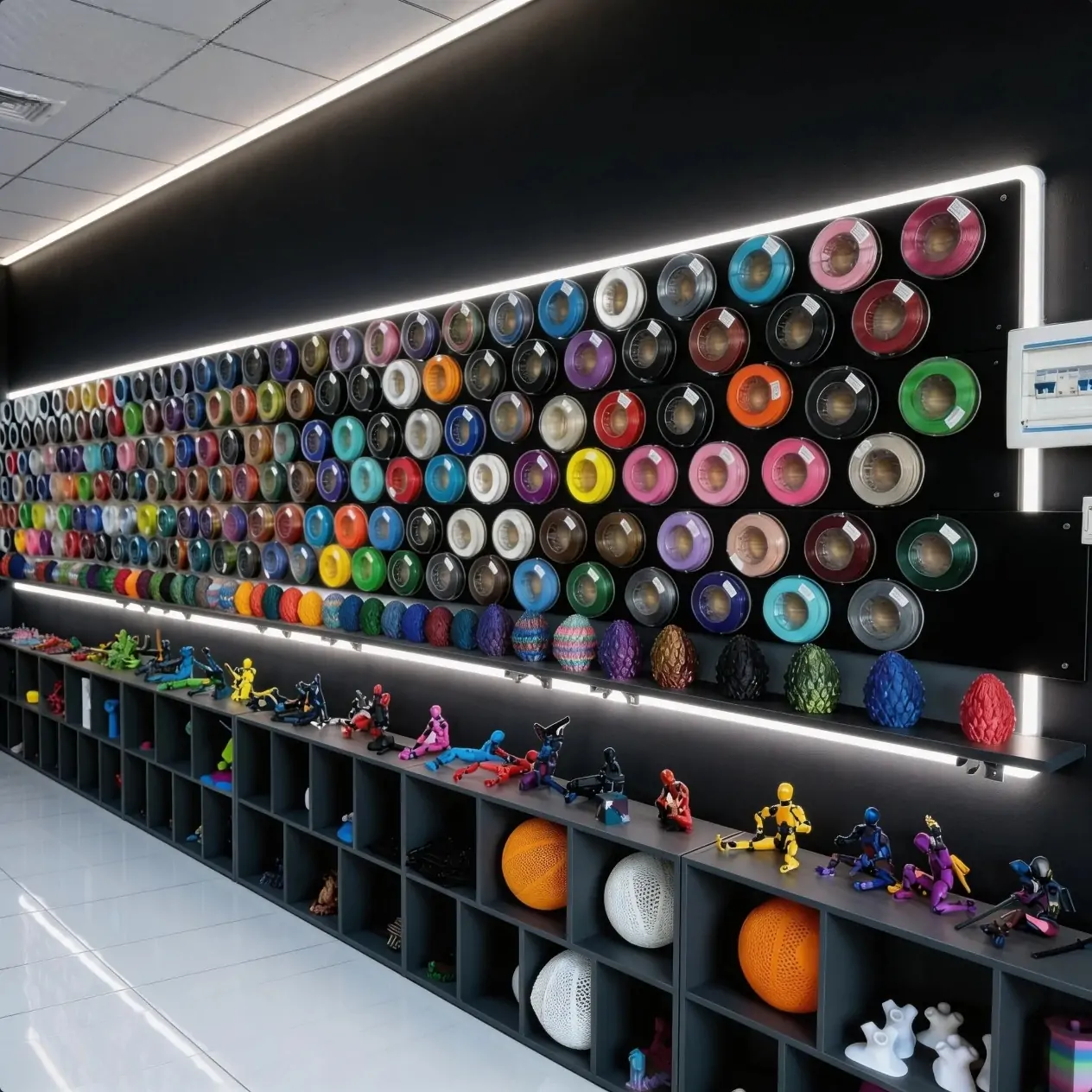 Color planningBuild a standard range or start a Pantone/RAL private-label route.
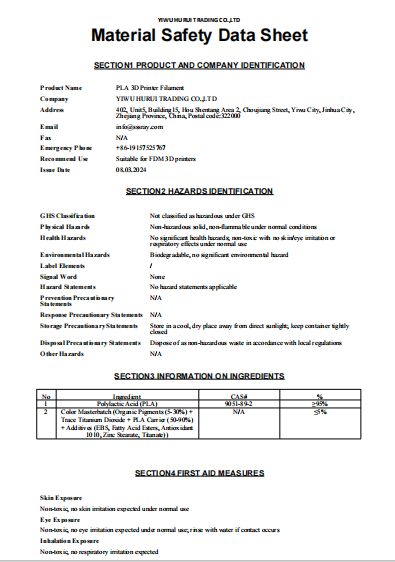 Document scopeOpen the technical document center and request the current grade-specific files.
2016Founded
50+Extrusion lines
Up to 35 t/dayProduction capacity
±0.03 mmDiameter tolerance
OEM / ODMPackaging and project routes
Documents your buyer can approve
Ask for the current file—not a certificate collage.
We can provide COA, TDS, SDS/MSDS, RoHS and REACH documents for applicable products and orders. Before approval, ask us to confirm the exact grade, current revision, destination-market scope and whether the record is product-, batch- or order-specific.
Relevant test-method references:
ISO 527-2 tensile properties ↗
ISO 62 water absorption ↗
ASTM D1238 melt flow rate ↗
Use only when relevant to the material, specimen and purchasing specification.
RFQ checklist
Send an RFQ a factory can price without guessing.
01 · Material, grade and color
02 · Printer, nozzle and target speed
03 · Real part, customer or buying application
04 · Expected first-order quantity
05 · 1kg / 3kg / 5kg route and packaging
06 · Destination country and target date
07 · Required COA, TDS, SDS/MSDS, RoHS or REACH
What we confirm next
Turn an approved test into a comparable factory quote.
We confirm the material route, sample need, spool and packaging scope, available documents, quotation basis and information still missing. Our wholesale orders under this program start from 50 spools, and we supply PLA in 1kg, 3kg and 5kg formats.
Production: our standard bulk production is typically 10–20 days, subject to the confirmed material, color, packaging, volume and schedule.
Before dispatch or PO: confirm freight route, cost responsibility, Incoterm, artwork, document scope, production timing and shipment plan in writing.
Buyer FAQ
Straight answers before you spend testing time.
Do we have to use SSSray’s print settings?
Use the applicable SSSray guidance as a starting point, then qualify the settings that work on your printer and part. Save the final profile. The purchase decision should reflect your production route, not a showroom setup.
Can we test SSSray beside our current supplier?
Yes. Use the same sample conditioning, printer, G-code, measurement pattern, tuning allowance and pass rule. That gives your purchasing team a comparison it can defend.
What happens if the sample fails?
Send the photos, profile, printer details and failure point. We review whether the next step is a controlled retest, a different SSSray material route or stopping that grade for the application.
How much material should we test?
Use enough to tune once, print the real part, repeat the run and expose the winding route. The right amount depends on part size, run time, printer fleet and approval risk. Our Free Samples page explains the available full-size sample route.
How should OEM or private-label packaging be approved?
Approve filament performance first. Then confirm spool, vacuum bag, desiccant, label, barcode, box, artwork and carton requirements as a separate commercial record before packaging production.
Can SSSray provide COA, TDS, SDS/MSDS, RoHS and REACH?
Yes. We can provide these documents for applicable products and orders. Ask us to confirm the exact grade, current revision, destination-market scope and batch or order relevance before relying on a file.
What is the MOQ and normal bulk lead time?
Orders under our Filament Qualification Program start from 50 spools. Standard bulk production is typically 10–20 days. Final timing and terms depend on material, color, spool, packaging, quantity and the confirmed production schedule.
Does one approved sample guarantee every future batch?
No single sample can do that. Keep the approved sample record as the purchasing baseline, then use incoming inspection, applicable COA data and agreed batch controls to check repeat orders. Define when a material, color, pack or process change requires requalification.
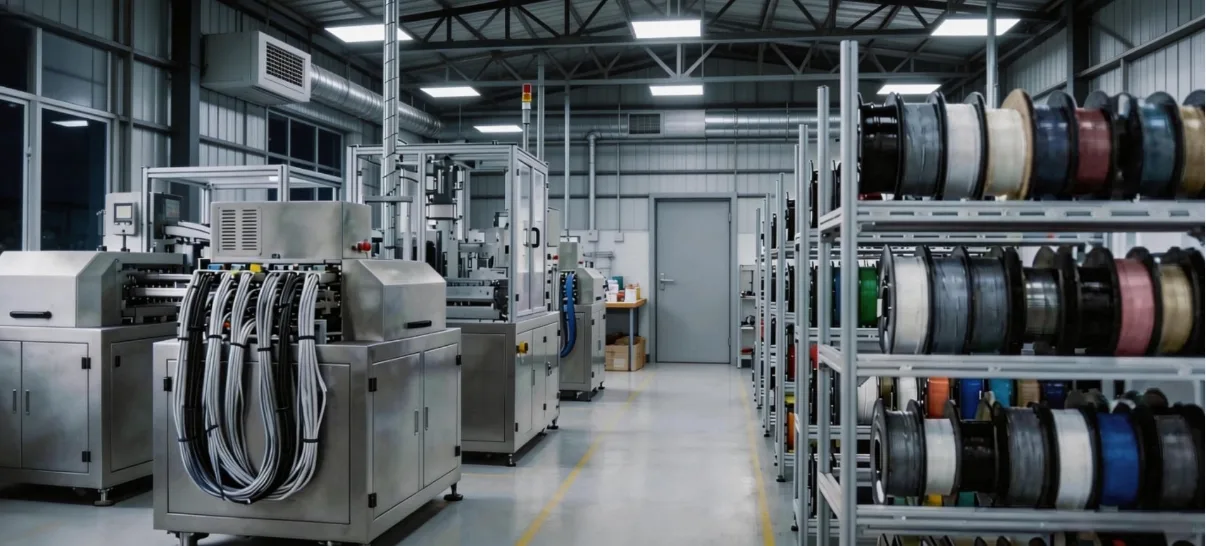
Put our filament through a real test
Bring us the print that exposes weak filament.
Send the material, printer, difficult part, planned quantity, destination, packaging route and required files. We will help turn it into a sample plan and an RFQ your team can compare.

Get Your Factory-Direct Quote Today
From virgin polymer pellets to shelf-ready filament products, SSSrayFilament delivers complete manufacturing solutions.
As a factory-direct 3D printing filament supplier in China, we combine high production capacity with competitive pricing.
- 50+ extrusion lines
- 1,000+ tons monthly capacity
- Premium quality without trading company markups.
 In-House Color Matching
Unlike trading companies, SSSray operates an internal color laboratory.
Send us any Pantone or RAL code and we will achieve over 99% color matching accuracy, creating exclusive brand colors with sample delivery in 3-5 days.
 Complete OEM Manufacturing
We provide full-cycle OEM services including:
- Filament production
- Spool injection molding
- Custom packaging design
- Vacuum sealing and labeling
Everything is manufactured directly in our factory.
 Global Logistics Support
SSSrayFilament exports to 50+ countries worldwide.Our experienced logistics team handles international shipping and documentation so you can focus on growing your business.