Online time
Monday to Friday: 9AM - 8PM
Weekend: 10AM - 5PM


B2B supplier qualification before bulk supply
SSSray Filament Qualification Program
Before you commit to a full range, prove the filament on your printers, review the factory and batch requirements, and turn the approved result into a repeatable first order from 50 spools.
50 spoolsQualification-program MOQ
1kg · 3kg · 5kgSupported PLA spool formats
50+ linesExtrusion-line capacity
1,000+ tonsMonthly production capacity
COA · RoHS · REACHAvailability confirmed by material and order
OEM / private labelProduct and packaging planning
Start with the risk
Do not qualify a supplier from one good spool.Tell us what creates returns, downtime or approval delays in your business. We will build the qualification brief around that buying risk.
What a buyer needs to control
Approve the supply route, not only the sample
While free samples allow initial testing, a single sample printing well can still leave your purchasing team with unanswered questions. The program connects the print result to the specification, packaging, documents and reorder conditions.
- Material and application fitSelect the material around the customer, printer and part requirement—not the lowest line on a quote.
- Repeatable batch expectationsWrite down the approved material, diameter, color, spool, packaging and document requirements.
- Packaging after international transportReview the vacuum bag, desiccant, spool, label and carton before a larger order makes mistakes expensive.
- Documents that match the SKUConfirm the product name, scope and revision of COA, TDS, SDS/MSDS, RoHS or REACH support before relying on it.
- A clear result when something failsApprove, revise, retest or reject. A qualification program needs a decision, not polite sample feedback.
Three buyer routes
Tell us how you sell or print. We will qualify the right problem.
A distributor, a print farm and an engineering team should not approve filament with the same checklist.Distributor or private-label brand
Start with a sensible core range, then check color, shelf presentation, label and carton details, complaint risk and the ability to repeat the approved SKU. Decision: can this become a reorderable product line?Print farm or production user
Run the material on your actual machines and handling system. Focus on feeding, winding, long-run stability, spool format and the cost of interrupted jobs. Decision: can this protect machine uptime?Industrial, school or laboratory buyer
Connect the application test with the technical file, purchasing requirements, storage, labeling and the people who must approve the material. Decision: can technical and purchasing teams approve it?The qualification route
Five steps from buying brief to controlled first order
You know what is being tested, what evidence is needed and what must be locked before the order scales.
Define the requirement
Material, application, printer, color, spool weight, quantity, destination, packaging and required documents. Output: buying briefConfirm the route
SSSray confirms the suitable material route, availability, sample approach and the items that need separate approval. Output: evaluation planTest on your machines
Use your printers, settings and real part or product scenario. Record the conditions with the result. Output: test recordReview proof and packaging
Check the applicable documents, factory evidence, spool, vacuum pack, label, carton and order specification. Output: approval fileOrder, monitor, repeat
Move into the 50-spool program MOQ, retain the agreed specification and review the result before scaling. Output: reorder baselineTest protocol preview
Test what can cost you money after the sample passes
Pass/fail criteria should be agreed for the selected material, printer and application. You can review our full 3D printer filament test protocol for standardized evaluation criteria, as one universal threshold would not be reliable for every project.| Checkpoint | How to evaluate | Record with the result | Decision question |
|---|---|---|---|
| Requirement match | Check material, diameter, color reference, spool weight and intended application against the agreed brief. | SKU, sample identification and requested configuration | Did we test the product we intend to buy? |
| Printer trial | Print on the machines, slicer profile and part type that represent normal use. | Printer, nozzle, temperatures, speed and part | Does it work in our real workflow? |
| Long-run behavior | Observe feeding, winding, flow and interruptions during a representative extended print. | Run duration, machine count and any stoppage | Could this create downtime at scale? |
| Appearance and part result | Review finish, color, warping, adhesion and the properties relevant to the intended part. | Reference sample, photos and acceptance notes | Will our customer or technical team accept it? |
| Packaging inspection | Check vacuum bag, desiccant, spool, label, carton and condition after transport. | Arrival photos and packaging version | Will the product arrive ready to sell or print? |
| Document review | Confirm the product name, scope, revision and order relevance of requested documents. | COA/TDS/SDS/MSDS/RoHS/REACH checklist as applicable | Can purchasing and compliance use the file? |
| Final decision | Compare the result with the written buying brief and record unresolved items. | Approve, revise, retest or reject | Is the first order ready to release? |
Material-specific limits and test methods must be agreed for the selected SKU and application.
Factory and supply evidence
Review the production, packaging and stock behind your order
The first four photographs show SSSray extrusion, packaging, warehouse stock and color selection. The final image illustrates how an OEM supply environment can be organized for buyer review.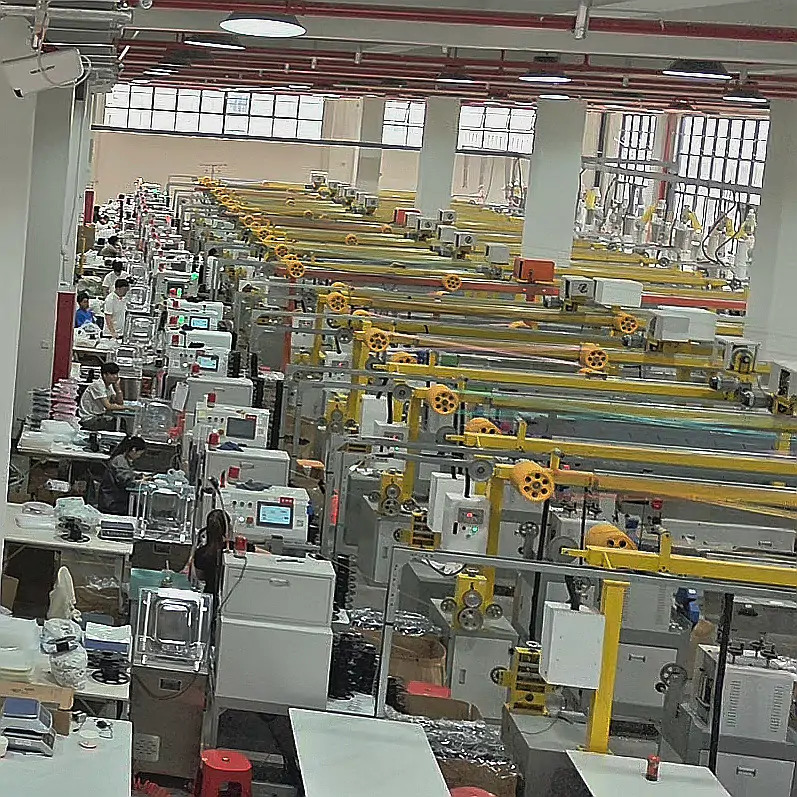
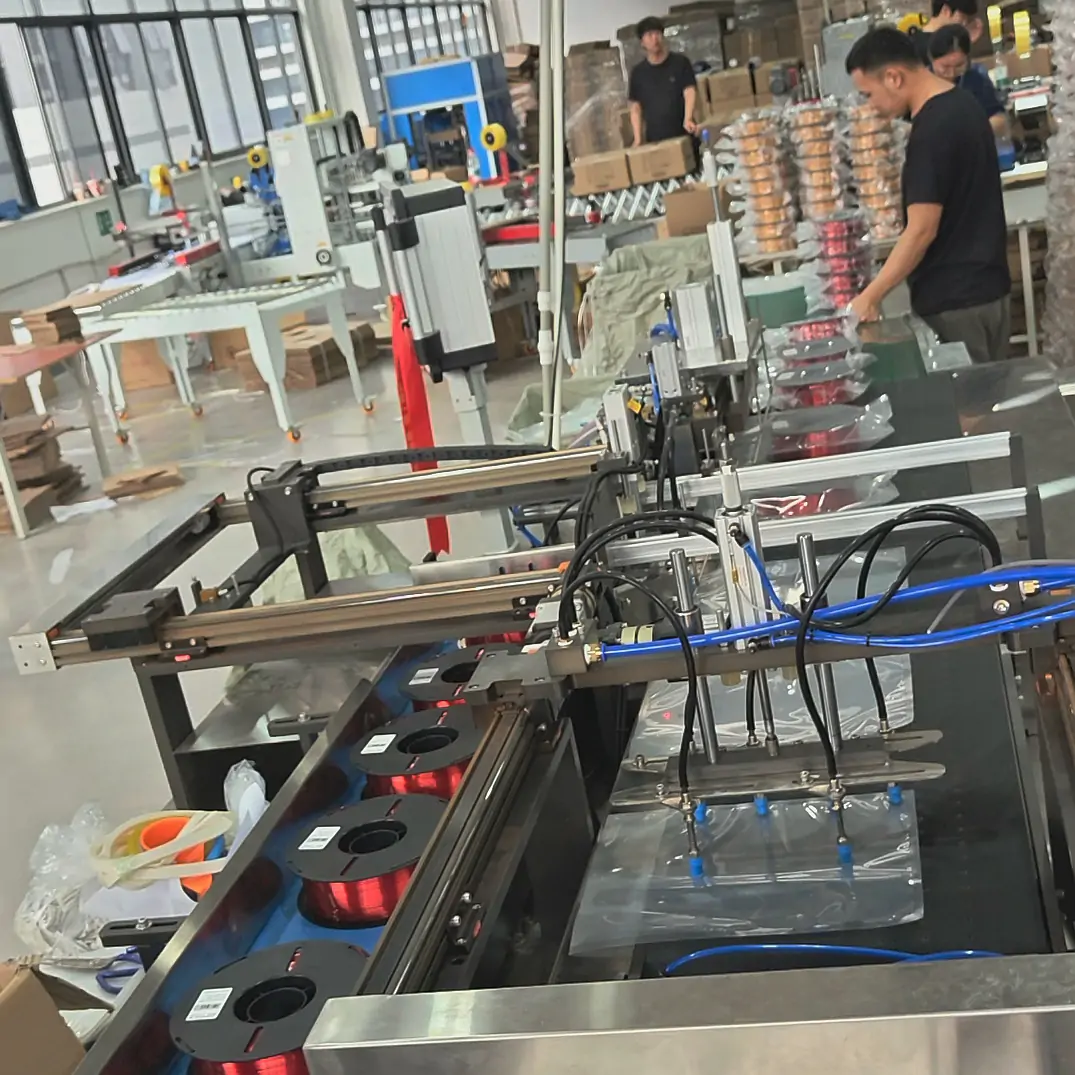

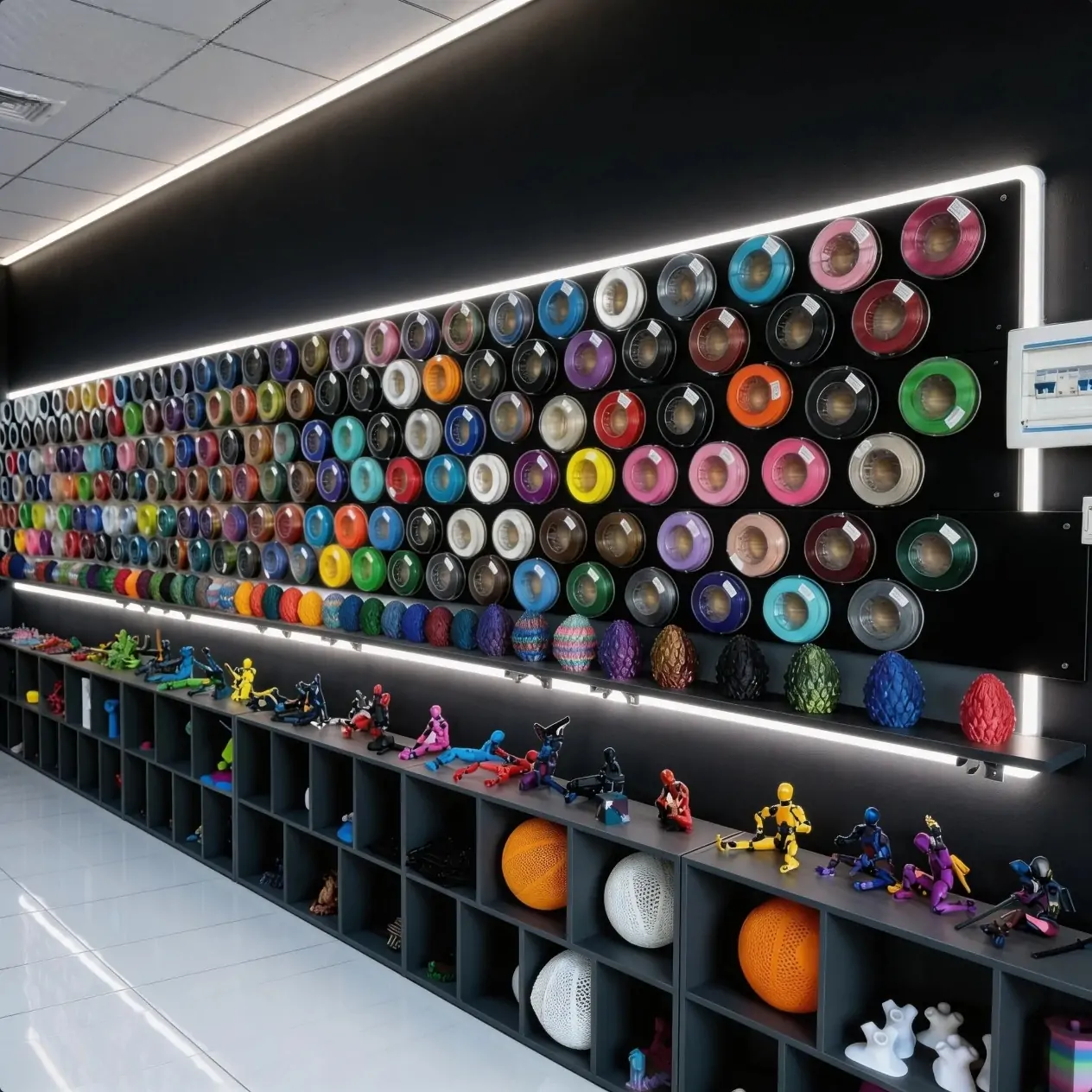
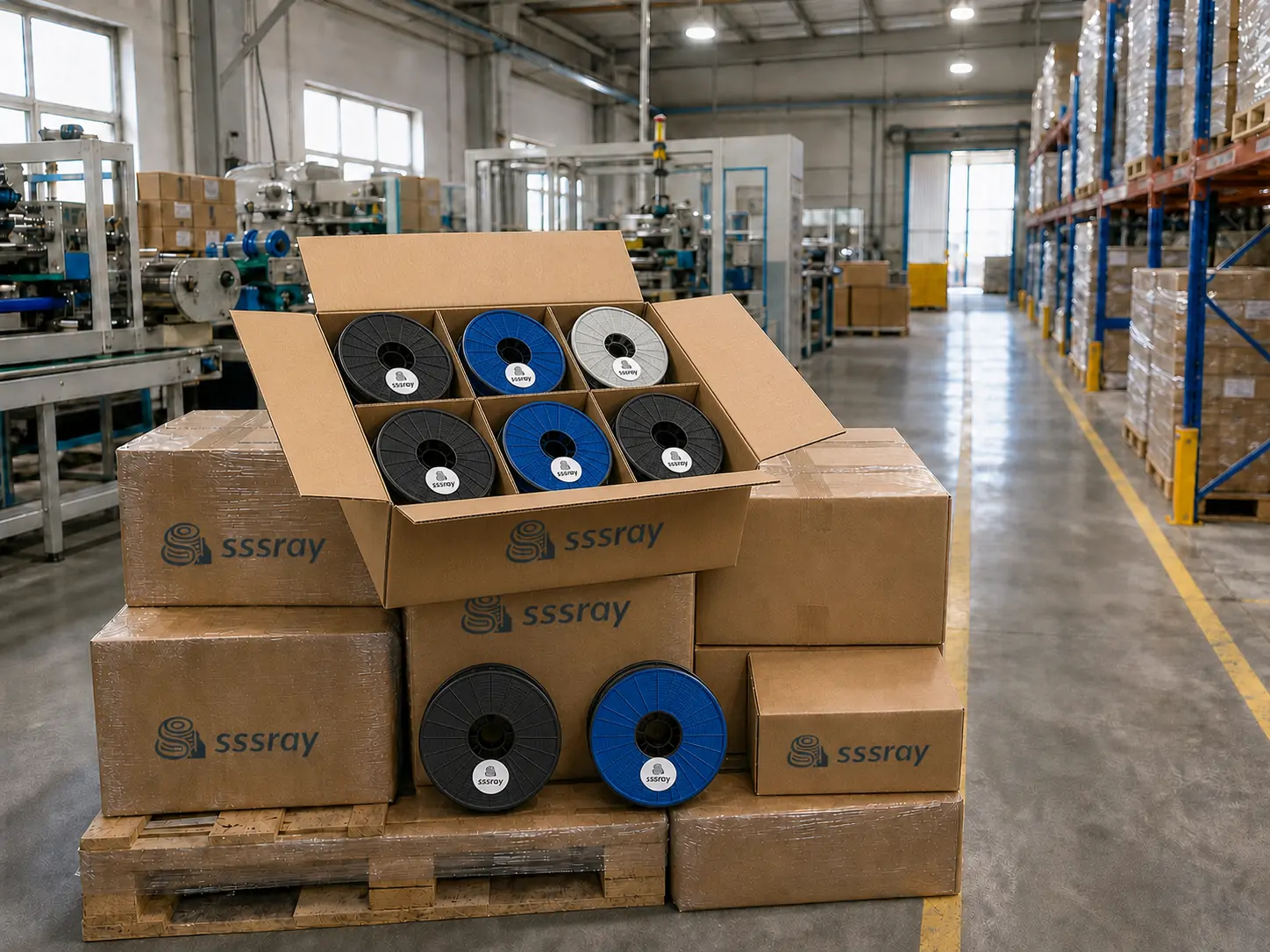
Buyer check: ask us which material, production line, packaging route and documents apply to your order. We confirm the final product specification, packaging and document scope in your quotation.
Buyer-fit and product-line planning
Qualify the configuration your business will actually reorder
Do not spend the test on a spool, package or material mix that will not match your commercial plan.From 50 spools
Use the first order to confirm the chosen product and operating route before increasing commitment.1kg, 3kg and 5kg
Choose the spool format around retail handling, printer setup and consumption—not habit.Approve product and packaging
Labels, boxes, spools, vacuum bags, cartons, barcodes and instructions can be planned to the order.| Buyer | Useful starting direction | What to test first | Spool and packaging focus | Approval evidence |
|---|---|---|---|---|
| Distributor / reseller | Core PLA, PLA+ and PETG before specialty expansion | Color, printability, shelf presentation and reorder consistency | 1kg retail format; label, box, barcode and carton | Sample record, packaging approval and applicable files |
| Private-label brand | Small, deliberate SKU architecture built around the target market | Material result, brand execution, color and artwork workflow | 1kg, 3kg or 5kg PLA where suitable; confirm packaging terms | Approved product brief, artwork and document checklist |
| 3D print farm | PLA/PLA+ or application material selected for machine and part | Feeding, winding, extended printing and machine uptime | 1kg, 3kg or 5kg PLA according to machine setup | Long-run test record and repeat-order specification |
| School / university | PLA or material selected for the curriculum, lab or equipment | Ease of use, storage, labeling and purchasing requirements | Usually 1kg; confirm local handling and storage needs | TDS, SDS/MSDS and compliance support as applicable |
| Industrial user | PETG, ABS, ASA, PA, PC, CF/GF or specialty material by application | Part performance, process window and technical approval | Format confirmed against material, machine and consumption | Application test, COA availability and technical file review |
Approval FileMatch each document to the selected material and order
COAAvailability and order relevance
TDSTechnical properties and starting guidance
SDS / MSDSMaterial-specific safety information
RoHS / REACHConfirm scope for the selected material and market
Technical document review
Ask for the file your customer can actually approve
We provide COA, batch QC data, and relevant technical or compliance documents depending on the material and order requirements. Confirm the exact product name, scope and revision before placing the purchase order.
- Before testingIdentify which documents purchasing, compliance, sales channels or end customers require.
- Before orderingConfirm availability for the selected SKU and whether the file applies to the intended market.
- Before reorderingRetain the approved specification and request the applicable order or batch documentation.
Before you rely on a file: confirm that it matches the selected material, SKU, revision and destination-market requirement.
Buyer qualification resources
Continue the review with four dedicated resources
Explore our Free Samples, Test Protocol, Batch QC Data, and Supplier Comparison Tool to support the next stage of your review.Free Samples
Define available sample routes, qualification fit, freight handling and what the buyer should test. Request Free SamplesTest Protocol
Give purchasing and technical teams a reusable way to record conditions, observations and decisions. View Test ProtocolBatch QC Data
Explain the batch evidence that may be reviewed or requested for the selected material and order. Review Batch QC DataSupplier Comparison Tool
Compare suppliers with the same specification, evidence, commercial assumptions and test conditions. Use Comparison ToolFirst order to repeat supply
Lock the decisions that make the second order easier
Use the first 50-spool order to confirm the approved product, packaging, documents and reorder baseline before scaling.| Stage | Buyer objective | What should be locked | SSSray confirmation |
|---|---|---|---|
| Qualification brief | Define the product and risk before testing | Material, application, printer, color, spool, destination, packaging and documents | Suitable route, availability and evaluation plan |
| Sample evaluation | Generate evidence on the buyer’s real workflow | Test conditions, observations, packaging review and unresolved points | Revision, retest or approval response |
| First order | Validate the approved route commercially | Final quotation, specification, artwork, documents, timing and shipping terms | Program MOQ from 50 spools and written order details |
| Repeat order | Reduce ambiguity and avoid accidental specification drift | Approved baseline, requested changes, forecast and destination requirements | Availability, schedule and order-specific document scope |
Build a useful RFQ
Send the details that change the answer
A useful quote needs more than “best PLA price.” Complete the brief and send it directly to SSSray through WhatsApp.- Material and application
- Buyer type
- Spool weight
- Quantity
- Destination
- Packaging
- Required documents
- Timing and concerns
Qualification FAQ
Questions buyers ask before releasing the first order
What is the SSSray Filament Qualification Program?
It is our structured B2B purchasing route for connecting your requirements, test conditions, factory and packaging review, applicable documents and first order. The goal is a recorded approval decision, not only a positive sample impression.
What is the MOQ under this program?
For this qualification program, the MOQ starts at 50 spools. We confirm the selected material, spool format, packaging, availability and price against your final request.
Does SSSray support 1kg, 3kg and 5kg PLA?
Yes. We supply 1kg, 3kg and 5kg PLA formats. Other spool options must be confirmed against the selected material and order.
Can SSSray support OEM and private-label filament?
Yes. We can plan labels, boxes, spools, vacuum bags, cartons, barcodes and instructions for OEM or private-label orders. Artwork, quantities, timing and packaging details are confirmed in the written quotation.
Can SSSray provide COA, RoHS and REACH support?
Yes. We can provide COA and relevant RoHS or REACH documentation depending on the material and order requirements. Confirm the exact scope, material, revision and destination-market requirement for the SKU you intend to approve.
How long do samples and bulk production normally take?
Standard samples usually take 3–7 days. Normal bulk production is typically 10–20 days, while complex materials, custom colors or customized packaging may require longer. We confirm the final schedule in your quotation.
What happens if the sample does not pass our test?
Share the test conditions, result and the issue that prevents approval. The next decision should be to revise the requirement, select another material route, retest or stop the qualification. A failed test is useful when it prevents the wrong bulk order.
How should we compare SSSray with another supplier?
Use the same material specification, color reference, spool configuration, printer conditions, packaging requirements, document list, commercial assumptions and decision criteria for every supplier. You can use our Supplier Comparison Tool to evaluate suppliers on identical benchmarks, keeping the comparison focused on evidence rather than presentation.
The next step is evidence
