Online time
Monday to Friday: 9AM - 8PM
Weekend: 10AM - 5PM


TL;DR: How B2B Buyers Solve Bambu Lab AMS Problems in 2026 Multi-Color Production
In 2026 multi-material 3D printing, automated material systems like the Bambu Lab AMS (including X1/P1 buffer units, AMS Lite, and AMS 2 Pro) dominate multi-color workflows. However, print farms, distributors, and OEM brands routinely suffer costly downtime from Bambu Lab AMS problems, including feed failures, PTFE tube friction, buffer spring lockout, and thermal heat creep clogs. Resolving these issues requires matching consumable physical tolerances (ovality <0.01mm, CoF <0.15) with AMS buffer setting mechanics and roller drive kinematics.
Best OptionDry-packed high-speed PLA/PETG with ±0.01mm diameter tolerance on rigid 200mm ABS spools.
When Not To UseDirect AMS feeding for standard flexible TPU (<95A) or brittle non-modified PVA without dedicated external bypasses.
Key Specification1.75mm ±0.01mm precision tolerance, Vicat Tg >58°C, spool rim width 55mm–68mm, smooth outer surface.
Procurement WarningUncertified third-party spools causing cardboard dusting or edge slippage account for up to 68% of farm downtime.

He Jiang
Senior Researcher · SSSray · 3D Printing Filament Manufacturing · Jinhua, Zhejiang
He Jiang is a senior researcher at SSSray, a 3D printing filament manufacturer in Jinhua, Zhejiang, China. He focuses on EU regulatory shifts that affect filament brands exporting into Europe, including REACH SVHC disclosure, the universal PFAS restriction, and PPWR packaging compliance. He Jiang's writing for SSSray is grounded in supplier SDS documentation, ECHA publications, and EUR-Lex regulatory texts, and is intended for B2B brand owners, distributors, and OEM partners — not as a substitute for professional regulatory advice.
Why Bambu Lab AMS Problems Are Systemic Procurement Risks
As industrial 3D printing and commercial print farms operate in 2026, multi-material automated changing systems have evolved into primary factory equipment. Hardware such as the Bambu Lab X1 AMS, AMS Lite, and active-drying AMS 2 Pro represents the largest installed base of multi-color desktop printers globally. However, commercial operators with 50 to 500+ machines face yield loss from unexpected pause alarms, AMS feeding failures, and premature PTFE tube degradation.
A primary buyer misconception is treating multi-color printing faults purely as machine hardware glitches. In reality, over 70% of persistent AMS clog events, retract jams, and spool roller slippages originate from incompatibilities between raw consumable mechanics and AMS feed path dynamics. This engineering guide examines buffer slider equilibrium, internal PTFE wall drag, spool traction torque, and polymer thermal crystallization thresholds to help procurement leads prevent farm downtime, reduce returns, and vet reliable OEM suppliers.
Four Major Bambu Lab AMS Pitfalls to Avoid
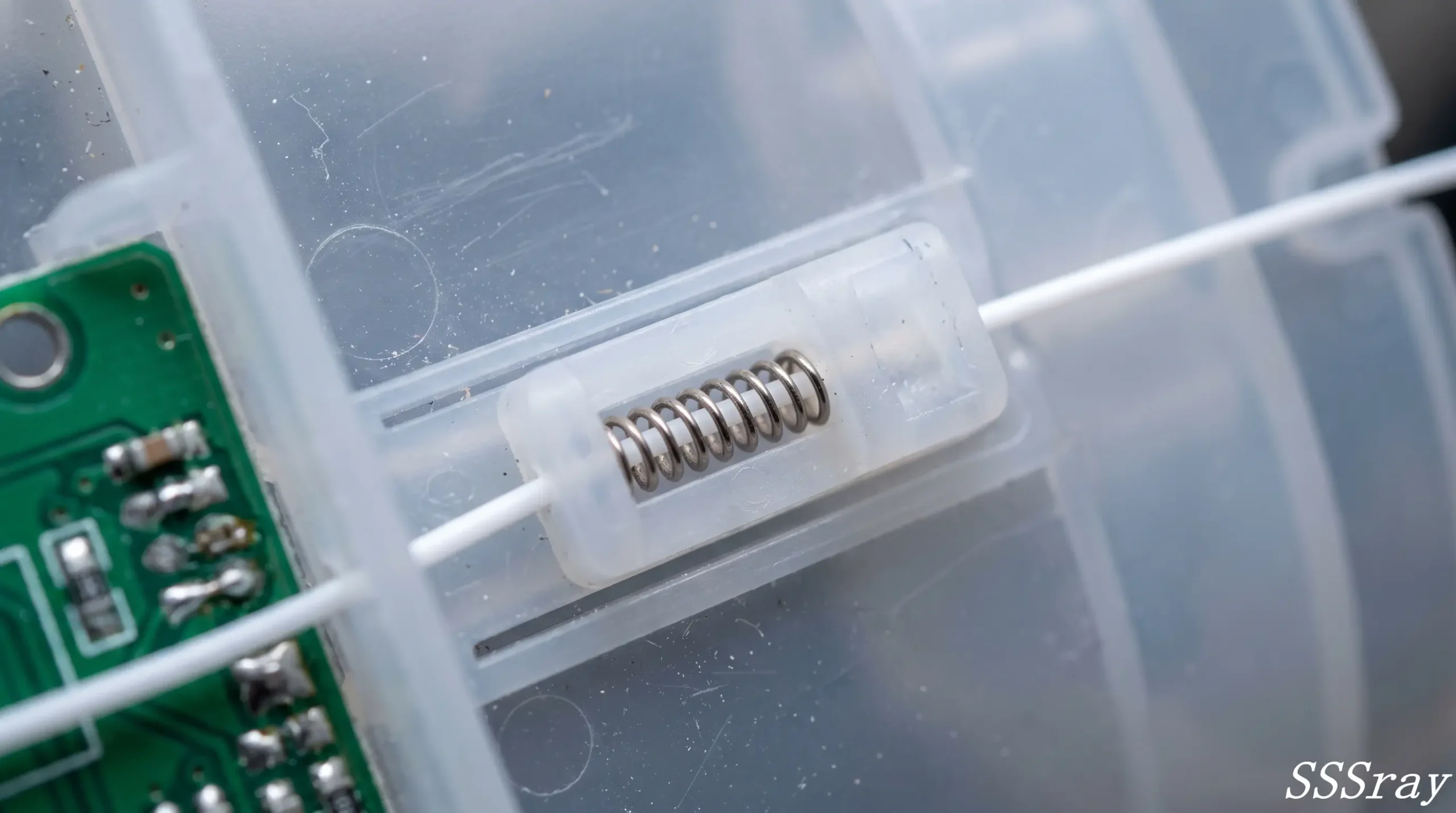
1. Buffer Slider Mechanics and Hall Sensor Lockout
Problem: Repetitive feeding and retraction failures in Bambu Lab X1 AMS units usually occur because the rear buffer slider binds physically or fails to compress the spring within the standard 2.5 N to 4.2 N force window. This interrupts the Hall sensor signal chain, causing the printer to pause with errors like HMS_0700-4000-0002-0004.
Fix: Source materials extruded from consistent virgin polymer resin formulations. Uniform flexural elastic modulus ensures predictable buffer spring displacement and zero signal interruption.
How to verify: Inspect buffer slider movement using a manual tension gauge. Verify linear displacement across 100 consecutive feed-retract cycles without mechanical binding.
2. PTFE Tube Internal Wear and Sensor Contamination
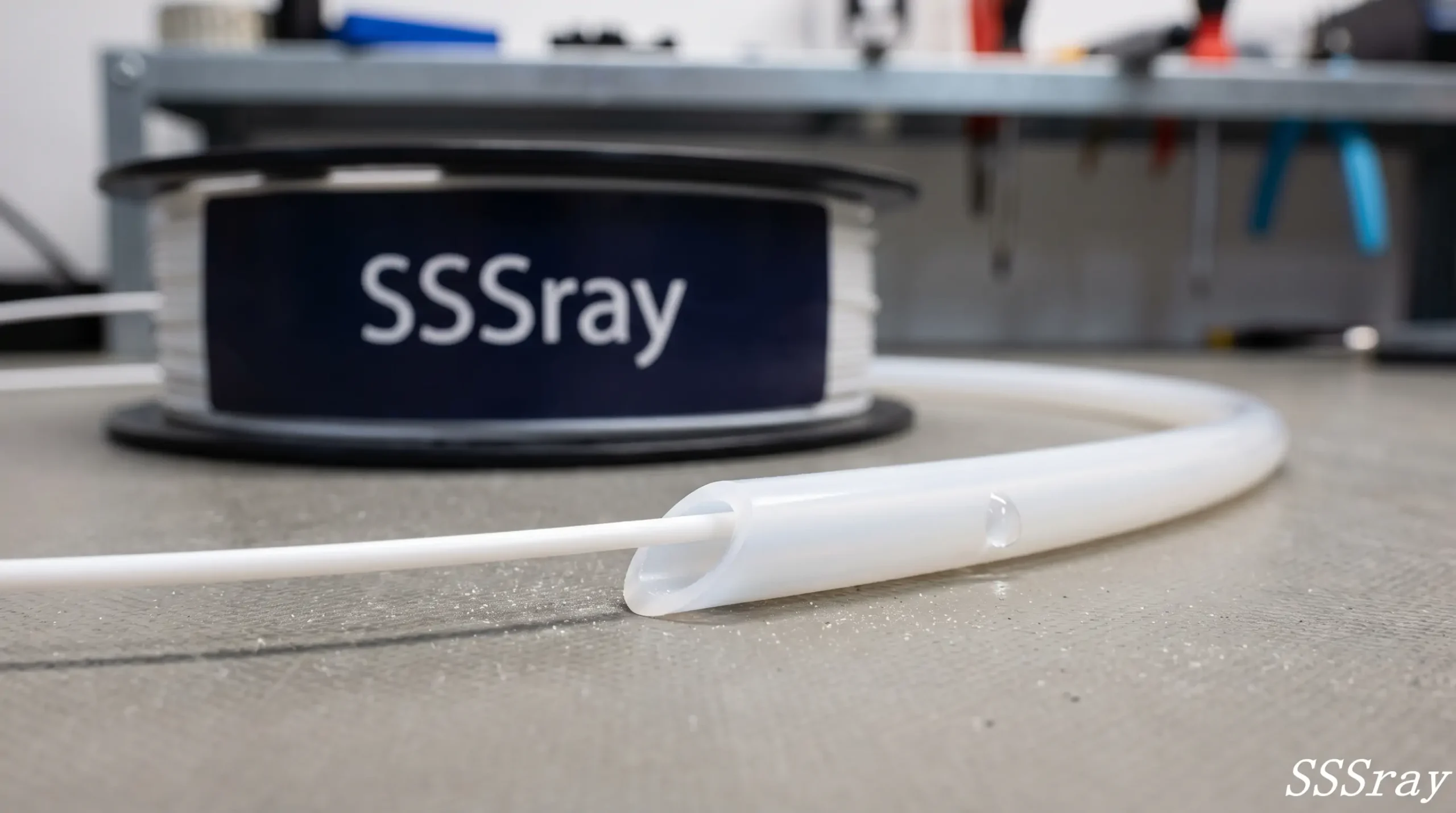
Problem: High sliding resistance occurs inside PTFE guide tubes at tight bend radiuses (<65mm), leading to frequent AMS PTFE tube replacement needs and feed motor stalls during rapid color changes. Bambu Lab officially uses PTFE tubing with a 2.5mm Inner Diameter (ID) and 4.0mm Outer Diameter (OD) to minimize path resistance; using narrow 2.0mm ID tubing severely increases drag along curved feeder paths.
Fix: Standardize on official 2.5mm ID PTFE guide tubes and select filaments treated with smooth, low-friction surface coatings (CoF <0.15) to minimize internal tube gouging and prevent fine plastic dust from fouling AMS optical sensors.
How to verify: Perform a manual pull test using a 1-meter 2.5mm ID PTFE tube curved at 90 degrees. Drag force must remain below 0.45 N for standard 1.75mm strands.
3. Filament Ovality and Roller Drive Slippage
Problem: Out-of-round filament (ovality >0.03mm) and non-standard spool flange geometry cause active rubber rollers to slip, leading to severe AMS tangle fix issues and feeding stalls.
Fix: Require rigid, injection-molded ABS spools with standardized rim widths (55mm to 68mm) and continuous 4-axis laser diameter control (±0.01mm).
How to verify: Measure spool rim runout using a dial indicator on a rotating axle. Total axial and radial runout must stay below 0.8mm.
4. Thermal Heat Creep and Retraction Clogging
Problem: High-frequency color switches (500+ retractions per print) pull semi-molten filament tips back into the cold heatbreak. Heat creep causes low Glass Transition Temperature (Tg) polymers to expand and wedge inside the cold block, requiring an urgent AMS clog fix.
Fix: Deploy high-speed PLA and PETG formulations with rapid thermal crystallization thresholds and Vicat Tg ratings exceeding 58°C.
How to verify: Execute a continuous 500-cycle purge test in a 45°C ambient enclosure to confirm zero nozzle clogs or cutter jams.
Internal SSSray Engineering Note: Learn how our custom engineered filaments prevent heat creep during multi-color retractions at SSSray Custom Engineering Filament.
Quantitative Performance Benchmarks
To assist procurement leads in evaluating operational risk, these empirical benchmarks compare standard commercial spools against SSSray AMS-Optimized materials across core mechanical metrics.
Figure 5: Escalation of PTFE feeding drag force caused by inner tube wall wear across 100,000 retraction cycles.
| Failure Mode | Root Cause Mechanism | AMS System Impact | SSSray Manufacturing Standard |
|---|---|---|---|
| Buffer Spring Lockout | Variable polymer flexural modulus | Hall sensor signal interrupt & pause alarm | High-purity resin formulation for constant modulus |
| PTFE Tube Scoring | Rough surface texture or coarse mineral filler | Feed motor stalling & fine debris accumulation | Low-friction surface coating (CoF <0.15) |
| Hub Gear Slippage | Diameter ovality exceeding ±0.03mm | Gear teeth grinding & feed stall | Continuous 4-axis laser measurement (±0.01mm) |
| Spool Roller Skew | Cardboard rim damage or non-standard flange width | Spool fails to rotate during retraction | High-rigidity ABS spools (58mm width) |
B2B Buyer Decision Framework for AMS Materials
Procurement teams should evaluate filament manufacturers using these seven criteria to ensure continuous high-yield automated production:
| Framework Metric | Why It Matters | What To Ask The Supplier | Pass / Fail Signal | Hidden Risk |
|---|---|---|---|---|
| Application Requirement | Multi-color printing demands consistent layer bonding between color strands. | "Are pigment loading ratios standardized across all color SKUs?" | PASS: Uniform print temp across colors. FAIL: Temp shifts >10°C per color. |
Delamination along color transition lines. |
| Material Performance | Softening point dictates resistance to heat creep during frequent retractions. | "What is the Vicat Softening Temperature (ISO 306)?" | PASS: Vicat Tg >58°C for PLA. FAIL: Tg <52°C. |
Soft tip expansion jamming the heatbreak. |
| Printability & Tolerance | Uniform diameter prevents drive gear slippage inside the feeder hub. | "Do you supply real-time continuous laser measurement logs?" | PASS: ±0.01mm (100% logged). FAIL: ±0.04mm or unlogged. |
Unexplained mid-print pause alarms. |
| Compliance & Safety | Exporting to EU and US markets requires strict chemical disclosures. | "Do you provide REACH SVHC and PFAS compliance statements?" | PASS: Full SDS + REACH disclosures. FAIL: Generic safety claims. |
Customs hold-ups or EU non-compliance fines. |
| Supplier Reliability | Raw resin variations alter color tone and melt flow across reorders. | "Do you use 100% virgin resin or recycled blends?" | PASS: Virgin polymer resin exclusively. FAIL: Mixed scrap blends. |
Color shifts and strength fluctuations across batches. |
| Landed Cost Efficiency | Minor spool savings are wiped out by farm downtime and scrap. | "What is total operational cost including scrap and labor downtime?" | PASS: Downtime <1%. FAIL: High scrap rates. |
Unbudgeted labor costs clearing machine jams. |
| Reorder Stability | Brand continuity requires identical spool geometry across production runs. | "Are spool dimensions standardized on injection-molded designs?" | PASS: Dedicated ABS spool tooling. FAIL: Variable spool sources. |
Incompatible spools stalling AMS drive rollers. |
Material Option Comparison Matrix
This technical guide assists procurement leads and engineering heads in selecting suitable materials for automated changing systems.
| Option | Best Use Case | Key Specification | Advantage | Risk | How To Verify | When To Reject | SSSray Sourcing Note |
|---|---|---|---|---|---|---|---|
| High-Speed PLA | Retail products & multi-color prototyping | MFR >12 g/10min; Melt Temp 190-220°C | Fast cooling, zero stringing, vivid color contrast | Low heat deflection (<55°C) | 300mm/s high-speed flow test | Brittle strand snapping below 15% RH | SSSray Wholesale PLA engineered for seamless AMS feeding. |
| Engineering PETG | Functional enclosures & chemical-resistant parts | Density 1.27 g/cm³; Tensile Yield 50 MPa | High impact durability, minimal shrinkage | Stringing if wet; elevated PTFE tube drag | Karl Fischer titrator test (<200 ppm) | Moisture content exceeding 0.05% | SSSray Wholesale PETG treated with low-friction surface coating. |
| ABS / ASA High Impact | Outdoor automotive & structural housings | HDT 85°C at 0.45 MPa; UV rating 4+ | High heat resistance, easy post-processing | Chamber heat softens filament strand in buffer | Chamber warp test at 50°C enclosure temp | Spool softening at 55°C drying temp | SSSray Wholesale ABS/ASA for high thermal dimension stability. |
| Carbon Fiber Composites | Rigid industrial jigs & end-use fixtures | 15% CF loading; Tensile Modulus >4.5 GPa | Exceptional stiffness, premium matte finish | Erodes plastic AMS funnels and internal PTFE tubes | Microscopic fiber dispersion analysis | Unsheathed spools generating fine carbon dust | SSSray Carbon Fiber Series with smooth pass-through outer sheath. |
2026 B2B Material Market Pricing Benchmark
Understanding wholesale market pricing helps buyers negotiate terms effectively while maintaining essential quality controls.
Statistical Price Benchmark Notice: The price ranges in Table 4 reflect estimated global wholesale averages gathered at the time of publication. SSSray supplies direct factory-direct pricing offering significant cost advantages while guaranteeing ±0.01mm tolerance.
| Material Grade | Market Average MOQ | Global Market Price Range (USD/kg) | SSSray Direct Factory Offer | Included Quality Guarantees |
|---|---|---|---|---|
| Standard High-Speed PLA | 100 kg | $11.50 – $16.00 / kg | Direct Factory Advantage | ±0.01mm laser tolerance, dry vacuum packaging, ABS plastic spool |
| Engineering PETG | 100 kg | $13.00 – $18.50 / kg | Direct Factory Advantage | Low-friction surface coating, moisture <200 ppm, full TDS report |
| High-Impact ABS / ASA | 200 kg | $14.50 – $21.00 / kg | Direct Factory Advantage | Elevated Vicat Tg, low warping, REACH/RoHS compliance certification |
| Carbon Fiber PLA/PETG | 50 kg | $24.00 – $38.00 / kg | Direct Factory Advantage | Anti-abrasive outer sheath, low PTFE tube scoring design |
Supplier Claims vs. Manufacturing Reality
In B2B sourcing, marketing promises can hide significant quality trade-offs. Below is a guide to validating supplier claims against physical evidence:
-
Vague Claim: "100% AMS Compatible with All Multi-Color Hardware"
What It Might Hide: Spools use soft cardboard edges that drop dust into optical sensors or fail to engage drive rollers.
What To Request: Physical sample spools, technical dimensional drawings (confirming 200mm OD, 58mm width, injection-molded rim), and a 500-switch continuous test log.
Reliable Supplier Output: Standardized ABS plastic spools featuring precise edge geometry and zero cardboard dust production. -
Vague Claim: "Ultra-Precision ±0.02mm Diameter Control"
What It Might Hide: Laser gauging is measured along a single axis or averaged over long intervals, missing sudden ovality spikes.
What To Request: Full 2-axis or 4-axis continuous laser measurement data logs for the delivered batch.
Reliable Supplier Output: Continuous 4-axis laser measurement reports indexed via batch QR codes on every spool package. -
Vague Claim: "High-Speed Print Ready — Up to 600 mm/s"
What It Might Hide: High flow is achieved using low-grade plasticizers that lower Vicat softening temperatures, increasing retraction heat creep risk.
What To Request: Differential Scanning Calorimetry (DSC) curves and Melt Flow Rate (MFR) test documentation.
Reliable Supplier Output: Formulations balancing rapid melt flow with elevated thermal crystallization thresholds.
B2B Operational Scenarios & SSSray Solutions
Scenario 1: Regional Brand Distributor
Situation: Distributor receives high customer return rates due to spool roller slippage and broken filament inside AMS units.
Bad Choice: Distributing cheap cardboard-spooled filament with simple private re-labeling.
Consequence: Return rates exceed 8%, damaging brand equity and customer retention.
Better Choice: Partnering with SSSray for custom private label filament using rigid ABS spools.
Verification: Perform 100-hour multi-color stress testing on customer machines prior to market release.
Scenario 2: OEM Brand Owner
Situation: OEM introducing a multi-color filament portfolio for next-generation printers.
Bad Choice: Sourcing uncalibrated commodity PLA without verifying thermal retraction recovery.
Consequence: Cutter jams during rapid multi-color toolhead changes.
Better Choice: Work with SSSray OEM/ODM services for custom resin compounding and custom spool tooling.
Verification: Require complete REACH/RoHS/PFAS compliance documentation and batch DSC curves.
Scenario 3: Scaled Print Farm Operator
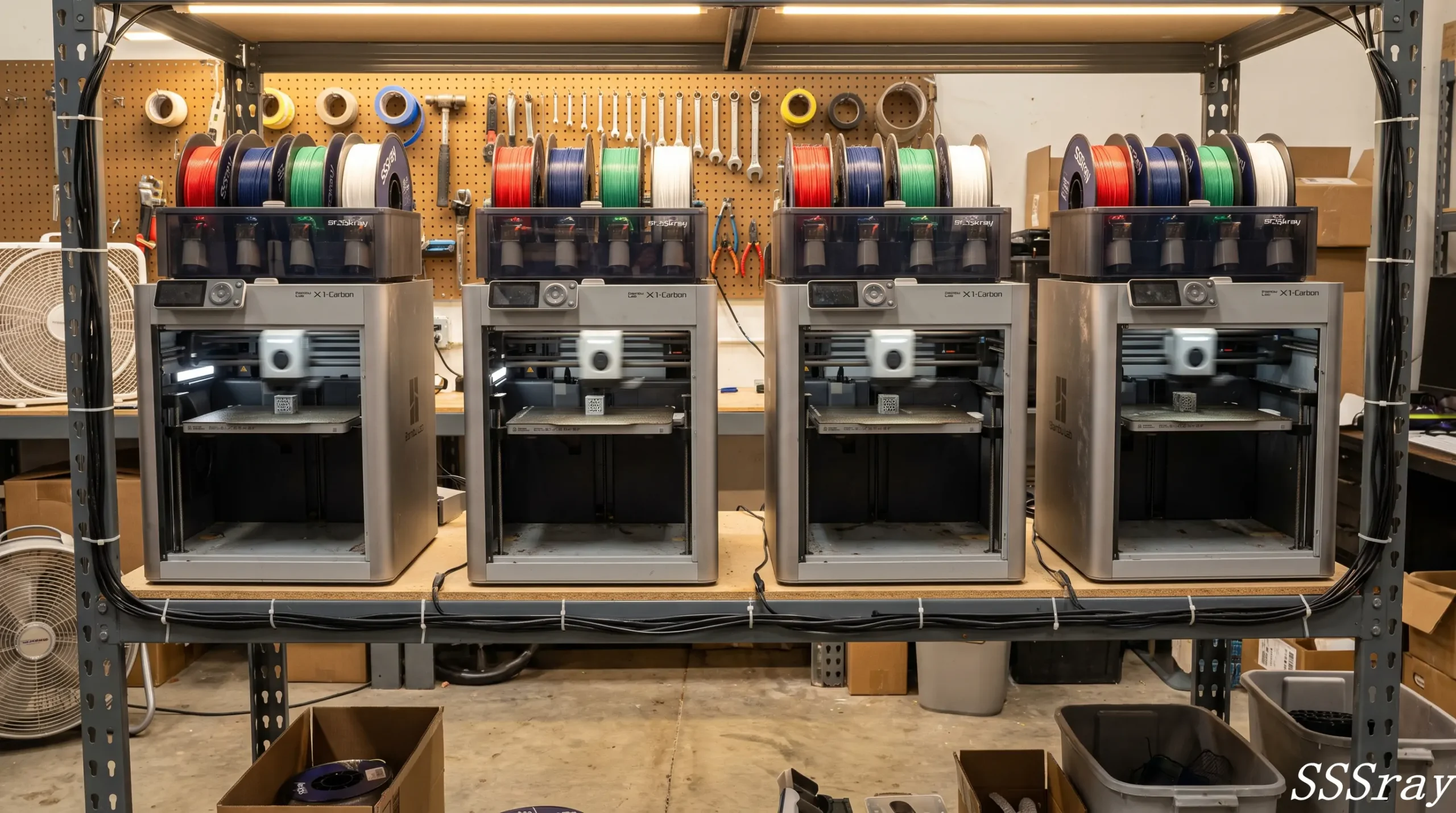
Situation: Farm operating 80+ Bambu Lab AMS units experiencing frequent pause alarms on overnight runs.
Bad Choice: Buying unverified spot-market bulk filament based solely on low price per spool.
Consequence: Machine downtime reaches 18%, driving up maintenance labor costs.
Better Choice: Standardizing on SSSray Wholesale High-Speed PLA with guaranteed ±0.01mm tolerance.
Verification: Track machine pause events over a 50-spool test lot; target <0.5 errors per printer/week.
Scenario 4: Industrial Engineering Buyer
Situation: Sourcing multi-material carbon-fiber parts for industrial jigs and automotive fixtures.
Bad Choice: Standard CF filaments that wear out internal plastic AMS feeder funnels.
Consequence: Severe hardware wear requiring full AMS feeder replacement.
Better Choice: Sourcing SSSray Carbon Fiber Reinforced filaments with smooth pass-through outer sheath formulations.
Verification: Inspect inner PTFE tube walls after 50kg throughput using an optical borescope.
B2B Material Procurement Specifications
Procurement contracts should integrate the following quality control standards into long-term supply agreements:
| Parameter | Standard Quality Requirement | SSSray Supply Capability | Verification Method |
|---|---|---|---|
| Minimum Order Quantity (MOQ) | Flexible SKU allocation | 100 kg per color for standard; 500 kg for custom compounding | Purchase order contract terms |
| Production Lead Time | 10 to 18 business days | 12 business days average dispatch cycle | Shipping dispatch notification |
| Sample Approval | Pre-shipment batch testing | Free 1kg sample spools provided for evaluation | Laboratory print report sign-off |
| Dimensional Tolerance | 1.75mm ±0.02mm (Max ovality 0.015mm) | 1.75mm ±0.01mm guaranteed via continuous 4-axis laser gauge | Laser measurement continuous log audit |
| Regulatory Compliance | Full safety disclosures | TDS, MSDS/SDS, REACH SVHC, RoHS, and PFAS documentation provided | Certified lab test reports |
| Packaging Integrity | Vacuum sealed with desiccant | High-barrier aluminum/poly vacuum bag (<10% internal RH) | Internal humidity indicator card check |
| Private Label Customization | Custom spool artwork & packaging | Full OEM artwork integration and custom barcode application | Digital proof and physical sample sign-off |
Frequently Asked Questions (FAQ)
Why does my Bambu Lab AMS keep clogging during multi-color prints?
Multi-color AMS clogging is primarily caused by heat creep during high-frequency retractions and soft-tip filament swelling. When filament is retracted back through the toolhead, semi-molten material expands in the heatbreak, wedging inside the cold zone or cutter assembly. Using thermal-stabilized filaments like SSSray High-Speed PLA prevents expansion, ensuring smooth continuous cycling.
How can print farms fix AMS feed failure error alarms?
Fixing AMS feed failures requires checking four areas: ensuring stock 2.5mm ID PTFE guide tubes are unworn, clearing optical sensors in the AMS hub, verifying spool rim width is between 55mm and 68mm, and using filament with tight diameter tolerances (±0.01mm) to prevent roller slippage.
Is Bambu Lab AMS better than Mosaic Palette systems for high-volume B2B operations?
From a B2B operational standpoint, the Bambu Lab AMS offers higher reliability and lower per-unit cost for integrated high-speed printers, as it directly controls spool rotation and buffer tension. Mosaic Palette systems splice single strands, which introduces weak joint failure risks during long industrial print runs.
How do B2B buyers verify if third-party filaments will work reliably in AMS units?
B2B buyers should request four verification items from suppliers: 2-axis or 4-axis laser diameter log files, spool rim runout specifications (<0.8mm), Vicat softening temperature documentation (>55°C), and physical sample testing across a 500-switch multi-color purge block.
Can AMS units reliably print soft TPU materials in automated production?
Bambu Lab officially advises against feeding standard soft TPU (<95A Shore hardness) into AMS units because flexible strands buckle inside the internal feeder gears and buffer slider. For flexible part production, print farms must use specialized high-stiffness modified TPU grades or deploy external direct-mount spool feeds.
What is the financial impact of using uncertified cardboard spools in AMS print farms?
Uncertified cardboard spools shed micro-fibers into internal AMS hub optical sensors, causing sensor failure and roller slip. In a 50-machine farm, this increases manual intervention labor by up to 3.5 hours per day and reduces monthly print capacity by 12% to 18%.
How does SSSray ensure batch-to-batch consistency for OEM private label buyers?
SSSray utilizes 100% virgin polymer resins, automated continuous 4-axis laser measurement, and batch-indexed spool tracking. Every production lot undergoes automated colorimeter checks and a 100-cycle AMS buffer test before vacuum sealing.
Conclusion: Building a Zero-Downtime AMS Multi-Color Production System
Scaling multi-color 3D printing in 2026 requires moving beyond trial-and-error slicer tweaks and addressing physical interactions between consumables and hardware. By understanding how spring buffer mechanics, PTFE wall drag, spool rim traction, and thermal heat creep cause print failures, procurement managers can eliminate major farm downtime bottlenecks. Partnering with a dedicated filament manufacturer like SSSray ensures access to precision-engineered, AMS-optimized materials backed by strict regulatory compliance and batch-level quality control.
Request a quote or free samples
Tell us the material, color, spool size and monthly volume. An engineer replies within 24 hours on business days.