Online time
Monday to Friday: 9AM - 8PM
Weekend: 10AM - 5PM

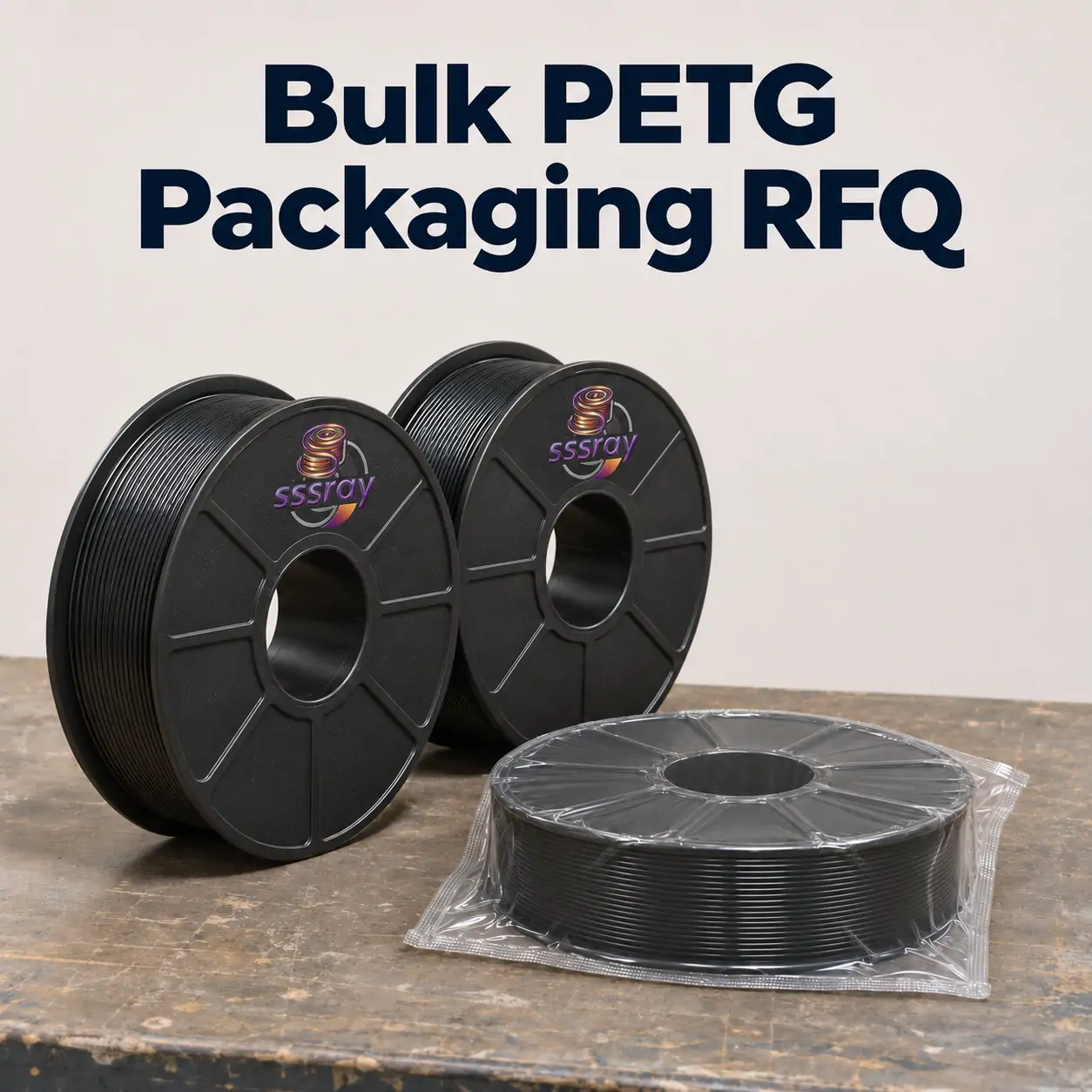
Our PETG Filament Pouch Qualification: Film, Seal and Leak Tests
For a bulk PETG packaging RFQ, we specify film water vapor transmission rate (WVTR), heat-seal peel force and a leak test on the loaded pouch. In our UK distributor pilot, the clear pouch (A) released 114 of 120 reels for immediate retail. The metallized pouch with flange guards and carton end pads (B) released 119 of 120. The buyer approved those 119 reels for this batch and kept repeat-order approval pending.
On day 82, after 30 more days of sealed storage following receipt, water content was 0.028–0.033 wt% for A and 0.020–0.023 wt% for B. We tested three previously unopened witness reels per pack. Using the arrival release counts, we modeled a cost of $8.21 per accepted reel for A and $8.05 for B, in USD.
Start with the production packApprove a named pouch revision, measurable seal criteria and a loaded sample from the planned packing line.
When to upgradeQualify the standard pack for fast local turnover. Price an upgrade when the route, stock time or cost of rejection warrants it.
Match three reportsCompare film WVTR at the same conditions, measure seal force, and verify the defects your loaded-pouch test can detect.
Trace the shipmentMatch film, seal and leak-test results to the same pack revision and trace the packing lot to the carton.
Check filament water contentMeasure after drying and before sealing. A pouch can pass an integrity check with damp PETG inside.
How Do You Specify PETG Vacuum Packaging for Bulk Orders?
When we quote a PETG pack, we put the film revision, seal limits and loaded-pouch test on the same specification. Send us the spool drawing, carton, route and sealed storage window so we can take the conditions of the repeat shipment into account. We also check filament water content before sealing and agree with receiving QC on what releases stock for retail or production.
The clear pouch in our UK pilot met the film and bench seal limits. It missed the loaded-carton handling gate, and three separate witnesses missed the moisture limit after the additional storage period. The RFQ and inspection record below show how we track these checks from packing to the buyer’s reorder decision.
What We Put on the PETG Packing Specification
We match every requirement to a record your receiving team can use to make a release decision.
- Specify the pouch revision. A film grade, bag drawing and closure revision give a replacement pouch something concrete to match.
- Compare WVTR at matched conditions. Align temperature, humidity on each side or the stated RH gradient, and the exposed face of the film.
- Measure the seal and check the pack. Specify peel force on cut strips and an integrity method on the loaded pouch.
- Set a pre-seal water-content requirement. Request the grade-specific acceptance limit and the shipment’s measured lot result.
- Approve the carton with the spool inside. Check flange contact, seam position and pouch damage after representative handling.
- Make the receiving rule explicit. Agree what counts as a defect, who can release a held lot and which evidence goes on the claim.
- Price by accepted units. Divide the agreed cost by reels available for their intended use after inspection and disposition.
For wide tables, scroll inside the table or focus it and use the arrow keys to reach every column.
Bulk PETG Filament Packaging: What We Need for Your RFQ
Send us the spool geometry, shipping route and sealed stock window. We return a priced specification that separates the film, seal and finished-pouch checks.
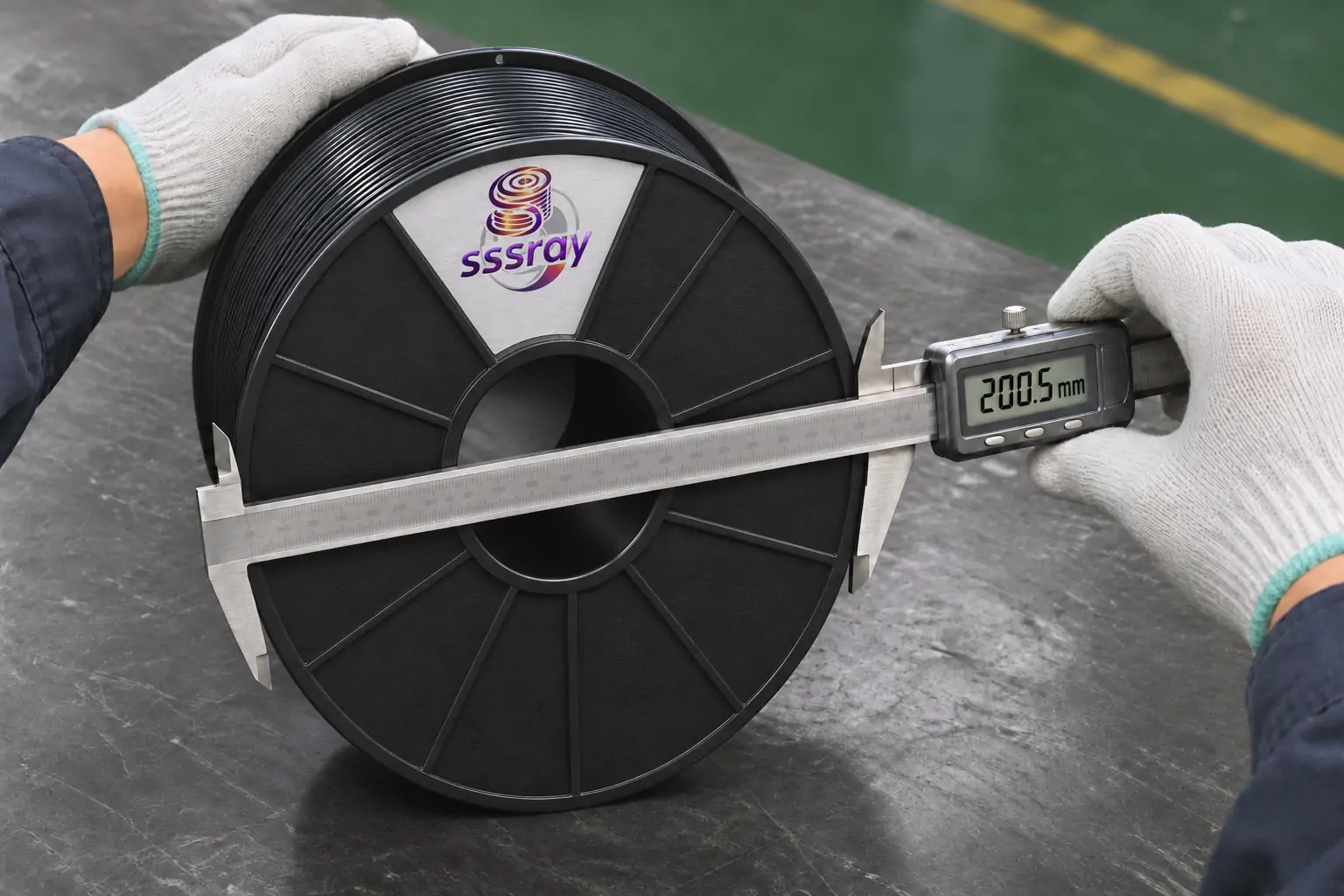
Copy and fill in this vacuum-pouch request for quotation
Start with the repeat shipment. Send us the export carton and destination even if the sample ships locally. We identify which differences between the courier sample and production pack need your approval.
PETG vacuum-pouch RFQ
Grade, color, diameter and net spool weight [ ] · Quantity by SKU [ ]
Spool outside diameter × flange-to-flange width (mm) [ ] · Carton and destination [ ] · Transit and sealed stock time [ ]
Film code and revision [ ] · Pouch drawing [ ] · WVTR at the agreed temperature, RH and orientation [ ]
Seal locations and peel test [ ] · Finished-pouch leak method and defect criterion [ ] · Pre-seal water-content method and limit [ ]
Production-representative sample pack [ ] · Packaging lot and carton mapping [ ] · Inspection and retest costs [ ]
Use the table to review our quote line by line. We identify each item as included, optional or subject to a pilot, with its cost and lead-time impact where applicable.
On mobile, swipe horizontally to review every column.
| RFQ item | Buyer fills in | Supplier confirms or returns | Approval check |
|---|---|---|---|
| MOQ | Spools [ ] by SKU and color. Repeat quantity [ ]. | Minimums for filament, pouch order, printed artwork and each applicable SKU or color. | Confirm the quantities invoiced and who owns unused custom packaging. |
| Lead time | Sample due [ ]. Ship-ready date [ ]. | Working days and start event for samples, film, artwork, testing and production. | Confirm the ship-ready date after pack approval. Show production and transit days separately. |
| Sample approval | Pack route, carton, test coverage and sign-off owner [ ]. | Loaded pack from the planned process, revision IDs and pilot-to-production differences. | Keep a marked reference pack and sign off differences. |
| Tolerances | Spool envelope, pouch usable dimensions, seal width and clearances (mm) [ ]. | Drawing with internal width and length, usable space, seam locations, thickness (µm), tolerances and gusset if used. | Measure the largest in-spec spool in the minimum usable pouch. Verify seam clearance after sealing and boxing. |
| Documentation | SKU TDS/SDS and lot COA fields [ ]. Pouch declarations [ ]. | Packaging report IDs, revisions, issue dates, scope and applicable expiry. | Match the grade and pouch. Verify the COA and pouch reports separately. |
| Packaging performance | Transit, storage duration, climate and acceptable damage [ ]. | Film WVTR (g/m²/day) with °C, RH gradient and exposed face. Seal force (N per stated width in mm) with peel technique and conditioning. Loaded-pack leak method, fixture, pressure reference and detection criterion. | Approve limits with the buyer and tie desiccant type and loading, vacuum settings and outer pack to the tested configuration. |
| Private label | Artwork revision, barcode, lot-code location and channel [ ]. | Printed pouch, applied label or printed box. State film or seal setup changes. | Scan the sealed pack. Confirm artwork, code position and destination documents. |
| Reorder control | Approved pack revision, notice window and hold rules [ ]. | Filament lot, pouch lot, packing run and carton linked in the shipment record. Written change and reapproval procedure. | Keep the last approved pack as the reference and review changes before the next release. |
Agree the targets with us before issuing the purchase order. When we quote a packaging change, we confirm the film and spool revisions, the test scope, the required lot records, and any converter minimum or lead-time impact for the specified route.
Bulk PETG Filament Packaging Options for Short and Long Routes
Qualify the standard loaded pouch first, then spend on a better barrier, more clearance or a tougher carton according to the failure you need to prevent.
Choose for the journey and the spool geometry
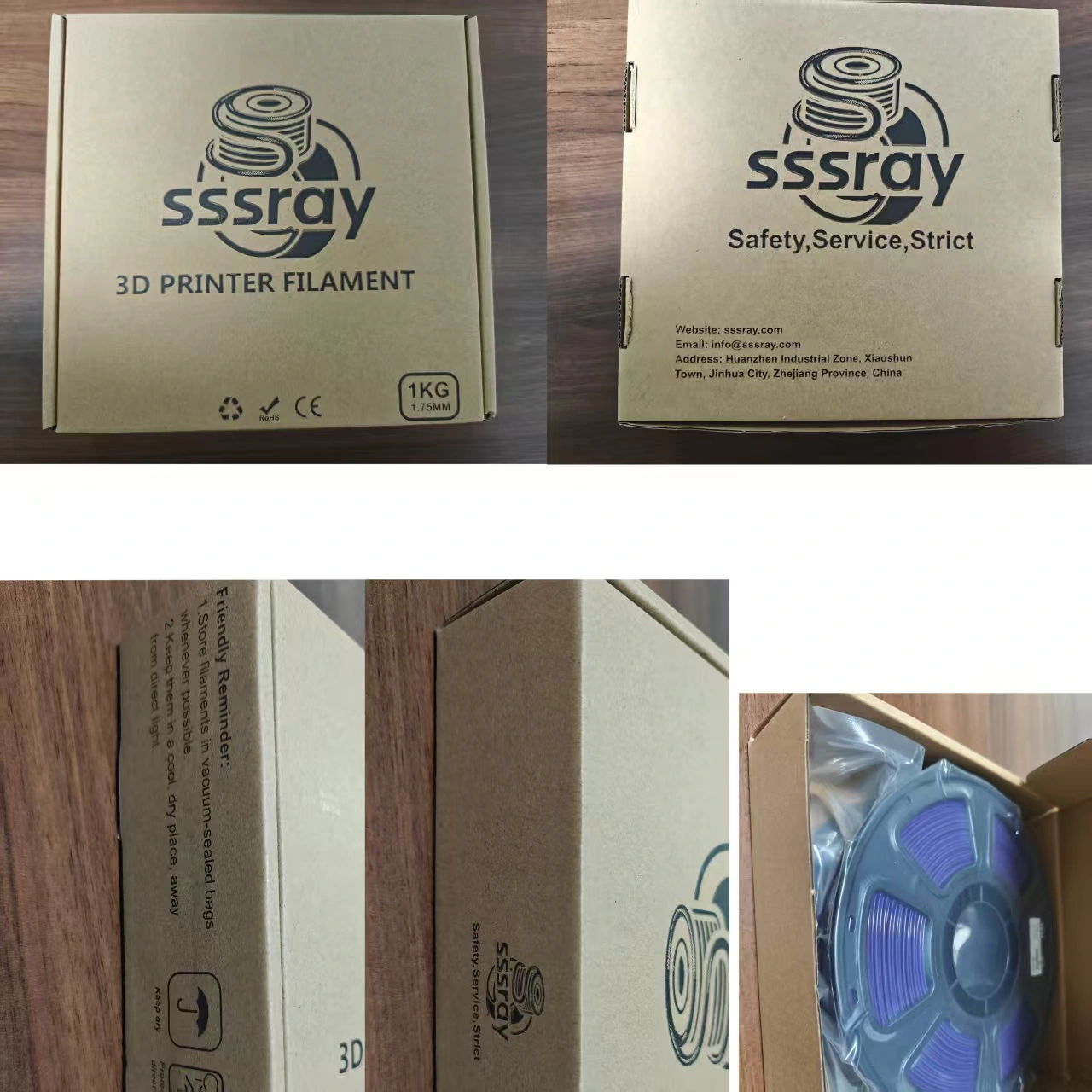
A pallet that clears customs quickly may sit sealed in a humid warehouse for months. A nearby print farm may turn stock quickly and still see punctures where heavy spool flanges press against the film. The first route calls for a barrier review. The second calls for a fit and carton check.
Read each row as a quote option for the same grade and spool. Evaluate any proposed change with the test conditions and acceptance criteria agreed for that route.
On mobile, swipe horizontally to review every column.
| Option | Best use case | Key spec | Advantage | Risk | How to verify | When to reject | SSSray sourcing note |
|---|---|---|---|---|---|---|---|
| Standard vacuum pouch with desiccant | Fast-moving stock on a proven route | Named pouch and spool revisions, desiccant type and mass (g), finished-pack criteria | Established packing setup and a baseline quote | Unspecified film or casual substitutions between orders | Match the declared bag to the approved loaded sample and review the lot record | Pilot arrives outside the agreed intact-pack or moisture criteria | Request the standard pack specification for the exact SKU first |
| Lower-WVTR laminate | Longer sealed inventory or humid freight and warehousing | Declared construction and WVTR ceiling in g/m²/day at matched °C, RH gradient and exposed face | Reduces film permeation under the specified conditions | Film can still suffer flex damage or weak seams after packing | Review the exact laminate report and test loaded packs after agreed handling | Film misses the agreed limit or packed units fail the handling check | Ask for a separate barrier-upgrade quote with film data and any lead-time impact |
| Pouch fit and carton protection upgrade | Large or heavy reels with flange rub, folds or corner punctures | Internal pouch dimensions and flange clearance (mm), spool restraint and carton revision | Targets damage at contact points | A bigger pouch can move inside the carton or add exposed film area | Use the largest in-spec reel and inspect the same packed carton before and after handling | Seams take the spool load or damage recurs at the same contact point | Send the spool drawing and planned carton load for a fit review |
| Buyer-specified alternate film or printed pouch | Private-label artwork, visibility or a defined packaging material requirement | Film structure and revision, compatible sealing setup, artwork and document scope | Lets buyer control the visible pack and material specification | Finishes, coatings or a new seal layer can change the proven process window | Approve a production-printed sample, scan the barcode, and verify seal and leak records | The revised pack fails the signed specification or the lot code becomes unreadable | Ask for artwork, converter minimum and retest cost as separate quote lines |
Barrier and fit upgrades can go on the same quote when the pilot shows both risks. For carton qualification, ASTM D4169 gives a way to select distribution hazards and test levels. Agree on the relevant sequence and inspect the pouches after the test, including the surfaces that touched a flange or carton wall.
If the filament grade is still open, compare grades and use cases in our PETG material and sourcing guide. Name the selected grade and spool in the pouch RFQ so both suppliers quote the same load.
Verify Film WVTR, Seal Strength and Finished-Pouch Leaks
Use the film test to compare vapor transmission, the seal test to measure peel force, and the finished-pouch test to check for leaks on the actual packed spool.
Film barrier: ask for the exact web and the actual conditions
Water vapor can permeate intact plastic. The water vapor transmission rate, or WVTR, reports the mass that passes through a unit of film area per day under the test conditions. ASTM F1249-25 uses a modulated infrared sensor to measure plastic film or sheeting. Ask for the film construction and thickness, exposed side, test temperature, RH on each side or the specified gradient, and the reported value and measurement limit.
For a rough film-only comparison, multiply a matched-condition WVTR in g/m²/day by total exposed film area in m² and time in days. Include both faces and any exposed gussets. The result is an estimated mass in grams under those assumed conditions. A larger pouch made of the same film can admit more vapor through the web at the same conditions, even if the two reports show the same WVTR.
Use the estimate to compare films and discuss desiccant. To support a storage-life claim, qualify the loaded pack over the intended exposure and check the filament at the end. AMETEK MOCON’s permeation guidance explains why temperature and humidity on a film report matter.
Seal strength: agree where to cut and how to pull
ASTM F88/F88M-23 measures the force needed to separate a strip containing the seal. Set the seam locations, strip width, pull technique, test rate, conditioning in °C and RH, and acceptance rule before the pilot. Request individual results in newtons with strip width in millimeters, the recorded failure mode and at least the peak force. Add average peel force if the approval rule needs it.
Take valid strips at defined points along the factory closure and any converter-made seams that matter to the contract. Compare the same locations and technique across suppliers. If the pack has a crease next to a seam, add a targeted integrity check there. A good peel result describes the strip tested. A narrow channel elsewhere can still admit moisture, as the review by Volpe and Pagnotta explains for localized defects. Bamps and colleagues also distinguish seal strength from leak tightness and discuss process and material factors that affect both.
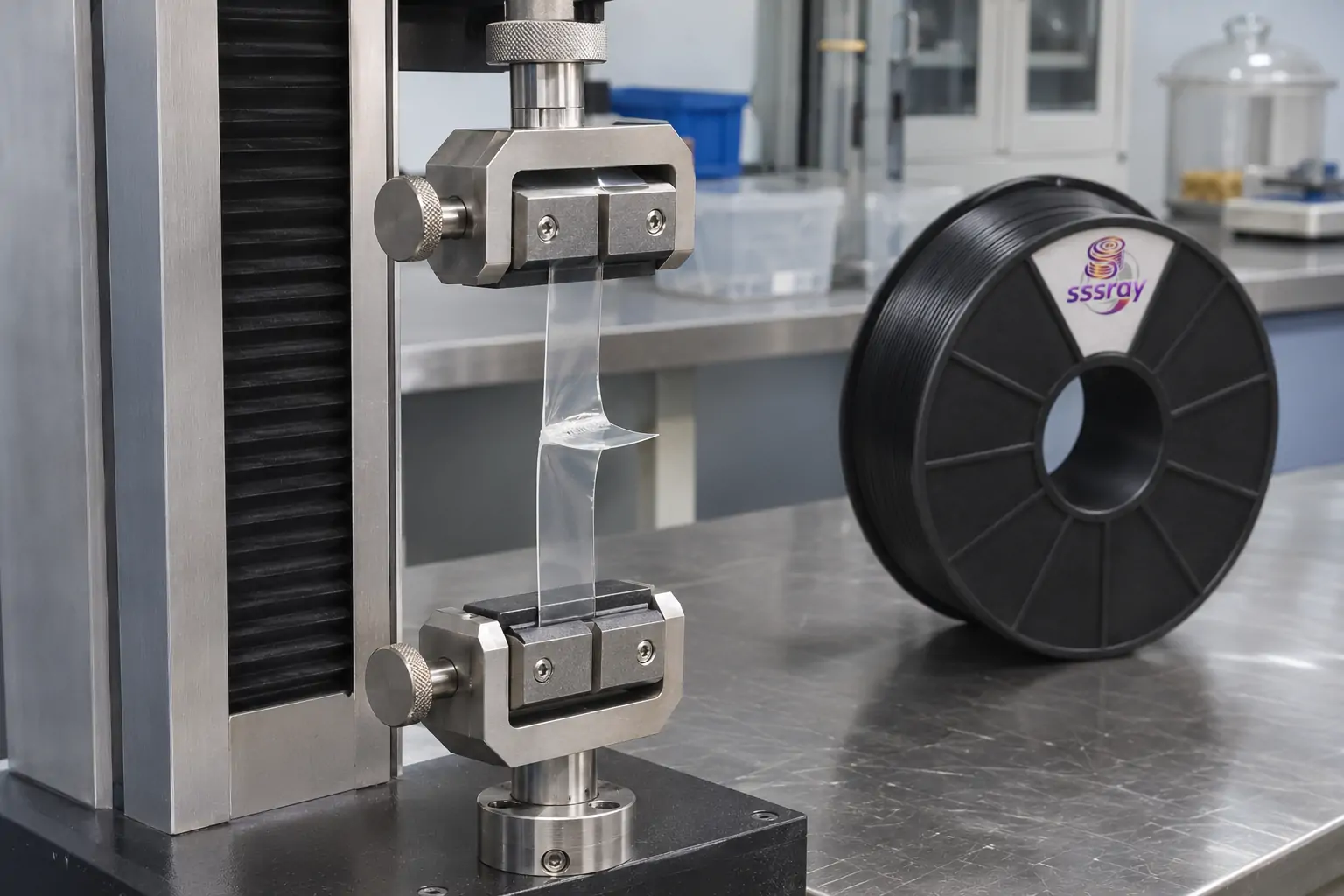
Leak check: challenge the finished pouch with the real load
ASTM F2338-24 describes vacuum decay. A sealed pack goes into a test chamber, and the system looks for a pressure rise after evacuation. Ask the lab to show that the fixture and cycle can distinguish intact packs from representative leaking controls on your loaded pouch. Low headspace, spool contact and the way flexible film moves in a chamber can change the signal.
Record the fixture, pack orientation, conditioning, chamber pressure reference, test and stabilization times, detection criterion and control results. An “accept” result applies to that validated setup and defect criterion. If vacuum decay suitability is unresolved, ask for a qualified alternative with its coverage stated. For example, ASTM F3039-23 dye penetration can localize leaks in selected nonporous edge seals with Method A. Price it as a destructive seam check and agree how the rest of the loaded pouch will be covered.
How we quote the testsWe itemize the film, seal and loaded-pouch checks so you can carry each one into the purchase order.
Sample the production spoolA tight-looking bag or a test on a different spool size leaves the actual pack unchecked.
Match records to the packWe check the reported conditions, fixtures and sample labels against the approved configuration.
What We Verify on a PETG Pouch Quote
Match each supplier claim to a dated report that names the pack revision, the test scope and the acceptance limit.
Translate the quote into evidence
Use each claim to request a matching record. Compare numerical results under agreed conditions.
On mobile, swipe horizontally to review every column.
| Vague claim | What it might hide | Document, sample or test to request | Evidence to check before release |
|---|---|---|---|
| “High-barrier film” | Test from another structure or at a milder humidity gradient | Film ID and sourced WVTR report with temperature, RH gradient, thickness, exposed face and method | Report matched to the quoted construction and a written rule for substitutions |
| “Strong seals” | Only easy-to-test center strips, or an average that hides weak readings | Seal map, individual forces and limits, strip width, conditioning and pull technique | Records tied to packing runs, with seam locations and failure modes |
| “Leak tested” | A visual squeeze check or an empty-bag test sold as loaded-pack verification | Closed, loaded production sample and a test report with validated detection criterion, fixture and controls | Named method, tested sample count, test conditions and linked accept or reject results |
| “Dry and ready to ship” | Dryer status or humidity indicator substituted for a filament measurement | Lot-linked pre-seal water-content result and test method, plus receipt checks if the route warrants them | Sample timing, condition, unit, measured result and grade-specific release limit |
| “Same pack on reorder” | New film, spool flange or sealing equipment under the original SKU | Approved pack revision, lot-to-carton map and changes since sample approval | Shipment-linked pack records and advance notice of changes that require new approval |
Mark unverified lines as open in the quote comparison. A named laboratory booking or pilot can close a gap before production release, with the date and cost agreed on the quote.
PETG Packaging Acceptance: From Sample Pack to Reorder
We approve a production-representative pack with you, then use the same criteria to sample, hold and release shipped lots.
Eight acceptance checks for the loaded PETG pouch
Application requirement
We use your spool, carton, route and sealed storage window to approve the pack. For sea freight, we check what changes between the courier sample and the production carton.
Material performance
We match the film report to its pouch revision and check pre-seal filament water content against its own limit. For a longer stock window, we test the loaded pack over the agreed dwell. A fresh sachet in a short pilot can mask a weaker barrier.
Printability
When print approval is part of the pilot, we agree on the coupon and defect criteria with you. We compare an as-received print with a dried control on the same printer profile.
Compliance documents
We match the documents to the filament grade, film revision, artwork and destination market. Check the report IDs and scope before approving a change to the barrier or adhesive.
Supplier reliability
We trace the trial pack to the production line and packing run and record the samples and any corrections. The packing record links a seal defect to the run and cartons affected.
Receiving and disposition
Agree with us who can hold, release, sort or reject stock, and how quickly a defect must be reported. Keep suspect pouches sealed with their cartons until QC records the evidence.
Landed cost
We compare quotes using the same cost scope and release count. Include inspection and buyer-paid rework, apply agreed recoverable credits and use the actual number of released reels.
Reorder stability
We match the pack revision to the approved sample on repeat orders. Review changes to film, sealant, spool or carton before approving the pack, even when film thickness stays the same.
Sample the lot and protect the evidence
- Qualify the configuration. Sign off a sealed, identified reference pack and planned carton. Challenge the worst-fitting approved spool and vulnerable seam points. When route testing is part of approval, run the same package configuration before release.
- Set the production sampling plan. Define a packaging lot, inspection stage, random draw across the shipment, sample size, defect classes and acceptance or rejection rule. Include enough samples for any destructive work. An agreed ISO 2859-1:2026 scheme can support lot-by-lot attribute decisions. Use a separate diagnostic challenge for known risk points and retain the distinction between that challenge and the random lot sample.
- Screen at receiving before opening. Photograph the carton, position, pouch sides, seals and codes. Compare to the signed pack and hold suspect units with their cartons. ASTM F1886/F1886M-25 describes visual inspection of primary packaging. Treat a visual flag as a reason to check further using the agreed method.
- Decide and map the affected stock. Record each measured result, defect count and disposition. Trace failures to the packing run, pouch lot and cartons. Agree a controlled sort, replacement or other disposition before releasing held stock. Keep enough sealed reference units to investigate later complaints.
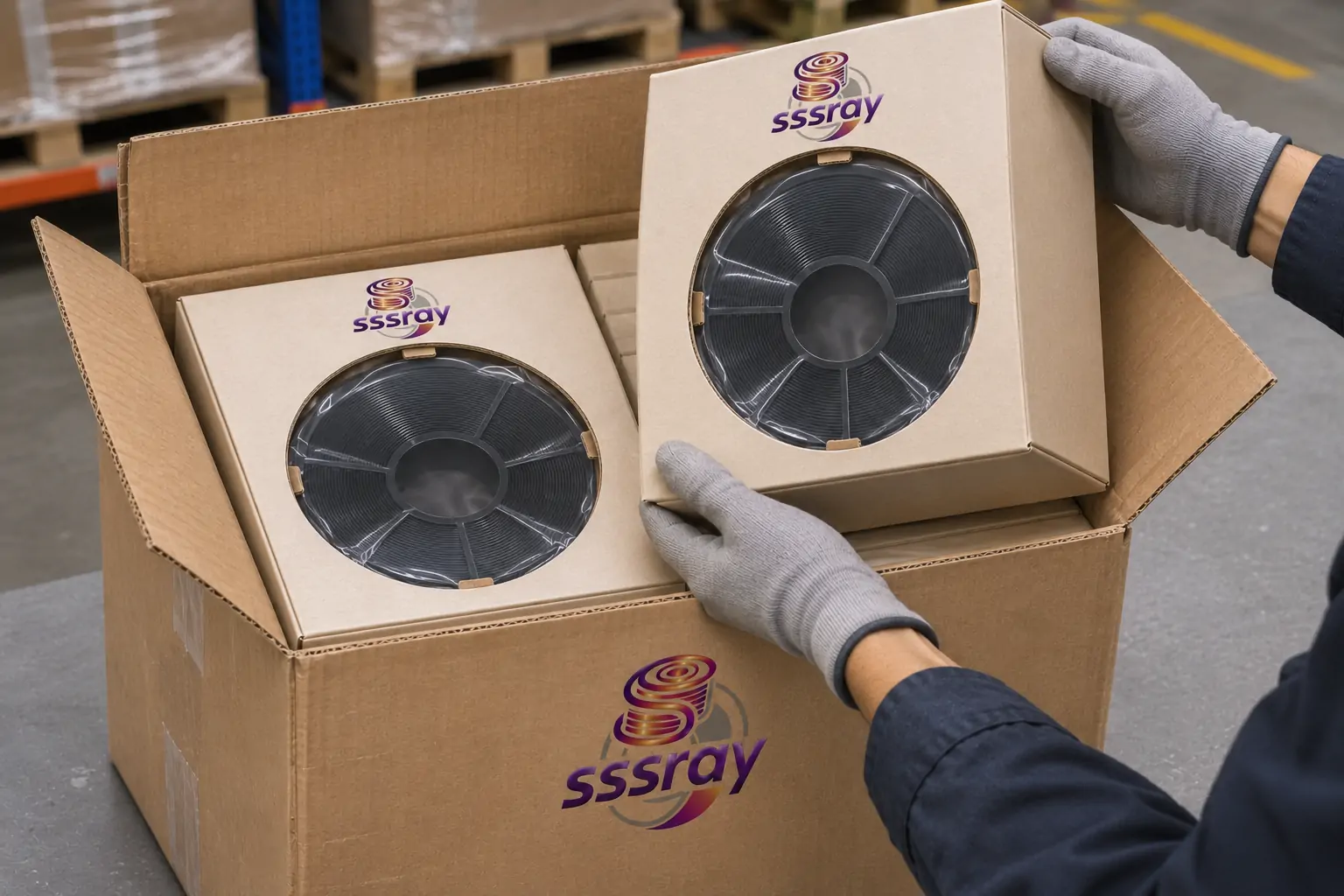
List the changes that trigger reapproval in the RFQ, including a new converter, film, flange, sealer or carton. Name the reviewer and the evidence they need. Use our filament test protocol to agree your print check and record the pack-specific tests on the RFQ.
Cost per Accepted Reel: Compare Bulk PETG Packaging Quotes
Use total comparable cost divided by the number of reels released for their intended use. Confirm the acceptance count before treating the lowest quoted price as the lowest delivered cost.
Use the same denominator and approval window
Start with the quote, packaging and freight on the same basis. Add applicable unrecovered import costs, inspection and buyer-paid sorting or rework. Deduct only credits that are agreed and recoverable. Count a reel once, after QC clears it for the intended sale or use. If a softened box is acceptable for farm use but unsaleable in retail, calculate each outcome against its own intended channel.
Cost per accepted reel
Comparable order and handling cost, less agreed recoverable credits, divided by released reels.
The cost comparison from the UK batch record applies this calculation to the receiving data and shows how to set a price ceiling for the upgraded pack.
Price pack upgrades, per-lot tests and tooling separately. Spread upfront costs over the planned shipments. Where yields are forecast, compare a range and reconcile it to the first receipt.
Where buyers tend to lose accepted reels
Distributor
Buying slow-moving clear PETG by price alone leaves the importer sorting slack or damaged pouches before retail dispatch.
Qualify the loaded carton and sealed stock window. Log arrival defects by carton and test affected packs. Send the stock window and carton route.
OEM brand
A flat proof hides a fold that makes the lot code hard to scan on the sealed OEM pouch.
Approve artwork on a loaded pack. Scan it after sealing, audit the seam and retain the pack. Send the artwork revision and test scope.
Print farm
Using the smaller reel’s pouch for a heavier reel puts the flange against the film. Holding punctured stock can interrupt a run.
Check the largest in-spec reel for flange rub after handling. Print as received against a dried control. Send reel dimensions and first-run criteria.
Engineering buyer
A lab approves peel force alone and stores samples for a later build. A seam channel or initial moisture can disrupt the trial.
Agree loaded-pack testing and moisture checks. Retain a sealed reference from the lot. Send storage duration and evidence requirements.
SSSray PETG Packing QC and Pouch Inspection Record
Our published PETG/PCTG family QC lists a pre-seal water-content limit of ≤0.025 wt% using Karl Fischer moisture testing after drying. For your order, ask us to confirm the exact grade criterion and which measured lot and packaging records can accompany it.
Public reference and the evidence to request
See our Batch QC Data for the published family control. The figure is a release limit. A quote for the film, seal and loaded pouch should identify the corresponding reports, test scope and cost. Our Jet Black PETG specification gives a public starting point for the standard 1 kg vacuum-packed spool with desiccant. Use the approved drawing and order quotation for the supplied pack.
For that SKU, published planning references are a neutral-pack MOQ from 50 spools and typical OEM pack orders of 500–1,000 spools. The listed lead times are 7–15 working days for standard orders and typically 15–25 working days for custom orders after specification and packaging confirmation. Ask us to quote pouch-converter minimums, documentation and validation time for your configuration.
Verified B2B buyers can request up to three complimentary full-size 1 kg spools through our free sample program. The buyer covers freight. We confirm the grade and pack before dispatch. If your pilot includes destructive tests, ask us to quote the extra test packs and reserve a sealed reference.
SSSray protocol numbers and equipment behind the record
We document packaging qualification by run, equipment and method revision so you can trace each reported result to its production configuration. The protocol is SSS-QP-PK-03 Rev. B (Vacuum-Pouch Packaging Qualification Protocol), supported by sealing instruction SSS-WI-PK-11 Rev. C, integrity method SSS-VD-02 Rev. B, water-content method SSS-KF-01 Rev. C and inspection form SSS-F-PK-07 Rev. A. Quote the protocol revision and the Batch ID when you ask for the record.
On mobile, swipe horizontally to review every column.
| Capability | Equipment or document | Stated range | Used on record SSS-PQ-2608-04 |
|---|---|---|---|
| Extrusion and diameter | 50+ high-speed lines; dual-axis laser micrometers at 500 scans/s with automatic cut and purge | 1.75 mm ± 0.03 mm; ovality ≤ 0.020 mm | 1.75 mm nominal, 1.000 kg net |
| Water content | Karl Fischer bench · SSS-KF-01 Rev. C | Oven transfer at 155 °C; reporting limit 0.005 wt%; expanded uncertainty 0.002 wt% (k = 2); PETG release ≤ 0.025 wt% | 18 results, pre-seal to day 82 |
| Sealing | Chamber vacuum sealer in packing cell PK-L02 · SSS-WI-PK-11 Rev. C | Jaw 145–165 °C, dwell 0.8–1.6 s, 0.28 MPa air; closure 8.0 ± 1.0 mm checked at three positions | 154 °C / 1.2 s (A); 158 °C / 1.3 s (B) |
| Whole-pouch integrity | Vacuum-decay station VD-CN-02 in Jinhua, with a contoured 200 mm spool fixture · SSS-VD-02 Rev. B. UK receiving station VD-UK-01 used a matching fixture. | 15.0 ± 0.5 kPa absolute; 20 s stabilization, 30 s rise; blank, intact and seeded controls in every series | VD-CN-02 screened 24 reels at dispatch. VD-UK-01 screened all 240 sale-intended reels at UK receiving. |
| Film barrier and seal strength | Accredited external laboratory for ASTM F1249-25 film WVTR. SSSray in-house tensile bench for ASTM F88/F88M-23 seal peel. | WVTR at 37.8 °C and 90% RH; peel on 25.4 mm strips at 250 mm/min after 40 h conditioning | Reports SSS-WVTR-260813 and SSS-PEEL-260820 |
| Traceability and COA | Laser-etched spool serial, Batch ID on the master carton, lot-to-carton map | Every spool serialized; COA issued per shipment and keyed to the Batch ID | 2 pack runs, 300 loaded reels, 24 retail cartons with 240 sale-intended reels |
On this shipment’s COA, we recorded measured diameter, ovality and water content against the PETG/PCTG family limits and named the packaging revision. Ask us to match the COA and the film, seal and integrity reports to your shipment. For grade documentation, see our TDS and SDS download center or request the current revision with your quote.
Copy this inspection record for a new lot
PETG pouch inspection record
Report ID [ ] · Test date [ ] · PETG lot [ ] · Film and pouch lot [ ] · Packing line/run [ ] · Carton IDs [ ]
Film [method and revision / lab and instrument ID / tested specimen count / conditions and exposed side / actual WVTR and limit]
Seal [method and revision / tensile tester ID / pouch and strip counts / cut location, pull method and conditioning / individual forces, modes and limits]
Finished pouch [method and revision / equipment and fixture ID / pack count / conditions, controls and detection criterion / result and defect count]
Pre-seal filament [method and instrument ID / sample count and timing / conditions / individual water-content results and limit]
Lot decision [ ] · Held cartons or corrective action [ ] · Reviewer [ ] · Reference pack ID [ ]
Complete the fields from signed test reports and retain the pack-to-carton mapping. Include calibration status, any deviations and whether tests were run in-house or by an external lab. Ask for that coverage on the RFQ before assuming it is part of a standard shipment record.
PETG Vacuum-Pouch Qualification Batch for UK Distribution
SSS-QP-PK-03 Rev. B · Packaging qualification record SSS-PQ-2608-04
Filament lot SSS-PETG-JB-260818-E01 · packing runs SSS-PK-260818-A and SSS-PK-260818-B · Ningbo to Felixstowe · record closed 26 November 2026.
Record SSS-PQ-2608-04. A UK distributor qualified 1 kg black PETG reels for sea freight from Ningbo to Felixstowe, followed by 30 days of sealed stock. We packed the same filament lot and spool in both configurations. A was the clear-pouch baseline in the distributor’s brief. B combined a metallized lower-WVTR laminate with flange guards and carton end pads. The distributor’s retail approval for B covered the 119 reels released from this batch. Approval for subsequent retail orders remained pending.
Film WVTRA 3.83 · B 0.28 g/m²/day at 37.8 °C and 90% RH on the outer face
Released for immediate retail saleA 114/120 · B 119/120 after inspection of every incoming reel
Day-82 filament water contentA 0.028–0.033 wt% · B 0.020–0.023 wt%, n = 3 witness reels per pack
Packing run and sample allocation
Both configurations use PETG lot SSS-PETG-JB-260818-E01, black, 1.75 mm nominal diameter and 1.000 kg nominal net weight. Every spool carried a laser-etched serial keyed to the lot-to-carton map. The spool drawing specifies a 200.0 ± 0.6 mm flange diameter and 58.0 ± 0.8 mm flange-to-flange width. For the fit check, the largest spool measured 200.5 × 58.6 mm. In the sealed fit samples, minimum clearance from the flange or guard to the inside edge of the closure was 16.2 mm for A and 14.7 mm for B, both above the 12.0 mm requirement. Each pouch had one 10 g silica gel sachet.
| Field | A · Clear baseline | B · Barrier and protection upgrade |
|---|---|---|
| Packing run and line | SSS-PK-260818-A · PK-L02 | SSS-PK-260818-B · PK-L02 |
| Spool serialization | Laser-etched serial at the hub of every spool, keyed to the lot-to-carton map; Batch ID on each master carton | |
| Pouch drawing, film roll, converter lot | PD-PA90-R2 · FL-A0811 · CV-A0816 | PD-MPET102-R1 · FL-B0811 · CV-B0816 |
| Outside to sealant | Clear PA 15 µm / LLDPE 75 µm | PET 12 µm / metallized PET 12 µm / LLDPE 75 µm |
| Finished film thickness target | 90 ± 8 µm including tie materials | 102 ± 8 µm including tie materials |
| Minimum usable pouch space | 275 × 315 mm excluding seams · flat pouch | 275 × 315 mm excluding seams · flat pouch |
| Packing settings, PK-L02 | 154 °C jaw setpoint · 1.2 s dwell · 0.28 MPa air regulator | 158 °C jaw setpoint · 1.3 s dwell · 0.28 MPa air regulator |
| Chamber pressure and closure width | 23 ± 2 kPa absolute · 8.0 ± 1.0 mm | 23 ± 2 kPa absolute · 8.0 ± 1.0 mm |
| Flange and carton construction | Bare spool flanges · CTN-R1 · 450 × 230 × 350 mm | Smooth polypropylene flange guards and carton end pads · CTN-R2 · 450 × 230 × 350 mm |
| Carton and sample IDs | A01–A12 retail · A-R01–A-R10 bench and retains · A-H01–A-H10 handling · A-W01–A-W10 witness | B01–B12 retail · B-R01–B-R10 bench and retains · B-H01–B-H10 handling · B-W01–B-W10 witness |
Each arm used 150 loaded pouches. The 120 retail candidates went into 12 numbered cartons of 10. The other 30 formed three separately identified groups of 10. R supplied five pouches for destructive seal tests, three integrity controls and two dispatch retains. H was a full carton reserved for the handling challenge. W traveled in a separate witness carton, with six spools for moisture testing, three for receiver integrity controls and one for retained evidence. QA packs and pre-seal filament grabs are excluded from the 120-reel receiving count.
Both runs were packed on August 18, 2026. Dispatch QC screened one preselected reel from each retail carton on day 2. We shipped the pilot with the distributor’s approval. At arrival, receiving QC held retail stock until the pack screen and the day-52 witness checks were complete. Receiving QC recorded the disposition. The buyer reviewed the carton challenge and day-82 results before deciding on a repeat order.
Acceptance criteria agreed for the pilot
| Inspection | Agreed gate | Decision |
|---|---|---|
| Film WVTR | A ≤4.20 and B ≤0.35 g/m²/day, applied to each coupon at the stated conditions. | Check the named film roll against its option-specific ceiling. |
| Seal strength and visible closure | Every test strip ≥18.0 N per 25.4 mm. Final closure 7.0–9.0 mm wide at the three measured positions, with a continuous visible seal. | Hold the run for an out-of-limit strip or a visible seal defect. |
| Whole-pouch integrity | Pressure rise ≤25 Pa with valid system controls. The carton challenge allows zero integrity rejects in its 10-pack group. | Isolate individual receiving rejects. A challenge failure blocks the repeat-order gate. |
| Water content | Reported value plus 0.002 wt% uncertainty allowance must be ≤0.025 wt% for each result. Apply at pre-seal, arrival and end of the agreed stock window. | Approve moisture at each stage from its own samples. |
| Receiving | Every sale-intended reel receives an integrity and visual screen and a barcode check. Buyer QC clears sound units after reviewing day-52 witnesses and reconciling holds. | Release by reel for immediate retail sale. Repeat orders require review of the handling test, day-82 witnesses and receiving exceptions. |
Film and seal inspection records
Film report SSS-WVTR-260813. Three coupons per roll, measured at an accredited external laboratory by modulated infrared sensing using ASTM F1249-25 as the method reference. The test was run at 37.8 ± 0.5 °C, with 90 ± 2% RH on the exterior-facing layer and dry carrier gas on the pouch interior side. The reporting limit was 0.05 g/m²/day. The reference film read 1.00 against a check value of 1.02 ± 0.05 g/m²/day.
| Pack | Thickness (µm), C1–C3 | WVTR (g/m²/day), C1–C3 | Mean | Per-coupon limit | Result |
|---|---|---|---|---|---|
| A | 91, 93, 89 | 3.72, 3.93, 3.84 | 3.83 | ≤4.20 | Pass |
| B | 102, 100, 104 | 0.28, 0.31, 0.25 | 0.28 | ≤0.35 | Pass |
B’s mean film WVTR was 92.7% lower at these conditions. The coupons represent the intact film. The handling and moisture results below apply to the two loaded configurations.
SSSray in-house peel report SSS-PEEL-260820. We conditioned five sealed bench pouches per configuration for 40 hours at 23 ± 2 °C and 50 ± 5% RH. We used ASTM F88/F88M-23 as the method reference, with Technique A, a 25.4 mm strip and a 250 mm/min crosshead speed. Our plant tensile bench read 24.98 N on a 25.00 N check within ±0.10 N. All strips separated at the seal interface. L, C and R are left, center and right of the final closure. The converter strips were taken from the left side seam, bottom seam and right side seam.
On mobile, swipe horizontally to review every column.
| Pouch | Final closure L / C / R | Converter left / base / right | Closure width min–max (mm) | Result |
|---|---|---|---|---|
| A-R01 | 21.6, 23.8, 20.9 | 23.7, 24.6, 22.9 | 7.7–8.3 | Pass |
| A-R02 | 22.3, 24.2, 20.6 | 24.2, 23.5, 22.8 | 7.8–8.4 | Pass |
| A-R03 | 20.1, 22.5, 19.3 | 23.2, 23.3, 22.4 | 7.6–8.2 | Pass |
| A-R04 | 22.0, 23.1, 21.4 | 22.7, 24.0, 23.3 | 7.8–8.5 | Pass |
| A-R05 | 19.0, 22.1, 18.6 | 23.1, 23.9, 22.3 | 7.4–8.1 | Pass |
| B-R01 | 24.2, 26.7, 23.1 | 24.8, 25.2, 24.1 | 7.8–8.3 | Pass |
| B-R02 | 23.9, 25.6, 21.8 | 24.2, 24.5, 23.6 | 7.7–8.4 | Pass |
| B-R03 | 22.1, 25.1, 22.6 | 23.2, 23.6, 24.0 | 7.7–8.2 | Pass |
| B-R04 | 24.4, 27.2, 23.3 | 25.1, 25.7, 24.8 | 7.9–8.4 | Pass |
| B-R05 | 20.8, 24.1, 21.2 | 23.8, 24.8, 23.9 | 7.6–8.2 | Pass |
All 30 strips per arm met the 18.0 N criterion. The lowest peak force was A 18.6 and B 20.8 N per 25.4 mm. The closure-width readings met the agreed range.
Integrity controls and loaded-carton handling results
Integrity method SSS-VD-02 Rev. B. A nonporous flexible-pack vacuum-decay setup based on ASTM F2338-24. The pouch was placed broad face down in a contoured 200 mm spool fixture with vent paths around the seams and flange contact points. Packs equilibrated for at least two hours at 23 ± 2 °C. The chamber target was 15.0 ± 0.5 kPa absolute, followed by a 20-second stabilization and a 30-second pressure-rise measurement. The 25 Pa decision threshold applies to this fixture and test cycle. The controls demonstrate response to the two seeded defect types in this configuration.
Dispatch unit VD-CN-02 and receiver unit VD-UK-01 used matching fixture drawings. For each configuration, check packs included an intact pack and separate loaded references with a nominal 75 µm body hole or a nominal 75 µm seam channel. Reference packs were reset to the test starting condition for each check. The blank had to read ≤8 Pa, the intact control ≤18 Pa and each seeded control ≥35 Pa at the start and end of the series. Dispatch and handling used R06–R08. The receiver used W07–W09 and prepared its seeded controls after arrival.
On mobile, swipe horizontally to review every column.
| Series | Blank | Intact | Body-hole control | Seam-channel control | Check |
|---|---|---|---|---|---|
| Day 2 · dispatch A | 4 / 5 | 12 / 14 | 65 / 62 | 48 / 46 | Valid |
| Day 2 · dispatch B | 5 / 4 | 13 / 12 | 59 / 61 | 43 / 47 | Valid |
| Day 7 · handling A | 4 / 5 | 12 / 13 | 64 / 63 | 47 / 46 | Valid |
| Day 7 · handling B | 4 / 5 | 13 / 14 | 60 / 58 | 46 / 43 | Valid |
| Day 52 · receiver A | 5 / 4 | 14 / 13 | 61 / 59 | 46 / 44 | Valid |
| Day 52 · receiver B | 4 / 5 | 14 / 15 | 57 / 56 | 41 / 43 | Valid |
| Day 82 · receiver A | 4 / 5 | 13 / 14 | 60 / 58 | 48 / 45 | Valid |
| Day 82 · receiver B | 5 / 5 | 15 / 14 | 59 / 57 | 42 / 44 | Valid |
Handling report SSS-H-260825. One full 10-reel H carton per arm. The lab conditioned both cartons for 24 hours at 30 ± 2 °C and 80 ± 5% RH, applied a 1.50 kN top load for 60 minutes, ran 30 minutes of fixed-displacement vertical vibration at 4.5 Hz and 25.4 mm peak-to-peak, then made one 250 mm bottom-edge drop. QC opened the cartons and checked all loaded pouches with the same method.
| Pack | Before | After | Rejects | Gate |
|---|---|---|---|---|
| A | 11, 12, 9, 13, 10, 11, 12, 15, 10, 12 | 16, 14, 12, 19, 43, 16, 14, 18, 17, 13 | 1 | Hold |
| B | 12, 14, 10, 12, 13, 11, 12, 16, 11, 14 | 16, 19, 13, 15, 16, 14, 16, 22, 15, 17 | 0 | Pass |
A-H05 showed a flange-shaped rub mark and a body perforation after the sequence. B met the handling criterion in its 10-pack challenge. The pilot changed both the laminate and the protection, so the result qualifies the tested configuration as a whole.
Receiving log and individual reel dispositions
Receiving record SSS-RCV-261009. On day 52, QC checked the seals, pouch body, reel identity, carton condition and retail barcode, then measured pressure rise on every sale-intended reel. Each receipt cell lists readings in carton position order from 01 to 10. The dispatch column lists the one screened position and its first reading. Pressure-rise readings are in Pa. For example, A04-02 went from 13 Pa at dispatch to 47 Pa at receiving. QC opened the rejected pack for a targeted dye check and documented the channel in the folded closure.
On mobile, swipe horizontally to review every column.
| Carton | Dispatch position · Pa | Day-52 pressure rise, positions 01–10 (Pa) | Integrity rejects |
|---|---|---|---|
| A01 | 04 · 11 | 11, 12, 14, 13, 9, 11, 14, 13, 10, 15 | 0 |
| A02 | 04 · 11 | 12, 13, 11, 14, 17, 14, 58, 18, 12, 15 | 1 |
| A03 | 08 · 10 | 9, 11, 12, 11, 13, 14, 12, 10, 16, 12 | 0 |
| A04 | 02 · 13 | 14, 47, 11, 16, 13, 10, 17, 15, 36, 14 | 2 |
| A05 | 03 · 11 | 15, 10, 12, 13, 11, 14, 17, 12, 13, 11 | 0 |
| A06 | 09 · 10 | 11, 16, 13, 15, 12, 13, 12, 13, 11, 14 | 0 |
| A07 | 05 · 12 | 14, 16, 13, 18, 65, 14, 16, 13, 15, 17 | 1 |
| A08 | 07 · 12 | 10, 12, 14, 13, 12, 15, 15, 13, 11, 14 | 0 |
| A09 | 10 · 13 | 12, 14, 15, 16, 13, 12, 13, 12, 11, 15 | 0 |
| A10 | 02 · 13 | 13, 15, 19, 12, 21, 17, 15, 14, 12, 13 | 0 |
| A11 | 06 · 14 | 15, 17, 12, 16, 19, 39, 14, 13, 16, 15 | 1 |
| A12 | 01 · 11 | 13, 12, 15, 11, 20, 13, 15, 12, 16, 14 | 0 |
| B01 | 08 · 10 | 11, 13, 10, 13, 14, 16, 12, 11, 13, 15 | 0 |
| B02 | 03 · 12 | 13, 11, 14, 12, 13, 16, 13, 16, 11, 13 | 0 |
| B03 | 04 · 13 | 14, 12, 13, 21, 14, 12, 12, 16, 13, 15 | 0 |
| B04 | 06 · 14 | 14, 11, 12, 16, 15, 12, 14, 11, 14, 13 | 0 |
| B05 | 07 · 12 | 13, 13, 16, 12, 13, 11, 14, 15, 14, 12 | 0 |
| B06 | 02 · 11 | 12, 13, 9, 15, 14, 16, 15, 13, 14, 17 | 0 |
| B07 | 05 · 14 | 13, 14, 15, 12, 17, 15, 12, 11, 15, 12 | 0 |
| B08 | 04 · 12 | 12, 14, 13, 17, 15, 14, 13, 15, 17, 16 | 0 |
| B09 | 08 · 15 | 13, 15, 12, 14, 13, 15, 16, 33, 17, 16 | 1 |
| B10 | 09 · 13 | 12, 13, 14, 13, 14, 15, 12, 13, 17, 14 | 0 |
| B11 | 01 · 13 | 15, 13, 14, 16, 15, 14, 13, 14, 13, 12 | 0 |
| B12 | 08 · 15 | 13, 14, 17, 12, 13, 16, 16, 25, 15, 15 | 0 |
QC isolated the affected packs and held the source cartons until the complete screen and mapping were reviewed. Initial results stayed in the record. The record treats all seven individually rejected reels as outside the released quantity and books no recoverable credit.
On mobile, swipe horizontally to review every column.
| Reel | Initial pressure rise (Pa) | Inspection finding | Disposition |
|---|---|---|---|
| A02-07 | 58 | Flange-shaped rub and a pinhole under backlight. | Reject · preserve pouch and carton |
| A04-02 | 47 | Dye tracked through a folded closure near the right corner. | Reject · retain photos and dye-test strip |
| A04-09 | 36 | Pinpoint body damage at the flange contact mark. | Reject · preserve pouch and carton |
| A07-05 | 65 | Puncture aligned with a crushed carton edge. | Reject · preserve carton and contact-point photos |
| A11-06 | 39 | Pinpoint opening in a scuffed film area at the pack edge. | Reject · preserve pack and carton |
| A11-09 | 16 | Retail barcode failed two scans. No approved relabel by the decision deadline. | Reject for this release · preserve label and lot mapping |
| B03-04 | 21 | Slack film. Seams and body passed visual inspection. A diagnostic repeat read 19 Pa. | Release · record the visual flag |
| B09-08 | 33 | Small perforation at a rub mark next to the end pad. Position logged for follow-up. | Reject · retain pack and affected carton |
| B12-08 | 25 | Reading at the inclusive integrity limit. Visual and barcode checks passed. | Release · keep the first reading |
Day-52 disposition. A released 114 of 120 reels. Five exceeded the integrity threshold and one could not clear the retail barcode check. B released 119 of 120 reels, with one integrity rejection. Both released groups were eligible for immediate retail sale under the pilot agreement. The distributor approved all 119 released B reels for immediate retail in this pilot. Its 30-day sealed-stock review remained a separate repeat-order gate.
Filament water content and print comparison
Moisture series SSS-KF-01. The oven-transfer coulometric Karl Fischer procedure runs under SSS-KF-01 Rev. C, with ISO 15512:2019 as the water-content method reference. Chopped filament was loaded into sealed vials and heated at 155 °C under dry nitrogen. Values use blank-corrected water mass. The reporting limit was 0.005 wt%, the expanded uncertainty was 0.002 wt% (k = 2) and a water standard check recovered 98.6%. The decision adds 0.002 wt% to the value reported to 0.001 wt%.
Pre-seal grabs came from the start, middle and end of each packing run after drying. A shared pallet logger outside the pouches recorded 16.4–30.8 °C and 45–79% RH between dispatch and receiving. The W01–W03 spools opened on October 9, 2026. W04–W06 stayed sealed for 30 more days at 23 ± 2 °C and 60 ± 5% RH and opened on November 8, 2026. Each W pouch passed vacuum decay immediately before opening. Each arrival and stock-window result comes from a separate, previously unopened witness spool.
On mobile, swipe horizontally to review every column.
| Sample | Stage | Pouch pressure rise (Pa) | Mass (g) | Water (µg) | Reported (wt%) | With allowance (wt%) | Result |
|---|---|---|---|---|---|---|---|
| A-G01 | Pre-seal · day 0 | — | 1.984 | 318 | 0.016 | 0.018 | Pass |
| A-G02 | Pre-seal · day 0 | — | 2.013 | 363 | 0.018 | 0.020 | Pass |
| A-G03 | Pre-seal · day 0 | — | 1.991 | 338 | 0.017 | 0.019 | Pass |
| B-G01 | Pre-seal · day 0 | — | 2.021 | 343 | 0.017 | 0.019 | Pass |
| B-G02 | Pre-seal · day 0 | — | 1.976 | 316 | 0.016 | 0.018 | Pass |
| B-G03 | Pre-seal · day 0 | — | 2.008 | 381 | 0.019 | 0.021 | Pass |
| A-W01 | Arrival · day 52 | 15 | 2.026 | 426 | 0.021 | 0.023 | Pass |
| A-W02 | Arrival · day 52 | 13 | 1.987 | 437 | 0.022 | 0.024 | Pass |
| A-W03 | Arrival · day 52 | 17 | 2.009 | 462 | 0.023 | 0.025 | Pass |
| B-W01 | Arrival · day 52 | 14 | 1.993 | 359 | 0.018 | 0.020 | Pass |
| B-W02 | Arrival · day 52 | 17 | 2.012 | 382 | 0.019 | 0.021 | Pass |
| B-W03 | Arrival · day 52 | 15 | 2.004 | 402 | 0.020 | 0.022 | Pass |
| A-W04 | End of stock window · day 82 | 17 | 1.979 | 554 | 0.028 | 0.030 | Hold |
| A-W05 | End of stock window · day 82 | 19 | 2.018 | 605 | 0.030 | 0.032 | Hold |
| A-W06 | End of stock window · day 82 | 21 | 1.995 | 658 | 0.033 | 0.035 | Hold |
| B-W04 | End of stock window · day 82 | 16 | 2.011 | 403 | 0.020 | 0.022 | Pass |
| B-W05 | End of stock window · day 82 | 14 | 1.981 | 436 | 0.022 | 0.024 | Pass |
| B-W06 | End of stock window · day 82 | 17 | 2.024 | 465 | 0.023 | 0.025 | Pass |
At day 82, A measured 0.028–0.033 wt% and B measured 0.020–0.023 wt%. Three A witnesses missed the buyer’s moisture rule even though their pouches passed the leak screen. The day-82 decision uses the moisture and integrity records together. We used three distinct witness reels per pack configuration at arrival and at the end of the stock window. The results apply to this lot, route and exposure.
Print check SSS-PRT-261108. We printed one 40 mm single-wall coupon per condition from each day-82 witness spool on a Bambu Lab P2S. Both conditions used the same pilot profile with a 0.4 mm nozzle at 245 °C, a 75 °C bed, 0.20 mm layers and 50 mm/s. QC counted surface pits on one 40 × 20 mm face, with an acceptance limit of two. The paired control from the same reel was dried at 65 °C for six hours and cooled in a sealed container before printing.
| Reel | As opened · pits | As opened · result | After drying · pits | After drying · result |
|---|---|---|---|---|
| A-W04 | 4 | Hold | 1 | Pass |
| A-W05 | 5 | Hold | 1 | Pass |
| A-W06 | 7 | Hold | 2 | Pass |
| B-W04 | 1 | Pass | 1 | Pass |
| B-W05 | 1 | Pass | 0 | Pass |
| B-W06 | 2 | Pass | 1 | Pass |
After drying, all six coupons met the appearance criterion. The paired coupon gives the buyer a printability check alongside the water-content record.
Compare cost per accepted reel on the same basis
SSSray pilot cost model in USD
We apply the day-52 release counts to this order scenario. For current, competitive PETG pricing, ask us for a quote on your volume, destination and approved pack.
The model uses the day-52 release count for immediate retail stock. It includes freight and unrecovered import and handling charges. One-time qualification costs including QA stock are allocated over ten equal shipments, at USD 620 for A and USD 680 for B before allocation. Receiving costs cover USD 52.80 for the 120-reel screen in each arm, plus USD 15.60 for A and USD 2.40 for B in exception handling. Both options use the same currency and receiving window.
| Cost or release count | A · Clear pouch | B · Upgraded pack |
|---|---|---|
| 120 PETG reels with baseline packaging | $624.00 | $624.00 |
| Pouch and protection upgrade | $0.00 | $28.80 |
| Freight and unrecovered import and handling allocation | $182.00 | $182.00 |
| Qualification and QA stock allocation | $62.00 | $68.00 |
| Receiving inspection and exception handling | $68.40 | $55.20 |
| Agreed recoverable credits | $0.00 | $0.00 |
| Comparable total cost | $936.40 | $958.00 |
| Reels released at receiving | 114 of 120 (95.00%) | 119 of 120 (99.17%) |
| Cost per accepted reel | $8.21 | $8.05 |
In this model, B costs $21.60 more per 120 incoming reels and releases 5 more reels. At 119 released reels, B’s modeled break-even total is $977.47. That leaves $19.47 per 120 incoming reels between the B scenario and break-even. At $958.00, B needs at least 117 accepted reels to match or beat A on this basis.
Repeat-order decision and evidence to request
Close the handling and stock-window review before committing. A’s 114 released reels qualified for immediate sale. Its carton challenge and day-82 water-content results blocked approval for repeat stock. B met both gates. The buyer kept repeat-order approval pending review of the B09-08 puncture. For the next order, we would document any pack revision and verify the affected carton position before release.
To scope a similar pilot with us, send your spool drawing, carton load, receiving reject rules and sealed stock window. Request a PETG quote with the pack upgrade and test scope itemized.
How to Cite and Reuse the SSSray Pilot Data
Cite He Jiang, SSSray, PETG Vacuum-Pouch Qualification Batch for UK Distribution, SSS-PQ-2608-04. We make the public pilot data tables available under Creative Commons Attribution 4.0 International (CC BY 4.0). Credit SSSray and He Jiang, link to the record and license, and indicate material changes.
For a qualification review, send us the record ID and the film, seal, integrity or moisture evidence you need. We confirm which lot documents we can share before you order or commission tests.
PETG Vacuum-Pouch RFQ FAQ
Agree the pouch specification and inspection rules before comparing supplier quotes or releasing a purchase order.
What belongs in a bulk PETG packaging RFQ?
Include the spool and carton dimensions, planned route, sealed stock time, film identification, seal criteria and a finished-pouch leak check. Ask for the film’s water vapor transmission rate with its test conditions, and request separate prices for a barrier upgrade and the test work. Give the supplier the quantity per SKU and the required lot-to-carton traceability. Before paying for artwork or production, agree which production-representative sample and documents your buyer, warehouse and quality team will approve.
How do buyers verify a filament pouch seal?
Verify seal peel force on strips from agreed locations and check integrity at the pack level. Use the same strip width, technique, test rate and conditioning in both supplier quotes. Ask for individual readings and failure modes, especially near vulnerable folds or seams. Then check for leaks using the agreed loaded-pouch method and its controls. A seal can require substantial force to peel over most of its width and still have a localized channel that the strip test never sampled.
What does film WVTR tell a PETG importer?
WVTR tells an importer how fast water vapor crosses the tested film under stated conditions. It helps compare candidates when the temperature, humidity gradient, exposed side and film revision match. Film area and storage time also matter, so review them with your packaging supplier before choosing a desiccant or a tighter barrier target. Use a loaded-pack qualification to cover seam quality, flange abrasion and post-shipment condition. For storage approval, agree how to check filament condition after the intended dwell.
Can a sealed spool still contain wet PETG?
Yes. PETG can carry residual water into a pouch even when the seal is intact. Moisture can also arrive later through the film, a seal channel or handling damage. Ask for the lot-linked water-content result at packing, with a suitable method such as an agreed procedure under ISO 15512:2019. For a complaint, compare a sealed retained pack and an unopened received pack where available, and record the storage history. Assign responsibility only after reviewing the timing and the separate package evidence.
How should buyers sample filament bags for leaks?
Define the lot and draw sealed, loaded packs at random from across that lot under a written sampling plan. Specify which run or carton groups the sample should cover and agree the decision rule before testing. Use a test shown to detect the relevant defect on the exact pouch and spool, with intact and known-leak controls. Keep targeted checks at flange contact points and seam junctions as additional diagnostics. Set aside sealed reference packs separately before using any destructive method.
Which packaging records should a PETG factory provide?
Ask for the approved packaging revision, film construction and WVTR report, seal strength record, loaded-pouch integrity result and packing traceability. Identify the PETG batch, pouch lot, date or packing run, and carton or pallet IDs. For each test report, request the method, instrument or lab, sample count, conditions, actual results and release decision. If your purchase needs a filament COA as well, list its required fields separately and cross-reference it to the same shipment.
When is a more expensive PETG pouch worth buying?
Pay for the upgrade when an agreed pilot or receiving record shows an improvement that covers its total added cost. Compare comparable freight, inspection and rework, then divide by the reels accepted for the relevant channel. If punctures concentrate at the flange, test a fit or carton remedy first. If temperature, humidity and dwell favor higher moisture ingress through intact film, compare matched WVTR and loaded-pack results. Price artwork, tooling and retesting separately so later orders can be compared consistently.
What Should Go on Your PETG Packaging Purchase Order?
Put the approved pouch and film revisions, seal and leak criteria, test scope and receiving rules on the PETG purchase order. Use those same details to release or hold stock when it arrives.
Choose the pack for the longest expected sealed exposure and the spool that puts the most stress on it. Ask for a film report with comparable conditions, a seal record from the actual closure and a finished-pouch check on the loaded production configuration. Pair those records with the pre-seal water-content requirement and compare bids by cost per accepted reel.
Send us your PETG grade, spool dimensions, quantity by SKU, destination, and sealed stock window. Our engineering team reviews PETG packaging inquiries on business days and replies with a quotation basis, a proposed packaging configuration and test or sample availability. When you need firm OEM packaging prices, we confirm material availability, converter minimums and any validation time for your specification.
Request a quote or free samples
Tell us the material, color, spool size and monthly volume. An engineer replies within 24 hours on business days.
References
These standards and reviews cover film permeability, flexible-package seals, distribution hazards, water-content measurement and lot sampling.
- ASTM F1249-25 — water vapor transmission through film and sheeting.
- ASTM F88/F88M-23 — seal strength of flexible barrier materials.
- ASTM F2338-24 — nondestructive package leak detection by vacuum decay.
- ASTM F3039-23 — dye penetration for nonporous packaging or barrier materials.
- ASTM F1886/F1886M-25 — visual inspection of primary packaging integrity.
- ASTM D4169-23e1 — distribution performance testing for shipping containers and systems.
- ISO 15512:2019 — methods for determining water content in plastics.
- ISO 2859-1:2026 — lot-by-lot inspection by attributes using AQL-indexed sampling schemes.
- AMETEK MOCON, Permeation FAQ — conditions and units for reporting transmission rates.
- Volpe and Pagnotta, Materials (2026) — sealant performance and the effect of localized defects.
- Bamps and colleagues, Packaging Technology and Science (2023) — flexible heat-seal materials and closure performance.

He Jiang
Senior Researcher · SSSray · 3D Printing Filament Manufacturing · Jinhua, Zhejiang
He Jiang is a senior researcher at SSSray in Jinhua, Zhejiang, China. Contact our team to review PETG packaging approval, pilot test scope or shipment-level quality records.
