Online time
Monday to Friday: 9AM - 8PM
Weekend: 10AM - 5PM

Abstract
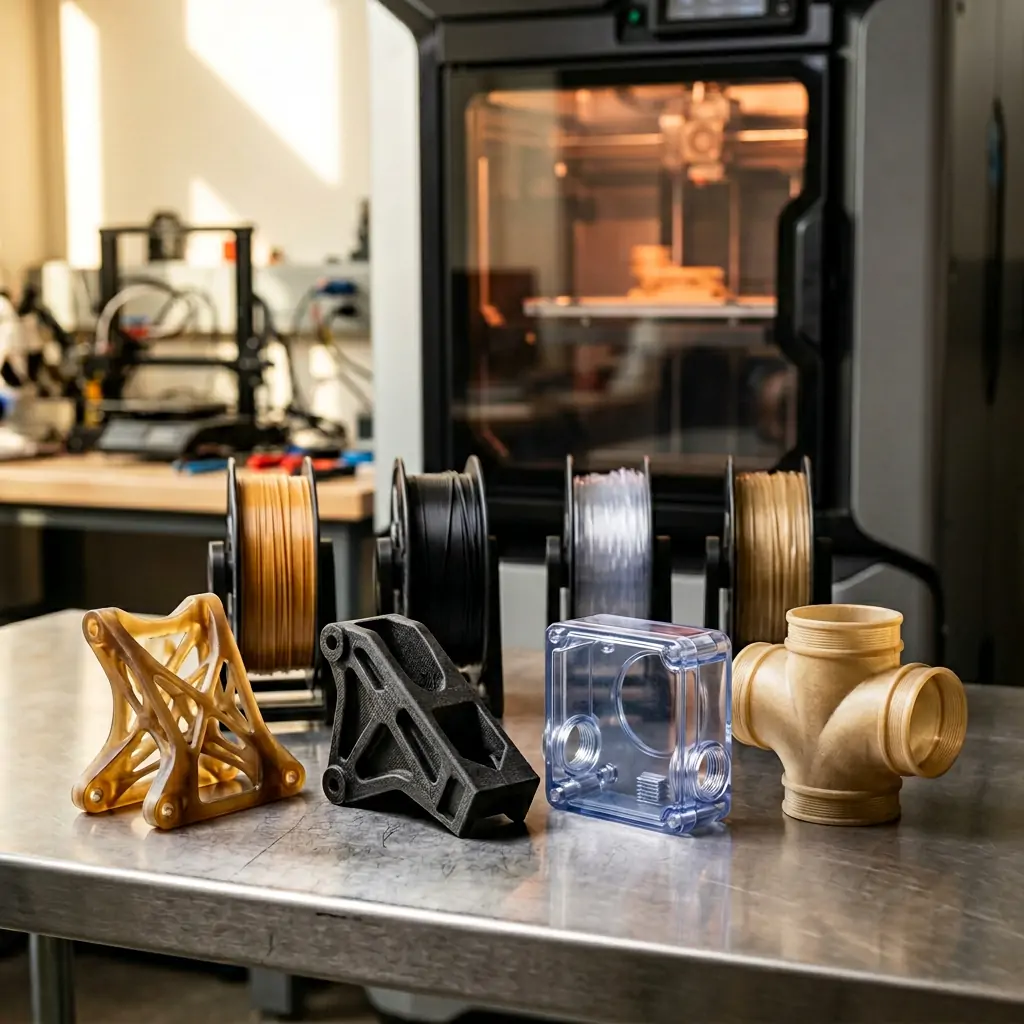
Buying high-temperature 3D printing materials in 2026 is a cross-functional decision. Engineers care about mechanical and thermal performance; procurement teams need cost-per-part data and reliable supply; and quality managers ask about certifications, batch traceability, and process control. This guide addresses all three. Rather than a generic material overview, it’s a practical selection toolkit: printer requirements, validated print settings, PEEK-vs.-PEI trade-offs, realistic cost comparisons, and the certification landscape for aerospace and medical. The data draws from manufacturer datasheets, independent test reports, and direct experience with production users of PEEK, PEI Ultem, polyamide nylon, and polycarbonate PC filaments.
Key Takeaways
- PEEK 3D printing filament remains the performance benchmark, but a 380–420 °C nozzle and actively heated 90–150 °C chamber are non-negotiable for achieving datasheet-level mechanical strength.
- Polyamide nylon filament (PA6, PA12, PA-CF, PA-GF) is the practical workhorse for tough, fatigue-resistant parts. Success hinges on obsessive moisture control—4 to 12 hours of drying at 80–100 °C before every print is the baseline, not a recommendation.
- Polycarbonate PC filament offers a sweet spot of 60–72 MPa tensile strength and useful optical clarity but will warp relentlessly without a closed, heated build chamber above 50 °C.
- PEI Ultem filament (1010 and 9085) is the go-to for FST-rated aerospace and medical applications. 9085 is generally easier to print than PEEK, but its higher cost-per-kilogram can be offset by avoiding the FST qualification overhead required for PEEK.
- In aerospace grade filament selection, the PEI-vs.-PEEK decision often boils down to a business case: Ultem 9085 is pre-qualified to FAR 25.853, while PEEK demands additional certification investment but offers higher mechanical headroom.
- The PEEK-to-PLA cost ratio in 2026 is 30× to 50× per kilogram. The relevant metric, however, is cost per functional part. When scrapped prototypes, post-processing, and end-use performance are factored in, PEEK frequently comes out ahead for low-volume production runs.
- UV resistance varies significantly. PC yellows and embrittles within months of outdoor exposure. PEI holds up with proper stabilization. PEEK, in most grades, performs well in sustained outdoor service.
- Standard hobbyist FDM printers are not viable for PC, PEEK, or PEI. An all-metal hotend capable of at least 350 °C, a genuinely enclosed and actively heated build chamber, and a dry-filament handling system are the entry ticket for production-grade output.
1. Why High-Temperature 3D Printing Materials Define the Next Industrial Cycle
Engineering-grade filaments have moved from the R&D lab to the production floor. The shift is being driven by real economics—lower tooling costs, shorter lead times, and the ability to consolidate multi-part assemblies into single printed components—rather than novelty. Understanding the market context helps frame the technical decisions that follow.
The Market Has Quietly Doubled
According to the Wohlers Report 2025, the global high-temperature 3D printing materials segment reached roughly $1.42 billion in 2025, up from $720 million in 2022. The compound annual growth rate sits around 25%, more than triple the broader polymer AM market. This isn’t speculative growth—it reflects production programs at Airbus, Boeing, the U.S. Department of Defense, and a growing base of medical device OEMs now routinely specifying printed PEEK and PEI parts.
On the supply side, large resin producers—VICTREX, SABIC, Evonik, and Solvay—have moved directly into the filament format, compressing pricing on PEEK filament by 8–12% year-over-year and closing the gap to PEI. For procurement teams, this means lead times are shrinking, and multi-year bulk supply agreements for engineering filaments are no longer limited to a handful of qualified suppliers.
What “High-Temperature” Actually Means in Production
The high-temperature 3D printing materials category generally refers to polymers with a continuous service temperature above 150 °C or a Heat Deflection Temperature (HDT) above 130 °C at 0.45 MPa. That includes PEEK, PEI, PPS, PPSU, and reinforced nylons. Polycarbonate sits at the lower boundary, while PLA, PETG, and ABS fall outside it entirely.
The practical implication for B2B users is that the printer requirements shift dramatically. A standard enclosed FDM printer running PLA at 200 °C cannot be upgraded to PEEK at 400 °C with a “high-temp kit” alone. You need an actively heated build chamber, a hotend capable of sustained 400 °C operation, a build plate that survives 160 °C, motion components rated for the heat, and—often overlooked—dry filament handling from spool to nozzle.
Market context: PEEK and PEI Ultem together account for roughly 38% of the high-temperature filament market by volume, with reinforced nylons (PA-CF, PA-GF) at 31% and PC at 19%. The remaining 12% covers PPS, PPSU/PSU, PEKK, and specialty blends. These are 2025 segment estimates cross-referenced with Wohlers 2025 and SmarTech Analysis data.
Why the 2026 Buyer Profile Has Shifted
The buyer of high-temperature 3D printing materials in 2022 was almost always an R&D engineer running one or two test prints. In 2026, we see a growing share of procurement managers and category buyers writing multi-year supply contracts, evaluating COGS, and negotiating part performance against cost-per-part. That shift is why this guide focuses on practical print parameters and cost reasoning you can take to a finance team. Whether you’re a distributor building inventory, a brand qualifying a new material line, or a print farm scaling production, the same fundamentals apply.
2. PEEK 3D Printing Filament: The Performance Benchmark
When an aerospace engineer is asked to name the polymer that bridges 3D printing and injection-molded performance, the answer is almost always PEEK. The reasons are rooted in its polymer chemistry, and they translate directly into a specific set of printer and process requirements that cannot be compromised.
What Drives PEEK’s Properties
Polyetheretherketone (PEEK) is a semi-crystalline aromatic polymer with a melting point around 343 °C and a glass transition near 143 °C. The semi-crystalline structure is the key to its mechanical performance. If a printed part cools too quickly, the polymer chains solidify in an amorphous state, yielding roughly 30% lower tensile strength and significantly reduced chemical resistance. The practical consequence is that the chamber temperature during printing determines the crystallinity—and therefore whether the part meets the datasheet or falls short.
A PEEK part printed at 90 °C chamber temperature with 30% crystallinity behaves differently than one cooled slowly at 150 °C with full crystallization. Tensile strength moves from around 70 MPa to above 95 MPa. Impact resistance follows the same pattern. If your application demands the published values, the chamber is not a preference—it is the primary process variable that decides whether you have engineering-grade PEEK or an amorphous approximation.
PEEK Print Settings: The Thermal Story
For PEEK 3D printing filament, the parameter envelope in 2026 is well-established but requires discipline. These are starting reference values—your specific filament batch, machine, and part geometry will pull these numbers up or down. We have cross-referenced these against VICTREX 450G technical data, Roboze ARGO printing guides, and INTAMSYS FUNMAT PRO 610HT validated parameters.
- Nozzle temperature: 380–420 °C (all-metal hotend; no PTFE liner above 250 °C)
- Bed temperature: 120–160 °C (PEI sheet or polyimide tape recommended)
- Chamber temperature: 90–150 °C for semi-crystalline parts; amorphous-grade PEEK or non-structural prototypes are the only exceptions to this rule
- Print speed: 15–30 mm/s for the first layer, 30–60 mm/s for bulk; PEEK does not tolerate fast extrusion
- Layer height: 0.1–0.2 mm typical; 0.4 mm possible for large, non-cosmetic parts
- Drying: 120–150 °C for 4–6 hours before printing; store in a sealed dry-box at < 200 ppm moisture
Validated parameter tip: When validating a new PEEK spool, run a 30×30×10 mm tensile cube and a 50×50×5 mm warp test on your actual build plate. The warp test is unforgiving—if the part lifts at the corners, the chamber isn’t holding temperature uniformly. Adding a brim, switching to a PEI build sheet, or improving chamber insulation will resolve the issue in 90% of cases.
Where PEEK Is Being Used in 2026
The strongest demand for PEEK filament is in aerospace grade filament applications—semi-structural brackets, ducting, clips, and electrical insulation components that replace machined aluminum or molded PEEK. The weight saving versus aluminum is typically 30–40% for an equivalent stiffness-to-weight ratio, which compounds at fleet scale.
In medical, PEEK’s ISO 10993-1 biocompatibility makes it a candidate for surgical guides, drill templates, and—in regulated pathways—long-term implant trials. Its compatibility with MRI and sterilization cycles (autoclave, gamma, EtO) sets it apart from PC and standard nylon in this segment. A common error is assuming all PEEK grades are biocompatible by default; only specific grades carry the ISO 10993 certification, so always request documentation from your supplier.
Industrial and chemical processing is the third major segment. PEEK is a true chemical resistant filament—it tolerates hydrocarbons, ketones, esters, and most acids at service temperatures where PA and PC would swell, dissolve, or fail mechanically. Pump housings, valve seats, sensor bodies, and lab fixtures are common applications.
Where PEEK Falls Short
A realistic assessment of PEEK’s limitations is essential for procurement decisions:
- Cost: 30–50× the per-kilogram price of commodity PLA. The per-part economics, however, can flip this (see Section 7).
- UV performance: Unfilled PEEK holds up reasonably outdoors, but UV-stabilized grades should be specified for sustained solar exposure.
- Notch sensitivity: PEEK is sensitive to sharp corners and stress concentrations. Design rules that work for metals do not directly translate.
- Print window: ±5 °C nozzle variation can swing crystallinity enough to alter mechanical results. Consistent thermal control is mandatory.
For a deeper dive into the PEEK printing process, explore our PEEK 3D printing filament product page on SSSray, which walks through validated settings on Roboze, INTAMSYS, and equivalent industrial hardware.
3. Polyamide Nylon Filament: Tough, Flexible, Demanding
Polyamide nylon is the everyday workhorse of the engineering filament world. It offers toughness, fatigue resistance, and chemical tolerance at a fraction of the PEEK price tag—but it demands a disciplined moisture-management routine that many production shops underestimate.
The Nylon Family Tree
“Nylon” for 3D printing covers a wide polymer family. Understanding the differences avoids costly mis-specifications:
- PA6 (Nylon 6): High toughness and abrasion resistance, but extremely moisture-sensitive. Glass transition around 50 °C, melting around 220 °C.
- PA12 (Nylon 12): Lower moisture absorption (under 1% vs. 8–12% for PA6), better dimensional stability, slightly lower mechanical peak. The industry favorite for functional parts where consistency matters.
- PA6/66 (Nylon 6/66): A copolymer balancing PA6 strength with PA66 stiffness. Common in industrial applications needing higher HDT.
- PA-CF (carbon fiber reinforced): PA12 or PA6 with 15–25% chopped or milled carbon fiber. Stiffness jumps 2–3×, dimensional stability improves, moisture absorption decreases.
- PA-GF (glass fiber reinforced): Glass fiber reinforcement for impact resistance at lower cost than CF, but expect accelerated nozzle wear and rougher surface finish.
For B2B buyers, the practical takeaway is that PA12-based formulations are the easiest entry point due to their lower moisture sensitivity and tighter dimensional tolerance. If your production environment has humidity above 60%, we’d suggest starting with PA12 rather than PA6—the performance gap is smaller than the process reliability gap.
Why Nylon Moisture Sensitivity Matters So Much
Polyamide chains are hygroscopic by design; the amide groups form hydrogen bonds with water. This gives nylon its toughness in humid environments but also creates the most common source of print failure. When wet nylon extrudes, the water boils at the nozzle, generating steam bubbles, voids, stringing, and weak layer adhesion. The result is a part that looks acceptable on the bench but fails at half the expected mechanical load.
To put numbers on it: the dry-as-molded moisture content of PA6 is around 0.08–0.12%. The equilibrium moisture content in a 50% RH lab environment is around 3–4%. A freshly dried spool left on an open printer can exceed the print-ready moisture limit within hours in humid conditions.
How to Dry Nylon Filament Before Printing
A disciplined drying protocol is the single highest-ROI investment for nylon printing. Below is a step-by-step procedure that works across PA6, PA12, and reinforced grades:
- Pre-heat the dryer to the target temperature (see table below) for 15 minutes. Do not load the spool during the ramp-up phase—this creates uneven moisture gradients in the filament. Let the oven stabilize first.
- Load spools with airflow in mind. Most industrial dryers (PrintDry, eSun eBOX, EIBOS Cyclopes) hold one to four 1 kg spools. Do not stack or block airflow paths.
- Dry for 4–12 hours depending on starting moisture. A spool open for less than a day typically needs 4 hours. A spool left out for weeks may need 12 hours or longer.
- Verify dryness. If you have a moisture meter, target < 0.05% for PA6 and < 0.03% for PA12. Alternatively, run a purge test: extrude 50 mm of filament at print temperature and watch for bubbles, hissing, or popping. A clean, silent extrusion means you are dry.
- Print from a heated dry-box. For production runs exceeding 2–3 hours, a 50 °C print-dry-box prevents moisture re-uptake during the job. In climates with ambient humidity above 60%, this is non-negotiable.
Don’t skip drying: Wet filament is the root cause of more failed nylon prints than any other factor. The symptoms—stringing, surface pitting, weak layer adhesion, a sizzling sound at the nozzle—are all moisture-driven. A dedicated filament dryer pays for itself rapidly; a kitchen oven at 80 °C (convection) for 6 hours works in a pinch, but temperature control is less precise and the risk of damaging the spool is higher.
Nylon Print Settings: A Practical Starting Point
- Nozzle temperature: 240–270 °C for PA12, 250–280 °C for PA6, 260–290 °C for reinforced grades
- Bed temperature: 80–110 °C; PA-CF benefits from the higher end of this range
- Chamber temperature: 40–60 °C minimum; an enclosed printer is strongly recommended to control warping
- Print speed: 30–50 mm/s typical; reinforced grades should be run slower to preserve fiber alignment
- Nozzle type: Hardened steel or ruby-tipped for reinforced grades; abrasive fibers will wear a brass nozzle in 2–5 kg of filament
Where Nylon Shines in Industrial Use
PA-CF and PA-GF have become the default materials for functional prototyping, jigs, fixtures, and low-volume production end-use parts in automotive and industrial equipment. PA-CF can reach 8–12 GPa flexural modulus—stiffness that directly competes with machined aluminum for many applications—at roughly 1/10th the cost per part and 1/3rd the lead time.
For end-use parts requiring repeated flexing, plain PA12 is a strong candidate for living hinges, clips, and snap-fit assemblies. Its elongation at break (often 200–300%) allows it to survive impact and cyclic loading that would crack PC or PEEK. That mechanical forgiveness is why nylon appears in drone frames, automotive under-hood brackets, and consumer product components.
4. Polycarbonate PC Filament: Strength Meets Transparency
Polycarbonate is the most accessible entry into high-temperature 3D printing materials—a meaningful step above PETG and ABS in strength and thermal performance. But its reputation as “the easy high-temp material” can be misleading; PC demands careful thermal management and the right hardware to print reliably.
Is Polycarbonate Stronger Than PETG?
The short answer is yes, by a margin that matters for structural parts. Comparing typical 3D printing-grade values:
- Tensile strength: PC reaches 60–72 MPa; PETG tops out at 50–55 MPa.
- Flexural modulus: PC delivers 2,300–2,500 MPa; PETG around 1,900–2,100 MPa.
- Heat deflection: PC holds geometry up to 130–140 °C; PETG softens around 70–80 °C.
- Impact resistance: PC is 4–6× tougher than PETG in notched Izod testing.
The performance headroom is real. The trade-off is that PC warps more than PETG, demands higher nozzle and chamber temperatures, and is more sensitive to moisture and uneven cooling. The learning curve is steeper, but the mechanical return is significant.
PC Filament UV Resistance: The Honest Answer
Standard unfilled PC has poor UV resistance. It yellows noticeably within 3–6 months of direct outdoor exposure and becomes progressively more brittle. This limitation explains why PC-ASA, PC-PMMA blends, and UV-stabilized PC grades exist—they address the underlying photodegradation behavior that pure polycarbonate cannot avoid.
For B2B buyers, the decision tree should look like this:
- Indoor mechanical parts: Standard PC is fine. No UV additive needed.
- Outdoor enclosures with full sun exposure: Specify UV-stabilized PC, a PC-ASA blend, or consider PEI/PEEK for long-term service.
- Translucent covers, light housings: Coated or capped PC (acrylic cap layer) is the common industrial answer.
- Medical, food contact, autoclavable: Medical-grade PC is available; confirm FDA or USP Class VI documentation with the supplier before committing.
Hardware Requirements: Can Regular Printers Handle PC?
The honest answer is: not reliably. A standard hobbyist FDM printer with a PTFE-lined hotend cannot sustain 270 °C operation safely—the PTFE liner begins to off-gas fluorinated compounds above 250 °C, which is both a safety and part-contamination issue. Even printers with all-metal hotends often struggle if the build chamber is open, because PC warps aggressively when the part cools unevenly.
For consistent, production-grade PC printing, you need:
- All-metal hotend rated for sustained 300 °C+ (no PTFE anywhere in the thermal zone)
- Enclosed build chamber with active heating to at least 40–50 °C
- Heated bed at 100–120 °C with a compatible build surface (PEI sheet, polycarbonate-compatible adhesive, or glass with Magigoo PC)
- Dry filament storage—PC is moderately hygroscopic; dry at 100–110 °C for 4–6 hours before printing
- Cooling fan off for the first 3–5 layers—PC parts crack if cooled too aggressively during adhesion
For procurement teams evaluating printer fleets: If your existing fleet is predominantly Creality Ender, Prusa MK4, or Bambu X1-class machines, you can run PC on the higher-end enclosed systems (Bambu X1C with active chamber heating, Prusa MK4 with the enclosure upgrade). For PEEK and PEI, the equipment gap is larger—you will need industrial systems like Roboze, INTAMSYS FUNMAT PRO, or equivalent. SSSray’s OEM/ODM engineering filament service can help align filament grade with your specific hardware fleet.
PC vs. PC-ABS vs. PC-ASA: Quick Guide
PC blends in the market each target a different weakness of straight PC:
- PC + ABS: Lower print temperature (250–270 °C), better surface finish, reduced warping. Common in automotive interior prototyping.
- PC + ASA: Adds UV resistance while retaining most of PC’s mechanical performance. The default choice for outdoor enclosures and housings.
- PC + PMMA: Prioritizes optical clarity and scratch resistance. Used in lighting and display prototypes.
5. PEI Ultem Filament: The Aerospace and Medical Workhorse
PEI (Polyetherimide), sold under the SABIC trade name Ultem, dominates the inside of commercial aircraft cabins and a growing share of medical device housings. In filament form, it gives 3D printing access to a material already validated in some of the most demanding certification frameworks in the world.
What Makes Ultem Different
PEI is an amorphous thermoplastic with a glass transition around 217 °C (Ultem 1010) or 247 °C (Ultem 9085). Because it does not crystallize, cooling rate is less of a process variable than for PEEK—but the trade-off is that PEI parts won’t reach PEEK’s peak mechanical strength. What PEI delivers instead is a unique combination of properties:
- Flame, Smoke, and Toxicity (FST) compliance—Ultem 9085 is pre-qualified to FAR 25.853 for aircraft interior applications, which is a closed and expensive certification to obtain for alternative materials.
- Continuous service temperature up to 200 °C for Ultem 1010.
- Chemical resistance to most automotive fluids, alcohols, and weak acids—PEI earns its classification as a true chemical resistant filament.
- Dimensional stability—low thermal expansion and minimal creep under sustained load.
- Biocompatibility in ISO 10993-tested grades for medical device applications.
PEI 1010 vs. PEI 9085: Which One to Specify
The two grades you will encounter most in filament form are Ultem 1010 (unfilled, highest heat performance) and Ultem 9085 (a copolymer with better flow and impact resistance, at slightly lower heat). The decision typically maps to:
- Ultem 1010: Highest HDT (~200 °C), best chemical resistance, most demanding print settings (380–400 °C nozzle, 160–180 °C bed, 150–180 °C chamber)
- Ultem 9085: Easier to print (350–380 °C nozzle, 140–160 °C bed, 130–160 °C chamber), FST-certified for aerospace cabin interior, slightly lower HDT (~170 °C)
If your application is aircraft cabin interior, medical device housing, or food-contact prototyping, 9085 is usually the right starting point. For maximum thermal and chemical endurance, 1010 is the specification. Filament cost is similar between the two grades, so the decision is driven by certification and performance requirements, not price.
PEI Print Settings: A Validated Starting Point
For PEI Ultem filament in 2026, the validated parameters across major industrial printer brands are:
- Nozzle temperature: 350–380 °C (9085) or 370–400 °C (1010)
- Bed temperature: 140–170 °C; PEI build sheet is the recommended surface
- Chamber temperature: 130–180 °C; 150 °C is a strong default for both grades
- Drying: 120–150 °C for 4–8 hours; PEI is moderately hygroscopic
- Print speed: 20–40 mm/s; lower for high-detail parts
PEI vs. PEEK for Aerospace: How to Choose
One of the most frequent long-tail questions in the industry is whether PEEK and PEI are direct substitutes. The honest answer is that they overlap in some aerospace applications, but the decision almost always comes down to certification, not raw performance.
For aircraft cabin interior parts—air ducts, seat brackets, electrical enclosures—Ultem 9085 is the default because it is pre-qualified to FAR 25.853. Specifying PEEK for these applications means funding and managing a new FST qualification program, which is expensive and timeline-consuming.
For semi-structural aerospace parts in the engine bay, high-load clips, or fluid handling, PEEK typically wins on fatigue behavior and chemical resistance to jet fuel and hydraulic fluid.
For medical device applications, both PEEK and PEI Ultem offer ISO 10993 biocompatibility, but PEEK has deeper history in long-term implants (spinal cages, cranial implants), while PEI dominates reusable device housings and sterilization-cycle components.
6. PEEK vs. PEI: An Honest Head-to-Head for B2B Buyers
Since PEEK and PEI Ultem are the two materials most often specified in aerospace and medical RFQs, a side-by-side comparison with real data helps cut through the marketing claims. The summary below is what we would put in front of a technical buyer during a procurement review.
Spec-by-Spec Comparison
The table below cross-references manufacturer datasheets (VICTREX 450G, SABIC Ultem 1010 and 9085) with independent test data from peer-reviewed studies where available. Use these as typical values—specific grades and suppliers will vary.
| Property | PEEK (VICTREX 450G) | PEI Ultem 1010 | PEI Ultem 9085 |
|---|---|---|---|
| Density (g/cm³) | 1.30 | 1.27 | 1.34 |
| Tensile Strength (MPa) | 90–100 | 85–105 | 71–88 |
| Tensile Modulus (GPa) | 3.5–4.0 | 3.2–3.5 | 2.9–3.2 |
| Elongation at Break (%) | 30–45 | 60–80 | 50–70 |
| HDT @ 0.45 MPa (°C) | ~160 | ~200 | ~170 |
| HDT @ 1.8 MPa (°C) | ~152 | ~190 | ~160 |
| Glass Transition (°C) | 143 | 217 | 247 |
| Continuous Service Temp (°C) | 260 | 200 | 180 |
| Nozzle Temp Range (°C) | 380–420 | 370–400 | 350–380 |
| Chamber Temp Recommended (°C) | 90–150 | 150–180 | 130–160 |
| FST (FAR 25.853) | No (requires qualification) | No (requires qualification) | Yes (pre-qualified) |
| Biocompatibility (ISO 10993) | Yes (selected grades) | Yes (selected grades) | Yes (selected grades) |
| Approx. Filament Price (USD/kg, 2026) | $300–500 | $250–400 | $220–360 |
Source: VICTREX 450G technical datasheet (2024), SABIC Ultem 1010/9085 datasheets (2024), cross-referenced with Wohlers Report 2025 and peer-reviewed studies. Values represent typical commercial filament grades; specific supplier lots may vary ±5–10%.
How to Read This Table
PEEK offers the highest tensile strength and the best long-term survival rate in harsh chemical and thermal environments. PEI Ultem 9085 offers easier processing and the FST pre-qualification that PEEK lacks. PEI Ultem 1010 offers the highest HDT, making it the choice for the most thermally extreme applications where FST qualification is not required.
The practical decision framework for B2B buyers is:
- Need pre-qualified FST for aircraft interior? Ultem 9085.
- Need maximum mechanical strength + chemical resistance? PEEK.
- Need the highest heat resistance and your printer can sustain a 180 °C chamber? Ultem 1010.
- Need medical-grade biocompatibility for a reusable device? Either PEEK or Ultem 9085, depending on sterilization cycle requirements and regulatory history for your specific device category.
7. Application-Driven Selection Guide for 2026
The most effective way to choose an engineering filament is to start with the application requirements, not the material datasheet. The matrix below maps the four material families to the use cases that matter in B2B production, with trade-offs stated explicitly.
The Application-Material Matrix
| Application | Top Pick | Strong Alternative | Why |
|---|---|---|---|
| Aircraft cabin interior (FST-rated) | PEI Ultem 9085 | PEEK (with FST qualification work) | 9085 is pre-qualified to FAR 25.853, avoiding a costly and time-consuming certification process. |
| Aerospace semi-structural brackets | PEEK | PEI Ultem 1010 | Higher tensile strength and better fatigue behavior; inherent resistance to jet fuel and hydraulic fluid. |
| Medical surgical guides, drill templates | PEEK | PEI Ultem 9085, PC (medical grade) | Biocompatibility, autoclave/sterilization compatibility, and MRI transparency are the key selection criteria. |
| Chemical processing fixtures & valves | PEEK | PVDF, PPS (specialty) | Broadest chemical resistance at sustained high temperature; tolerates hydrocarbons, acids, and steam. |
| Automotive under-hood brackets | PA-CF (PA12-CF) | PA-GF, PEEK | Best cost-performance balance for low-volume production parts that must survive heat and oil exposure. |
| Functional prototypes (general engineering) | PA-CF or PA12 | PC, PEEK | Tough, dimensionally stable, significantly lower cost than PEEK/PEI for iterative prototyping. |
| Living hinges, snap-fit clips | PA12 (PA6 if higher load) | PP, TPU (flexible) | High elongation at break (200-300%) and excellent fatigue resistance at low cost. |
| Transparent covers, light housings | PC | PC-PMMA, clear ABS | Optical clarity, impact strength, and temperature resistance above PETG. Standard PC is not UV-stable. |
| Outdoor enclosures, UV exposure | PC-ASA, UV-stabilized PC | PEEK, PEI Ultem | PC-ASA handles UV well at moderate cost; PEEK/PEI hold up better but at a significant price premium. |
| Electrical insulation, high-voltage | PEEK | PEI Ultem | High dielectric strength, low dissipation factor, and UL94 V-0 flammability rating without additives. |
Recommendations reflect 2026 industry practice and published guidance from VICTREX, SABIC, and the Wohlers Report 2025. Specific application requirements may justify a different choice—always validate with a prototype run before committing to a material specification.
Cost vs. PLA: The Real Numbers for 2026
The headline answer to “what does PEEK filament cost vs. PLA?” is a multiple between 30× and 50× per kilogram in 2026. PLA sits in the $18–28/kg range for quality engineering-grade spools; PEEK 3D printing filament runs $300–500/kg, with PEI Ultem broadly comparable. Reinforced nylons fall in the middle at $60–120/kg for PA-CF and $45–80/kg for PA-GF.
But per-kilogram price is the wrong metric for B2B economics. The relevant figure is cost per functional part, and that calculation can flip the apparent winner in many real scenarios. A PEEK bracket that replaces a machined aluminum part often wins on total cost when you account for material utilization, machining time, and tooling. A failed $5 PLA prototype reprinted three times costs more than a successful $80 PA-CF part produced on the first attempt. A PEEK part that lasts five years in a chemical bath is cheaper than a PC part that fails in six months—even if the unit cost is 10× higher.
Cost-per-part worked example: A 250 g aerospace bracket in PEEK costs about $90 in material. The same bracket in PA-CF costs roughly $22 in material, but the design requires re-engineering (added ribs, thicker sections) to meet the stiffness requirement, bringing the PA-CF part to 320 g and $38. The PEEK part passes certification on the first iteration; the PA-CF part needs two design revisions. Total program cost: PEEK ~$90, PA-CF ~$130. The “expensive” material was the cheaper option when total cost of development was included. SSSray’s engineering consultation can help model this for your specific application before you default to per-kilogram math.
Market Sizing and What to Watch in 2026
Market analyses (cross-referenced with SmarTech and Wohlers 2025) project the high-temperature 3D printing materials segment to reach $2.6–2.8 billion by 2028. Three trends are worth monitoring: the emergence of lower-cost PEEK alternatives like PEKK and PAEK copolymers from Arkema and Solvay (10–20% cheaper with similar performance); closed-loop recycling programs for PEEK and PEI production scrap, increasingly relevant for ESG and Scope 3 reporting; and printer-side innovation—new industrial systems with 200 °C+ chamber capability entering the market below the $50K mark, compressing the cost barrier for production PEEK and PEI printing.
8. Pitfalls, ROI, and Procurement Best Practices
Most engineering filament failures in production are not material defects—they are process and procurement errors. Below is what we see go wrong most often, and what to do instead.
The Five Pitfalls We See Most Often
- Skipping chamber heating to save time. PEEK printed without a 90 °C+ chamber delivers 60–70% of datasheet strength. If the application requires PEEK, the chamber is not optional—it is the process.
- Printing wet nylon from an open spool. Even one hour of open-air exposure in humid conditions can push a freshly dried spool past the print-ready moisture limit. Dry-box printing is the only reliable answer for production.
- Specifying PEEK when PA-CF would do the job. PEEK is the right call for many applications, but it is the wrong call for many others. An honest cost-per-part analysis upfront saves real budget and avoids over-specification.
- Assuming PC is “the easy high-temp material.” PC is more accessible than PEEK and PEI, but it is a significant step up from PETG in warpage, moisture sensitivity, and hardware requirements. Underestimating this leads to a high first-print failure rate.
- Buying on per-kilogram price alone. A cheaper spool with ±0.05 mm diameter tolerance and undocumented batch consistency is more expensive in the end than a slightly pricier spool with ±0.02 mm tolerance and a COA for every lot. Quality variation is the hidden cost that procurement teams often miss.
Quality Signals to Require from Your Filament Supplier
Whether sourcing from a resin producer, a filament converter, or a distributor, these documentation items separate a quality supplier from a commodity vendor: diameter tolerance of ±0.02 mm or tighter (engineering-grade benchmark; ±0.05 mm is budget tier); batch-to-batch traceability with lot numbers and certificates of analysis (COAs) for every spool; moisture content at packaging verified below 200 ppm for PEEK/PEI and below 0.05% for nylon; mechanical test data from printed test bars, not just raw resin datasheets; and regulatory documentation—ISO 10993 for medical, FAR 25.853 for aerospace, UL94 for flammability, FDA or EU 10/2011 for food contact.
The Realistic ROI Timeline
For a typical B2B operation moving from PLA/PETG prototyping to a production engineering filament stack, the realistic payback period is 9–18 months. Savings come from three sources: eliminating machined metal parts in low-volume production (often 30–60% of the unit cost in the first 500 parts); reducing part count through part consolidation—a single printed bracket frequently replaces an assembly of 3–5 metal pieces; and compressing lead times from weeks to days for replacement parts, jigs, and fixtures.
Sample ROI calculation: A contract manufacturer producing 200 custom aerospace brackets per year was previously machining each from PEEK billet at $480/part with 6-week lead times. Switching to PEEK 3D printing brought per-part cost to $185 and lead time to 5 days. Annual savings: $59,000. Equipment investment: $180,000 for a mid-range industrial PEEK-capable printer. Payback period: approximately 9 months when the value of lead-time reduction (customer retention, on-time delivery bonuses) is included.
Building a Multi-Material Strategy
Most B2B operations we have worked with settle on a 3–4 material core rather than a sprawling catalog: PLA or PETG for concept models and visual prototypes; PA-CF or PA12 for functional prototypes, jigs, and low-volume production; PC or PC-ASA for housings, transparent covers, and UV-exposed parts; and PEEK or PEI Ultem for aerospace, medical, and high-temperature production. This stack covers roughly 90% of typical B2B use cases. SSSray’s product catalog covers the full engineering filament lineup with technical data sheets and validated print parameters for each grade.
Print Settings Quick Reference
Below is a consolidated print-settings comparison for the four engineering filament families. Use this as a quick-lookup when switching materials on a multi-printer fleet. Specific grades and printer models will deviate, so always cross-reference your filament supplier’s technical data sheet and your printer manufacturer’s validated material database.
| Parameter | PEEK | PEI Ultem 9085 | PA-CF (PA12) | PC |
|---|---|---|---|---|
| Nozzle Temp (°C) | 380–420 | 350–380 | 250–275 | 270–310 |
| Bed Temp (°C) | 120–160 | 140–160 | 80–110 | 100–120 |
| Chamber Temp (°C) | 90–150 | 130–160 | 40–60 (closed) | 40–60 (closed) |
| Drying (°C / hours) | 120–150 / 4–6 | 120–150 / 4–8 | 80–100 / 4–12 | 100–110 / 4–6 |
| Print Speed (mm/s) | 15–40 | 20–40 | 30–50 | 30–60 |
| Hotend | All-metal, ≥400 °C | All-metal, ≥380 °C | Hardened, ≥280 °C | All-metal, ≥310 °C |
| Build Surface | PEI sheet or polyimide | PEI sheet | PEI + glue / Magigoo PA | PEI / Magigoo PC |
| Enclosure Required | Yes (actively heated) | Yes (actively heated) | Strongly recommended | Yes |
Typical starting reference values, cross-referenced with VICTREX, SABIC, Stratasys, INTAMSYS, and Bambu Lab validated material databases (2024–2026). Adjust for your specific printer, lot, and part geometry. The engineering filament product catalog on SSSray links to per-grade technical data sheets and recommended printer compatibility.
Final Procurement Checklist
Before placing your next engineering filament order, run through this list:
- ✓ Confirmed your printer’s maximum chamber temperature matches the material’s recommended range
- ✓ Verified drying equipment and dry-box capability for the specific material family
- ✓ Requested COA and diameter tolerance documentation for the specific lot
- ✓ Confirmed regulatory documentation matches your end-market requirements (medical, aerospace, food contact)
- ✓ Estimated cost per part, not cost per kilogram, with realistic print yield assumptions
- ✓ Established a sample-print validation protocol (tensile cube + warp test + functional test) before committing to volume
Frequently Asked Questions
Q1: What temperature is needed to print PEEK successfully?
For PEEK 3D printing filament, the starting reference values are a nozzle temperature of 380–420 °C, a heated bed at 120–160 °C, and an actively heated build chamber between 90–150 °C. Chamber temperature is the critical variable for achieving crystallinity—below 90 °C, the part will be largely amorphous with reduced mechanical strength. Run a 30×30×10 mm tensile cube as a validation print whenever you change supplier, lot, or major parameter to confirm your settings produce the expected results.
Q2: How to dry nylon filament before printing?
For polyamide nylon filament, the standard drying protocol is 80–100 °C for 4–12 hours in a dedicated filament dryer. PA6 requires the longer end of the range; PA12 can often be ready in 4–6 hours. After drying, store and print from a heated dry-box at 50 °C to prevent moisture re-uptake. A simple purge test—extrude 50 mm at print temperature and look for bubbles, hissing, or popping—will tell you if the spool is dry enough to print.
Q3: Is polycarbonate stronger than PETG?
Yes, polycarbonate PC filament is measurably stronger than PETG. Typical 3D printing-grade values show PC reaching 60–72 MPa tensile strength versus 50–55 MPa for PETG, with 4–6× the notched Izod impact resistance and a heat deflection temperature roughly 60–70 °C higher. The trade-off is that PC requires 270–310 °C nozzle temperature, an enclosed build chamber, and disciplined drying—it is not a drop-in replacement for PETG.
Q4: What are PEEK filament applications?
PEEK filament is specified in three major application areas. In aerospace, it replaces machined aluminum in semi-structural brackets, ducting, clips, and electrical insulation—typically delivering 30–40% weight savings. In medical, its ISO 10993 biocompatibility supports surgical guides, drill templates, and implant components. In chemical processing, PEEK’s broad chemical resistance makes it the material of choice for pump housings, valve seats, sensor bodies, and lab fixtures exposed to aggressive chemicals and high temperatures.
Q5: Why does PEEK require an enclosed printer?
PEEK 3D printing filament requires an enclosed, actively heated build chamber for two reasons. First, PEEK is semi-crystalline—its mechanical properties depend on achieving 30–35% crystallinity, which requires slow, controlled cooling only possible with an actively heated chamber. Second, the chamber prevents the thermal gradients that cause warping and delamination in a high-temperature print. An open-frame printer cannot sustain the necessary ambient thermal conditions, and even if it could, the parts would warp badly. The enclosure is a process requirement, not an accessory.
Q6: How does PEI compare to PEEK for aerospace?
PEI Ultem and PEEK serve different niches in aerospace. For aircraft cabin interior components (air ducts, seat brackets, electrical enclosures), PEI Ultem 9085 is the default because it is pre-qualified to FAR 25.853 FST requirements. Specifying PEEK for these applications means funding a new qualification program. For semi-structural aerospace parts in the engine bay or fluid handling, PEEK wins on mechanical performance and chemical resistance to jet fuel and hydraulic fluid. Ultem 1010 sits between them, with the highest heat resistance of the three.
Q7: What is the cost of PEEK filament vs PLA?
The 2026 cost ratio between PEEK 3D printing filament and quality PLA is roughly 30× to 50× per kilogram—PLA at $18–28/kg, PEEK at $300–500/kg. However, cost per functional part is the relevant metric, and it often flips the calculation: a $90 PEEK bracket can be cheaper than a $38 PA-CF bracket that requires multiple design iterations to certify. For low-volume production under 1,000 parts, 3D printed PEEK frequently beats machined PEEK or aluminum on total cost.
Q8: Can regular printers handle PC filament?
Standard hobbyist FDM printers (Creality Ender, Prusa MK4 base, Voron) are not recommended for reliable PC filament printing. The issues: PTFE-lined hotends off-gas above 250 °C, making 270–310 °C PC prints unsafe and contaminating the part; open-frame builds allow too much cooling, causing warping and delamination; and standard build plates may not adhere PC reliably at 100–120 °C. For consistent PC printing, you need an all-metal hotend rated for 300 °C+, an enclosed chamber with active heating to at least 40–50 °C, and a compatible build surface. Enclosed systems like the Bambu X1C are workable for PC; for production volumes, industrial systems like Roboze or INTAMSYS are the reliable choice.
Conclusion: Building Your 2026 Engineering Filament Stack
The engineering filament market in 2026 has moved past the “does it work?” phase. The current questions are practical: which material fits my application, my printer fleet, and my certification requirements? PEEK 3D printing filament delivers the highest mechanical and thermal performance but demands the strictest process control. Polyamide nylon filament is the tough, fatigue-resistant workhorse for shops that commit to moisture management. Polycarbonate PC filament is the accessible step up from PETG—with real strength and heat advantages but a non-trivial hardware requirement. PEI Ultem filament is the certified aerospace and medical workhorse, with FST pre-qualification that PEEK lacks and processing that is incrementally easier.
For procurement teams building a 2026 sourcing roadmap, we recommend: validating a sample print on your actual hardware before volume orders; matching your printer fleet’s chamber temperature capability to the material, not the reverse; specifying by application requirement rather than per-kilogram cost; demanding COA, diameter tolerance, and lot traceability from your supplier; and building a 3–4 material core stack—PA-CF, PC, PEEK, and PEI Ultem covers the vast majority of B2B use cases in our experience.
The high-temperature 3D printing materials market is growing at 25% year-over-year, supply chains are maturing, and the price gap to commodity filaments is narrowing. For buyers who set up their engineering filament stack thoughtfully in 2026, the next 24 months are when the economics of additive manufacturing shift from experimental to accretive.
SSSray’s engineering team works directly with procurement professionals to match the right material to the actual application—not just to sell a catalog. If you are building or updating your engineering filament sourcing strategy, we would rather have a technical conversation about your parts and printer fleet than send a generic quote.
Request a quote or free samples
Tell us the material, color, spool size and monthly volume. An engineer replies within 24 hours on business days.
References
- Wohlers, T., & Campbell, R.I. (2025). Wohlers Report 2025: Additive Manufacturing State of the Industry. Wohlers Associates, ASTM International.
- VICTREX plc. (2024). VICTREX PEEK 450G Technical Data Sheet. Thornton-Cleveleys, UK.
- SABIC. (2024). ULTEM 1010 and ULTEM 9085 Resin Product Brochure. SABIC Innovative Plastics.
- ISO/ASTM 52900:2021. Additive Manufacturing — General Principles — Fundamentals and Vocabulary. International Organization for Standardization.
- ISO 10993-1:2018. Biological Evaluation of Medical Devices — Part 1: Evaluation and Testing within a Risk Management Process.
- Singh, S., Prakash, C., & Pramanik, A. (2024). “Mechanical and thermal characterization of FFF-printed PEEK for aerospace applications.” Materials Today: Proceedings, 102, 245–253.
- Chen, Y., et al. (2025). “Process–property relationships in FDM-printed ULTEM 9085 for aircraft interior components.” Additive Manufacturing, 88, 104246.
- Biesterfeld, A., et al. (2024). “Moisture-induced property changes in polyamide 12 during FFF processing.” Polymer Testing, 131, 108354.
- EVONIK Industries. (2024). VESTAMID L (PA12) and VESTAMID DX (PA-CF) Technical Data Sheets. Marl, Germany.
- Stratasys Ltd. (2024). FDM Nylon 12CF and FDM Nylon 12 Technical Specifications. Eden Prairie, MN.
- Roboze S.p.A. (2024). PEEK, PEI, and PAEK Printing Process Guide for the ARGO Production System. Bari, Italy.
- INTAMSYS Technology. (2024). FUNMAT PRO 610HT Validated Material Database — PEEK, ULTEM, PA-CF. Shanghai, China.
- Federal Aviation Administration. (2024). FAR 25.853 — Compartment Interior Materials Flammability Test Standards. U.S. DOT.
- SmarTech Analysis. (2025). High-Performance Polymers in Additive Manufacturing — 2025 Market Outlook. SmarTech Publishing.
