Online time
Monday to Friday: 9AM - 8PM
Weekend: 10AM - 5PM


TL;DR: PETG Stringing and Layer Separation Are Procurement Problems, Not Only Slicer Problems
PETG stringing, nozzle ooze, brittle Z-axis bonding, and inconsistent high-speed output usually come from a combined chain: moisture in the filament, an unstable melt-flow window, excessive cooling, weak packaging, and insufficient supplier batch control. A print farm can tune retraction for one spool. A distributor, OEM brand, or engineering buyer needs a repeatable incoming QC method, supplier evidence, and shipment-level traceability.
Print ProcessStart with drying, temperature tower, pressure advance, then retraction. Do not tune retraction first.
Incoming QCCheck diameter log, moisture record, MFR/IV evidence, packaging barrier, SDS, RoHS, and REACH SVHC declaration.
Buyer RiskUnverified recycled feedstock, thin vacuum bags, and batch-to-batch rheology drift create returns that slicer presets cannot fix.
SSSray AngleUse supplier-confirmed batch data before volume orders; request samples, TDS, SDS, and QC records before signing an OEM schedule.

He Jiang
Senior Researcher · SSSray · 3D Printing Filament Manufacturing · Jinhua, Zhejiang
He Jiang is a senior researcher at SSSray, a 3D printing filament manufacturer in Jinhua, Zhejiang, China. He focuses on EU regulatory shifts that affect filament brands exporting into Europe, including REACH SVHC disclosure, the universal PFAS restriction, and PPWR packaging compliance. He Jiang’s writing for SSSray is grounded in supplier SDS documentation, ECHA publications, and EUR-Lex regulatory texts, and is intended for B2B brand owners, distributors, and OEM partners — not as a substitute for professional regulatory advice.
1. Why PETG Stringing and Layer Separation Happen in Production
PETG is a glycol-modified copolyester. Compared with PLA, it normally prints at a higher nozzle temperature, has a stickier melt, and needs a more careful balance between part cooling and layer fusion. This is why PETG can look clean on one printer and become stringy or brittle when the same spool is moved to another machine, a faster profile, or a humid print room.
For B2B buyers, the important point is not simply “PETG strings.” The important point is that stringing and layer separation can reveal supplier variation. If one container shipment has a wider diameter distribution, higher residual moisture, different melt flow behavior, or weaker packaging, the buyer absorbs the cost through customer returns, labor rework, failed print-farm jobs, and brand complaints.
| Observed Failure | Likely Technical Cause | Shop-Floor Check | Supplier Evidence to Request |
|---|---|---|---|
| Fine stringing across travel moves | Moisture, excessive nozzle temperature, long open travel, weak pressure control | Dry at 60-65°C, run a temperature tower, then tune pressure advance and retraction | Batch moisture record, packaging specification, and recommended drying profile |
| Nozzle blobs and random seams | Diameter variation, melt-flow drift, too much residual hotend pressure | Measure filament diameter at multiple points and compare extrusion consistency | Continuous laser diameter logs and MFR/IV consistency evidence |
| Good surface but brittle Z-axis bonding | Too much cooling, too low nozzle temperature, degraded polymer chain length | Reduce fan speed, raise nozzle temperature in small increments, break test coupons | Mechanical test method, resin certificate, and batch traceability |
| One color prints well, another fails | Pigment/additive loading changed melt behavior or reduced interlayer bonding | Compare the same geometry across colors using identical drying and slicer settings | Color-specific formulation control, additive declaration, and retained sample policy |
2. Six-Step Field Protocol Before Blaming the PETG Supplier
Procurement teams should require a structured troubleshooting record before opening a supplier claim. This prevents unnecessary disputes while giving real evidence when a batch is unstable.
Step 1: Dry and Isolate Moisture
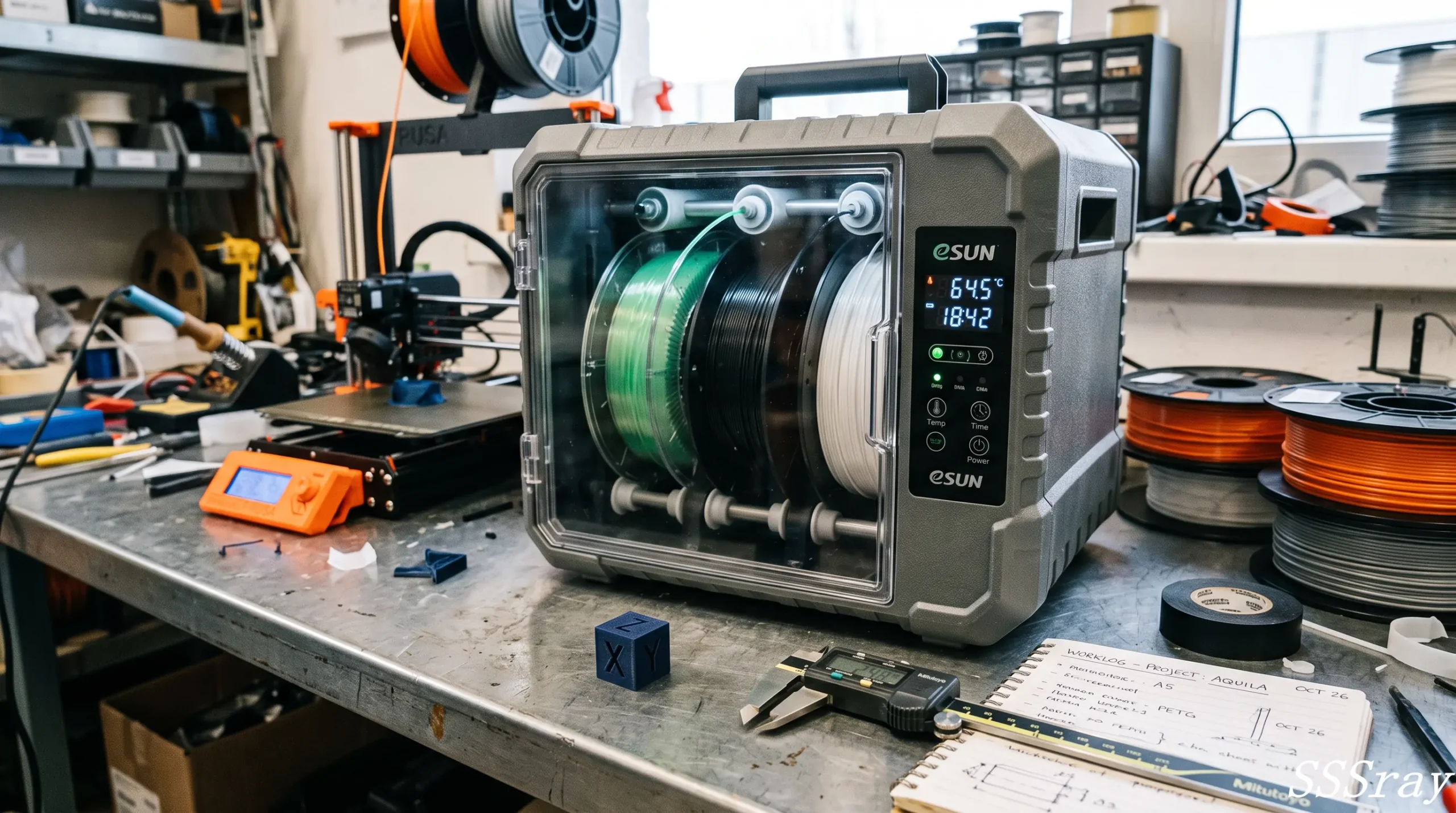
Dry PETG at 60-65°C for 5-8 hours, then print from a sealed dry box. If stringing improves sharply, the issue is moisture exposure or packaging protection, not only slicer tuning.
Step 2: Run a Temperature Tower
Start inside the supplier’s recommended range. Many standard PETG profiles begin around 230-260°C, while some high-flow or translucent PETG grades may require a higher window. Choose the lowest temperature that still maintains layer bonding.
Step 3: Tune Pressure Before Retraction
Use pressure advance or linear advance to reduce corner swelling and nozzle pressure. Then adjust retraction in small increments so the hotend does not clog or under-extrude.
Step 4: Control Cooling by Part Purpose
For functional PETG parts, avoid aggressive continuous cooling. Use only enough fan to control overhangs and surface quality while preserving Z-axis layer fusion.
Step 5: Compare Two Spools Under One Profile
Print the same coupon from the suspect batch and a retained reference batch. Keep drying, slicer, nozzle, bed, and room conditions identical.
Step 6: Record Evidence
Keep photos, short videos, coupon weights, drying conditions, printer profile, spool batch number, and failure rate. This turns a complaint into a supplier quality conversation.
3. PETG Supplier QC Evidence B2B Buyers Should Request
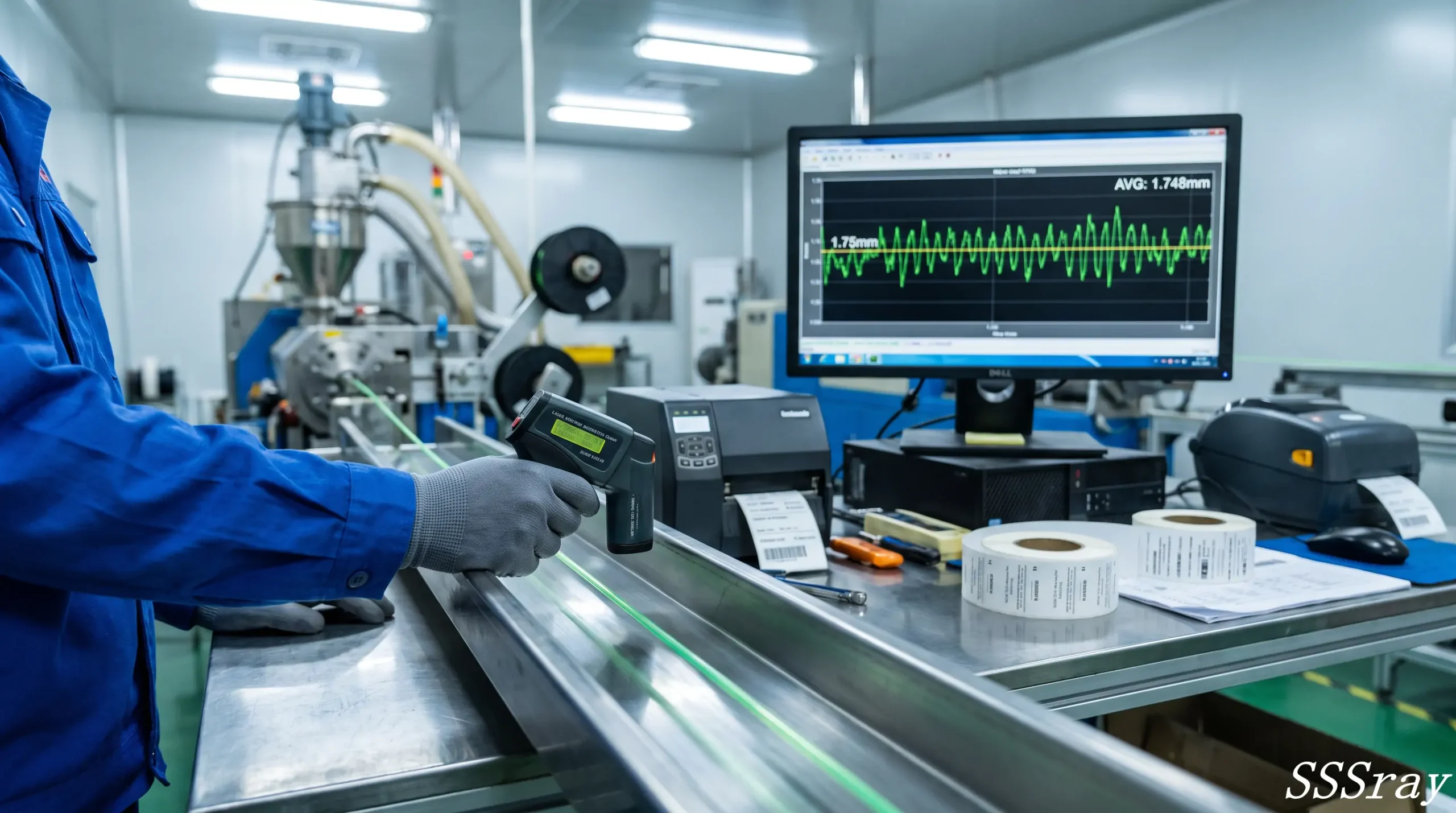
A reliable PETG supplier should be able to explain how filament is dried, extruded, measured, packed, retained, and traced. Do not rely on generic statements such as “premium quality” or “no stringing.” Ask for batch-specific evidence.
| QC Item | Why It Matters | Acceptable Evidence | Buyer Action |
|---|---|---|---|
| Diameter and ovality | Diameter swings cause over-extrusion, blobs, gaps, and unstable flow | Laser measurement log or batch inspection report for 1.75 mm or 2.85 mm filament | Request tolerance target before purchase; verify with incoming measurement |
| Moisture control | Wet PETG can string, pop, foam, and lose mechanical performance | Karl Fischer or equivalent moisture test method; drying and packaging record | Require pre-shipment confirmation for high-volume orders |
| MFR or IV consistency | Melt-flow drift changes pressure, stringing, and layer bonding | MFR test by ASTM D1238 or supplier resin IV documentation | Compare production batch against approved sample batch |
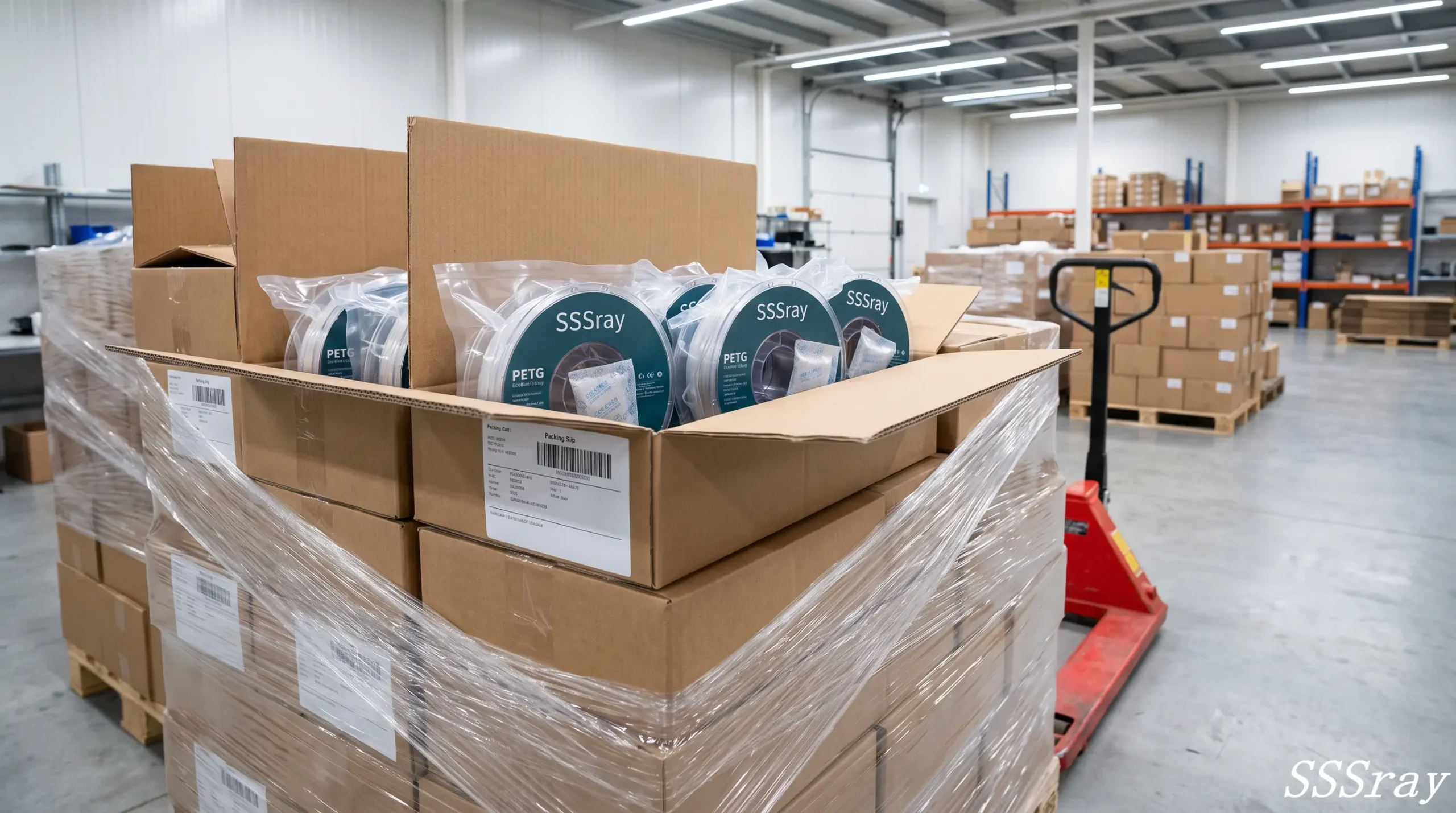
| Packaging barrier | Sea freight and warehouse storage expose filament to moisture | Bag material specification, desiccant specification, vacuum seal check, carton protection | Reject thin bags for long transit or humid destination markets |
| Regulatory file | EU and marketplace buyers need chemical documentation | SDS, RoHS report, REACH SVHC declaration, and packaging compliance review | Keep documents linked to SKU, color, material, and batch |
| Retained samples | Dispute resolution requires comparison against shipped goods | Supplier retained spool policy and batch number traceability | Ask supplier to keep retained samples until warranty window closes |
4. B2B Buyer Decision Matrix for PETG Filament Sourcing
| Buyer Type | Main Commercial Risk | Most Important Evidence | Best SSSray Conversation |
|---|---|---|---|
| Distributor | Customer returns, damaged reviews, slow-moving colors | Stable SKU range, packaging durability, documentation for marketplace compliance | Wholesale PETG supply, color portfolio planning, and regional packaging requirements |
| OEM filament brand | Private label inconsistency between repeat orders | Approved sample lock, color masterbatch control, carton artwork control, retained samples | Private label filament manufacturing with batch traceability |
| Print farm | Labor loss from failed jobs and manual string removal | Dry-box performance, spool winding consistency, high-speed profile stability | Bulk PETG filament qualification by machine model and part geometry |
| Engineering buyer | Functional part failure after customer deployment | TDS, SDS, mechanical test method, thermal property record, and lot traceability | Wholesale PETG filament samples with technical document review |
5. Baseline PETG Settings for Qualification Prints
The settings below are starting points for supplier qualification, not universal final profiles. Final settings must be confirmed on the buyer’s printer, nozzle size, hotend flow capacity, bed surface, part geometry, and target speed.
| Parameter | Starting Range | What to Watch | Procurement Interpretation |
|---|---|---|---|
| Nozzle temperature | 230-280°C, grade-dependent | Stringing at high temperature; weak bonding at low temperature | A narrow stable window may indicate formulation or process sensitivity |
| Bed temperature | 60-80°C | Warping, elephant foot, excessive adhesion to glass or PEI | Include surface recommendation in product listing and user guide |
| Direct-drive retraction | 0.5-2.0 mm at moderate speed | Stringing, under-extrusion after travel, heat-break clogging | Do not market a single “perfect” value; publish a range |
| Bowden retraction | 3-7 mm depending on tube length | Filament grinding, delayed pressure response, inconsistent restart | Provide separate Bowden and direct-drive guidance |
| Part cooling | Low to moderate; increase only for bridges and small details | Brittle Z-axis bonding, sagging bridges, rough overhangs | Engineering buyers should test strength, not only surface finish |
| Drying | 60-65°C for 5-8 hours when exposed or before critical jobs | Popping, haze, foam, stringing, inconsistent extrusion | Packaging and storage instructions should be visible on the product page |
6. How to Verify PETG Supplier Claims Without Guesswork
| Supplier Claim | Risk if Unverified | Evidence to Request | Decision Rule |
|---|---|---|---|
| “Low stringing PETG” | May only be tuned for one printer profile or one slow speed | Printed test model under stated settings, drying condition, and batch number | Accept only if the supplier states test conditions clearly |
| “High-speed PETG” | May sacrifice layer bonding or require a high-flow hotend | Recommended speed range, volumetric flow guidance, and nozzle temperature range | Match claim to your printer fleet before volume purchase |
| “Vacuum sealed” | Vacuum appearance does not prove long-term moisture barrier | Bag structure, desiccant specification, seal integrity process, and storage guidance | Require stronger barrier packaging for humid markets and sea freight |
| “Virgin material” | Uncontrolled recycled content can shift melt behavior | Resin source statement, batch traceability, and MFR/IV consistency record | Lock approved formulation for repeat OEM orders |
| “EU compliant” | Compliance may not cover colorants, additives, labels, and packaging | SDS, RoHS, REACH SVHC declaration, and packaging regulatory review | Verify documents by SKU and update date before import |
7. SSSray Qualification Workflow for PETG Volume Orders
For distributors, OEM filament brands, and print farms, SSSray treats PETG qualification as a pre-purchase evidence process. The goal is not to promise that PETG will never string. The goal is to help buyers verify repeatability before committing to repeat purchase orders.
Supplier Data Confirmation Before Quotation
Before a volume PETG order is quoted, buyers can ask SSSray to confirm the current PETG tolerance target, available PETG grades, packaging structure, sample policy, MOQ, color customization terms, SDS/TDS availability, REACH/RoHS documentation status, and whether batch moisture, MFR, or IV records can be shared for qualified B2B projects.
Recommended buyer flow: first request a PETG sample, then test it against the buyer’s printer fleet, then request technical documents and packaging evidence, then approve color and spool packaging, then move to a pilot order before full container or repeat OEM scheduling.
8. Frequently Asked Questions
Why does PETG string more than PLA?
PETG normally prints hotter than PLA and has a stickier melt behavior. Moisture, excessive nozzle temperature, long travel moves, and weak pressure control can all increase stringing. Dry the filament first, then tune temperature, pressure advance, and retraction.
Can retraction alone fix PETG stringing?
No. Retraction helps relieve nozzle pressure, but it cannot fully compensate for wet filament, excessive temperature, unstable diameter, poor pressure advance, or a formulation that changes between batches.
What PETG documents should a distributor request before importing?
Ask for SDS, RoHS report, REACH SVHC declaration, product TDS, packaging specification, diameter tolerance target, batch traceability method, and the supplier’s recommended drying and print settings.
How should an OEM brand approve a PETG private label batch?
Approve the sample spool, color, spool type, box artwork, label barcode, documentation set, and packaging structure. For repeat orders, compare production batch evidence against the approved sample batch instead of relying only on visual inspection.
Why do PETG parts look smooth but break between layers?
The common causes are excessive cooling, too low a nozzle temperature, insufficient layer time, moisture-related degradation, or a material formulation that does not bond well at the selected speed. Engineering buyers should test coupon strength, not only surface appearance.
Should new PETG spools be dried before printing?
For critical production, yes. Even sealed spools can pick up moisture after opening, and storage conditions vary. Drying and printing from a sealed dry box creates a more reliable baseline for qualification.
Request a quote or free samples
Tell us the material, color, spool size and monthly volume. An engineer replies within 24 hours on business days.
9. References and Standards Used for Verification
- ISO 15512:2019 – Plastics: determination of water content, including Karl Fischer-based methods.
- ASTM D1238 – Melt flow rates of thermoplastics by extrusion plastometer; ASTM lists D1238-23A as the active version.
- ASTM D638 – Tensile properties of plastics.
- ECHA Candidate List – SVHC list under EU REACH.
- Regulation (EU) 2025/40 – Packaging and packaging waste regulation.
- Snapmaker PETG HF technical page – PETG drying and print-setting reference point.
- QIDI PETG Rapido technical page – High-speed PETG drying and print-setting reference point.
- Anycubic PETG technical page – PETG drying, print settings, and documentation reference point.
