Online time
Monday to Friday: 9AM - 8PM
Weekend: 10AM - 5PM




PEEK High-Performance Series | Carbon Fiber Reinforced | OEM / ODM
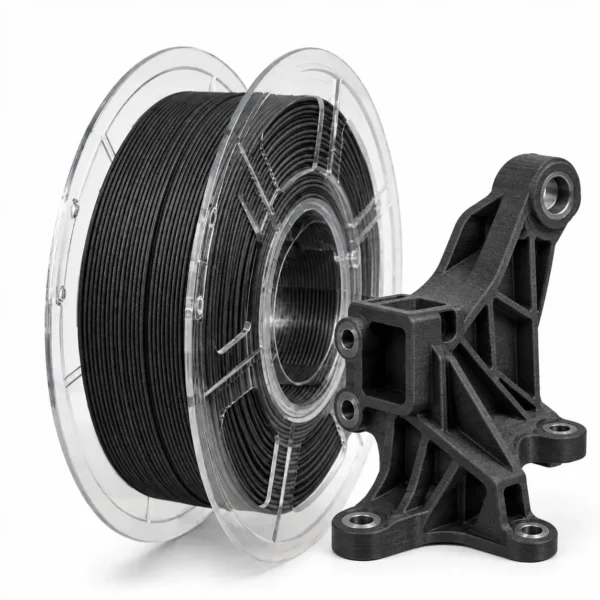
Carbon Fiber PEEK Filament – SSSray PEEK-CF Matte Black, філамент PEEK з вуглецевим волокном for 3D Printing Robotic Grippers & Structural Brackets
Carbon-fiber-reinforced PEEK filament for industrial FFF programs that need high stiffness, high-temperature capability, controlled shrinkage and a matte technical surface.
We supply this PEEK-CF grade for robotic grippers, structural brackets, fixtures, tooling and demanding functional parts printed on high-temperature equipment. The carbon-fiber-filled PEEK matrix is abrasive and requires a wear-resistant nozzle, an actively heated chamber and disciplined moisture control.
MaterialPEEK-CF
SeriesPEEK High-Performance
Color EffectCharcoal Matte Black
Diameter1.75mm
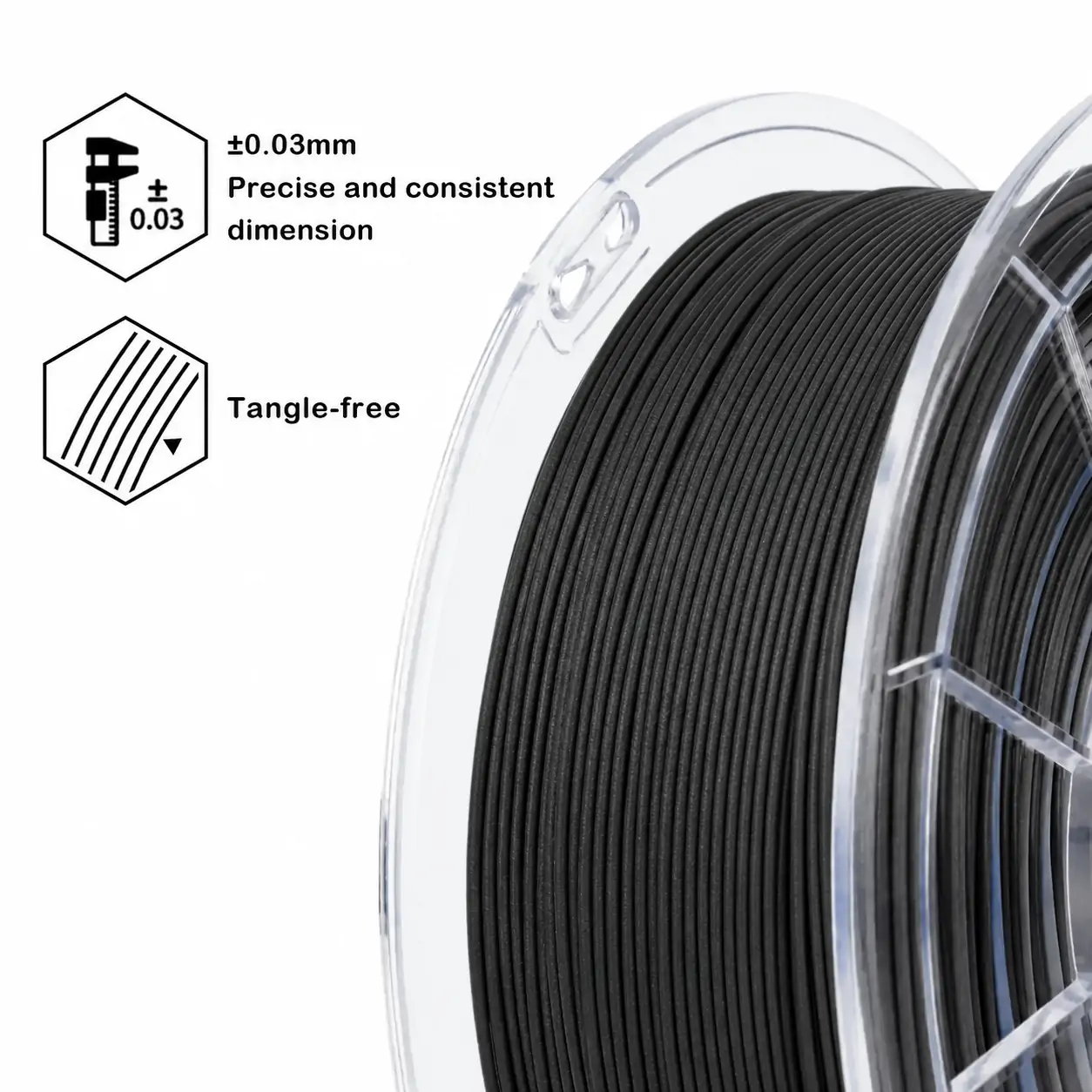
Tolerance±0.03mm
Net Weight1kg
Gross Weight1.3kg
Nozzle Start400–410°C
Bed Start120–150°C
Chamber Start90–120°C
Print Speed30–50 mm/s
PackagingVacuum + Desiccant
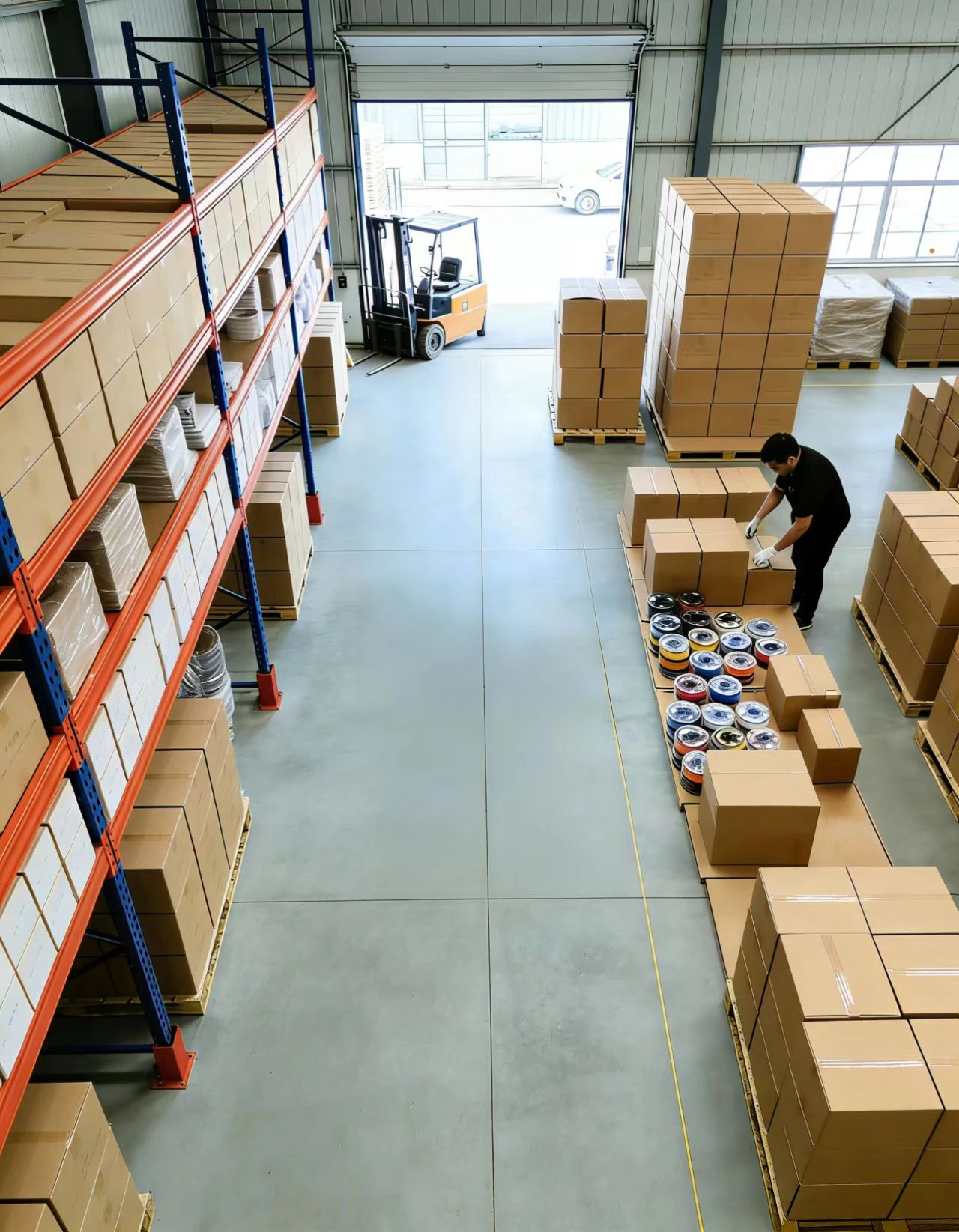
MOQ: Neutral packaging from 50 spools; OEM packaging typically 500–1,000 spools.
Lead Time: Standard 7–15 working days; customized orders typically 15–25 working days.
Product Overview
We developed SSSray PEEK-CF for industrial FDM/FFF programs that need high stiffness, high-temperature capability, dimensional control and lower part weight. Its semi-crystalline PEEK matrix provides the high-temperature polymer base, while the carbon-fiber reinforcement raises rigidity and lowers flow-direction thermal expansion compared with unfilled PEEK. We supply this grade for robotic gripper fingers, end-effectors, structural brackets, jigs, fixtures, tooling and other functional parts that need stable geometry under heat or mechanical load.
The filament has a deep charcoal matte-black appearance with a fine, slightly granular surface. Printed ribs, jaws and bracket walls retain a technical matte finish rather than a glossy or silk effect. We control the standard 1.75mm filament to ±0.03mm, supply it dried and vacuum-packed with desiccant, and support bulk, private-label and OEM programs for buyers building a high-temperature engineering-material line. For related sourcing programs, see our custom engineering filament and wholesale carbon fiber filament supply pages.
Built for High-Temperature Structural Parts
We supply PEEK-CF for parts where high stiffness, lower mass, heat resistance, chemical resistance and fast design changes can reduce dependence on machined or metal components. The carbon-fiber reinforcement improves dimensional stability versus unfilled PEEK, while a high-temperature printer, stable chamber heat, dry filament and a wear-resistant nozzle give the material the processing conditions it needs.
What SSSray PEEK-CF Delivers
Carbon-Fiber-Reinforced PEEK
Higher stiffness and lower flow-direction thermal expansion than unfilled PEEK support dimensionally demanding functional parts.
High-Temperature Service Potential
Built around a PEEK matrix for applications that exceed the practical thermal range of mainstream engineering filaments.
Matte Technical Surface
Deep charcoal-black parts show a low-gloss, fiber-textured finish suited to tooling, brackets and robotic components.
±0.03mm Diameter Control
Controlled filament diameter supports stable feeding through high-temperature direct-drive and industrial extrusion systems.
Dry, Sealed B2B Packaging
We dry the filament and vacuum-pack each spool with desiccant to protect it through storage and export shipment before high-temperature printing.
OEM / Private-Label Supply
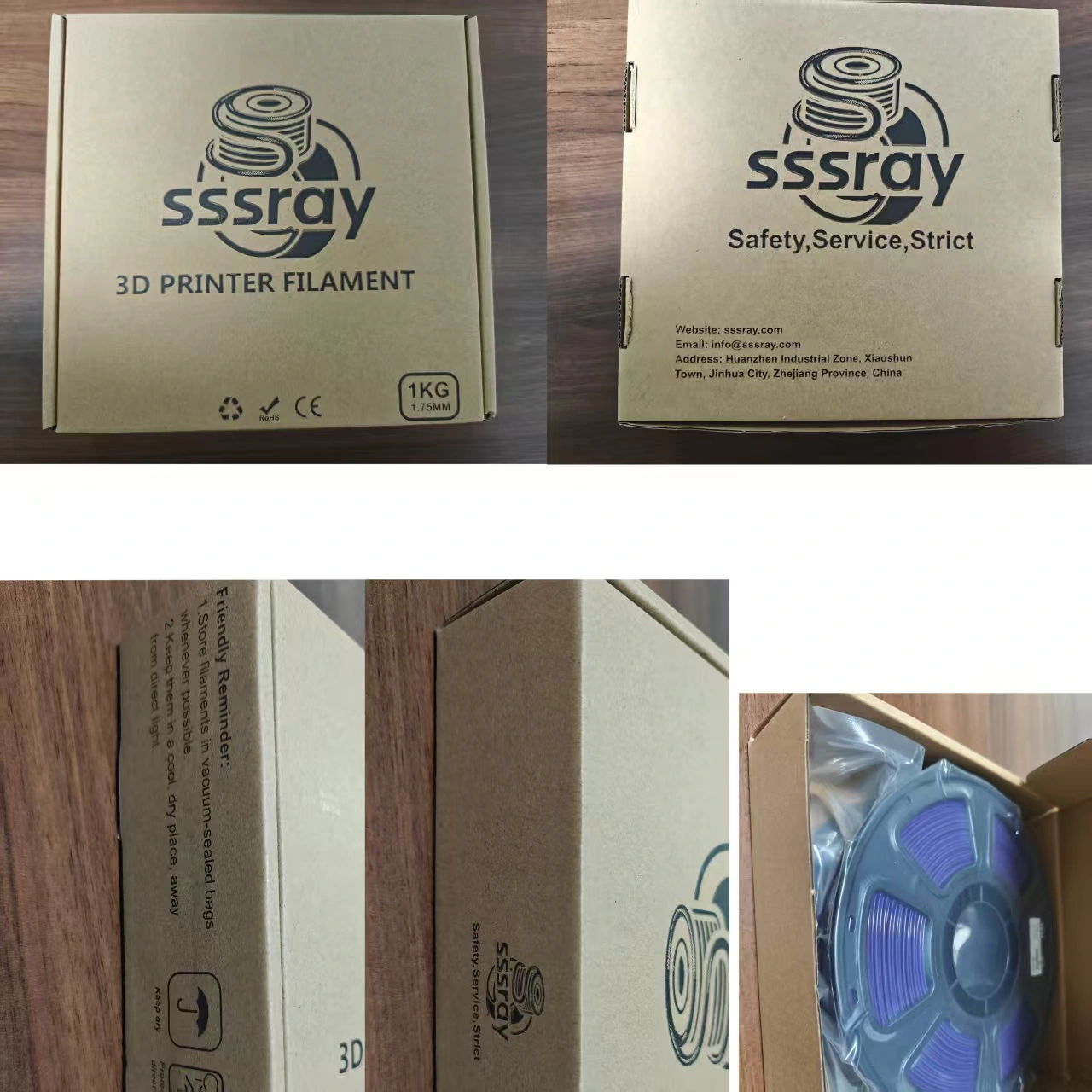
We support custom labels, boxes, spool presentation, barcodes and batch-identification formats for OEM and private-label programs.
PEEK-CF Supply & Material Features
| Feature | Practical Buyer Benefit |
|---|---|
| PEEK Matrix + Carbon Fiber | Combines high stiffness with lower flow-direction thermal expansion and improved dimensional stability versus unfilled PEEK |
| Charcoal Matte Black | Technical low-gloss appearance suited to robotics, fixtures, tooling and structural components |
| 1.75mm Standard Diameter | Fits industrial FFF systems configured for 1.75mm high-temperature filament |
| ±0.03mm Tolerance | Supports controlled feeding and repeatable extrusion for sample runs and batch production |
| Vacuum Sealed with Desiccant | Reduces moisture pickup during storage and international shipment |
| OEM / ODM Support | Supports private-label engineering-material lines without changing the core production platform |
Where We Position PEEK-CF for Industrial Buyers
We recommend PEEK-CF when a lightweight bracket, gripper, fixture or tool would otherwise require CNC machining, metal inventory or repeated design revisions. For low-volume and geometry-specific industrial parts, additive production can consolidate features, shorten iteration cycles and reduce machining steps while keeping the design editable from one batch to the next.
How We Run PEEK-CF B2B Projects
1
Application & Printer Match2
Specification Confirmation3
Sample Printing4
Packaging & Label Setup5
Production & Batch QC6
Final Inspection & ShipmentPEEK-CF vs Alternative Engineering Filaments
| Material | Material Behavior | Printing Class | Dimensional Consideration | Typical Use |
|---|---|---|---|---|
| PEEK-CF | Carbon-fiber-reinforced semi-crystalline PEEK | Ultra-high-temperature industrial FFF | Lower flow-direction thermal expansion and improved dimensional stability versus unfilled PEEK; stable chamber heat remains important | Robotic grippers, structural brackets, hot fixtures, tooling |
| Unfilled PEEK | Semi-crystalline high-performance polymer | Ultra-high-temperature industrial FFF | Higher ductility but greater sensitivity to shrinkage and crystallization control | Chemical-resistant functional parts, high-temperature components |
| PEI / ULTEM | Amorphous high-temperature thermoplastic | High-temperature industrial FFF | No crystallization step; still requires strong chamber control for large parts | Housings, ducts, fixtures, aerospace tooling |
| PA-CF | Carbon-fiber-reinforced polyamide | Engineering FFF | Lower processing temperature; moisture management remains important | Jigs, brackets, fixtures, functional components |
Technical Specifications
| Product Name | Carbon Fiber PEEK Filament – SSSray PEEK-CF Matte Black, філамент PEEK з вуглецевим волокном for 3D Printing Robotic Grippers & Structural Brackets |
|---|---|
| Material | Carbon-fiber-reinforced PEEK (polyetheretherketone) |
| Polymer Family | PAEK; semi-crystalline thermoplastic |
| Series | SSSray PEEK High-Performance Series – Carbon Fiber Reinforced Line |
| Color / Effect | Charcoal Matte Black; opaque, low-gloss, fine fiber-textured surface |
| Filament Diameter | 1.75mm standard; 2.85mm available on request |
| Diameter Tolerance | ±0.03mm |
| Net Weight | 1kg standard; 3kg and 5kg formats available on request |
| Gross Weight | 1.3kg for the standard 1kg spool package |
| Spool Type | Plastic spool |
| Packaging | Dried, vacuum sealed with desiccant |
| Winding | Tangle-free winding |
| Abrasiveness | High; wear-resistant high-temperature nozzle required |
| Recommended Nozzle Diameter | 0.6mm preferred for production stability; 0.4mm minimum starting point |
| PEEK Matrix Thermal Reference | Typical Tg ≈143°C; typical melting point ≈343°C |
| Printer Compatibility | High-temperature FDM/FFF systems capable of approximately 400°C+ nozzle temperature, 120°C+ bed temperature and an actively heated chamber |
| Typical Applications | Robotic grippers, end-effectors, structural brackets, jigs, fixtures, tooling and high-temperature functional parts |
| RoHS | Compliant |
| OEM / ODM | Supported |
Recommended Print Settings
| Parameter | Recommended Starting Point | Usable / Qualification Range |
|---|---|---|
| Nozzle Temperature | 400–410°C | 380–450°C, depending on hot end, flow rate and exact grade behavior |
| Bed Temperature | 120–150°C | 100–160°C |
| Chamber Temperature | 90–120°C | 70–150°C; larger parts generally benefit from the upper end |
| Print Speed | 30–50 mm/s | 20–60 mm/s |
| Nozzle Diameter | 0.6mm wear-resistant nozzle | 0.4–0.8mm; avoid standard brass for production |
| Layer Height | 0.15–0.25mm | 0.12–0.30mm, matched to nozzle diameter and part detail |
| Cooling Fan | 0% | 0–20% only for small features after validation |
| Retraction | Direct drive 0.5–1.5mm | Bowden 2–4mm starting reference; tune to hot-end path |
| Wall Count | 3–5 perimeters | 2–6 perimeters based on load path and nozzle size |
| Infill | 25–40% for tooling / 50–80% for higher-load parts | Application-dependent; use test coupons before production |
| First Layer Speed | 15–20 mm/s | 10–25 mm/s |
| Bed Adhesion | High-temperature build surface with PEEK-compatible adhesive; brim for larger parts | Raft or dedicated high-temperature adhesive system for difficult geometries |
| Drying | 120°C for 4–6 hours | 100–130°C for 4–8 hours depending on moisture exposure; use a heat-safe spool/dryer setup |
PEEK-CF Print Setup Guide
| Item | Guidance |
|---|---|
| Moisture Control | Dry before high-temperature printing and feed from a dry environment during long jobs; moisture can create bubbles, rough extrusion and weaker interlayer bonding |
| Thermal Stability | Preheat the chamber and bed before printing so the part does not see a large temperature swing after the first layers |
| Nozzle Wear | Use a wear-resistant high-temperature nozzle; a 0.6mm nozzle is a practical production starting point for carbon-fiber-filled material |
| First Layer | Use a slow first layer, a clean high-temperature surface and a PEEK-compatible adhesive; add brim or raft for larger footprints |
| Part Orientation | Orient primary loads through continuous XY toolpaths where practical because FFF parts remain direction-dependent |
| Crystallization Control | Keep chamber conditions stable through the print and cooling cycle; do not use aggressive part cooling on large PEEK-CF components |
| Post-Processing | If your process uses annealing or post-crystallization, confirm the cycle on the actual part geometry before batch production because dimensions can shift |
Printer Brand Starting Settings
| Printer / Platform | Nozzle | Bed | Chamber | Speed | Practical Note |
|---|---|---|---|---|---|
| INTAMSYS FUNMAT HT | 400–410°C | 120–150°C | 90°C class | 20–40 mm/s | Use a wear-resistant nozzle and start with stable chamber preheating |
| Prusa Pro HT90 | 380–440°C | 140–155°C | 85–90°C | 20–40 mm/s | Use the high-temperature print head with a wear-resistant nozzle |
| CreatBot PEEK-250 | 400–450°C | 100–160°C | 70–120°C | 30–60 mm/s | Fan off; 480°C nozzle, 200°C bed and up to 200°C chamber hardware provide ample thermal headroom |
| CreatBot PEEK-300 | 400–450°C | 100–160°C | 70–120°C | 30–60 mm/s | Fan off; 480°C nozzle, 200°C bed and up to 120°C chamber support PEEK-CF production |
| Bambu Lab H2D (stock) | Not recommended | — | — | — | Stock 350°C nozzle and 65°C chamber are below the normal PEEK-CF processing window |
| Creality K2 Plus (stock) | Not recommended | — | — | — | Stock 350°C nozzle and 60°C chamber are below the normal PEEK-CF processing window |
| Prusa CORE One / CORE One L (stock) | Not recommended | — | — | — | Stock thermal limits are not a production starting point for this PEEK-CF grade; use Prusa Pro HT90-class hardware instead |
Use these as practical starting points, then tune flow, chamber temperature and adhesion for the actual printer, nozzle size and part geometry.
PEEK-CF Material Behavior
| Characteristic | Material Behavior | Production Reference |
|---|---|---|
| Stiffness | Carbon fiber raises modulus versus unfilled PEEK | Useful for grippers, brackets, fixtures and other geometry-sensitive parts |
| Thermal Expansion | Lower than unfilled PEEK along the reinforced flow direction | Supports tighter dimensional control when chamber temperature is stable |
| Surface Appearance | Opaque charcoal matte black with fine fiber texture | Low-gloss technical finish; no silk, metallic or translucent effect |
| Abrasiveness | High | Wear-resistant nozzle and abrasion-resistant filament path components recommended |
| Crystallization | Semi-crystalline PEEK matrix | Thermal history affects shrinkage, dimensions and final part properties |
| Moisture Sensitivity | Drying required before high-temperature extrusion | Keep opened filament sealed or in a dry feed system |
| FFF Anisotropy | Printed properties vary with toolpath and build direction | Use application coupons to confirm orientation and load path before production |
PEEK-CF Industrial Applications
| Application Focus | Practical Notes |
|---|---|
| Robotic Grippers & End-Effectors | Useful where low moving mass, rigidity and custom finger geometry can improve automation tooling |
| Structural Brackets | Suitable for high-stiffness, low-volume brackets when temperature and chemical exposure exceed mainstream filament capability |
| Assembly Jigs & Fixtures | Good fit for heat-exposed or chemically exposed production aids that need repeatable geometry |
| High-Temperature Tooling | Suitable for forming, inspection and process fixtures built around the required service temperature and load |
| Pump, Valve & Fluid-System Components | Useful for fluid-system housings, fixtures and components when the operating media, pressure and sealing design match the project specification |
| Aerospace / Automotive Tooling | Suitable for jigs, fixtures, assembly aids and prototype brackets where low weight and high-temperature performance matter |
PEEK-CF Drying & Storage
- Keep unopened spools vacuum sealed with desiccant until qualification or production use
- After opening, store in a sealed dry box or moisture-controlled cabinet
- Dry at about 120°C before printing when the filament has been exposed to ambient humidity; extend the cycle for heavily exposed material
- Use only a spool and dryer setup rated for the selected drying temperature
- Keep the filament feed path dry during long high-temperature print jobs
PEEK-CF OEM / ODM Supply
We supply PEEK-CF programs for distributors, industrial-material suppliers, private-label brands and engineering buyers. Available options include neutral packaging, custom labels, branded cartons, barcode formats, spool presentation, batch marking and coordinated document packs. Carbon fiber gives PEEK-CF its characteristic dark appearance, so color-development requests are handled as custom projects.
MOQ Reference: Neutral packaging from 50 spools; OEM packaging typically 500–1,000 spools.
PEEK-CF Batch & Packaging Controls
- Filament diameter control to the specified ±0.03mm tolerance
- Winding and spool-condition inspection before packing
- Net-weight and packaging configuration check
- Vacuum-seal and desiccant verification
- Visual inspection for strand consistency and surface contamination
- Batch identification and shipment preparation review for repeat orders
For B2B qualification, buyers can also use our Filament Qualification Program, Test Protocol and Batch QC Data workflow.
PEEK-CF Compliance & Technical Documents
- RoHS – compliant for this SKU
For regulated or customer-specific projects, include the destination market, end-use environment and required document list with your RFQ; we will align the document package with the shipment.
Frequently Asked Questions
What is the MOQ for SSSray PEEK-CF?
Neutral packaging starts from 50 spools. OEM or private-label packaging typically starts from 500–1,000 spools depending on the packaging scope.
Can this PEEK-CF run on a normal desktop 3D printer?
No. This grade is intended for high-temperature FDM/FFF equipment with roughly 400°C or higher nozzle capability, a high-temperature bed and an actively heated chamber. Standard desktop hardware is generally outside the required processing window.
What nozzle should I use for PEEK-CF?
Use a wear-resistant high-temperature nozzle. A 0.6mm nozzle is a practical production starting point, while 0.4mm can be used when the nozzle and filament path are designed for abrasive high-temperature materials.
Does the filament need drying before printing?
Yes. A practical starting point is about 120°C for 4–6 hours. Longer or hotter drying can be used for heavily exposed material when the spool and dryer are rated for the selected temperature.
What applications fit this material best?
We recommend this grade for robotic grippers, end-effectors, structural brackets, assembly fixtures, jigs, tooling and other high-temperature functional parts.
Do you supply 2.85mm or larger spool formats?
1.75mm is our standard format. 2.85mm filament and 3kg or 5kg spool formats are available on request.
Can you provide OEM or private-label PEEK-CF?
Yes. We support custom labels, cartons, barcodes, spool presentation and batch-identification formats for OEM / ODM programs. OEM packaging typically starts from 500–1,000 spools.
Are samples and RoHS documentation available?
B2B buyers can request up to 3 free sample spools for material trials. This SKU is supplied as RoHS compliant; include any additional document requirements with your RFQ.
Source PEEK-CF for High-Temperature Industrial Printing
Tell us your printer platform, nozzle size, target part, annual demand and packaging plan. We will match the starting print window, arrange samples and build a bulk or private-label supply plan around your application.
Related products
-

PA12-GF Glass Fiber Reinforced Nylon Filament 1.75mm 1kg – Industrial Grade Engineering Polyamide for Structural Manufacturing & Functional Prototyping
-
Wholesale PC-PBT-GF20 Glass Fiber Filament 1kg (1.75mm / 2.85mm)
-
Industrial PA12 Carbon Fiber Reinforced 3D Printing Filament 1.75mm 1kg – High Stiffness, Low Moisture Absorption for Lightweight Aerospace & Automotive Parts
-
PET-GF Glass Fiber Filament 1.75mm 1kg | High Stiffness & Chemical Resistant Engineering Grade


