Online time
Monday to Friday: 9AM - 8PM
Weekend: 10AM - 5PM

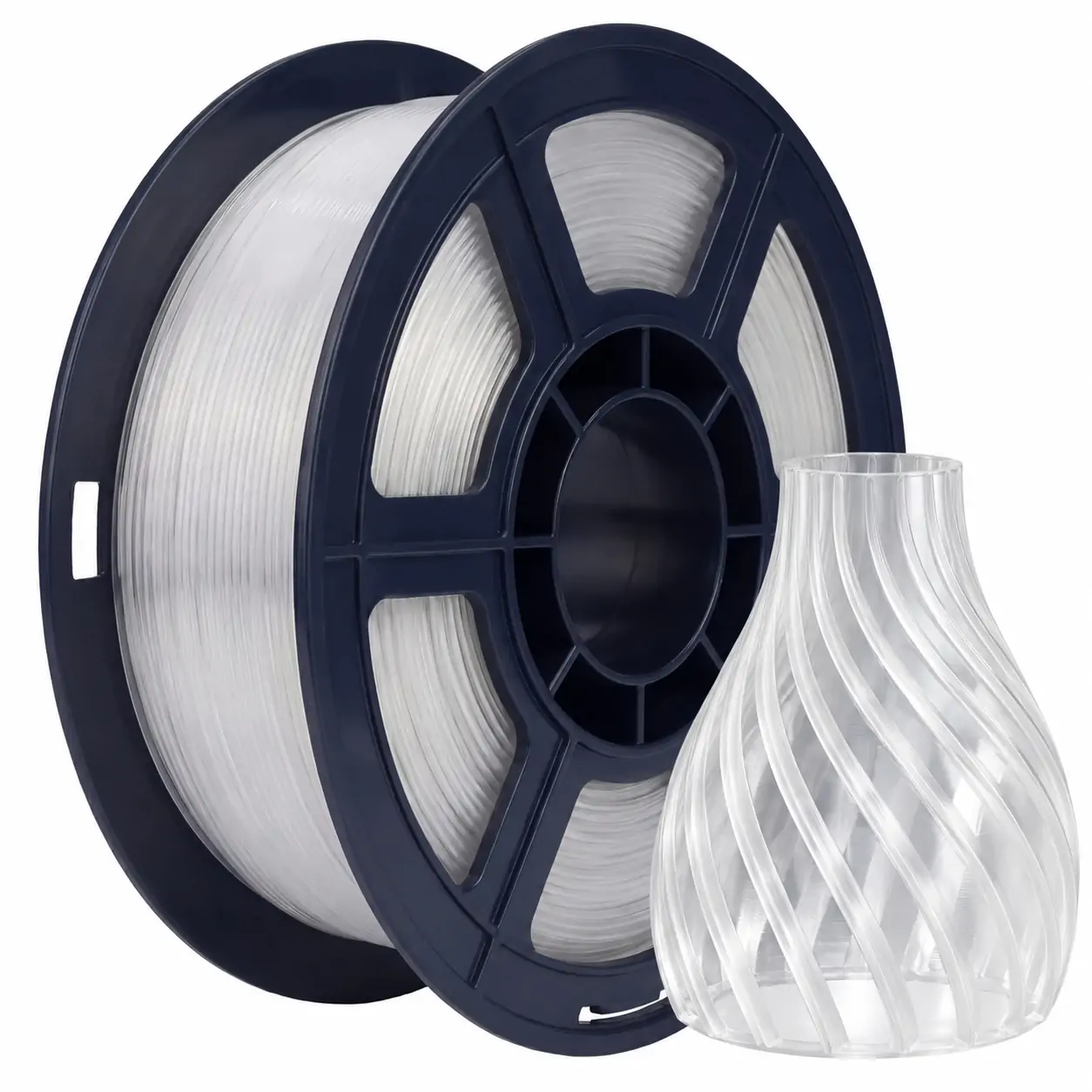
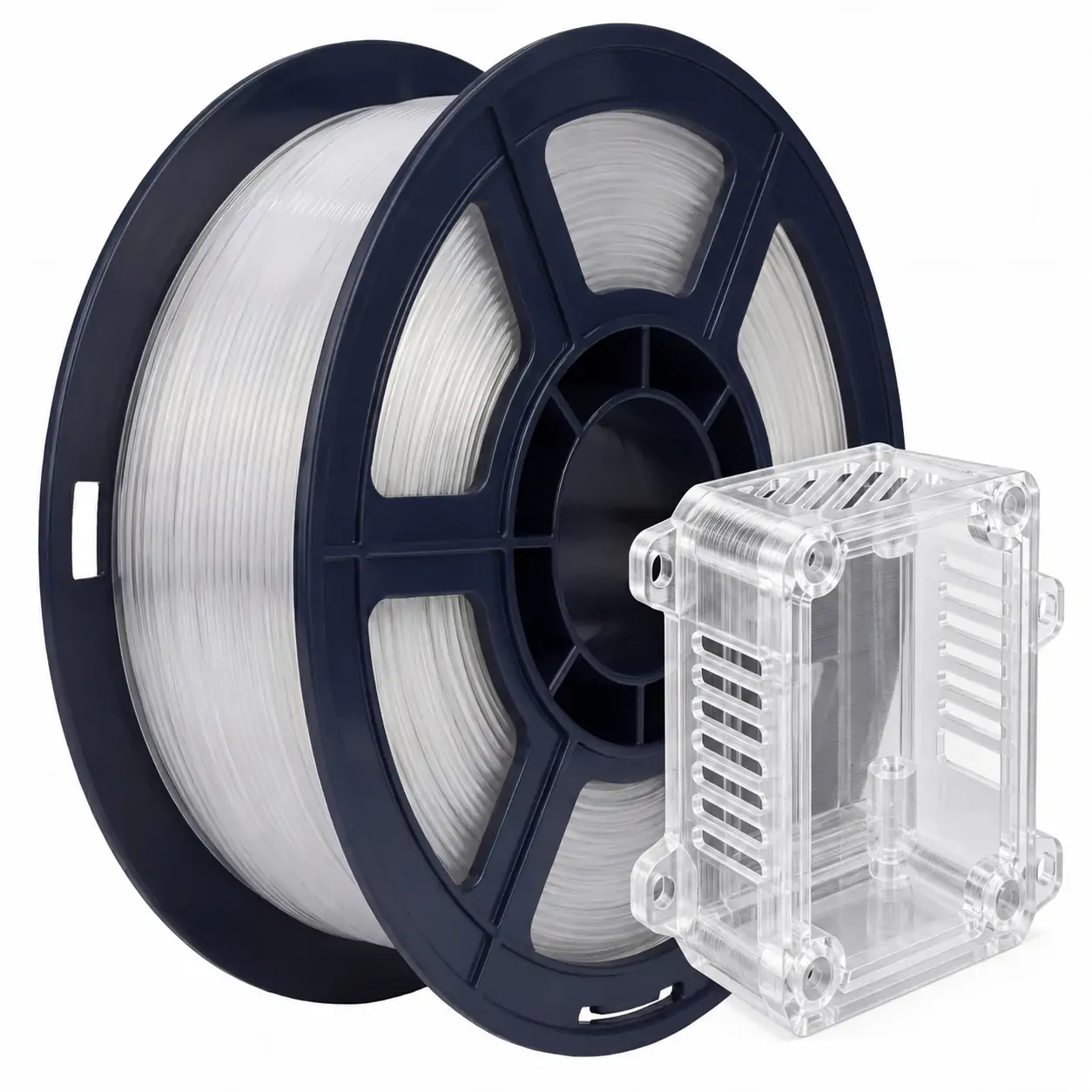
Transparent-Clear PETG Series | Wholesale Supply | OEM / ODM Support
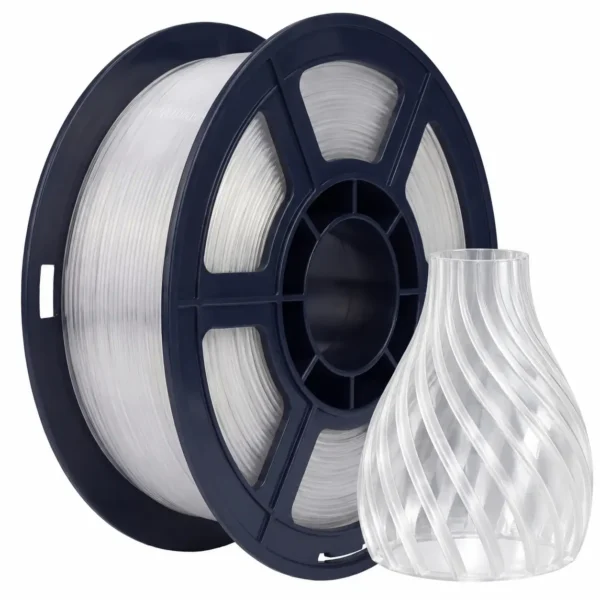
SSSray Clear Transparent PETG 1.75mm 3D Printer Filament – 透明PETGフィラメント for Functional Enclosures & Display Models
Colorless transparent PETG engineered for functional enclosures, display models, protective covers, visual prototypes, and B2B private-label programs.
We supply this clear PETG for buyers who need a neutral, non-tinted filament with smooth high-sheen surfaces, controlled 1.75mm diameter, practical PETG toughness, and repeatable bulk-order presentation. Thin or single-wall parts can transmit light clearly; thicker walls and multi-layer geometry naturally appear more translucent because FDM layer interfaces scatter light.
MaterialPETG
SeriesTransparent-Clear PETG
Color EffectColorless Transparent
Diameter1.75mm
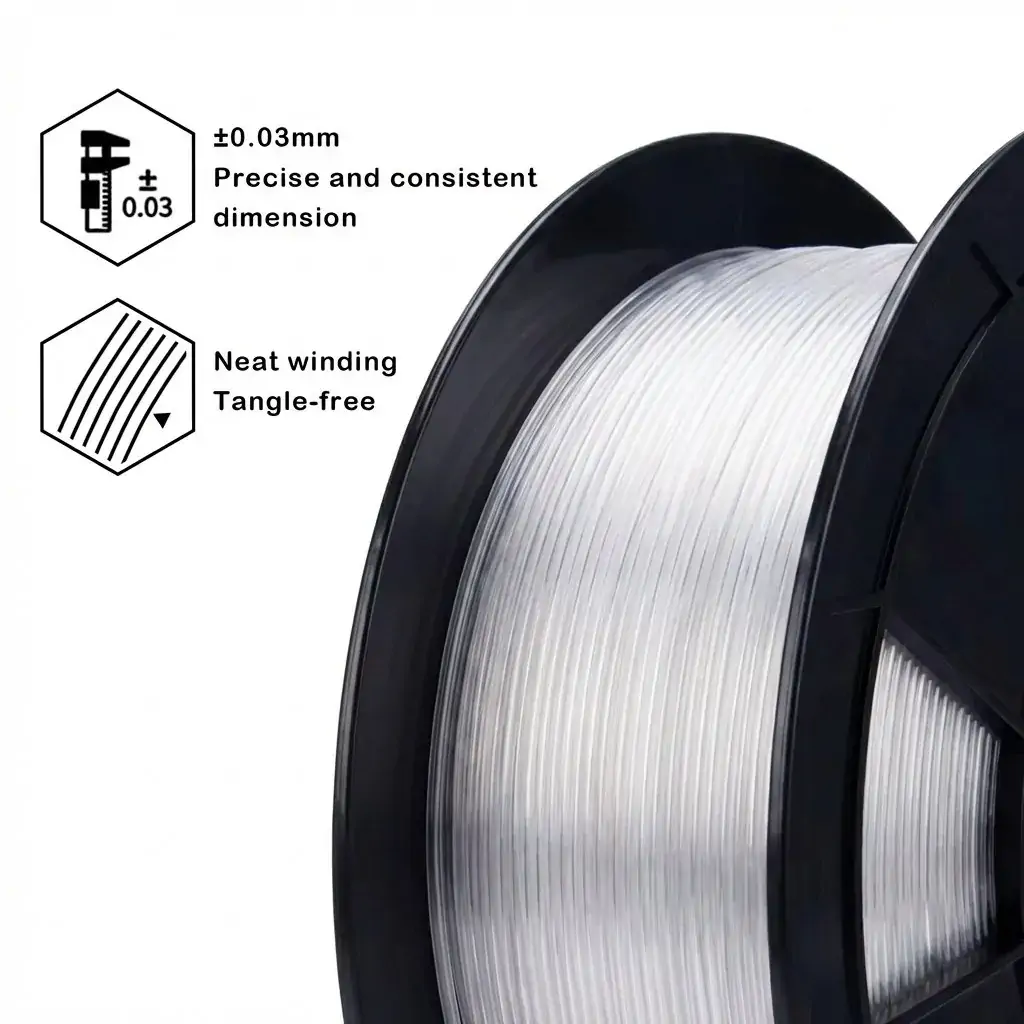
Tolerance±0.03mm
Net Weight1kg
Gross Weight1.3kg
Nozzle Temp240–255°C
Bed Temp65–75°C
Print Speed60–120 mm/s
PackagingVacuum + Desiccant
Spool TypePlastic Spool
MOQ: Neutral packaging from 50 spools; OEM packaging typically 500–1,000 spools.
Lead Time: Standard 7–15 days; customized orders typically 15–25 days.
Product Overview
SSSray Clear Transparent PETG is a colorless FDM/FFF filament developed for buyers who need functional PETG performance without an opaque pigment system. The neutral transparent appearance works especially well for electronics covers, inspection housings, display models, visual prototypes, light-transmitting features, protective guards, containers, and retail demonstration parts. Under well-tuned conditions, thin walls and single-wall prints can achieve high light transmission and a glass-like visual effect. As wall thickness, perimeter count, infill, or internal geometry increases, printed parts naturally become more translucent because each FDM layer interface scatters light.
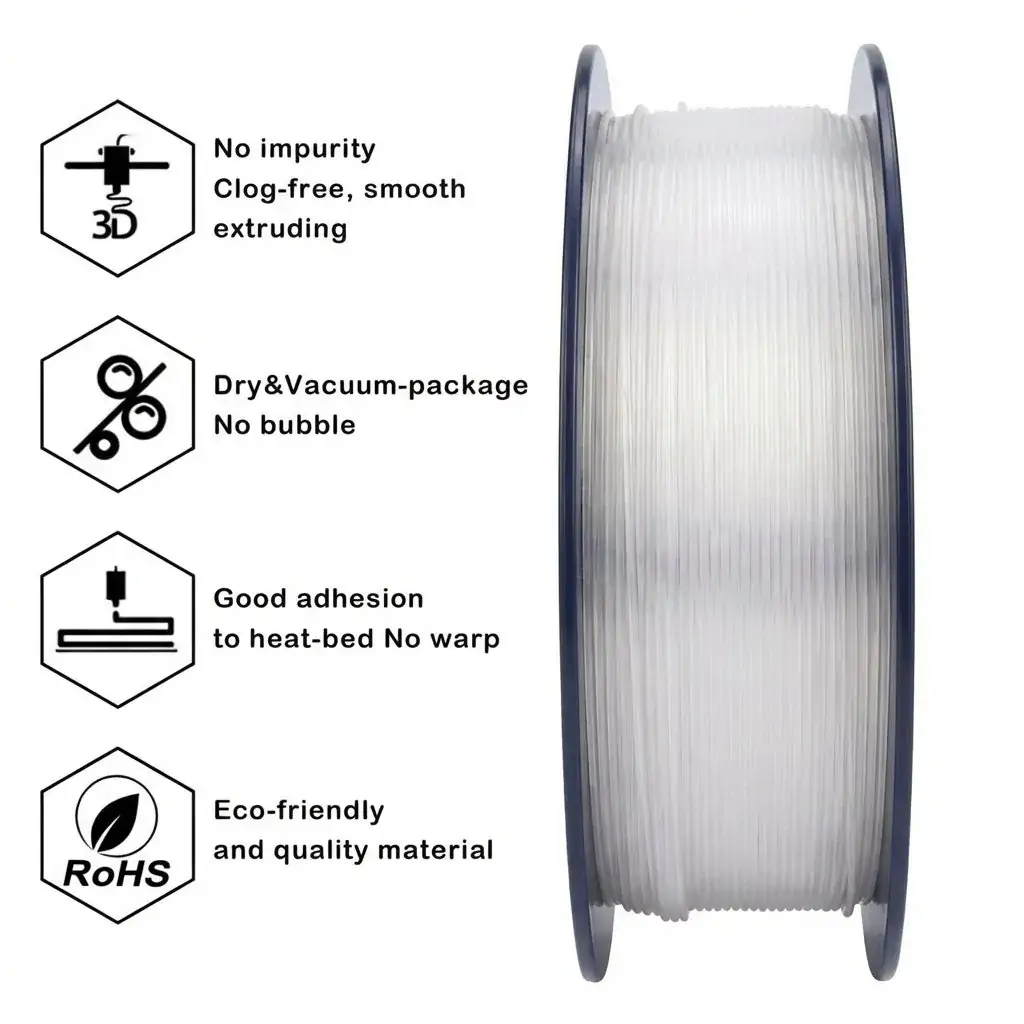
For B2B programs, we combine the material with ±0.03mm diameter control, orderly winding, vacuum-sealed packaging with desiccant, batch identification, and OEM/ODM support. This gives distributors and private-label buyers one SKU that can serve both functional and display-oriented demand while keeping packaging, labeling, color reference, and order specifications aligned for repeat purchases.
Why This Product Stands Out
For clear PETG, we give buyers a realistic optical specification: colorless filament with high light transmission in thin sections, while thicker FDM parts naturally become more translucent as layer interfaces increase. That makes qualification easier because the sample, quotation, and product description can use the same expectation. The grade combines glossy surfaces, visible internal features, practical PETG layer adhesion, low warping under recommended settings, and a useful balance between display appearance and functional part performance.
Key Selling Points
Colorless Transparent Feedstock
Neutral, non-tinted PETG for clear covers, visible housings, display parts, and light-transmitting designs.
Smooth High-Sheen Surface
Produces the glossy surface character buyers expect from clear PETG when flow, temperature, and cooling are tuned correctly.
Functional PETG Use
Suitable for protective covers, fixtures, housings, prototypes, and general functional parts that benefit from PETG toughness and low warping.
Controlled 1.75mm Supply
±0.03mm diameter specification, orderly winding, and batch-oriented QC support repeat wholesale and private-label programs.
Export-Oriented Supply
Neutral packaging, bulk cartons, FOB Ningbo / EXW terms, sample qualification, and documentation support for international B2B buyers.
OEM / ODM Ready
Custom labels, boxes, spool presentation, barcode data, language versions, and private-label project coordination are available.
Key Features
| Feature | Practical Buyer Benefit |
|---|---|
| Colorless Transparent PETG | Adds a clear-material SKU for covers, display parts, visual prototypes, and functional housings |
| High-Sheen Printed Surface | Supports a clean, polished appearance on visible exterior walls |
| ±0.03mm Diameter Specification | Supports consistent feeding and repeatable extrusion across bulk orders |
| Low Warping Under Recommended Settings | Useful for medium and larger functional parts without requiring a heated chamber in most cases |
| Vacuum Sealed with Desiccant | Helps control moisture exposure during storage and international transport |
| OEM / Private-Label Support | Allows distributors and brands to standardize labels, cartons, color naming, and market positioning |
For broader private-label PETG programs, see our Custom PETG Filament and Wholesale PETG Filament supply pages.
Balanced Quality and Cost Efficiency
Clear PETG gives a distributor more than a decorative color variant: it can serve both functional and visual applications from one familiar 1.75mm platform. Buyers can position it for protective enclosures, inspection windows, prototypes, display models, containers, and lighting-related parts while keeping standard 1kg packaging and mainstream FDM compatibility. That broader use case improves SKU utility without moving into the higher processing demands of materials such as PC. For private-label programs, we can keep the clear-grade naming, packaging artwork, barcode data, spool format, and batch reference aligned across repeat orders.
Why Choose This Product
- Neutral, non-tinted transparent appearance for clear-part product lines
- Glossy PETG surface character suited to visible housings and display models
- Low warping tendency under recommended PETG settings
- Useful balance of functional part performance and visual transparency
- 1kg plastic spool format with vacuum bag and desiccant
- 50-spool neutral-packaging MOQ for practical B2B qualification and replenishment
- OEM / ODM support for labels, boxes, private-label branding, and project-specific packaging
How We Work
1
Application & Market Review2
Specification Confirmation3
Sample Qualification4
Packaging & Label Approval5
Production & Batch QC6
Inspection & ShipmentMaterial Comparison Guide
| Material | Optical Appearance | Typical Printing Conditions | Material Behavior | Typical Use |
|---|---|---|---|---|
| Clear PETG | Colorless transparent feedstock; printed clarity decreases as wall count and internal interfaces increase | Heated bed; moderate cooling; moisture control recommended | Low warping, useful toughness, some stringing sensitivity | Enclosures, covers, display models, prototypes, containers |
| Standard PLA | Commonly opaque; transparent grades available but generally more brittle than PETG | Lower nozzle and bed temperatures; strong cooling commonly used | High stiffness, easy printing, lower heat resistance | Models, prototypes, educational and decorative parts |
| ABS / ASA | Usually opaque | Higher bed temperature; enclosure strongly recommended for larger parts | Higher shrinkage than PETG; ASA adds outdoor weathering advantages | Functional housings, automotive-style parts, outdoor parts with ASA |
| PC | Clear and translucent grades available | High nozzle/bed temperatures; enclosure and dry filament commonly required | Higher heat capability and stiffness demands, more difficult processing | Engineering parts, high-temperature fixtures, demanding housings |
Technical Specifications
| Product Name | SSSray Clear Transparent PETG 1.75mm 3D Printer Filament – 透明PETGフィラメント for Functional Enclosures & Display Models |
|---|---|
| Material | PETG (Glycol-Modified Polyethylene Terephthalate) – FDM/FFF filament |
| Series | SSSray Transparent-Clear PETG Series |
| Color / Effect | Colorless clear / colorless transparent; neutral, non-tinted appearance with glossy surfaces |
| Filament Diameter | 1.75mm standard; 2.85mm available upon project request |
| Tolerance | ±0.03mm |
| Net Weight | 1kg (3kg / 5kg formats available upon request) |
| Gross Weight | 1.3kg for the standard 1kg unit |
| Spool Type | Plastic spool |
| Packaging | Vacuum sealed with desiccant |
| Printer Compatibility | Most open-material 1.75mm FDM/FFF printers, including Bambu Lab, Prusa, Creality, Anycubic, and Elegoo platforms |
| Typical Applications | Functional enclosures, protective covers, display models, visual prototypes, containers, inspection housings, light-transmitting features |
| OEM / ODM | Supported: labels, boxes, spool presentation, barcode data, language versions, and private-label programs |
| Technical Documents | TDS / SDS for the confirmed production grade; additional compliance or third-party reports supplied when applicable to the selected SKU/order |
Recommended Print Settings
| Parameter | Recommended Guidance |
|---|---|
| Recommended Nozzle Temperature | 240–255°C |
| Usable Nozzle Range | 230–260°C |
| Recommended Bed Temperature | 65–75°C |
| Usable Bed Range | 60–85°C depending on build surface and printer |
| Recommended Print Speed | 60–120 mm/s for general production; use 40–80 mm/s when maximizing visual clarity on exposed walls |
| Usable Speed Range | 30–150 mm/s; higher speeds require sufficient hotend flow and typically reduce transparency |
| Layer Height | 0.16–0.28mm; 0.20–0.24mm is a practical starting range |
| Cooling Fan | 20–50% after the first 2–3 layers; increase for bridges and small features as needed |
| Retraction | Direct drive 0.8–1.5mm / Bowden 3–5mm as starting ranges; tune to hotend and travel behavior |
| Wall Count | 2–4 perimeters for functional parts; single-wall / vase mode for selected high-transmission display prints |
| Infill | 0–15% for display-oriented parts / 20–50% for functional parts, depending on geometry and load |
| First Layer Speed | 20–30 mm/s |
| Bed Adhesion | Satin/textured PEI preferred; smooth PEI or glass can use a suitable release layer where adhesion is too strong |
| Drying | 60–65°C for about 8 hours; extend drying if moisture-related popping, haze, or stringing persists |
Print Optimization Guide
| Item | Guidance |
|---|---|
| Transparency Focus | Use fewer walls and internal interfaces, consistent extrusion, moderate speed, and a slightly higher well-controlled nozzle temperature within the recommended range |
| Single-Wall Display Parts | Vase mode can maximize light transmission because it removes many internal layer interfaces that scatter light |
| Functional Enclosures | Use 2–4 perimeters and enough infill for the load; expect a more translucent appearance as wall thickness increases |
| Stringing Control | Dry the filament, then tune retraction, travel moves, and temperature before increasing cooling aggressively |
| Surface Finish | Keep outer-wall speed moderate and maintain stable flow; inconsistent extrusion is especially visible in clear PETG |
| Moisture Control | Reseal after opening and dry before critical appearance work if the filament has absorbed moisture |
| Bed Release | PETG can bond strongly to some smooth surfaces; use an appropriate separator/release layer when needed |
Printer Brand Starting Settings
| Printer Brand | Nozzle | Bed | Speed | Starting Notes |
|---|---|---|---|---|
| Bambu Lab | 245–255°C | 65–75°C | 50–100 mm/s | Start with a PETG profile, dry filament for appearance-critical parts, and reduce outer-wall speed for higher transparency |
| Prusa | 240–255°C | 70–85°C | 40–80 mm/s | Satin or textured PEI is a practical starting surface; tune cooling and retraction for the selected model |
| Creality | 235–250°C | 65–80°C | 40–70 mm/s | Use a stable first layer and tune retraction for the installed direct-drive or Bowden setup |
| Anycubic | 235–250°C | 65–80°C | 40–70 mm/s | Prioritize dry filament and moderate outer-wall speed for clean transparent surfaces |
| Elegoo | 235–250°C | 65–80°C | 40–70 mm/s | Start from the printer’s PETG workflow, then adjust flow, retraction, and cooling for part geometry |
These are SSSray starting references for this clear PETG grade. Final settings depend on hotend flow, nozzle size, build surface, slicer profile, and part geometry.
Performance Characteristics
| Characteristic | Production Reference | Practical Note |
|---|---|---|
| Optical Appearance | Colorless transparent feedstock with glossy printed surfaces | Printed parts become more translucent as wall count, infill, and layer interfaces increase |
| Warping Behavior | Low warping tendency under recommended PETG conditions | Large flat parts still benefit from a stable bed temperature and clean build surface |
| Layer Adhesion | PETG-type interlayer bonding | Avoid excessive cooling when functional layer strength is the priority |
| Stringing Sensitivity | More sensitive than typical PLA | Moisture, high temperature, travel settings, and retraction all affect stringing |
| Surface Character | Smooth, high-sheen finish | Outer-wall flow consistency is especially visible in clear material |
| Moisture Sensitivity | Dry storage recommended | Moisture can increase popping, bubbles, haze, and stringing during extrusion |
Applications
| Application Focus | Typical Part Design | Practical Notes |
|---|---|---|
| Functional Enclosures | Electronics covers, sensor housings, protective shells | Useful where internal components or indicators need to remain visible |
| Display Models | Vases, architectural forms, retail demonstration pieces | Single-wall or thin-wall geometry shows the clearest visual effect |
| Visual Prototypes | Clear mockups, fit-check parts, packaging concepts | Helps teams inspect internal geometry while retaining a functional FDM part |
| Lighting & Diffusion Parts | Lamp covers, indicator windows, translucent shells | Wall thickness and internal texture can be used to control light transmission and diffusion |
| Containers & Guards | Bins, covers, splash guards, protective panels | Useful when visibility through the part is more important than optical-grade clarity |
| Education & Demonstration | Mechanism covers, fluid-path models, cutaway-style teaching parts | Transparent material helps show internal features without removing the outer shell |
Storage Guide
- Keep unopened spools in the vacuum-sealed bag with desiccant until use
- After opening, reseal the spool or store it in a dry box for appearance-critical printing
- Keep the filament away from direct sunlight, liquid water, and prolonged humid-air exposure
- If popping, bubbles, haze, or unusual stringing appears, dry at about 60–65°C for about 8 hours before retesting; extend drying if moisture symptoms persist
- For long prints, feed from a controlled dry environment when local humidity is high
OEM / ODM Services
We support clear PETG programs for distributors, importers, private-label brands, retail chains, e-commerce sellers, education suppliers, and industrial sourcing teams. Options include neutral packaging, custom labels, branded color boxes, spool presentation, barcode / SKU data, multilingual packaging, carton marks, and coordinated product-line naming. We can also align sample qualification, approved appearance reference, batch QC records, and repeat-order specifications so your clear PETG SKU remains consistent from launch through replenishment.
MOQ Reference: Neutral packaging from 50 spools; OEM packaging typically 500–1,000 spools.
Quality Control
- Batch identification and production-record traceability for confirmed orders
- Online and dual-axis laser diameter monitoring against the ±0.03mm product specification
- Moisture analysis and melt-flow checks appropriate to the confirmed PETG production grade
- Extrusion and print validation for feeding, flow behavior, and visible surface defects
- Colorless appearance and transparency reference checks against the approved production standard
- Spool weight, winding, vacuum seal, desiccant, label, carton mark, and shipment-preparation inspection
Technical & Compliance Documentation
- TDS and SDS / MSDS can be supplied for the confirmed production grade
- Batch QC information can be supplied for qualified bulk and OEM orders
- RoHS, REACH, or other regulatory reports are supplied only when current documentation covers the selected SKU and order configuration
- SGS or other third-party testing can be arranged for bulk and OEM projects when additional verification is required
- Send us your destination market and required document list; our team will prepare the applicable technical files for the selected grade and coordinate third-party testing when your project requires it
Frequently Asked Questions
What is the MOQ for this Clear Transparent PETG?
Neutral packaging starts from 50 spools. OEM packaging typically starts from 500–1,000 spools depending on box, label, spool, and artwork requirements.
Will FDM-printed parts be completely transparent like glass?
No. The filament is colorless and transparent, but FDM layer interfaces scatter light. Thin or single-wall parts can look highly clear, while thicker walls, multiple perimeters, and infill make the part more translucent.
Which settings should I use when transparency is the priority?
Start around 240–255°C, keep outer-wall speed moderate, use dry filament, minimize internal interfaces, and reduce wall count where the design allows. Vase mode is useful for selected display parts because it removes many internal boundaries.
Is it suitable for functional enclosures?
Yes. This grade is positioned for functional covers, housings, guards, prototypes, and display-oriented parts. Final wall thickness and infill should be selected for the actual load and geometry.
Can SSSray provide OEM or private-label packaging?
Yes. We support custom labels, branded boxes, spool presentation, barcode data, multilingual packaging, carton marks, and coordinated private-label product-line development.
Are samples available?
Qualified B2B buyers can apply for sample support. After project review, we can provide up to 3 free sample spools for material qualification; freight and project terms are confirmed before dispatch.
What technical and compliance documents can be supplied?
We provide TDS and SDS / MSDS for the confirmed production grade. Regulatory or third-party reports are supplied when they apply to the selected SKU, and additional testing can be arranged for bulk or OEM projects.
What is the normal lead time?
Standard orders are typically 7–15 days. Customized OEM orders are typically 15–25 days after specifications, artwork, and packaging requirements are confirmed.
Build Your Clear PETG Supply Program with SSSray
Send us your target market, annual volume, packaging requirement, and application. We can support sample qualification, bulk pricing, OEM / ODM development, batch QC documentation, and export shipment planning for Clear Transparent PETG.


Related products
-

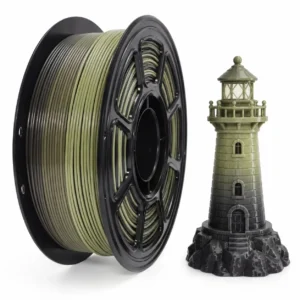
SSSray Black-to-Olive Green Gradient PETG 1.75mm 3D Printer Filament – PETG filament met kleurverloop for Scale Models & Decorative Prints
-
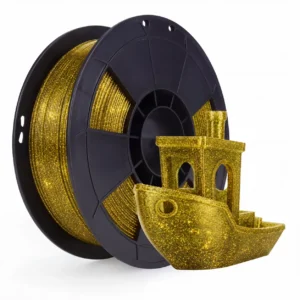
SSSray Gold Sparkle PETG Filament 1.75mm – altın simli PETG filament for Detailed Decorative 3D Printing
-
Premium Yellow PETG Filament 1.75mm 1KG | High Strength Glossy PETG for Functional Parts, Prototypes & Industrial Design | OEM/ODM Factory Direct
-
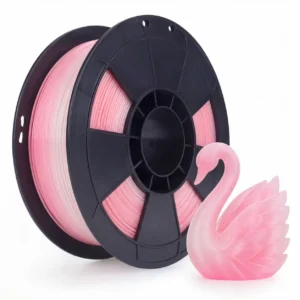
SSSray Blush Pink-to-Frost White Translucent PETG 3D Printer Filament 1.75mm – 半透明PETGフィラメント for Decorative Display Models