Online time
Monday to Friday: 9AM - 8PM
Weekend: 10AM - 5PM


PETG Gradient Series | Wholesale Supply | OEM / ODM Support
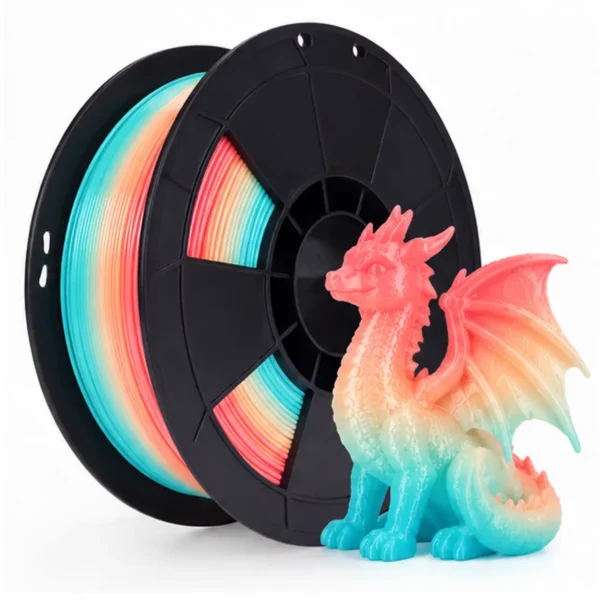
SSSray Coral–Peach–Aqua Multicolor PETG 1.75mm Gradient 3D Printer Filament – Filamento PETG Degradê for Decorative Display Models
Three-stage coral, warm peach/cream and aqua teal PETG gradient for decorative models, display pieces, home décor and differentiated private-label filament programs.
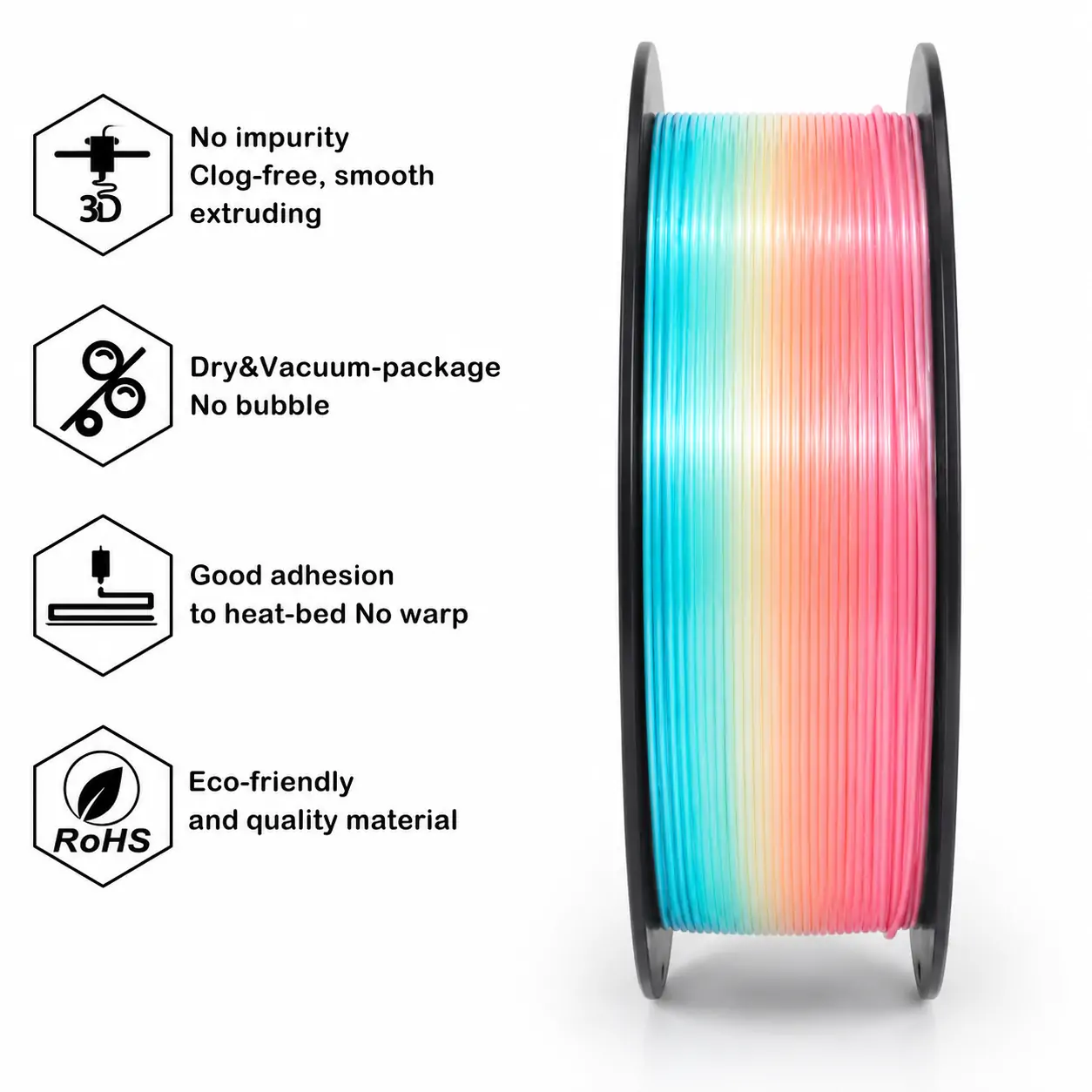
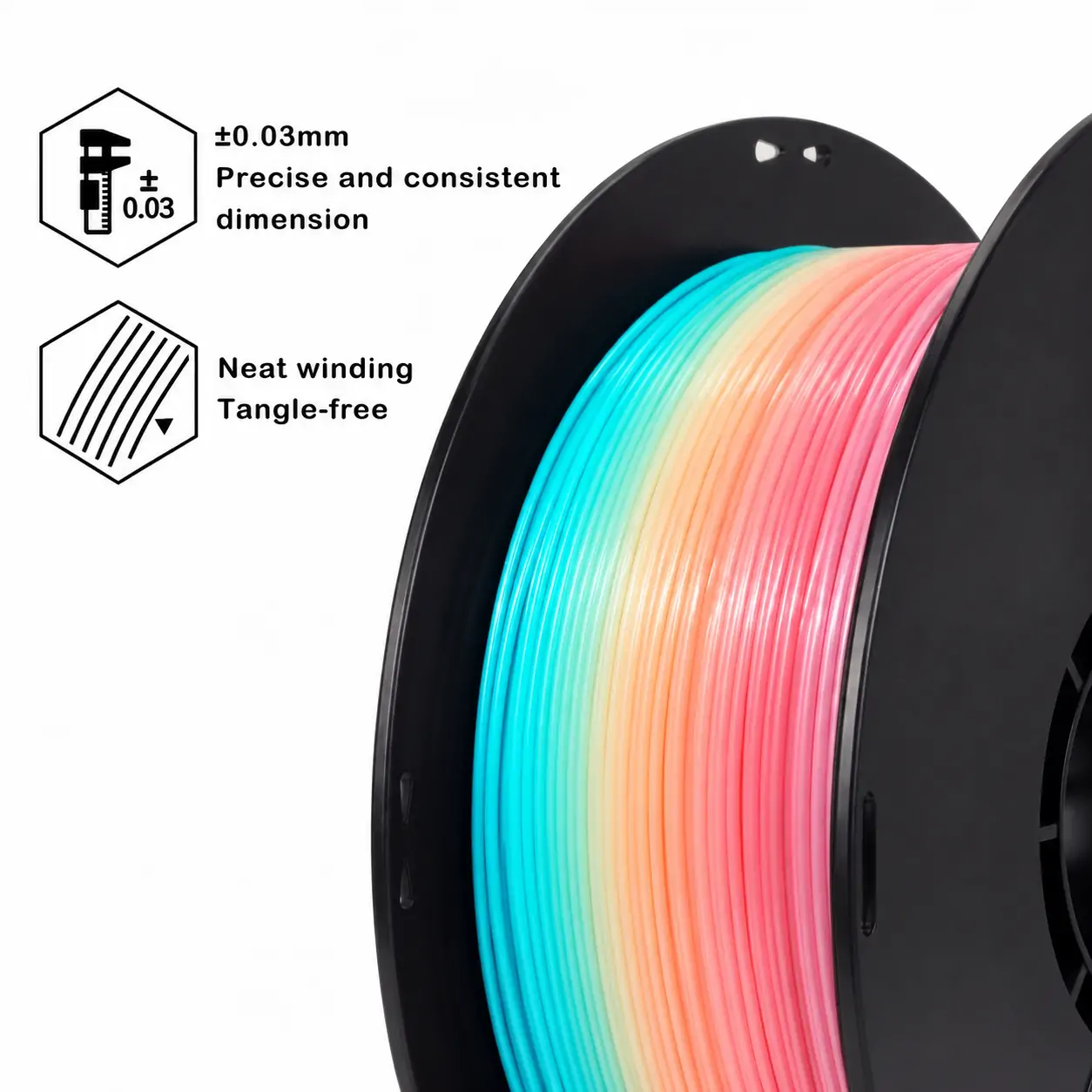
We supply this 1.75mm PETG gradient in a retail-ready 1kg spool format with ±0.03mm diameter control, vacuum sealing with desiccant, B2B sample support and OEM / ODM packaging options. The smooth reflective surface helps curved, faceted and spiral models reveal the color transition without post-processing.
MaterialPETG
SeriesPETG Gradient
Color EffectCoral → Peach → Aqua
Diameter1.75mm
Tolerance±0.03mm
Net Weight1kg
Gross Weight1.3kg
Nozzle Temp235–255°C
Bed Temp65–80°C
Print Speed60–150 mm/s
PackagingVacuum + Desiccant
Spool TypePlastic Spool
MOQ: Neutral packaging from 50 spools; OEM packaging typically 500–1,000 spools.
Lead Time: Standard 7–15 working days; customized orders typically 15–25 working days.
Product Overview
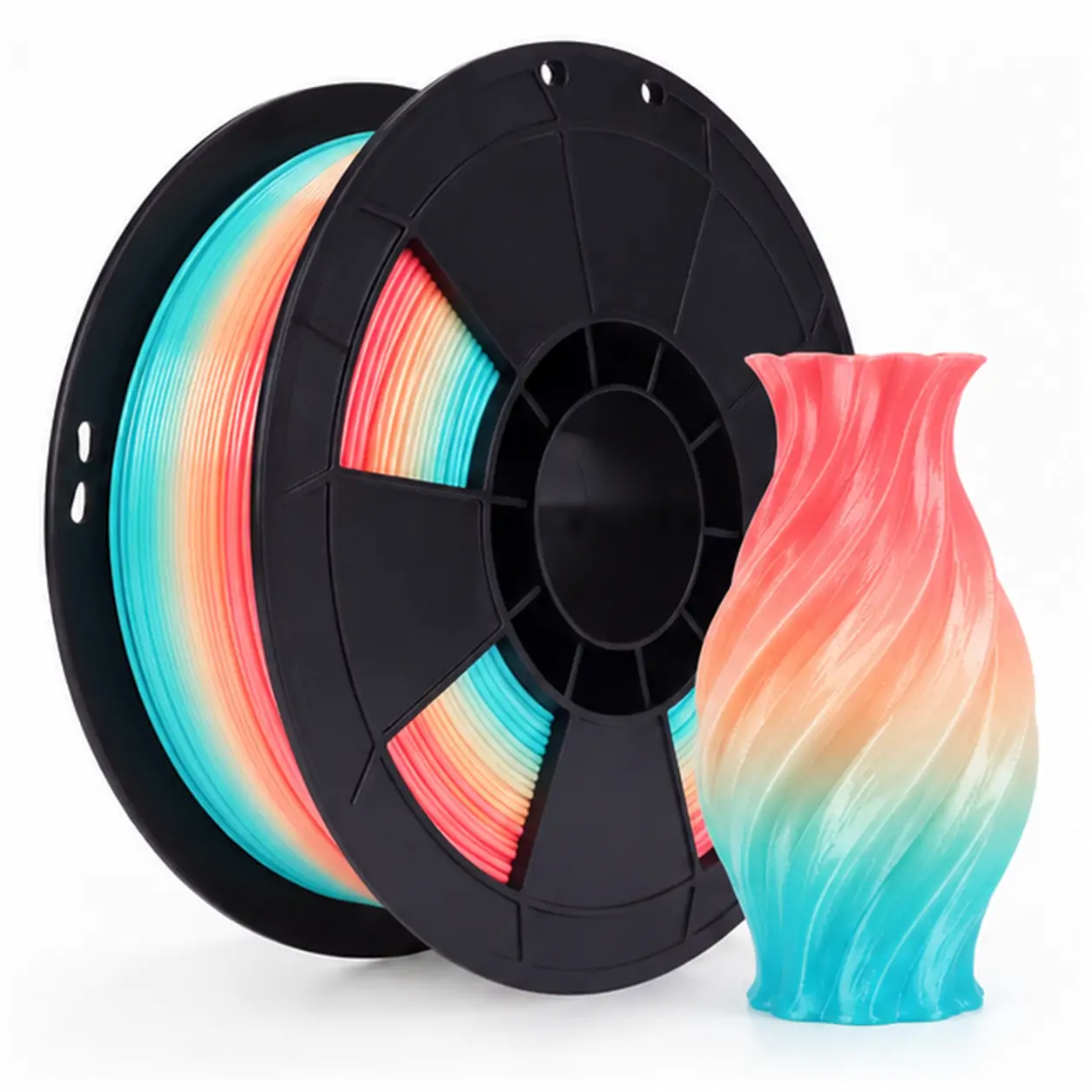
SSSray Coral–Peach–Aqua Multicolor PETG is built for buyers who want a PETG SKU with visible color movement rather than a flat single-color finish. The filament transitions from coral pink into a warm peach/cream zone and then into aqua teal, while the smooth reflective PETG surface adds light response across curves, facets and spiral geometry. On larger decorative models, the longer filament path reveals more of the three-stage transition; on smaller parts, the print can show one or two dominant zones from the same spool.
For distributors, 3D printing stores, private-label brands and e-commerce programs, this colorway gives a clear merchandising story: warm coral and peach tones move into a cooler aqua finish, creating a product that photographs well and produces visibly different results across vases, dragons, display models, décor pieces and gift-oriented prints. We supply it in 1.75mm ±0.03mm, 1kg plastic-spool format with vacuum sealing, desiccant, sample support and OEM / ODM packaging options.
Why This Gradient Gets Attention
The strength of this colorway is the warm-to-cool transition. Coral and peach bring a soft, decorative entry tone; aqua teal adds contrast and a cleaner finish as the model progresses. That makes the filament especially effective on tall vases, articulated display pieces, dragons, planters, lampshade-style décor and sculptural models where different surfaces catch both the color shift and PETG sheen.
Key Selling Points
Three-Stage Color Transition
Coral pink moves through warm peach/cream into aqua teal for a clear multicolor result.
Smooth Reflective PETG Finish
Curved and faceted surfaces pick up light cleanly, helping the gradient read clearly in display models.
±0.03mm Diameter Control
Standardized 1.75mm diameter supports steady feeding across mainstream open-material FDM platforms.
Retail-Ready 1kg Format
Familiar spool size and protective packaging fit wholesale, retail and private-label product programs.
Wholesale Program Fit
Suitable for distributors, 3D printing stores, e-commerce sellers and multi-color PETG assortments.
OEM / ODM Support
Private labels, branded boxes, barcode labels, carton marks and project-based color programs are supported.
Key Features
| Feature | Practical Buyer Benefit |
|---|---|
| Coral → Peach/Cream → Aqua Teal Gradient | Adds an identifiable warm-to-cool color story to decorative PETG ranges |
| Smooth Reflective Surface | Highlights curves, ridges and faceted details without paint or coating |
| 1.75mm ±0.03mm | Fits the mainstream open-material 1.75mm FDM ecosystem |
| PETG Base Material | Combines decorative appearance with PETG durability for general-use models |
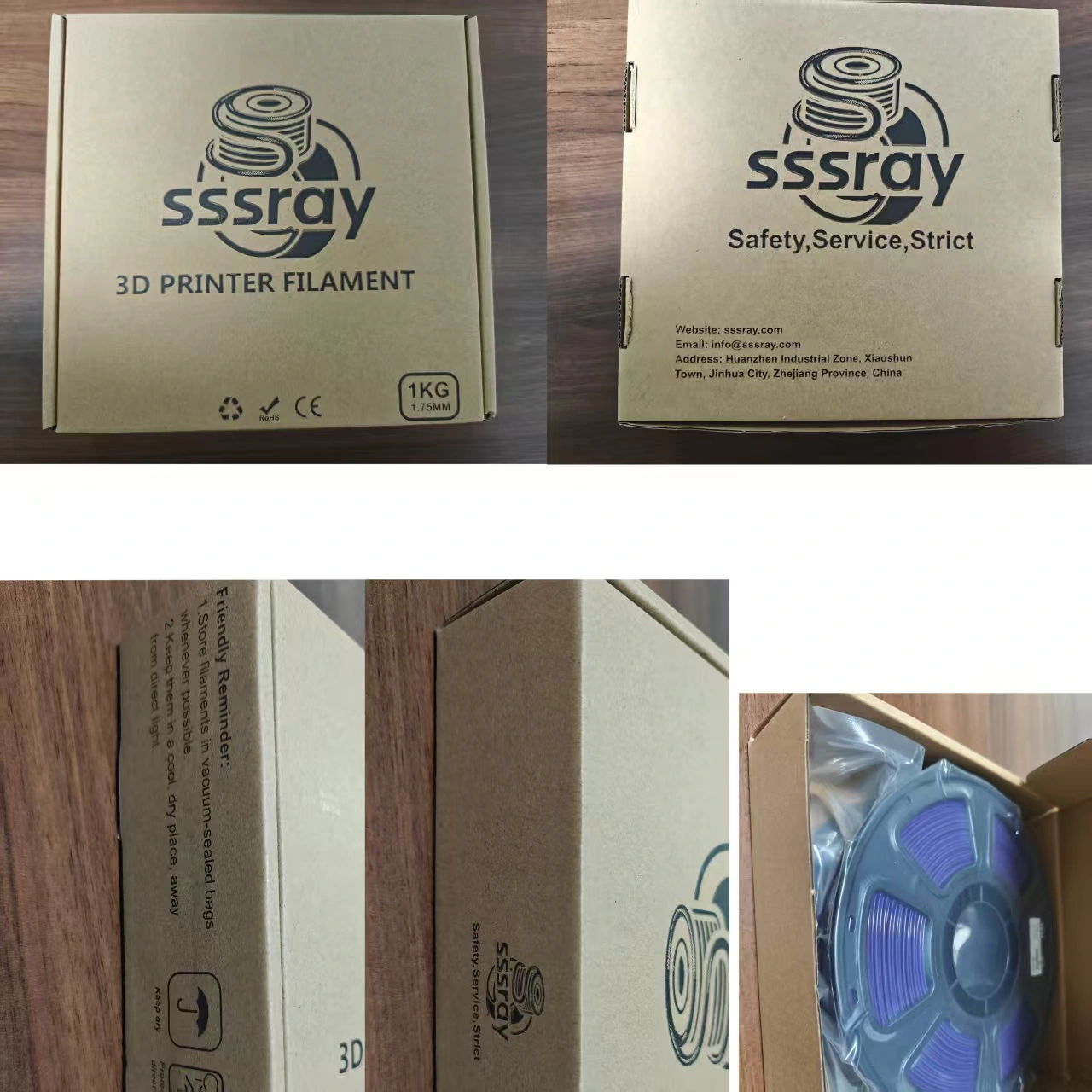
| Vacuum Sealed with Desiccant | Supports moisture control during storage and export transit |
| OEM / Private-Label Options | Supports differentiated packaging and reseller-owned product lines |
Why This Color Works in a Retail PETG Line
A single spool can produce noticeably different color compositions depending on model size and filament consumption, which gives resellers more visual content from one SKU. Coral and peach photograph well for décor and gift-oriented prints, while aqua teal adds contrast that keeps the finished model from reading as a single pastel tone. For buyers building a broader wholesale PETG filament range, this colorway works as a specialty visual SKU alongside clear, solid and translucent PETG instead of competing directly with them.
Why Choose This Product
- Distinct coral-to-peach-to-aqua transition for decorative product differentiation
- Smooth PETG surface that shows light and color movement clearly
- 1.75mm ±0.03mm format for mainstream FDM printer ecosystems
- Recommended settings balance surface quality, layer bonding and practical speed
- Vacuum-sealed packaging with desiccant for export and warehouse handling
- Neutral packaging available from 50 spools for B2B trial and wholesale programs
- OEM / ODM packaging and private-label support for established channel projects
How We Work
1
Requirement & Market Review2
Color & Specification Confirmation3
Sample Evaluation4
Label & Packaging Approval5
Bulk Production6
QC & ShipmentMaterial Comparison Guide
| Material | Surface / Color Behavior | Printing Conditions | Material Difference | Typical Use |
|---|---|---|---|---|
| PETG Gradient (This Product) | Three-stage multicolor transition with smooth reflective finish | Heated bed recommended; moderate cooling and dry filament improve finish | More heat and impact tolerance than standard PLA while retaining decorative color movement | Vases, dragons, display models, décor, gifts |
| Standard PETG | Single-color glossy to semi-gloss finish | Heated bed recommended; moisture control important | Same material family without the multicolor transition | General-use and functional printed parts |
| Gradient / Rainbow PLA | Multicolor transition with lower-temperature PLA processing | Lower nozzle and bed temperatures; stronger cooling commonly used | Easier low-temperature printing but lower heat resistance than PETG | Figurines, décor, display models |
| ASA | Usually solid-color matte to satin finish | Higher bed temperature; enclosure strongly recommended | Better outdoor and UV-oriented performance, but more demanding to print | Outdoor housings and functional parts |
Technical Specifications
| Product Name | SSSray Coral–Peach–Aqua Multicolor PETG 1.75mm Gradient 3D Printer Filament – Filamento PETG Degradê for Decorative Display Models |
|---|---|
| Material | PETG (Glycol-Modified Polyethylene Terephthalate) |
| Series | SSSray PETG Gradient Series – Multicolor Decorative & Display Printing |
| Color / Effect | Coral Pink → Warm Peach/Cream → Aqua Teal multicolor gradient |
| Surface Finish | Smooth reflective PETG finish; visible sheen changes with model geometry, layer direction and lighting |
| Filament Diameter | 1.75mm standard; 2.85mm available upon request |
| Tolerance | ±0.03mm |
| Net Weight | 1kg standard; 3kg and 5kg options available upon request |
| Gross Weight | 1.3kg |
| Spool Type | Plastic spool |
| Packaging | Vacuum sealed with desiccant |
| Recommended Nozzle Temperature | 235–255°C |
| Recommended Bed Temperature | 65–80°C |
| Recommended Print Speed | 60–150 mm/s |
| Printer Compatibility | Most 1.75mm open-material FDM / FFF printers, including Bambu Lab, Prusa, Creality, Anycubic, Elegoo and Flashforge platforms |
| Typical Applications | Decorative models, vases, dragons, display pieces, home décor, gifts, creative prototypes and general-use prints |
| Trade Terms | FOB Ningbo / EXW |
| OEM / ODM | Supported |
Recommended Print Settings
| Parameter | Recommended Guidance |
|---|---|
| Recommended Nozzle Temperature | 235–255°C |
| Usable Nozzle Range | 230–260°C |
| Recommended Bed Temperature | 65–80°C |
| Bed Tuning Range | 60–90°C depending on build surface, first-layer target and model footprint |
| Recommended Print Speed | 60–150 mm/s |
| Tuning Range | 40–200 mm/s; reduce visible-wall speed when uniform gloss is the priority |
| Layer Height | 0.12–0.28mm with a 0.4mm nozzle |
| Cooling Fan | 40–70% after the first layers; increase for bridges and small overhangs when needed |
| Direct-Drive Retraction | 0.8–1.5mm at 25–40 mm/s starting range |
| Bowden Retraction | 3–5mm at 25–45 mm/s starting range |
| Wall Count | 2–4 perimeters |
| Infill | 15–20% decorative / 40–60% for higher-demand parts |
| First Layer Speed | 20–30 mm/s |
| Bed Adhesion | Textured or satin PEI preferred; use a suitable release layer on smooth PEI or glass where required |
Print Optimization Guide
| Item | Guidance |
|---|---|
| Show More of the Gradient | Use taller, wider or higher-material-consumption models to reveal more of the coral, peach and aqua sequence in one print |
| Keep Gloss Consistent | Use a stable outer-wall speed and temperature so reflective surfaces do not shift abruptly between glossy and dull zones |
| Control Stringing | Keep filament dry, tune retraction first, then reduce nozzle temperature within the usable range if fine strings remain |
| Moisture Recovery | Dry at 60–65°C for 6–8 hours when popping, excess stringing or rough extrusion indicates moisture uptake |
| First-Layer Control | Clean the build surface, set correct Z offset and avoid excessive PETG bonding on smooth PEI or glass |
| Retail Color Approval | For repeat B2B programs, approve the production color sample and retain a reference spool or printed model for future order matching |
Printer Brand Starting Settings
| Printer Brand | Nozzle | Bed | Speed | Starting Guidance |
|---|---|---|---|---|
| Bambu Lab | 245–255°C | 70–75°C | 100–180 mm/s | Start from a generic PETG profile; keep outer-wall speed controlled for consistent gloss |
| Prusa | 235–245°C | 80–90°C | 50–100 mm/s | Satin or textured sheet is preferred for easier PETG release |
| Creality | 235–250°C | 70–80°C | 50–120 mm/s | Tune retraction and cooling for the installed direct-drive or Bowden configuration |
| Anycubic | 235–250°C | 70–80°C | 50–120 mm/s | Confirm first-layer adhesion before raising speed on large decorative models |
| Elegoo | 235–250°C | 70–80°C | 50–120 mm/s | Use dry filament and consistent outer-wall speed for cleaner reflective surfaces |
Start with these values, then tune flow, cooling, retraction and build-plate settings for the specific printer, nozzle, slicer profile and model geometry.
Performance Characteristics
| Characteristic | Material Behavior | Production Relevance |
|---|---|---|
| Color Transition | Coral pink → warm peach/cream → aqua teal | Creates visible variation across tall and high-material-consumption decorative models |
| Surface Finish | Smooth, reflective PETG appearance | Shows curved surfaces, ribs and facets clearly in product photography and display prints |
| Warping Behavior | Low warping tendency under stable recommended settings | Supports practical production of vases, décor and medium-to-large display parts |
| Layer Bonding | PETG material family provides reliable interlayer bonding when temperature and cooling are balanced | Useful for general-use models that need more toughness than standard decorative PLA |
| Moisture Sensitivity | PETG absorbs moisture during open storage | Dry storage and resealing help maintain cleaner extrusion and lower stringing |
| Stringing Sensitivity | More temperature- and moisture-sensitive than PLA | Retraction, drying and nozzle-temperature tuning are the main controls |
Applications
| Application Focus | Practical Notes |
|---|---|
| Dragons & Figurines | Scales, wings and faceted geometry show both the gradient shift and reflective PETG highlights |
| Spiral Vases & Planters | Tall continuous walls reveal longer sections of the three-color transition |
| Home Décor | Useful for lampshades, bowls, organizers and sculptural pieces where warm-to-cool color movement adds visual interest |
| Retail Display Models | Distinctive color variation gives stores and online sellers more image content from one SKU |
| Gift & Creative Products | Works well for personalized decorative items that benefit from a finished look without painting |
| General-Use Models | PETG toughness supports everyday printed parts, organizers, fixtures and general-use models where a balance of durability, surface finish and practical printability is preferred |
Storage Guide
- Keep unopened spools in the original vacuum-sealed packaging until use
- Reseal opened spools with fresh desiccant after printing
- Use a dry box for long prints or humid operating environments
- Dry at 60–65°C for 6–8 hours when moisture symptoms appear
- Store away from direct sunlight, high heat and open-air moisture exposure
OEM / ODM Services
We support distributors, importers, 3D printing stores and private-label brands with neutral packaging, custom labels, branded boxes, barcode / SKU labels, outer-carton marks and project-based packaging design. For established programs, we can develop gradient color sequences and discuss additional spool formats to match the buyer’s product line and order plan.
MOQ Reference: Neutral packaging from 50 spools; OEM packaging typically 500–1,000 spools. See our 3D printer filament OEM / ODM service and private-label filament program.
Quality Control
- Diameter and ovality checks against the agreed ±0.03mm specification
- Color-transition and surface appearance check against the approved production reference
- Winding, spool and visible filament condition inspection
- Extrusion / print sampling for feed behavior, surface finish and color-transition appearance
- Vacuum-seal, desiccant and individual-packaging inspection
- Lot label, carton marking and shipment-preparation review before dispatch
For supplier qualification projects, buyers can also review our Filament Qualification Program, Test Protocol and Batch QC Data resources.
Technical & Compliance Documentation
For bulk and private-label orders, send us the ordered SKU and destination market. We will confirm the technical and compliance documents available for that order and prepare the applicable files for your purchasing, qualification and import review.
- Technical specification and recommended processing information
- SDS / MSDS support for material handling and shipping documentation
- Batch QC records for B2B qualification and repeat-order programs
- Available destination-market compliance reports confirmed for the ordered SKU
Frequently Asked Questions
What is the MOQ for Coral–Peach–Aqua PETG Gradient?
Neutral packaging starts from 50 spools. OEM packaging typically starts from 500–1,000 spools depending on label, box, spool and color-program requirements.
Why can two models from the same spool show different color mixes?
Gradient filament changes color along the filament length. Model size, total filament consumption and the starting position on the spool determine how much coral, peach/cream and aqua teal appears in one print.
Which printer settings should I start with?
Start at 235–255°C nozzle temperature, 65–80°C bed temperature and 60–150 mm/s print speed. Then tune flow, cooling and retraction for the printer, build plate, nozzle size and model geometry.
Is this suitable for Bambu Lab, Prusa and Creality printers?
Yes. The standard 1.75mm format is suitable for most open-material FDM / FFF printers, including Bambu Lab, Prusa, Creality, Anycubic, Elegoo and Flashforge platforms.
Can SSSray make custom packaging or private-label versions?
Yes. We support custom labels, branded boxes, barcode / SKU labels, carton marks and other OEM / ODM packaging work for qualified B2B projects.
Are samples available before a bulk order?
Yes. Approved B2B customers can apply for up to 3 free sample spools for qualification and print evaluation.
How should I handle moisture or stringing?
Reseal the spool with desiccant after use. When popping, rough extrusion or excess stringing appears, dry the filament at 60–65°C for 6–8 hours, then retune retraction and nozzle temperature.
What is the production lead time?
Standard orders are typically 7–15 working days. Customized orders are typically 15–25 working days after specification and packaging details are confirmed.
Add a Coral–Peach–Aqua Gradient PETG SKU to Your Line
Contact SSSray for bulk pricing, sample qualification, OEM / ODM packaging and private-label supply for this coral-to-aqua PETG gradient program.


Related products
-

SSSray Charcoal Gray PLA-Lite 1.75mm Lightweight PLA Filament – lekki filament PLA for RC Aircraft & Architectural Models
-
SSSray Fresh Green PLA-Lite 1.75mm 3D Printer Filament for Lightweight Prototypes – PLA-Filament Grün für 3D-Druck
-
SSSray Warm Orange Glow-in-the-Dark PLA 1.75mm 3D Printer Filament – filamento PLA que brilha no escuro laranja for Decorative & Detailed Models
-
SSSray Deep Teal PLA-Lite 1.75mm Lightweight PLA Filament (Leichtes PLA-Filament) for Detailed FDM Models