Online time
Monday to Friday: 9AM - 8PM
Weekend: 10AM - 5PM

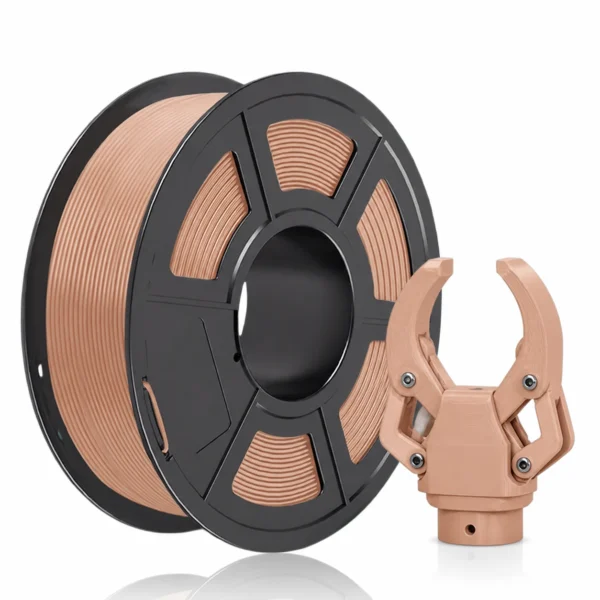

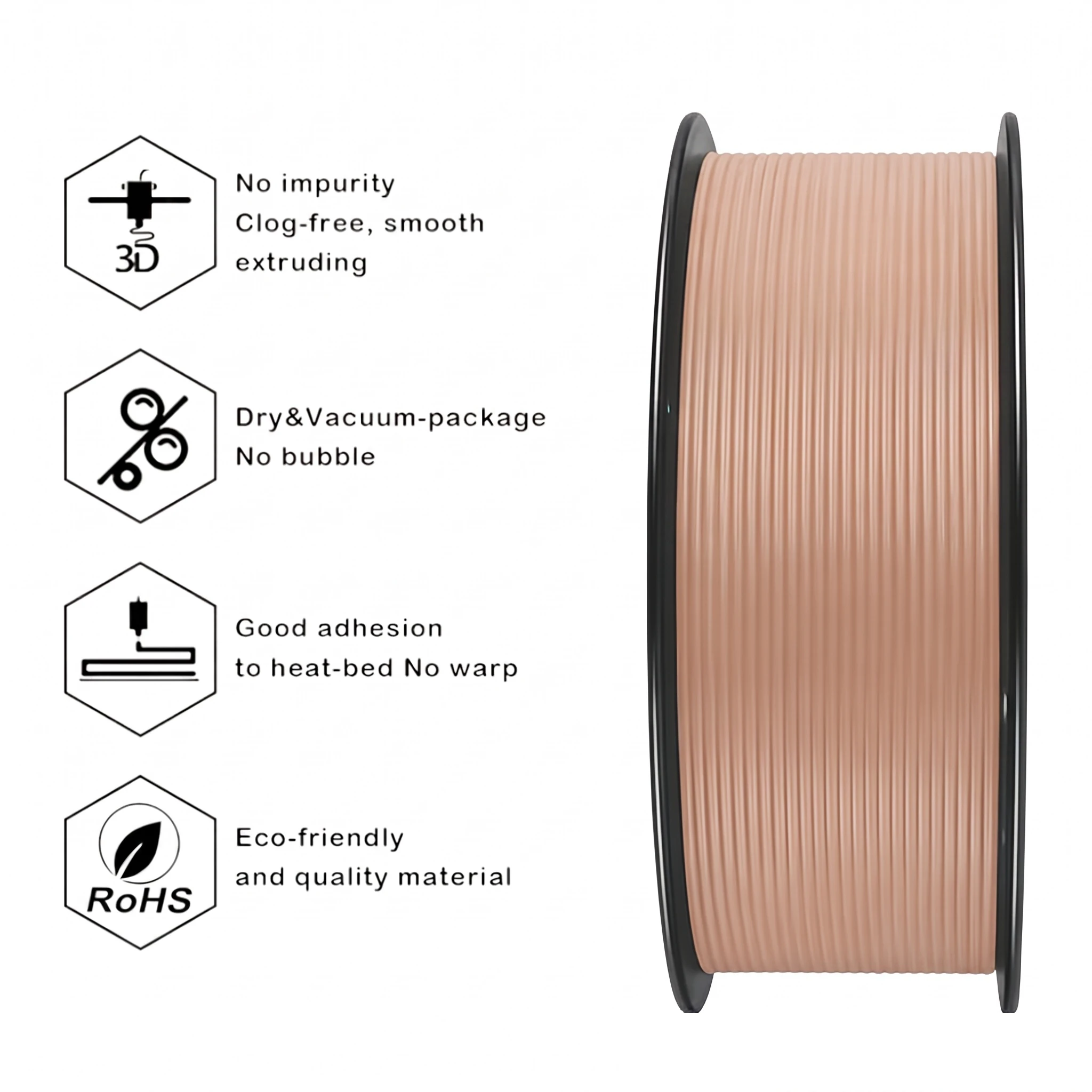
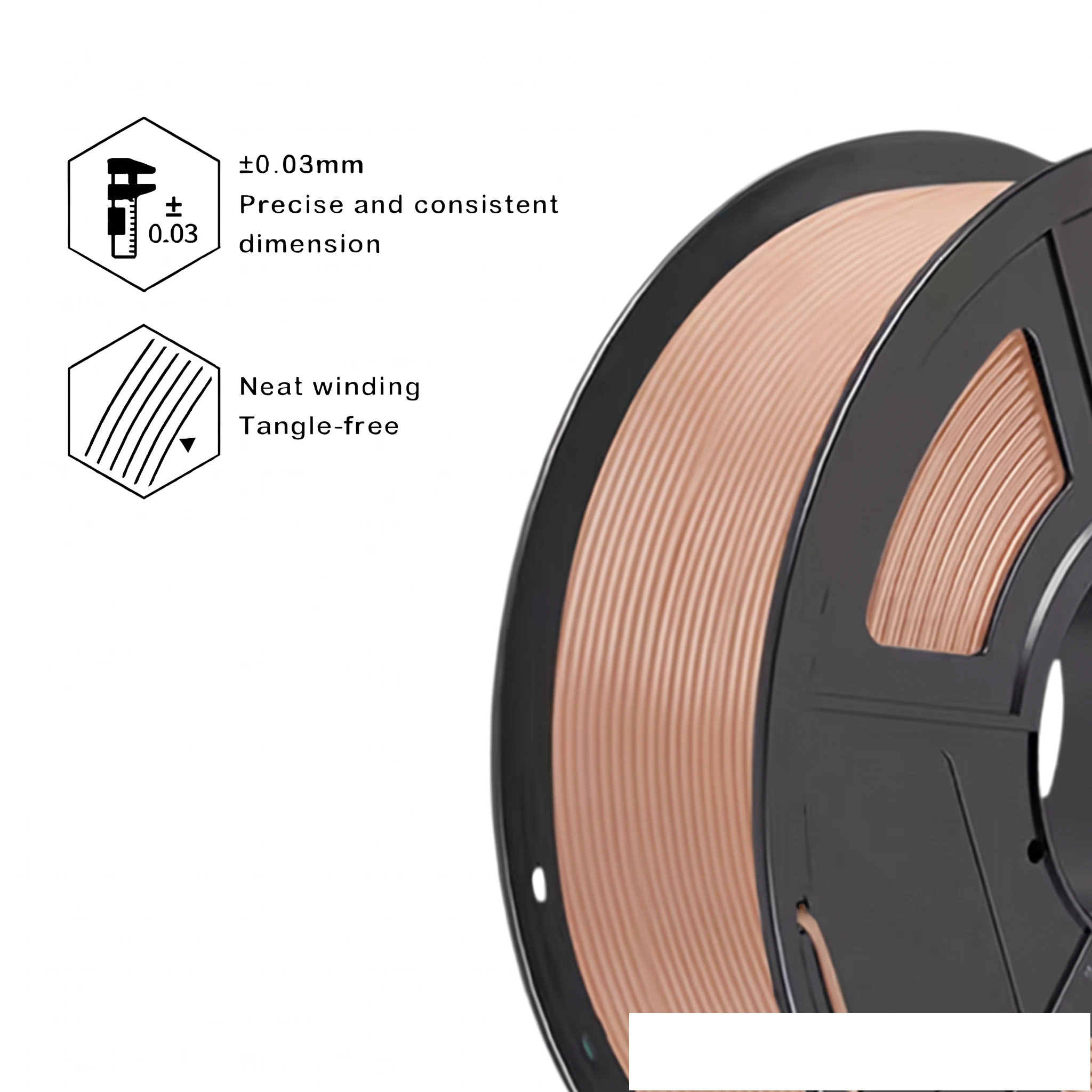

ABS+/ABS Pro Engineering Series | Flesh Skin Tone | Wholesale & OEM Supply
Flesh Skin Tone ABS+ Pro Filament 1.75mm 1kg – Engineering Material for Bionic & Ergonomic Prototypes
A high-toughness, heat-resistant modified ABS made for robotic grippers, ergonomic prototypes, anthropomorphic models, jigs, housings, and private-label engineering-filament programs.
We supply a solid flesh skin tone that helps prototype teams evaluate form, proportion, grip geometry, and human-facing surfaces before painting. The modified ABS formulation adds dependable impact performance, thermal stability, controlled winding, and practical post-processing for repeat B2B projects.
MaterialModified ABS
SeriesABS+ / ABS Pro
Color EffectSolid Flesh Skin Tone
Diameter1.75mm
Tolerance±0.03mm
Net Weight1kg
Gross Weight1.3kg
Nozzle Temp220–240°C
Bed Temp70–80°C
Print Speed40–250 mm/s
HDT96°C @ 0.455 MPa
PackagingVacuum + Desiccant
MOQ: Neutral packaging from 50 rolls; OEM customization typically 500–1,000 rolls.
Lead Time: Standard 7–15 working days; customized orders typically 15–25 working days.
Printing Note: Use an enclosed printer and build a dedicated material profile from the 230°C nozzle / 75°C bed starting point.
Product Overview
SSSray Flesh Skin Tone ABS+ Pro Filament 1.75mm 1kg is a modified acrylonitrile-butadiene-styrene material developed for professional FFF work where toughness, thermal stability, dimensional control, and human-centered appearance must work together. We supply it for robotic gripper bodies, prosthetic design prototypes, ergonomic handles, wearable concept shells, anthropomorphic fixtures, consumer-electronics housings, drill jigs, and low-volume functional parts. The solid warm skin tone gives design teams a closer, color-relevant visual starting point for evaluating form, contact surfaces, and proportions before any optional primer or color coating.
The formulation delivers 45 ± 3 MPa tensile strength, 22–28 kJ/m² notched Izod impact strength, and 96°C heat-deflection temperature at 0.455 MPa. Tight 1.75 ± 0.03mm diameter control and ≤0.02mm roundness deviation support predictable feeding from one spool to the next. For distributors, industrial users, and private-label buyers, we combine this engineering performance with vacuum-sealed packaging, batch identification, color customization, sample qualification, and export-ready OEM/ODM support.
Why This Flesh Skin Tone ABS+ Pro Stands Out
Mechanical performance is only half the purchasing decision for bionic and ergonomic prototypes. This solid flesh tone lets your customers review shape, grip zones, joint clearances, and human-facing surfaces in a more relevant visual context than black or signal white. The modified ABS then carries the part through drilling, sanding, painting, threaded fastening, and acetone-vapor finishing. You can offer one SKU that serves engineering validation, presentation models, and short-run functional work without positioning it as a medical-contact material.
Key Selling Points
Human-Centered Flesh Tone
A warm solid tone helps teams judge human-facing geometry before painting or final color approval.
45 ± 3 MPa Tensile Strength
45 ± 3 MPa tensile strength supports functional prototypes, fixtures, housings, and assemblies.
High Impact Performance
22–28 kJ/m² notched Izod and 20–26 kJ/m² notched Charpy values suit durable working parts.
Heat-Stable Engineering Grade
96°C HDT at 0.455 MPa and 101°C Vicat softening temperature expand practical use conditions.
Controlled Feeding Geometry
1.75 ± 0.03mm diameter and ≤0.02mm roundness deviation support repeatable extrusion.
Post-Process Friendly
Sand, drill, paint, mechanically fasten, or acetone-vapor smooth qualified printed parts.
Key Features & Buyer Benefits
| Feature | Practical Buyer Benefit |
|---|---|
| Solid Flesh Skin Tone | Adds a human-centered visual base for robotic, ergonomic, wearable, and prosthetic design prototypes |
| 45 ± 3 MPa Tensile Strength | Supports functional validation parts, housings, fixtures, clips, and mechanical assemblies |
| 18–25% Elongation at Break | Provides a useful balance of stiffness and ductility for parts handled during repeated evaluation |
| 96°C HDT at 0.455 MPa | Extends prototype use beyond the lower thermal range of standard PLA |
| High Notched Impact Values | Improves suitability for grippers, guards, brackets, and parts exposed to handling or occasional knocks |
| Post-Processing Compatibility | Supports sanding, drilling, painting, fastening, and controlled acetone-vapor smoothing workflows |
Commercial Value for B2B Programs
This SKU gives distributors and private-label brands a clear reason to expand beyond ordinary black and white ABS. The flesh skin tone addresses robotic, ergonomic, wearable, prop, education, and human-form modeling projects, while the modified ABS performance supports credible engineering positioning. Prototype teams can assess geometry in a relevant base color and reserve paint work for final presentation pieces, helping shorten iteration cycles. For repeat purchasing, the 1kg plastic spool, vacuum-sealed pack, documented material properties, controlled diameter, and OEM color/label options make the product easier to qualify, list, and replenish across wholesale and industrial channels.
Why Buyers Choose This Grade
- Flesh skin tone developed for bionic, ergonomic, wearable, and anthropomorphic prototype workflows
- 45 ± 3 MPa tensile strength with strong notched impact performance for functional parts
- 96°C HDT at 0.455 MPa and 101°C Vicat softening temperature
- 1.75 ± 0.03mm diameter with ≤0.02mm roundness deviation for controlled feeding
- Compatible with sanding, drilling, painting, fastening, and acetone-vapor finishing
- Vacuum-sealed aluminum-foil packaging with desiccant and lot/date identification
- Neutral wholesale supply from 50 rolls plus private-label and custom-color programs
How We Work
1
Requirement Review
2
Specification Confirmation
3
Sample Evaluation
4
Packaging Discussion
5
Production Arrangement
6
Inspection & Shipment
Material Comparison Guide
| Material | Density | Tensile Strength | HDT @ 0.455 MPa | Impact Resistance | Post-Processing |
|---|---|---|---|---|---|
| ABS+ / ABS Pro | 1.05 g/cm³ | 45 ± 3 MPa | 96°C | ★★★★★ | Excellent |
| Standard ABS | 1.04 g/cm³ | 40–47 MPa | 90–100°C | ★★★★★ | Good |
| PLA | 1.24 g/cm³ | 50–53 MPa | 55–60°C | ★★☆☆☆ | Limited |
Comparison values describe typical material behavior. Printed-part results depend on geometry, orientation, equipment calibration, and processing conditions.
Technical Specifications
| Product Name | Engineering ABS+ Pro 3D Printing Filament 1.75mm 1kg (Flesh Skin Tone) |
|---|---|
| Material | Acrylonitrile Butadiene Styrene (ABS) – Modified Grade |
| Series | ABS+ / ABS Pro Filament; Engineering Filament |
| Color / Effect | Flesh skin tone / solid color |
| Filament Diameter | 1.75 ± 0.03mm; 2.85 ± 0.03mm upon qualified project request |
| Roundness Deviation | ≤0.02mm |
| Density | 1.05 g/cm³ (ISO 1183 / ASTM D792) |
| Melt Flow Rate | 12–22 g/10min at 220°C / 10kg (ISO 1133) |
| Net / Gross Weight | 1kg / 1.3kg |
| Tensile Strength (XY) | 45 ± 3 MPa (ISO 527-2 / ASTM D638) |
| Tensile Modulus (XY) | 1,950 ± 100 MPa (ISO 527-2 / ASTM D638) |
| Elongation at Break | 18–25% (ISO 527-2 / ASTM D638) |
| Flexural Strength / Modulus | 72 MPa / 2,000 ± 100 MPa (ISO 178 / ASTM D790) |
| Izod / Charpy Impact, Notched | 22–28 / 20–26 kJ/m² (ISO 180 / ISO 179-1) |
| Shore D Hardness | 78 (ISO 868 / ASTM D2240) |
| Glass Transition Temperature | 103.5°C (ISO 11357-2 / ASTM D3418) |
| Heat Deflection Temperature | 96°C @ 0.455 MPa; 87°C @ 1.82 MPa (ISO 75-2 / ASTM D648) |
| Vicat Softening Temperature | 101°C (ISO 306 / ASTM D1525) |
| Continuous Use Temperature | 85–95°C typical |
| Water Absorption (24h) | 0.20–0.35% (ISO 62) |
| Melt Processing Temperature | 220–250°C |
| Recommended Chamber Temperature | 40–60°C; enclosed printer strongly recommended |
| Nozzle Material | Hardened steel or ruby-tipped nozzle for extended service; standard brass nozzle compatible |
| Spool / Packaging | Plastic spool; vacuum-sealed aluminum-foil bag with desiccant |
| Printer Compatibility | Most enclosed, open-material 1.75mm FDM/FFF platforms after material-profile calibration |
| Typical Applications | Robotic grippers, prosthetic design prototypes, ergonomic parts, housings, jigs, fixtures, brackets, anthropomorphic models, and low-volume end-use parts |
| Safety Limitation | Not certified for food-contact or medical applications |
| Compliance Documents | RoHS, CE-related documentation, SDS/MSDS, and TDS; project-based third-party verification support |
| OEM / ODM | Custom color, label, box, spool discussion, and private-label programs supported |
Recommended Print Settings
| Parameter | Production Starting Point | Adjustment Range / Guidance |
|---|---|---|
| Nozzle Temperature | 230°C | 220–240°C |
| Heated Bed | 75°C | 70–80°C; use an ABS-compatible adhesion interface |
| Print Speed | 40–80 mm/s for qualification | 40–250 mm/s after flow, cooling, and geometry validation |
| First Layer Speed | 20–30 mm/s | Keep within 20–30 mm/s while qualifying adhesion |
| Layer Height | 0.20mm with a 0.4mm nozzle | 0.16–0.24mm starting range; revalidate for other nozzle sizes |
| Layer Fan | 0% for first 3–4 layers | 0–30%; use up to 30% for bridges and overhangs |
| Enclosed Chamber | Required for stable results | 40–60°C recommended |
| Direct-Drive Retraction | 1.0mm at 40 mm/s | 0.5–1.5mm at 30–50 mm/s |
| Bowden Retraction | 4.0mm at 40 mm/s | 3–5mm at 30–50 mm/s |
| Wall Count | 3–4 perimeters | Use 4–6 for load-bearing prototypes after part testing |
| Infill | 15–20% visual / 40–60% functional | Match density and pattern to load path; validate the finished part |
| Bed Surface | Clean PEI with suitable glue interface | PEI, BuildTak, or qualified ABS slurry; brim for large footprints |
| Drying | 80°C for 4–6 hours when moisture is suspected | Cool to room temperature before loading; do not exceed the stated cycle |
Print Optimization Guide
| Issue | What We Recommend | Buyer Benefit |
|---|---|---|
| Warping / Lifted Corners | Use a 40–60°C enclosure, remove drafts, keep fan off for the first 3–4 layers, clean the plate, and add a brim | More stable dimensions on housings, jigs, and long flat parts |
| Layer Cracking | Raise nozzle temperature in 5–10°C steps without exceeding 240°C, reduce cooling, and stabilize chamber temperature | Stronger inter-layer bonding for functional prototypes |
| Stringing / Oozing | Lower temperature in 5–10°C steps, tune the stated retraction range, and dry material if moisture symptoms appear | Cleaner openings, joints, and robotic-gripper geometry |
| Poor First-Layer Adhesion | Clean the build plate, verify leveling and Z-offset, use PEI/BuildTak with a compatible adhesive interface, and keep the first layer at 20–30 mm/s | Fewer restarts during sample and batch qualification |
| Bubbles / Rough Surface | Dry at 80°C for 4–6 hours, keep the filament path clean, and store opened spools in a sealed dry box | Smoother flesh-tone surfaces and more predictable finishing |
| Odor / Visible Fumes | Print in an enclosed system with effective room ventilation and suitable carbon/particulate filtration | Safer, more professional engineering-print workflows |
Printer Brand Starting Profiles
Use the printer maker’s generic ABS preset only as a profile structure. Override the material values below for this formulation, then run flow, pressure/linear-advance, temperature, and maximum-volumetric-speed calibration before production.
| Printer Platform | Start Nozzle / Bed | Qualification Speed | Profile Action |
|---|---|---|---|
| Bambu Lab X1 / P1 enclosed platforms | 230°C / 75°C | 40–80 mm/s | Duplicate Generic ABS; calibrate flow dynamics, flow rate, and maximum volumetric speed |
| Prusa enclosed platforms | 230°C / 75°C | 40–70 mm/s | Duplicate Generic ABS; verify first layer, extrusion multiplier, and draft protection |
| Creality K1 / K2 enclosed platforms | 230°C / 75°C | 40–80 mm/s | Duplicate CR-ABS/Generic ABS; tune flow ratio and pressure advance before raising speed |
| Other open-material enclosed FDM printers | 230°C / 75°C | 40–60 mm/s | Confirm hotend, bed, chamber, and spool-path capability; run a small qualification coupon |
Do not retain another filament brand’s temperature values unchanged. This ABS+ Pro formulation has its own 220–240°C nozzle and 70–80°C bed operating window.
Performance Characteristics
| Performance Dimension | Rating | What It Means for Your Customer |
|---|---|---|
| Printability | ★★★☆☆ | Stable results require an enclosed, temperature-controlled workflow |
| Tensile Strength | ★★★★☆ | 45 ± 3 MPa supports functional and load-bearing prototype development |
| Heat Resistance | ★★★★☆ | 96°C HDT at 0.455 MPa serves many elevated-temperature engineering uses |
| Surface Quality | ★★★☆☆ | Smooth semi-gloss flesh-tone surfaces can be sanded, painted, or vapor-smoothed |
| Impact Resistance | ★★★★★ | High notched impact values suit durable parts, grippers, guards, and fixtures |
Best-Fit Applications for Flesh Skin Tone
| Application | Fit | Why This Color and Grade Work |
|---|---|---|
| Robotic Grippers & Human-Robot Interfaces | ★★★★★ | Combines a human-centered visual base with impact resistance and drillable, fastenable geometry |
| Prosthetic Design & Fit/Form Prototypes | ★★★★★ | Supports visual and ergonomic evaluation before finishing; not certified for patient-contact use |
| Ergonomic Handles & Control Surfaces | ★★★★★ | Useful for judging grip proportions, contact zones, and presentation quality |
| Wearable & Anthropomorphic Concept Models | ★★★★☆ | Provides a relevant base tone for shells, mannequins, training models, and prop components |
| Consumer-Electronics Housings | ★★★★☆ | Good strength, thermal stability, and post-processing for enclosure prototypes |
| Jigs, Fixtures, Brackets & Drill Guides | ★★★★★ | High impact values and mechanical-finishing compatibility support workshop use |
Storage & Moisture Control
- Store sealed spools at 15–25°C in a cool, dry area below 50% relative humidity
- Keep the aluminum-foil vacuum package closed until the spool is ready for use
- Move opened spools to an airtight dry box with fresh desiccant and humidity control
- Dry at 80°C for 4–6 hours if popping, stringing, bubbles, rough layers, or weak bonding appear
- Use unopened material within 24 months from production; target use within 6 months after opening to maintain the stated performance
OEM / ODM Services for Your Market
We support distributors and private-label brands with flesh-tone sample qualification, approved color-master matching, custom labels, branded boxes, barcode and compliance artwork coordination, spool discussions, multilingual packaging, and order-specific documentation. Neutral packaging starts from 50 rolls. OEM customization normally starts from 500–1,000 rolls, depending on the color, packaging structure, and artwork requirements. Share your target market, annual volume, printer base, and application mix so our team can build the right sample and quotation plan.
Six Controls Behind Repeat Orders
- Incoming resin and color-master identification before extrusion scheduling
- Diameter control against the 1.75 ± 0.03mm specification
- Roundness verification against the ≤0.02mm requirement
- Spool winding and tension review to reduce crossing and feeding interruptions
- Net-weight, seal, desiccant, lot number, and production-date checks before packing
- Pre-shipment sample retention and project-based third-party verification support
Compliance Documents & Project Support
- RoHS compliance documentation for restricted-substance review
- CE-related documentation for applicable EU safety and environmental requirements
- SDS / MSDS available for handling, storage, and transport review
- Technical Data Sheet available for material and process qualification
- Independent third-party verification is available for qualified projects; applicable service fees are confirmed in the quotation
- This grade is not certified for food-contact or medical applications
Frequently Asked Questions
What makes this flesh skin tone useful for B2B customers?
It gives robotics, ergonomic-product, wearable, prop, education, and prosthetic design teams a human-centered base color for form and presentation checks. Buyers can reserve heavier paint work for final samples while keeping the mechanical benefits of modified ABS.
Is this filament approved for medical devices or skin contact?
No. This grade is intended for general industrial, prototyping, and educational use. It is not certified for medical or food-contact applications. Customers must qualify material, finished-part design, cleaning, and regulatory compliance for their own end use.
What temperatures should customers start with?
Start at 230°C nozzle and 75°C bed, then calibrate within 220–240°C and 70–80°C. Use a 40–60°C enclosed chamber, disable the layer fan for the first 3–4 layers, and keep the first layer at 20–30 mm/s.
Can customers use a standard Bambu, Prusa, or Creality ABS preset?
Use the printer maker’s generic ABS preset as a profile structure, then override it with this product’s temperature range. Run flow, temperature, retraction, and maximum-volumetric-speed calibration before releasing a production profile.
How strong and heat resistant is the printed material?
Typical XY printed values include 45 ± 3 MPa tensile strength, 22–28 kJ/m² notched Izod impact strength, and 96°C HDT at 0.455 MPa. Finished-part performance still depends on orientation, wall design, infill, geometry, and processing conditions.
Can the printed surface be finished after printing?
Yes. Qualified parts can be sanded, drilled, painted, mechanically fastened, or acetone-vapor smoothed. Test the chosen process on a sample because finishing conditions affect dimensions, color, and surface detail.
What are the wholesale and OEM minimums?
For this flesh-tone SKU, neutral-pack purchasing begins at 50 spools. Custom-brand programs are normally planned from 500–1,000 spools, with the final quantity set after tone approval, box construction, labeling, and spool requirements are confirmed.
What should buyers evaluate before a bulk order?
We recommend confirming the flesh-tone master, print profile, sample-part geometry, packaging artwork, labels, documents, carton plan, and golden sample. Qualified buyers can request sample support before bulk production.
Build a Differentiated Flesh Skin Tone ABS+ Pro Filament Program
Send us your target application, printer platform, annual volume, required color reference, and packaging plan. We will prepare the right sample-qualification route for robotic grippers, ergonomic prototypes, human-form models, functional parts, and private-label engineering-filament sales.
Additional Information
| Color | Flesh Skin Tone / Solid Color |
|---|---|
| Filament Diameter | 1.75mm standard; 2.85mm upon qualified project request |
| Spool Weight | 1kg Net Weight |
| Gross Weight | 1.3kg |
| Material | Modified ABS |
| Packaging | Vacuum-sealed aluminum-foil bag with desiccant |
| Spool Type | Plastic spool |
| Standard Tolerance | ±0.03mm |
| Brand | SSSray |
| Product Series | ABS+ / ABS Pro Filament; Engineering Filament |
Packaging Gallery
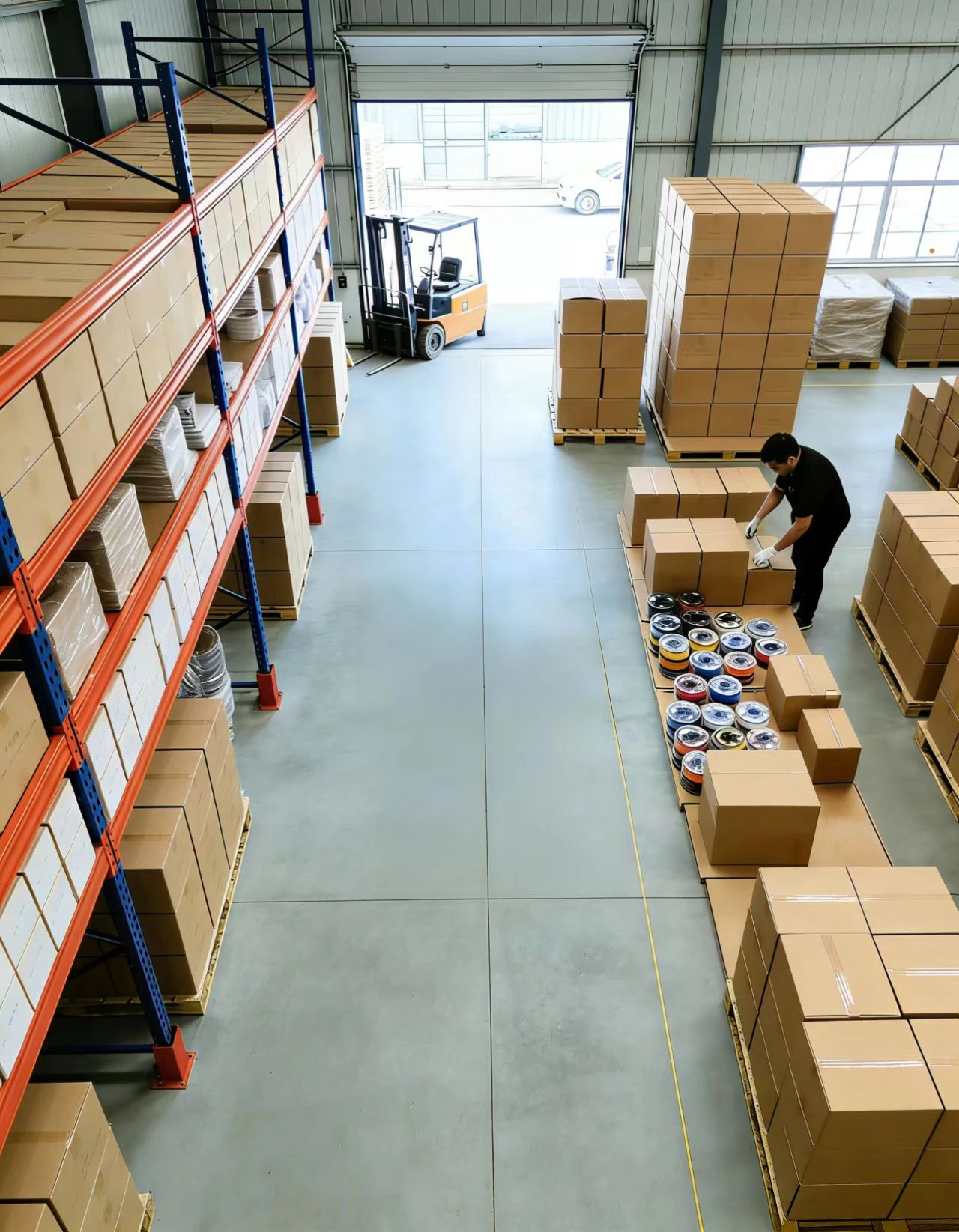
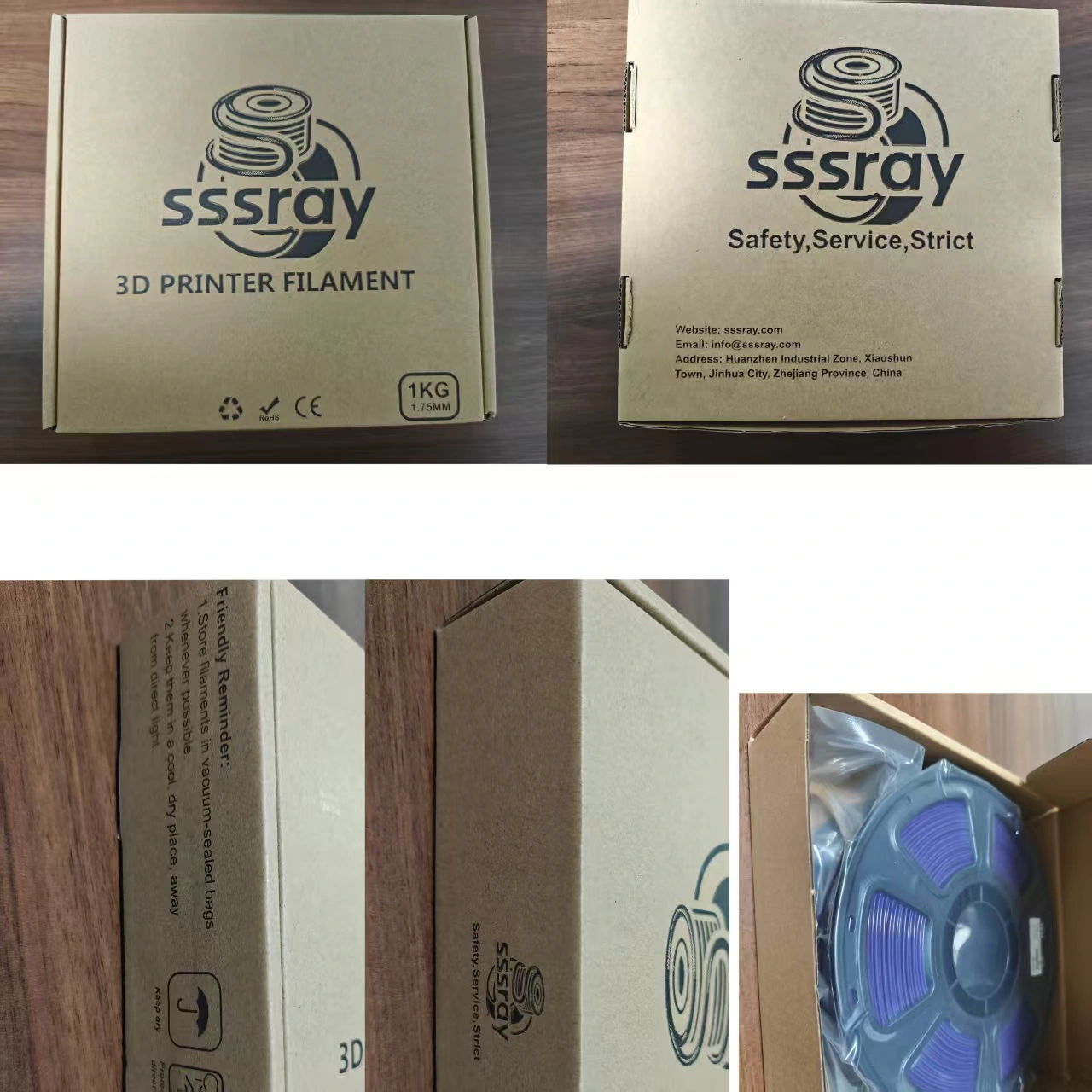
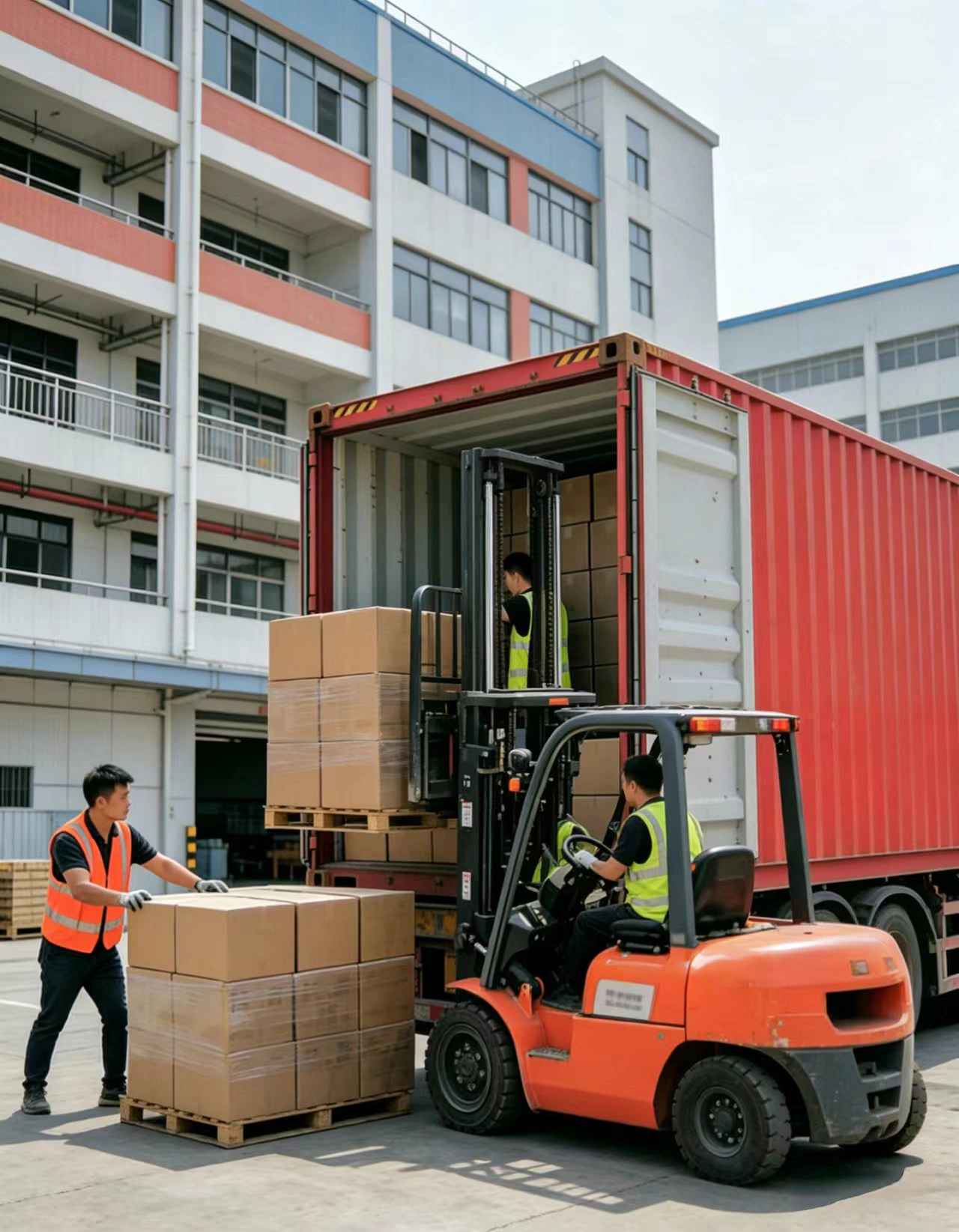
Our Protection Measures
- Vacuum-sealed bag packaging
- Desiccant included in each unit
- Individual box support available
- Export carton packing for bulk orders
- Shipment-ready outer carton preparation
Carton Reference
| Packing Reference | Typical Description |
|---|---|
| Inner Unit | 1 roll / box |
| Master Carton Quantity | Confirmed in the approved order packing plan |
| Carton Type | Export standard carton |
| Carton Dimensions | Confirmed against the approved spool and box format |
| Palletization | Available upon shipment planning |
| Labeling | Neutral / custom OEM labels available |
We confirm final carton dimensions and packing quantity after the spool style, box format, and customization requirements are approved.
B2B Supply Terms
| MOQ | Neutral packaging from 50 rolls; OEM customization typically 500–1,000 rolls |
|---|---|
| Available Colors | Standard and custom color options available |
| Diameter Options | 1.75mm standard; 2.85mm for selected products or upon request |
| Spool Design | Standard plastic spool or customized spool options |
| Sample Orders | After qualification review, buyers are eligible for up to 3 free sample rolls; freight responsibility is confirmed before dispatch |
| Payment Methods | T/T for all orders; PayPal for small trial orders |
| L/C Terms | Considered only for selected large-volume existing customers after evaluation |
| Trade Terms | FOB Ningbo / EXW |
| Standard Payment Terms | 30% deposit, 70% balance before shipment |
| Lead Time | Standard 7–15 working days; customized 15–25 working days |
| Port of Loading | Ningbo, China |
| OEM / ODM | Supported |
Related products
-

UV-Resistant ASA-GF Filament 1.75mm 1kg – Glass Fiber Reinforced for Outdoor Engineering Applications & Industrial Parts| OEM/ODM Bulk Supply
-
SSSray PC-ABS 3D Printer Filament Black 1.75mm 1kg
-
SSSray ABS 3D Printer Filament in Clean White – فلمنت ABS أبيض for DIN Rail Mounts & Protective Guards
-
Jet Black Flame Retardant ABS, 난연 ABS 필라멘트 블랙 – SSSray ABS-FR 3D Printer Filament for Louvered Module Housings & Hinged Split Clamps