Online time
Monday to Friday: 9AM - 8PM
Weekend: 10AM - 5PM

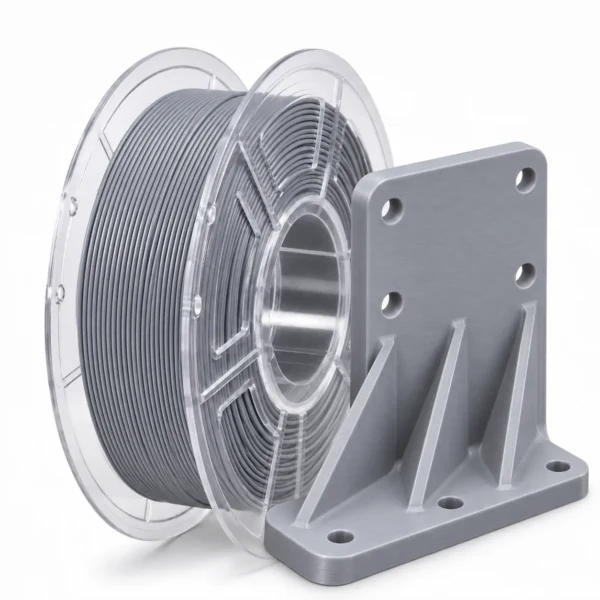
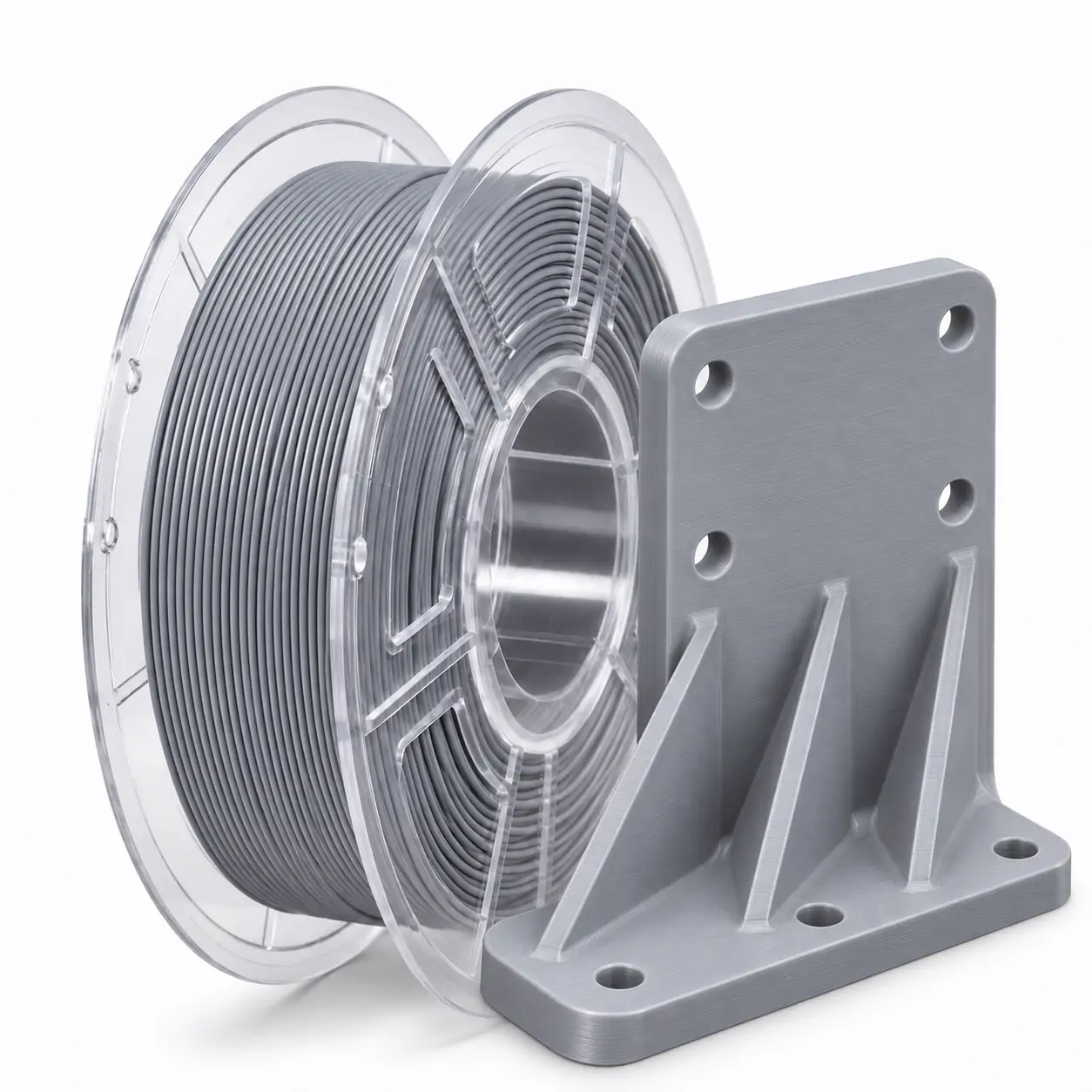
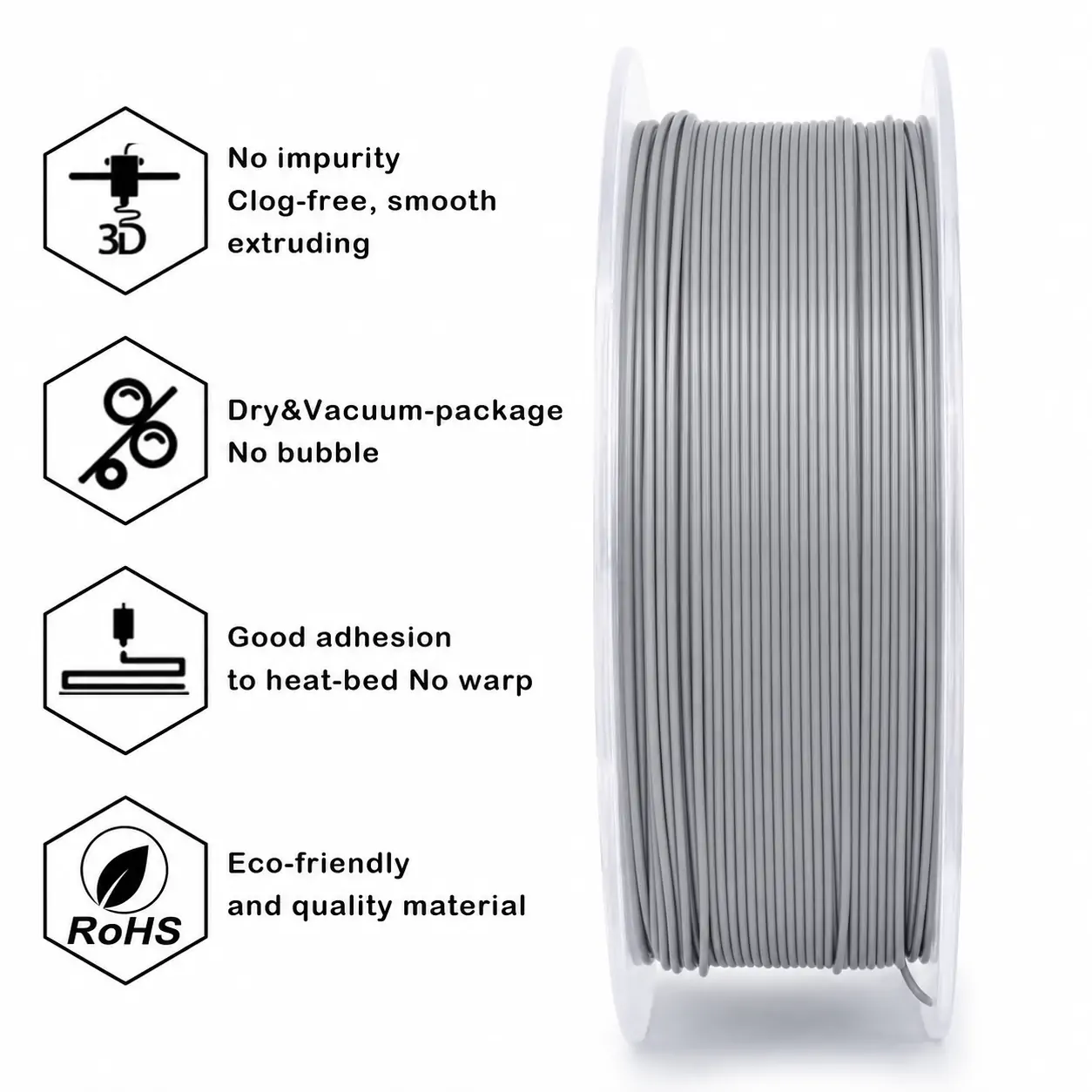
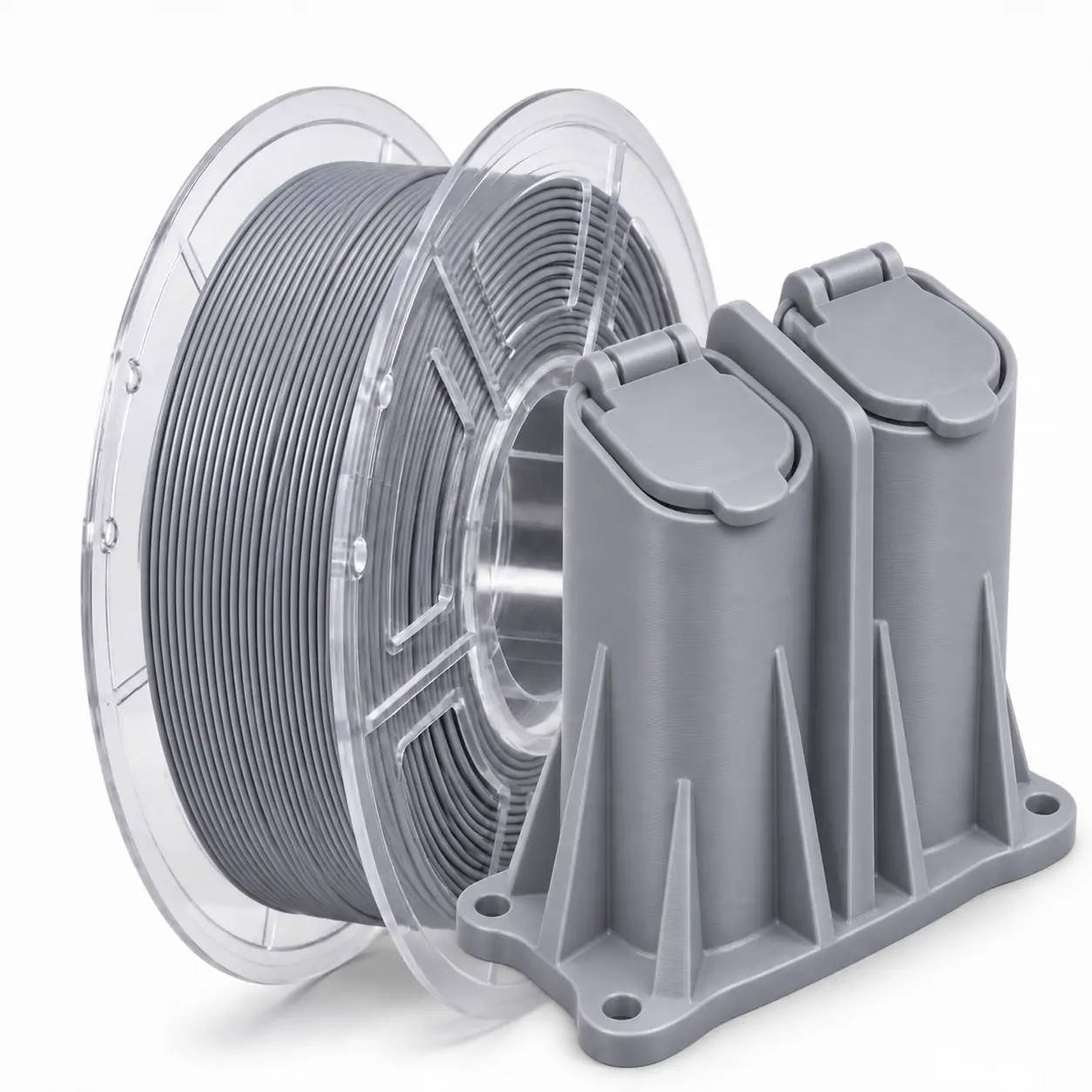
PC Polycarbonate Series | Industrial Gray | Bulk & OEM Supply
SSSray Industrial Gray Polycarbonate (PC) 3D Printer Filament – filament poliwęglanowy szary for Mounting Brackets & Hinged Housings
Heat-resistant engineering PC for gusseted bracket load paths, bolt bosses, precision hinge fits and industrial housing prototypes.
Equip your engineering customers with Industrial Gray PC filament built for serious fit-and-function projects. We combine a specified ±0.03mm diameter, a clean satin-low-sheen finish, vacuum-packed 1kg spools and flexible wholesale or private-label supply—backed by practical high-temperature printing guidance.
MaterialPolycarbonate (PC)
SeriesSSSray PC Polycarbonate
Color EffectSolid Industrial Gray · Satin-Low Sheen
Diameter1.75mm
Tolerance±0.03mm
Net Weight1kg
Gross Weight1.3kg
Nozzle Temp260–280°C
Bed Temp100–110°C
Print Speed40–150 mm/s; tuned to 250 mm/s
PackagingVacuum + Desiccant
Spool TypePlastic Spool
MOQ: Neutral packaging from 50 spools; OEM packaging typically 500–1,000 spools.
Lead Time: Standard 7–15 working days; customized orders typically 15–25 working days.
Product Overview
Our Industrial Gray Polycarbonate (PC) filament gives mechanical design teams a distinctive, solid medium-light cool gray for prototypes where geometry and elevated-temperature behavior matter. Subtle satin highlights make bolt-hole edges, rib-to-wall transitions, hinge pin bosses and mating surfaces easy to inspect under workshop lighting. We make Industrial Gray PC for gusseted mounting brackets, machine-side fixtures and hinged housings, combining a clean satin-low-sheen finish with the strength and heat performance expected of engineering-grade PC. Our published PC series test data lists 60 ± 3 MPa XY tensile strength, 93 MPa XY flexural strength and 112°C HDT at 0.455 MPa—specific mechanical and thermal benchmarks for buyers selecting PC for demanding functional applications.
We manufacture standard 1.75mm, 1kg filament to a specified ±0.03mm diameter tolerance and pack each plastic spool under vacuum with desiccant. Our enclosed-printer guidance covers hotend output, heated-bed adhesion, moisture control and oriented load paths so your customers can move efficiently from a test bracket to a functional assembly. We supply neutral packs from 50 spools and develop branded labels, cartons and alternative formats for OEM programs. Browse our wholesale PC filament range or send us your projected volume and drawing requirements for a tailored export quotation.
Why This Product Stands Out
Engineering PC with a commercially useful color. Industrial Gray is chosen for brackets with bolt preload, gusset transitions and hinge assemblies that need clearer geometry checks and tougher material options than everyday display models. We offer a 40–150 mm/s production-oriented starting range, plus a 30–250 mm/s machine-dependent tuning envelope for capable high-flow systems. Pair that processing flexibility with our 1kg export packaging, 50-spool neutral MOQ and private-label options to establish a distinct, heat-focused PC range alongside your everyday and outdoor filaments.
Key Selling Points
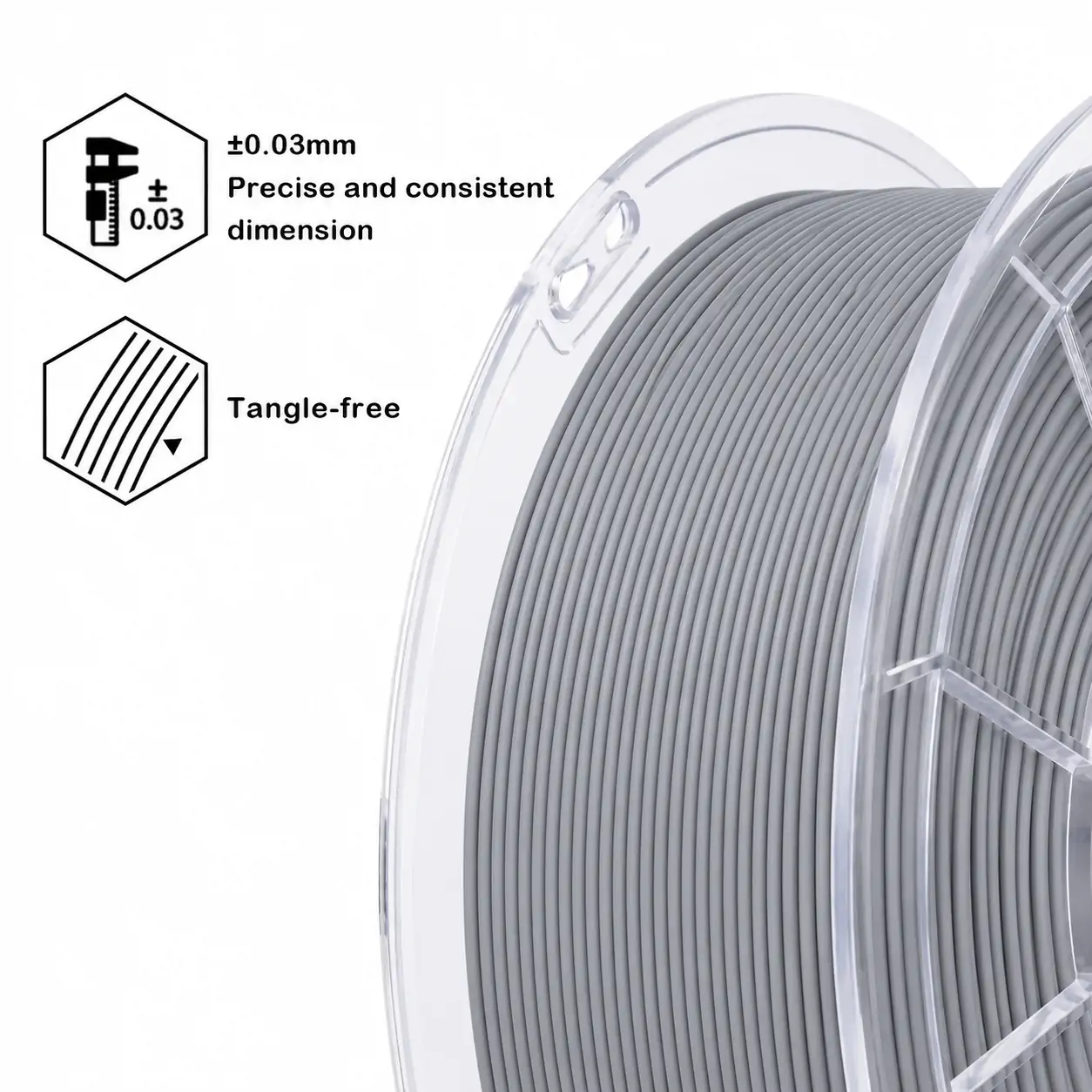
±0.03mm Feed Consistency
We specify 1.75mm ±0.03mm filament to help keep extrusion and surface appearance consistent across repeat bracket builds.
40–250 mm/s Process Envelope
Start production profiles at 40–150 mm/s; tune toward 250 mm/s only where melt flow, chamber heat and part geometry support it.
Purposeful Industrial Gray
A solid cool-gray, satin-low-sheen finish brings rib edges, counterbores and hinge mating gaps into clear visual focus.
Heat-Resistant PC Series
PC series reference data includes 112°C HDT at 0.455 MPa and 93 MPa XY flexural strength—relevant numbers for engineering buyers.
Export-Ready Order Support
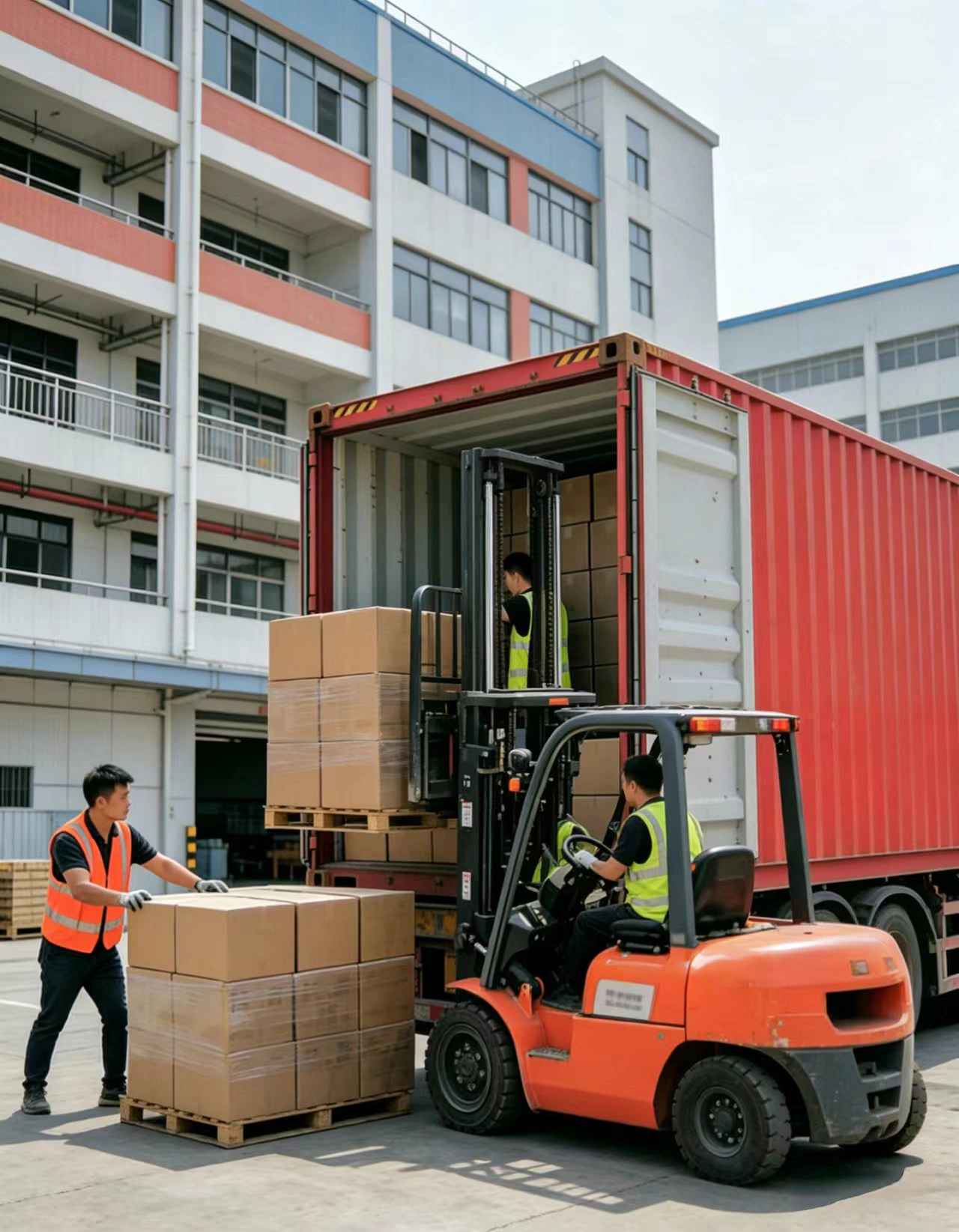
We coordinate vacuum-packed units, carton labeling and FOB Ningbo or EXW shipments for importers.
Private-Label PC Programs
We build your presentation with branded boxes, logo labels, carton marks and application-focused samples before rollout.
Key Features
| Feature | Practical Buyer Benefit |
|---|---|
| Solid Industrial Gray | Subtle satin sheen makes bolt bosses, fillet edges and hinge clearances easy to see in assembly photographs |
| Polycarbonate Material | Introduces a heat-resistant FDM engineering material where basic display plastics are not the target |
| 1.75mm ±0.03mm | Specified geometry supports repeatable feeding on compatible FDM equipment |
| Enclosed Printer Workflow | 260–280°C nozzle and 100–110°C bed starting guidance supports enclosed PC processing |
| Vacuum Seal + Desiccant | Helps limit moisture pickup during export storage and distribution |
| OEM / ODM and Sample Support | Our team connects qualifying samples, private-label artwork and export-ready carton programs |
Balanced Quality and Cost Efficiency
We help distributors position Industrial Gray PC as a higher-value engineering SKU for heated fixtures, bracket redesigns, hinge development and machinery-side prototype assemblies. One consistent mid-light gray keeps your catalog focused while giving technical customers a professional color for measuring clearances and documenting revisions. Start from just 50 neutral-packed spools, build demand through our filament qualification program, then scale with OEM artwork and predictable carton configurations. Our sales and technical team will help match your order plan to the part geometry, printer platform and target distribution channel.
How We Work
1
Requirement Review
2
Specification Confirmation
3
Sample Evaluation
4
Packaging Discussion
5
Production Arrangement
6
Inspection & Shipment
Material Comparison Guide
| Material | Typical Printing Window | Bed / Chamber | Material Behavior | Typical Application |
|---|---|---|---|---|
| PC (this SKU) | 260–280°C nozzle; 40–150 mm/s starting range | 100–110°C bed; enclosed chamber | Heat-resistant engineering polymer; dry feed and controlled cooling support layer bonding | Bolted brackets, heat-exposed fixtures and hinge-mechanism prototypes |
| PETG | Approx. 220–260°C (grade-dependent) | Commonly 70–85°C bed; enclosure often optional | Lower-temperature processing; different heat and stiffness limits | General fixtures, covers and functional models |
| ABS | Approx. 240–270°C (grade-dependent) | Commonly 90–110°C bed; enclosure recommended | Thermal contraction and layer splits require management | Mechanical prototypes and interior housings |
| ASA | Approx. 250–270°C (grade-dependent) | Commonly 90–110°C bed; enclosure recommended | Selected grades offer weathering resistance; still needs warp control | Outdoor covers and brackets after qualification |
Technical Specifications
| Product Name | SSSray Industrial Gray Polycarbonate (PC) 3D Printer Filament – filament poliwęglanowy szary for Mounting Brackets & Hinged Housings |
|---|---|
| Material | Polycarbonate (PC) FDM / FFF filament |
| Series | SSSray PC Polycarbonate Series – Gusseted Mounting Brackets & Hinged Housing Prototypes |
| Color / Effect | Industrial Gray – solid, medium-light cool gray with a smooth, low-sheen finish and subtle satin highlights |
| Filament Diameter | 1.75mm standard; 2.85mm by project inquiry |
| Tolerance | ±0.03mm |
| Net Weight | 1kg (2.2 lbs); 3kg / 5kg formats by project inquiry |
| Gross Weight | 1.3kg |
| Spool Type | Plastic spool |
| Packaging | Vacuum sealed with desiccant |
| Printer Compatibility | Suitable 1.75mm FDM / FFF printers with an all-metal high-temperature hotend, sufficiently heated bed, appropriate print surface and enclosure (e.g. supported Bambu Lab, Prusa, Creality and QIDI models) |
| Typical Applications | Gusseted bolt-on brackets, hinge pin bosses, heated assembly fixtures, machine-side jigs and dimensional fit prototypes |
| Typical XY Tensile Strength · PC Series | 60 ± 3 MPa · ISO 527-2 / ASTM D638 · printed XY test coupons |
| Typical XY Flexural Strength · PC Series | 93 MPa · ISO 178 / ASTM D790 · printed XY test coupons |
| Typical Tensile Modulus · PC Series | 2,350 MPa · ISO 527-2 / ASTM D638 |
| Heat Deflection Temperature · PC Series | 112°C at 0.455 MPa; 102°C at 1.82 MPa · ISO 75-2 / ASTM D648 |
| Glass Transition Temperature · PC Series | 115°C · ISO 11357-2 / ASTM D3418 |
| Density · PC Series | 1.19 g/cm³ · ISO 1183 / ASTM D792 |
| Nominal Print Guidance | 260–280°C nozzle; 100–110°C bed; 40–150 mm/s; enclosure recommended |
| Extended Speed Window | 30–250 mm/s across tuned systems; use a high-flow hotend and confirm stable melt delivery at the upper end |
| Drying Guidance | 75–80°C for 6–8 h in temperature-controlled equipment; use a heat-rated spool or transfer to a suitable drying reel |
| Technical Documents | We coordinate relevant PC series data and available color-grade documents with your export order |
| OEM / ODM | Supported |
| Compliance Documents | We match available declarations and third-party reports to your selected PC grade, color and destination market |
Recommended Print Settings
| Parameter | Recommended Guidance |
|---|---|
| Recommended Nozzle Temperature | 260–280°C; 270°C is a practical start for a 0.4mm all-metal hotend |
| Adjustment Window | 250–290°C for tuned PC profiles; increase melt temperature with speed while monitoring color and layer fusion |
| Recommended Bed Temperature | 100–110°C with an appropriate release layer |
| Bed-Limited Printer Condition | 95–100°C on beds capped at 100°C; use compact footprints, a substantial brim and a warm enclosure |
| Recommended Print Speed | 40–150 mm/s for enclosed PC printers; use 40–80 mm/s for dimension-critical outer walls |
| Extended High-Flow Range | 30–250 mm/s across tuned machine profiles; 150–250 mm/s calls for sufficient volumetric flow, higher melt input and suitable part geometry |
| Layer Height | 0.16–0.24mm preferred; 0.12–0.28mm for 0.4mm nozzle trials |
| Cooling Fan | 0–20% for walls; controlled local increase for bridges if required |
| Direct-Drive Retraction | 0.5–1.2mm at 20–35 mm/s as an initial test profile |
| Bowden Retraction | 2–4mm at 20–35 mm/s as an initial test profile |
| Wall Count | 3–5 perimeters for brackets and housings; tune with stress direction |
| Infill | 15–25% for fit-check prototypes; 30–50% for function-oriented test coupons |
| First Layer Speed | 15–25 mm/s with a calibrated first-layer squish |
| Bed Adhesion | High-temperature PEI or suitable engineering plate with glue / separation layer; brim 5–10mm on shrink-prone parts |
| Drying Before Printing | 75–80°C for 6–8 h, then feed from a dry box; use a reel and dryer rated for the selected temperature |
| Chamber / Ventilation | Use an enclosed printer, preheat the build area, avoid cold drafts and provide effective ventilation |
Print Optimization Guide
| Item | Guidance |
|---|---|
| Bracket Orientation | Align the main bracket load path in the XY plane and position gussets to avoid opening forces across layer interfaces |
| Hinge Clearance | Print a pin-and-bore coupon first; adjust bore diameter and running clearance using the measured cooled fit |
| Surface Quality Focus | Use 0.16–0.20mm layers and reduced outer-wall speed to sharpen the industrial gray satin finish |
| Bed Adhesion | Preheat, use a sacrificial glue release layer and add a brim; let the bed cool before removal |
| Warp Management | Round sharp external corners where design allows; avoid sudden chamber cooling and large dense infill blocks |
| Humidity Control | Dry before printing and feed from a sealed dry box to limit bubbling, surface haze and inconsistent flow |
| Ventilation | Run the enclosed printer with suitable exhaust or filtration; follow machine and workplace safety rules |
| Mechanical Testing | Run bolt-preload checks, repeated hinge cycles and heat exposure on a representative assembly before production use |
Printer Brand Starting Settings
| Printer Brand | Nozzle | Bed | Speed | Notes |
|---|---|---|---|---|
| Bambu Lab X1 Carbon | 265–280°C | 100–110°C | 40–120 mm/s | Preheat the enclosure; use a PC-compatible plate with a separation layer and control outer-wall flow |
| Bambu Lab P1S | 260–275°C | 95–100°C | 40–90 mm/s | 100°C bed ceiling; prioritize compact footprints, a warm enclosure and a substantial brim |
| Prusa CORE One+ | 265–280°C | 105–115°C | 40–130 mm/s | Enclosed printer and high-flow nozzle support faster infill; keep bolt-hole perimeters measured and controlled |
| Creality K1 / K1 Max | 260–280°C | 95–100°C | 40–100 mm/s | 100°C bed ceiling; optimize first-layer adhesion and start with smaller gusseted brackets |
| QIDI Q1 Pro | 265–285°C | 100–110°C | 50–150 mm/s | Use controlled chamber heating and a dry feed path; raise speed with demonstrated melt flow |
Our starting profiles give you practical temperatures and speeds for popular enclosed 1.75mm FDM platforms. Select a PC-compatible build surface, dry the spool and dial in flow with a small gusseted bracket before printing larger assemblies.
Performance Characteristics
| Characteristic | PC Series Reference / Process Guidance | Practical Notes |
|---|---|---|
| Filament Diameter | 1.75mm ±0.03mm specification | We monitor diameter during extrusion to support steady feeding and consistent wall deposition |
| XY Tensile Strength | 60 ± 3 MPa · ISO 527-2 / ASTM D638 · PC series typical | Useful for comparing material response along the main XY load path of a bracket |
| XY Flexural Strength | 93 MPa · ISO 178 / ASTM D790 · PC series typical | Relevant to rib-supported housings, bending loads and clamped fixture layouts |
| Notched Izod Impact | 7–10 kJ/m² · ISO 180 · PC series typical | Shows a measured material-property reference for impact-oriented engineering discussions |
| Heat Deflection Temperature | 112°C at 0.455 MPa; 102°C at 1.82 MPa · ISO 75-2 · PC series typical | Use the applied-load condition when selecting parts for warmer environments |
| Glass Transition Temperature | 115°C · ISO 11357-2 · PC series typical | Thermal material reference distinct from loaded heat-deflection performance |
| Color / Finish | Solid medium-light cool gray; satin-low-sheen appearance | Surface highlights help expose bore edges, gusset fillets and mating part lines |
| Moisture / Processing | 75–80°C drying for 6–8 h; 260–280°C nozzle starting range | Dry feedstock and a warm chamber support smooth extrusion and bonded layers |
| High-Flow Speed Window | 40–150 mm/s recommended; tuned 30–250 mm/s extended range | Match speed to hotend flow, layer height and the actual bracket or hinge geometry |
PC series typical mechanical and thermal values use printed XY specimens with 0.2mm layers and 100% infill. We help engineering buyers match their selected gray PC grade and application requirements to the relevant technical documentation.
Applications
| Application Focus | Part / Design Focus | Practical Notes |
|---|---|---|
| Bolted Gusseted Brackets | Rib roots, bolt-hole spacing, clamp faces and axial load paths | We suggest XY-oriented brackets and a controlled torque test for clamped joints |
| Thermally Exposed Fixtures | Mounting standoffs, alignment stops and positioning jigs near warm equipment | Compare the expected operating load with the 112°C / 102°C HDT test conditions |
| Hinge Mechanism Prototypes | Pin bosses, lid swing clearance, stop tabs and repeated opening motion | Print matching coupon geometry, measure cooled clearance and cycle the assembly |
| Industrial Machine Covers | Stiffening ribs, access-panel interfaces, captive fasteners and ventilation slots | Use Industrial Gray to review assembly fit; specify any required flame testing separately |
| Maintenance & Tooling Trials | Replacement mounting aids, drill guides and inspection fixtures | Keep print orientation, bolt preload and chamber conditions consistent across revisions |
Storage Guide
- Keep unopened PC spools in their vacuum bag with desiccant until production trials begin
- After opening, use a sealed dry box and minimize exposure during long bracket or housing prints
- Dry at 75–80°C for 6–8 hours in controlled equipment; use a spool or temporary reel rated for the drying temperature
- Keep sealed inventory away from high ambient humidity, direct sunlight and uncontrolled warehouse heat
- Reseal partial spools promptly, label opening dates and check for moisture-related popping or surface haze before reuse
OEM / ODM Services
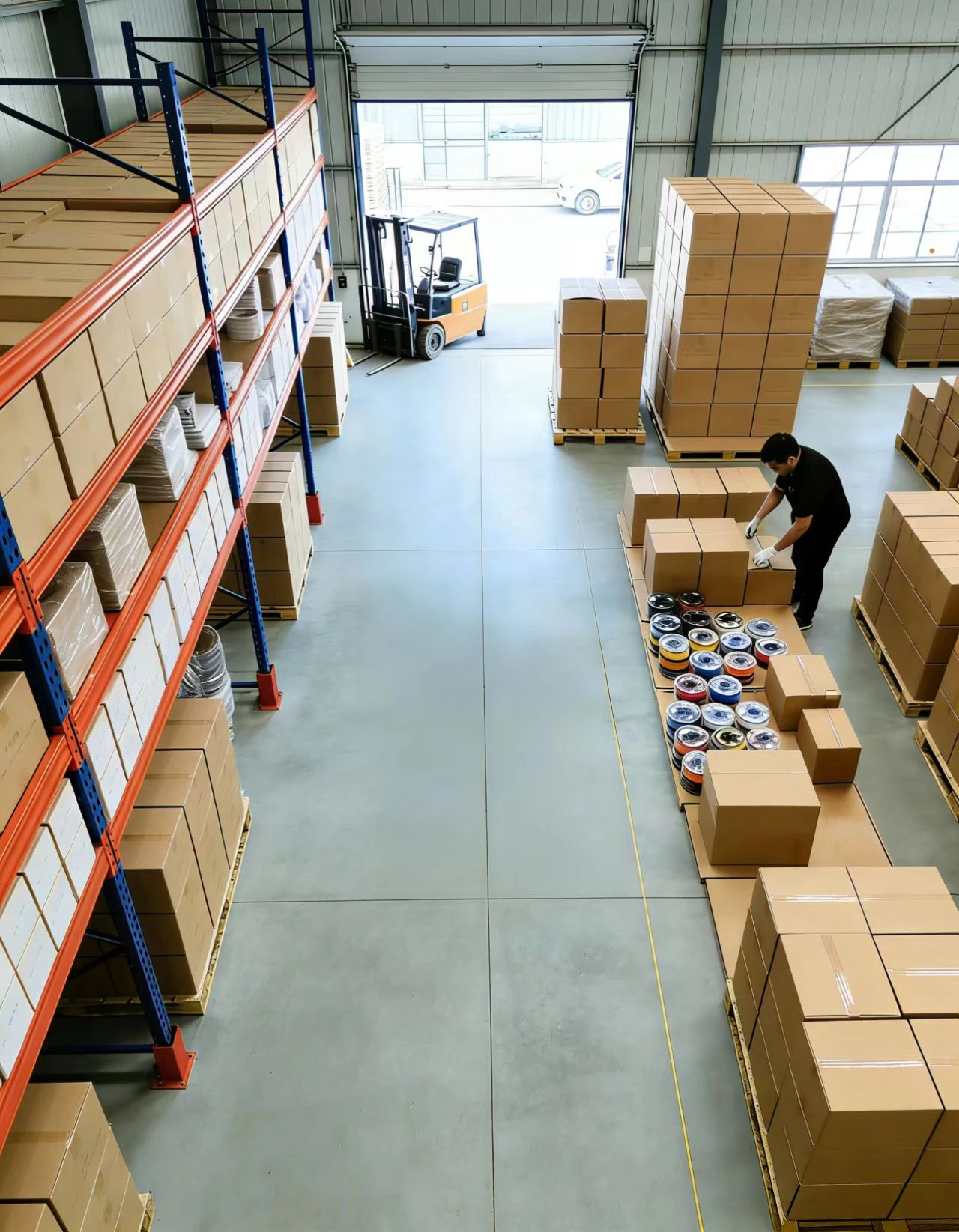
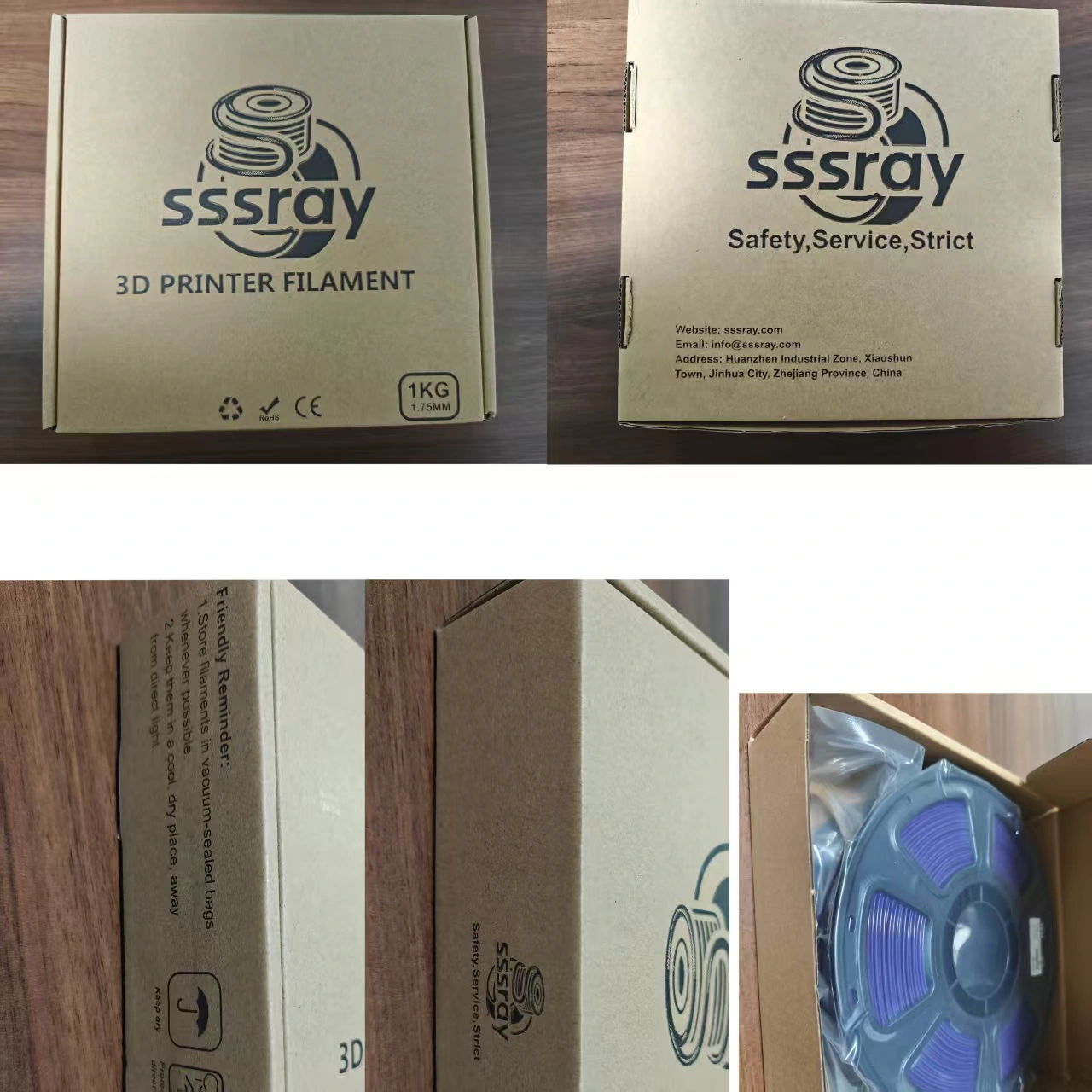
We build wholesale and private-label PC programs around your engineering customer base. Choose standard neutral spools, custom logo labels, branded retail boxes, export-carton markings and 3kg / 5kg format discussions. Send us your market, target orders, Industrial Gray color reference and packaging artwork; our team will coordinate the presentation, spool specification and batch schedule with you. Explore our OEM / ODM manufacturing options for your next product-line launch.
MOQ Reference: Neutral packaging from 50 spools; OEM packaging typically 500–1,000 spools. Approved B2B buyers can request up to 3 complimentary sample spools; shipping is charged separately.
Quality Control
- We inspect incoming PC raw material, batch identification and Industrial Gray color references before extrusion
- We monitor diameter against our 1.75mm ±0.03mm specification throughout filament production
- We inspect winding alignment, spool condition and feed-path presentation to reduce crossover and handling problems
- We compare Industrial Gray color and printed-surface appearance with the agreed production reference
- We inspect vacuum sealing, desiccant inclusion and individual-box / master-carton markings before packing
- We coordinate lot identification, final packing checks and the requested technical documents with each export order
Technical Documents & Compliance Support
- We coordinate PC technical specifications and available material documents around your target market and supplied grade.
- Our team matches relevant data to the selected Industrial Gray formulation and colorant before your purchase documentation is finalized.
- We supply available TDS property information and SDS handling information for their respective technical purposes.
- We discuss traceable RoHS / REACH declarations and third-party test records where they cover the ordered grade and formulation.
- For flame-rated, electrical, food-contact or other regulated projects, share the required standard so we can scope the matching documentation or additional testing.
Frequently Asked Questions
What is the MOQ for Industrial Gray PC filament?
We start neutral-pack orders from 50 spools. OEM packaging typically starts at 500–1,000 spools depending on labels, cartons and the agreed artwork.
Can I print this PC filament on a normal 1.75mm printer?
Yes, when the printer has a PC-temperature all-metal hotend, a suitable heated bed and an enclosure. We provide starting values above for Bambu Lab X1 Carbon, Prusa CORE One+, QIDI Q1 Pro and Creality K1-class machines. Share your exact machine and build plate for a more targeted starting profile.
Why choose Industrial Gray for brackets and hinged housings?
Industrial Gray reveals gusset fillets, counterbores, hinge-pin alignment and mating gaps clearly, while PC gives your team a heat-resistant engineering material for more demanding bracket and housing designs. We recommend a bolt-load and hinge-cycle test on the final printed geometry.
Can SSSray provide OEM or private-label packaging?
Yes. We can discuss custom logos, printed labels, branded boxes, master-carton marks and alternative spool formats, subject to order scope and confirmed specifications.
Are sample orders available?
Yes. We support approved B2B customers with up to 3 complimentary 1kg spools; freight is arranged at the buyer’s expense. Send a representative bracket drawing and hinge-clearance target so we can help your team plan the sample run.
Can you provide TDS, SDS or compliance test reports?
Yes. Tell us your destination market and required documents. Our team will coordinate the relevant PC technical data, available SDS and applicable third-party or regulatory records for the selected formulation and order.
How should I control PC warping and moisture?
Start with a 100–110°C bed, a PC-compatible separation layer, a 5–10mm brim and a preheated enclosure. Dry at 75–80°C for 6–8 hours on a heat-rated reel, then feed from a dry box. For 100°C-limited beds, choose smaller footprints and strengthen first-layer adhesion.
What is the lead time?
Standard orders typically take 7–15 working days; customized PC orders generally take 15–25 working days after artwork, material and order specifications are confirmed.
Building an Industrial Gray PC Filament Range?
Send us your target order volume, intended bracket or housing application and printer setup. We will help you arrange PC samples, discuss neutral or OEM packaging and prepare an export quotation for your market.