Online time
Monday to Friday: 9AM - 8PM
Weekend: 10AM - 5PM

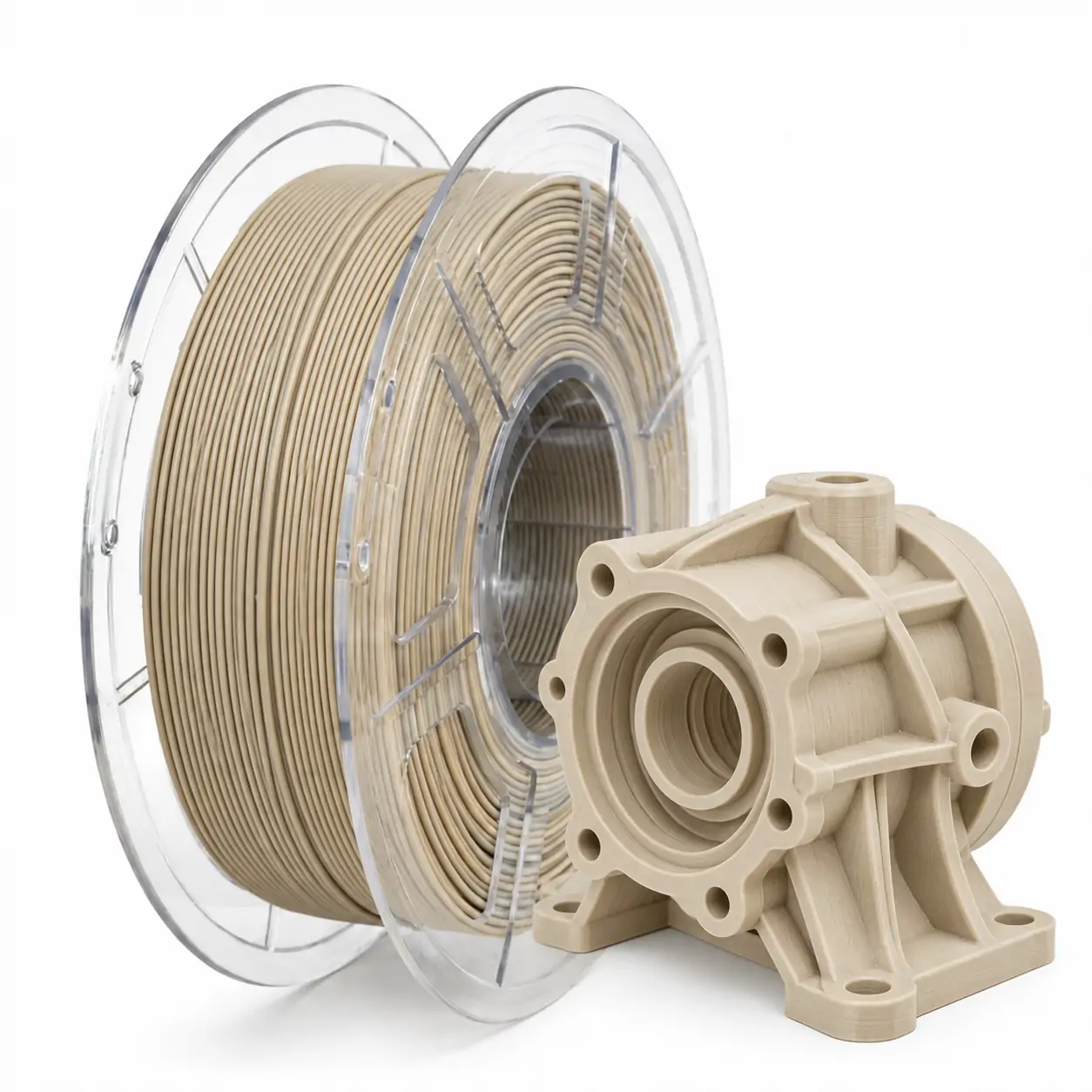
PEEK High-Performance Series | Glass-Fiber Reinforced | B2B Supply
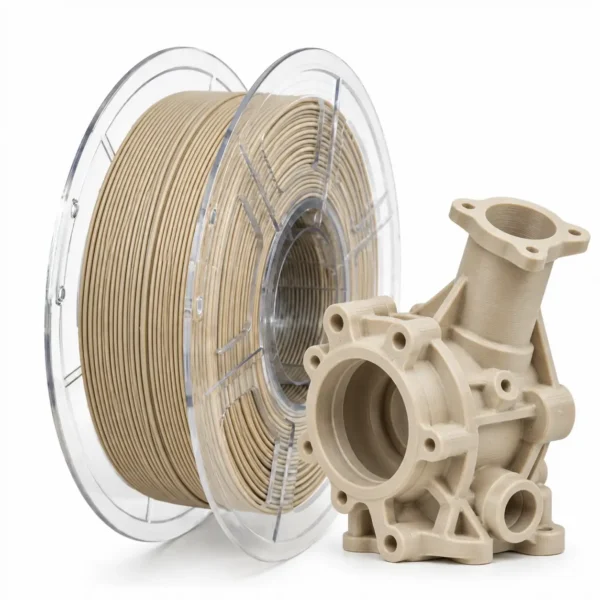
PEEK-GF Filament in Natural Beige – Glass Fiber Reinforced PEEK for High-Temperature 3D Printing by SSSray | PEEK filament vyztužený skelným vláknem for Pump Casings & Bearing Housings
Natural beige PEEK-GF filament for industrial teams that need higher stiffness, tighter dimensional control, and dependable high-temperature processing support.
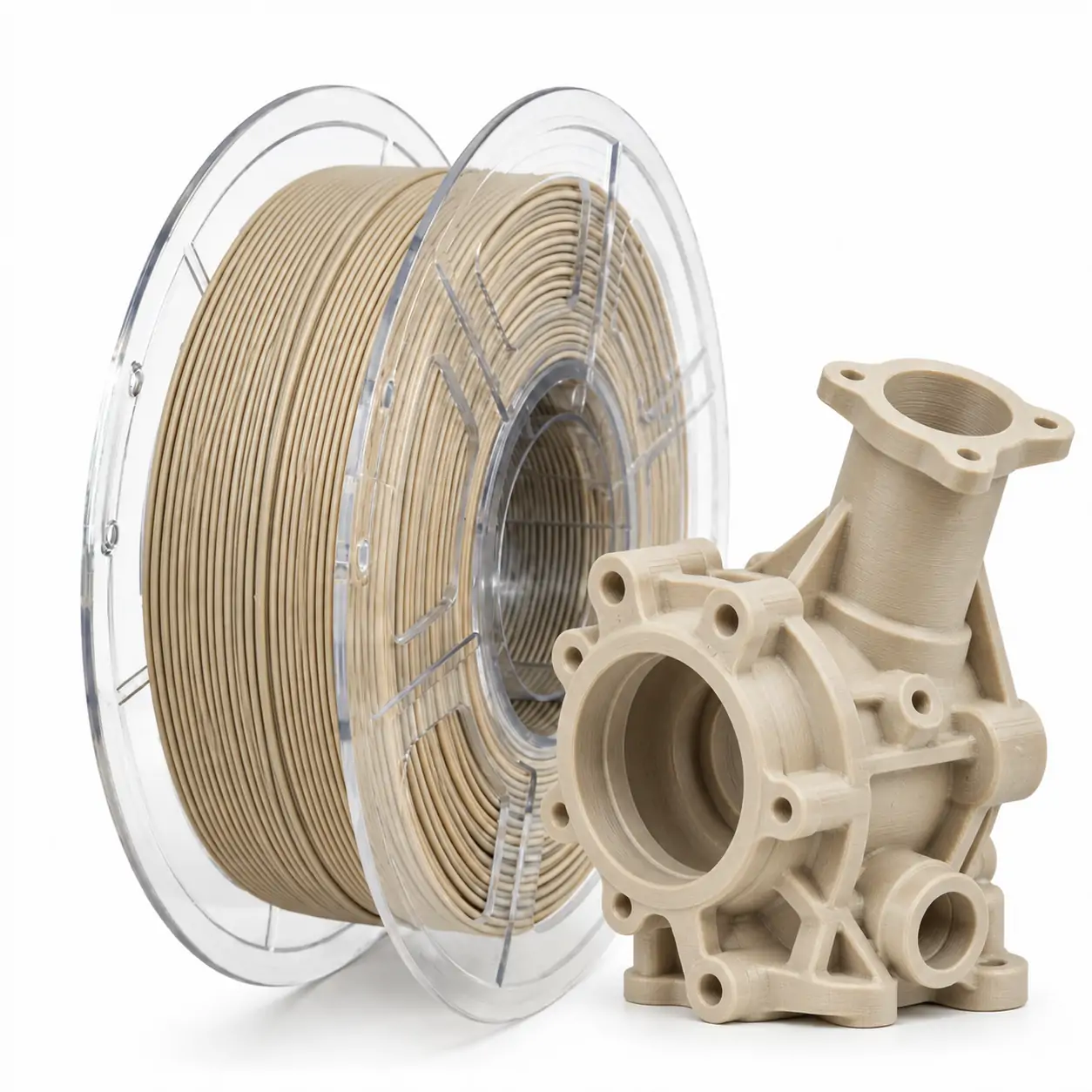
We supply this glass-fiber-reinforced PEEK grade for pump casings, bearing housings, high-temperature fixtures, structural brackets, and other demanding parts printed on PEEK-capable industrial FDM/FFF systems. The filament is dried, vacuum packed with desiccant, and wound for stable feeding; a wear-resistant nozzle and actively heated chamber are required for reliable processing.
MaterialPEEK-GF
Glass Fiber30 wt%
SeriesPEEK High-Performance
Color EffectNatural Beige
Diameter1.75mm
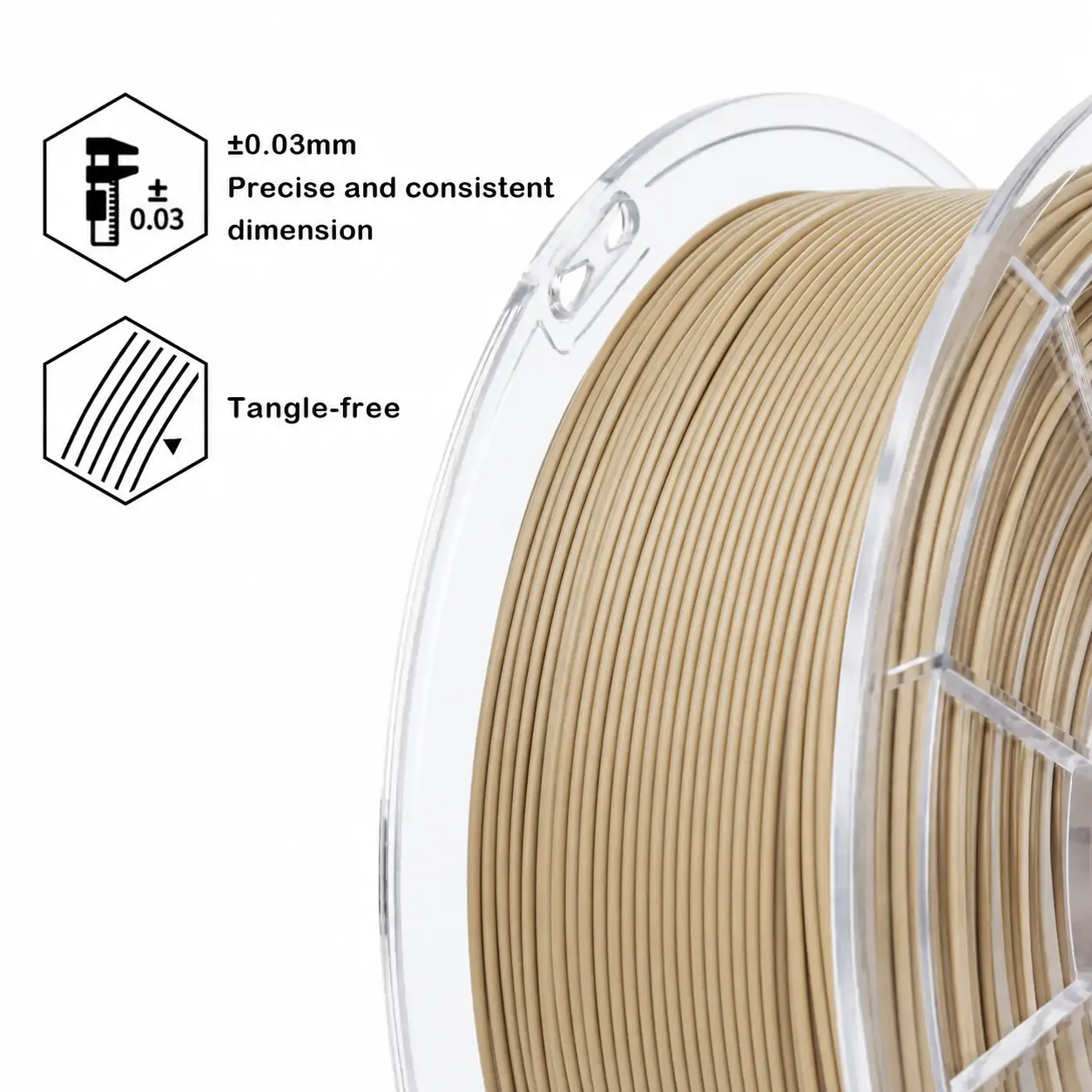
Tolerance±0.03mm
Net Weight1kg
Gross Weight1.3kg
Nozzle Temp400–450°C
Bed Temp120–150°C
Print Speed20–50 mm/s
PackagingVacuum + Desiccant
Spool TypePlastic Spool
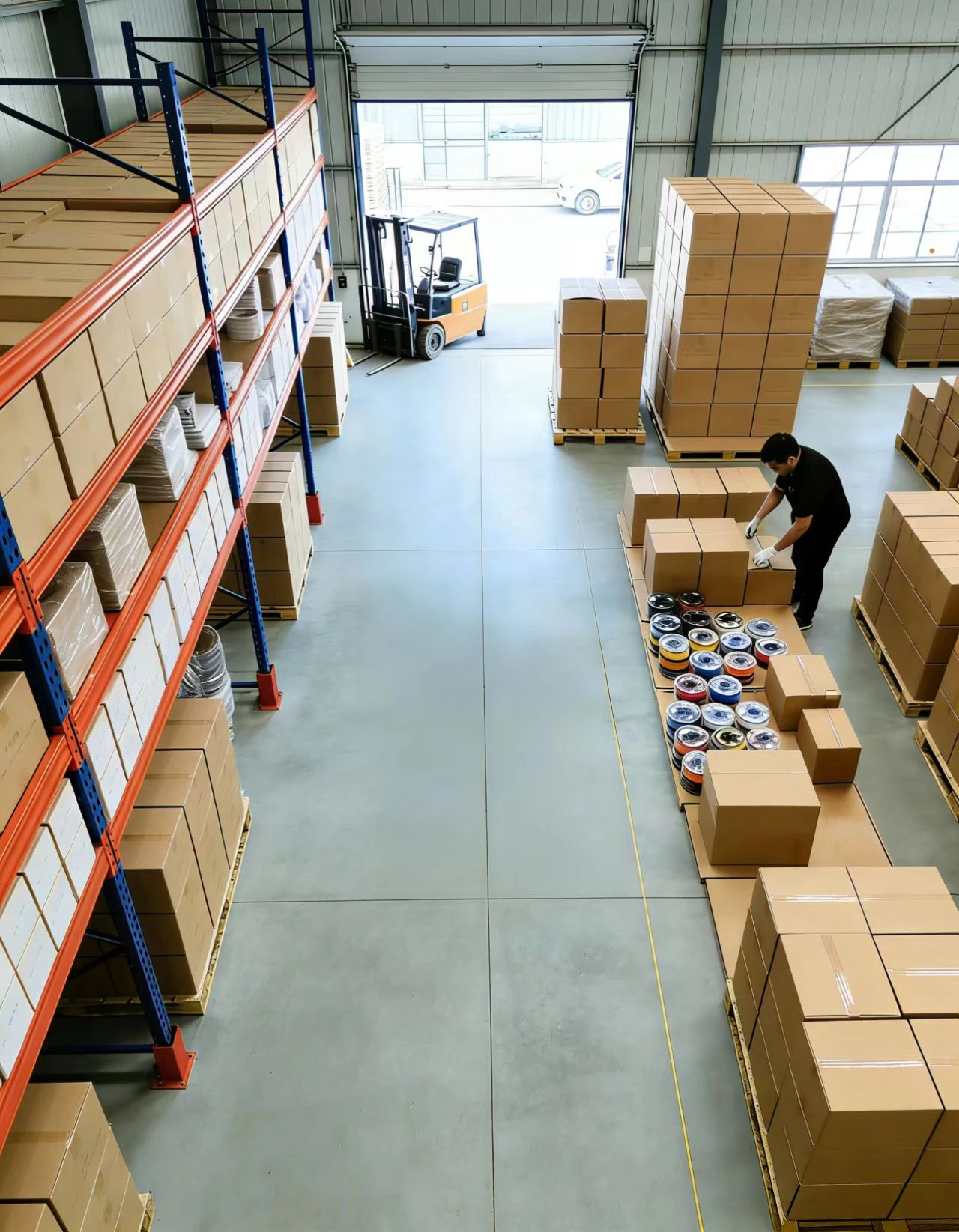
MOQ: Neutral packaging from 50 spools; OEM packaging typically 500–1,000 spools.
Lead Time: Standard 7–15 working days; customized orders typically 15–25 working days.
Product Overview
SSSray Natural Beige PEEK-GF is a 30 wt% glass-fiber-reinforced polyether ether ketone filament built for high-temperature FDM/FFF programs where stiffness, dimensional stability, chemical resistance, and repeatable geometry matter more than desktop-print convenience. The reinforcement gives printed parts a firmer, lower-sheen surface and helps control dimensional movement compared with unfilled PEEK, while the natural beige tone keeps the material visually consistent with the PEEK family.
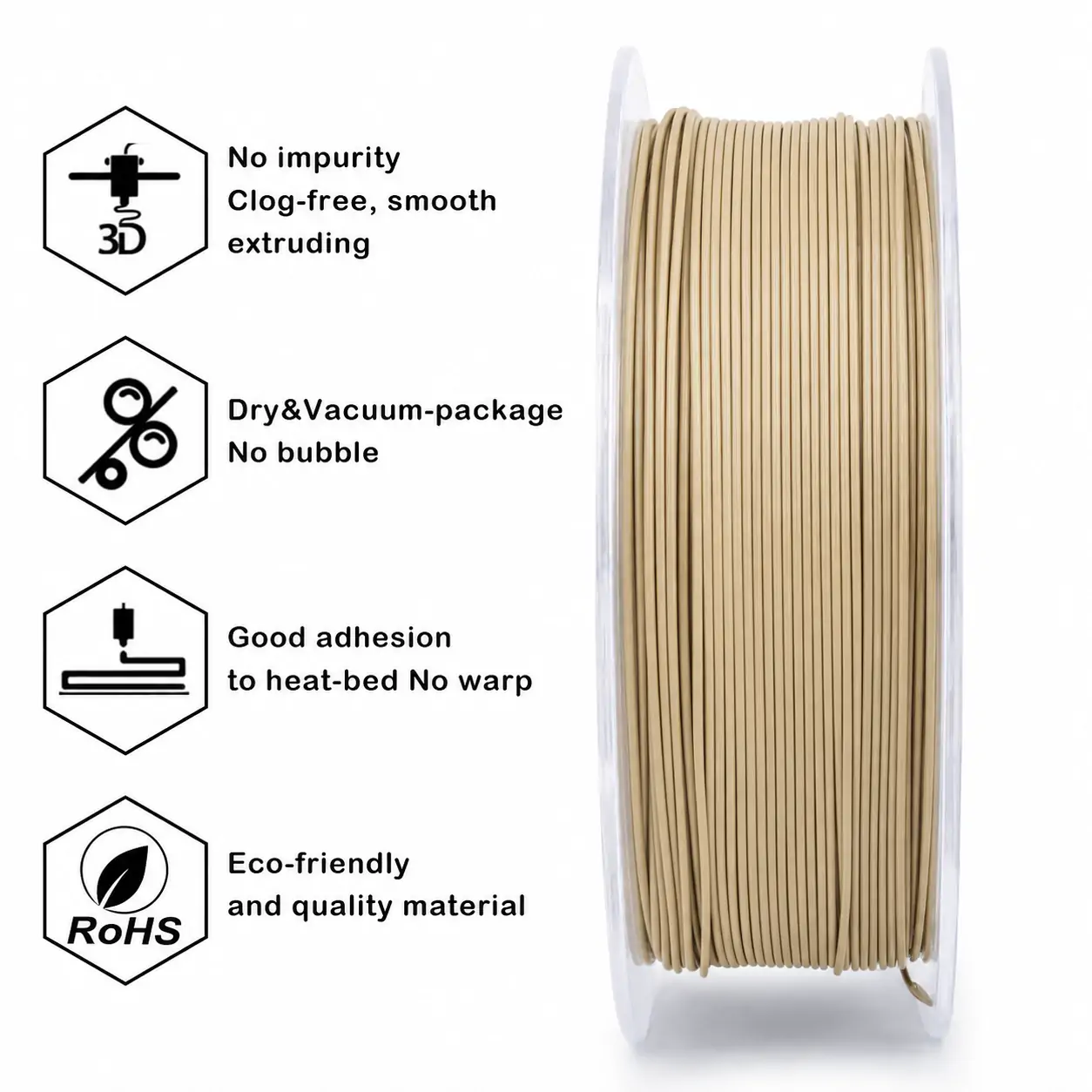
We supply this grade for engineering buyers producing pump casings, bearing housings, high-temperature jigs, fixtures, brackets, sensor bodies, and fluid-handling components on PEEK-capable equipment. Each standard spool is 1kg net, vacuum sealed with desiccant, and controlled to ±0.03mm diameter tolerance. For stable results, use a wear-resistant nozzle, a high-temperature bed, and an actively heated chamber; dry the material before critical production runs.
Why Natural Beige PEEK-GF Fits Industrial Programs
We supply Natural Beige PEEK-GF for engineering programs that need higher stiffness than unfilled PEEK, reduced dimensional movement from glass-fiber reinforcement, and a clean opaque finish for functional parts. Our supply focus is straightforward: stable filament diameter, dry sealed packing, batch traceability, OEM support, and practical processing guidance that helps your team move from sample printing to repeat orders with fewer setup variables.
Key Selling Points
Glass-Fiber Reinforcement
Raises stiffness and supports tighter dimensional control for rigid engineering parts.
High-Temperature Capability
Built for PEEK-class applications that require industrial hot-end, bed, and chamber temperatures.
Dimensional Stability
Useful for housings, fixtures, brackets, and other geometries where shape retention matters.
Natural Beige Engineering Finish
Opaque cream-beige parts with a matte, lightly fiber-textured appearance rather than a decorative effect.
Export B2B Supply
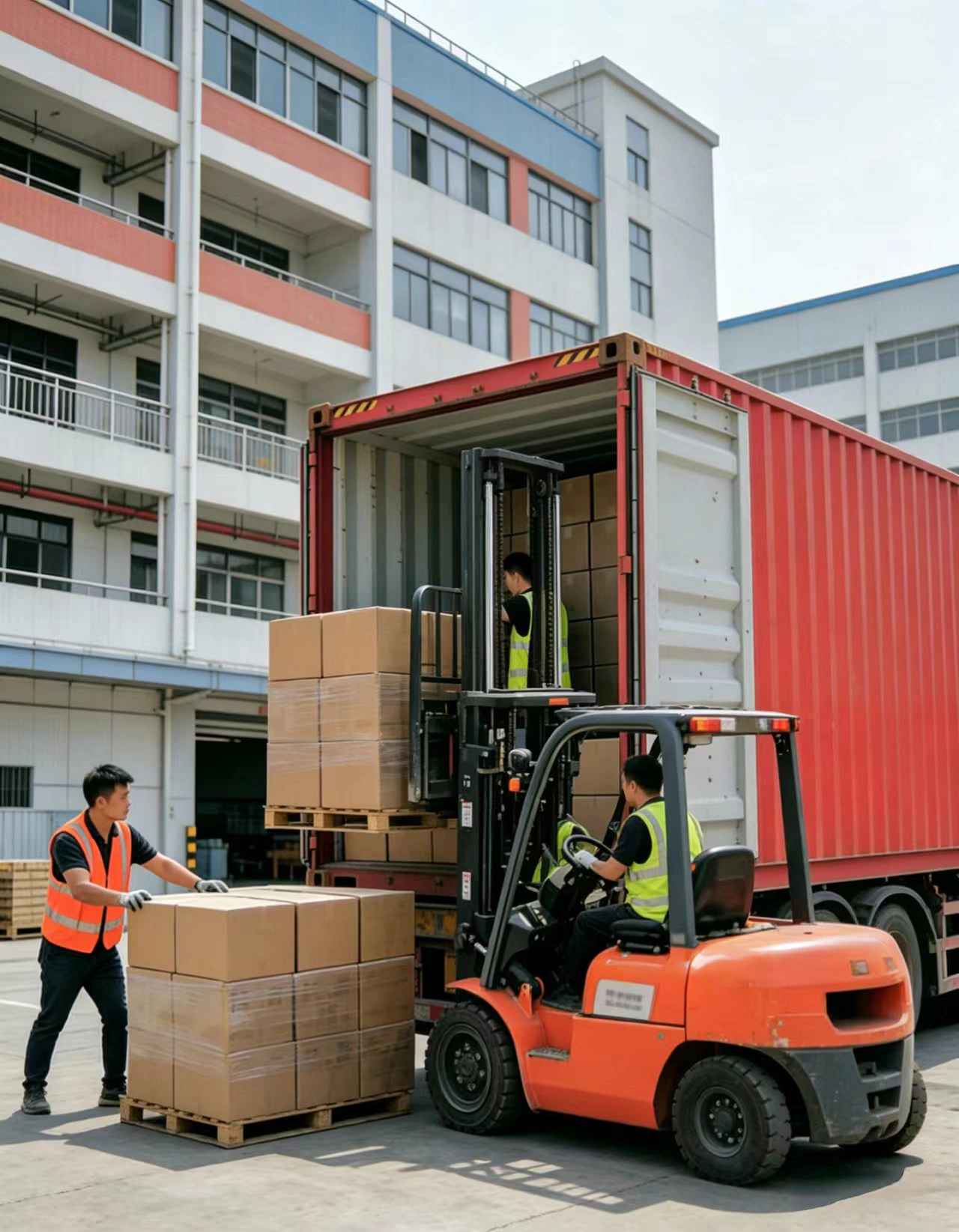
1kg standard spools, neutral packaging from 50 spools, and project-based bulk supply for distributors and industrial users.
OEM / ODM Support
We provide private labels, branded cartons, specification alignment, and project packaging for distributor and industrial supply programs.
Key Features
| Feature | Practical Buyer Benefit |
|---|---|
| Glass-Fiber-Reinforced PEEK Matrix | Higher stiffness and lower dimensional movement than unfilled PEEK in many rigid-part applications |
| Natural Beige, Opaque Finish | Clear visual differentiation for engineering-grade PEEK-GF inventory and finished components |
| ±0.03mm Diameter Tolerance | Supports stable feeding and repeatable extrusion on correctly configured industrial printers |
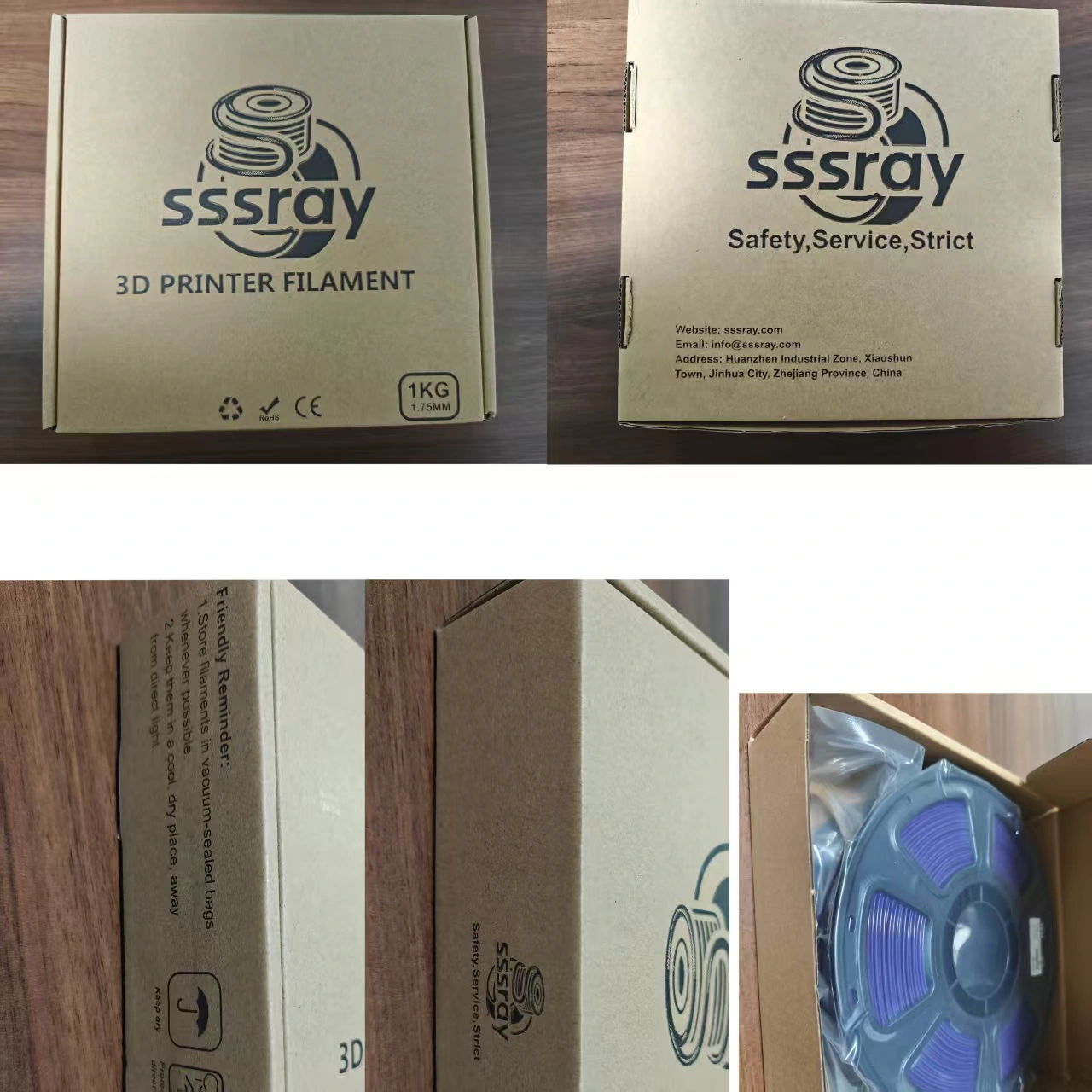
| Vacuum Sealed with Desiccant | Helps control moisture exposure during export storage and transport |
| High-Temperature Processing Window | Matches PEEK-capable systems with high-temperature hot end, bed, and actively heated chamber |
| OEM / Private-Label Supply | Supports distributor, industrial sourcing, and branded engineering-material programs |
Where This Grade Adds Commercial Value
We position PEEK-GF for rigid, heat-exposed, chemically demanding, and dimension-sensitive parts produced on PEEK-capable equipment. For distributors and industrial sourcing teams, Natural Beige PEEK-GF sits cleanly beside unfilled PEEK and PEEK-CF: it gives customers a glass-fiber-reinforced, stiffness-focused option with a different surface finish and reinforcement profile, making the engineering-material range easier to sell by application rather than by material name alone.
How We Work
1
Thermal Platform Check2
Drying & Nozzle Setup3
PEEK-GF Sample Print4
Part Fit & Surface Check5
Packaging & Label Approval6
Batch Production & ShipmentMaterial Comparison Guide
| Material | Reinforcement | Processing Requirement | Material Behavior | Typical Use Focus |
|---|---|---|---|---|
| PEEK-GF | Glass fiber | Very high-temperature hot end, heated bed, actively heated chamber | High stiffness, lower dimensional movement, abrasive to nozzles | Pump housings, bearing housings, fixtures, structural components |
| Unfilled PEEK | None | Very high-temperature processing with strong chamber control | PEEK baseline with higher ductility than reinforced grades | High-temperature functional parts, chemically exposed components |
| PEEK-CF | Carbon fiber | Very high-temperature processing; wear-resistant nozzle required | High stiffness with carbon-fiber surface appearance | Lightweight rigid structures, fixtures, industrial components |
| PEI / ULTEM-class | Grade dependent | High-temperature industrial printer | Amorphous high-performance thermoplastic family | Aerospace tooling, electrical and high-temperature applications |
| PPS / PPS-CF | None or carbon fiber | High-temperature controlled printing environment | Strong chemical and thermal resistance with different processing behavior from PEEK | Chemical handling, electrical, industrial tooling |
Technical Specifications
| Product Name | PEEK-GF Filament in Natural Beige |
|---|---|
| Material | Glass-fiber-reinforced polyether ether ketone (PEEK-GF) |
| Glass Fiber Content | 30 wt% |
| Series | SSSray PEEK High-Performance Series |
| Color / Effect | Natural beige / cream-beige, opaque, matte to low-sheen with subtle fiber texture |
| Filament Diameter | 1.75mm standard; 2.85mm available on request |
| Tolerance | ±0.03mm |
| Net Weight | 1kg standard; 3kg and 5kg available on request |
| Gross Weight | 1.3kg |
| Spool Type | Plastic spool |
| Packaging | Vacuum sealed with desiccant |
| Required Printer Class | PEEK-capable FDM/FFF system with high-temperature hot end, heated bed, and actively heated chamber |
| Nozzle Requirement | Wear-resistant hardened steel or carbide-type nozzle; 0.4mm minimum |
| Typical Applications | Pump casings, bearing housings, high-temperature fixtures, rigid brackets, sensor bodies, fluid-handling components |
| Compliance | RoHS compliant |
| OEM / ODM | Supported for labels, cartons, private-label programs, and project packaging |
Recommended Print Settings
| Parameter | Recommended Guidance |
|---|---|
| Recommended Nozzle Temperature | 400–430°C |
| Usable Nozzle Range | 400–450°C |
| Recommended Bed Temperature | 120–150°C |
| Actively Heated Chamber | 90–120°C; keep chamber temperature stable throughout the print |
| Recommended Print Speed | 20–40 mm/s |
| Usable Speed Range | 20–50 mm/s |
| Nozzle | Wear-resistant hardened steel or carbide-type nozzle; 0.4mm minimum |
| Layer Height | 0.25mm or higher with a 0.4mm+ nozzle; adjust to part geometry and surface target |
| Cooling Fan | OFF for the standard starting profile; for INTAMSYS FUNMAT HT, use 50% cooling fan per the current INTAMSYS PEEK / PEEK-CF/GF process profile |
| Retraction | Direct drive: keep retraction minimal; Bowden: use the shortest stable retraction that controls stringing without heat-creep or feed instability |
| Wall Count | Set wall thickness to the load path and finished-part requirement; increase perimeters for rigid housings and structural walls |
| Infill | Set by the load case; use the infill level required by the final part design and test method |
| First Layer Speed | 10–20 mm/s |
| Bed Adhesion | High-temperature PEEK-compatible build surface or high-temperature adhesive system |
| Pre-Drying | 130°C for at least 4 hours; extend drying for filament left exposed to ambient humidity. Use a heat-safe spool or loose-filament setup |
For the first run, preheat the chamber, keep the filament dry, and start near the middle of the temperature range. Then adjust flow, speed, and adhesion around your part geometry and machine response.
Print Optimization Guide
| Item | Guidance |
|---|---|
| Thermal Stability | Preheat the chamber and bed before printing; temperature swings increase the risk of warping and interlayer weakness. |
| Nozzle Wear | Glass fiber is abrasive. Use a wear-resistant nozzle and inspect nozzle diameter during long production runs. |
| Moisture Control | Dry before critical jobs and keep the opened spool in sealed dry storage between prints. |
| First Layer | Use a clean high-temperature build surface, slow first layer, and sufficient bed temperature for uniform contact. |
| Cooling | Keep part cooling off or minimal for the standard starting profile. On FUNMAT HT, use the current INTAMSYS PEEK / PEEK-CF/GF profile at 50% fan. |
| Crystallinity / Appearance | PEEK surface tone and crystallinity change with thermal history; keep the same thermal routine across samples, repeat orders, and production runs. |
| Drying Hardware | Use a heat-safe spool or transfer the filament before high-temperature drying so the spool does not become the process limit. |
Printer Brand Starting Settings
| Printer / Platform | Nozzle | Bed | Chamber | Starting Guidance |
|---|---|---|---|---|
| CreatBot PEEK-250 / PEEK-300 | 400–450°C | 120–150°C | 90–120°C | Use 20–50 mm/s with the cooling fan off; this platform range aligns directly with PEEK-GF processing. |
| INTAMSYS FUNMAT HT | 400–420°C | 140–150°C | 90°C | Use the high-temperature material workflow with 50% cooling fan per the current INTAMSYS PEEK / PEEK-CF/GF profile; the platform provides up to 450°C nozzle and 160°C bed capability for PEEK-GF. |
| Prusa Pro HT90 | 380–420°C | 130–155°C | 90°C | Use the high-temperature print head and abrasion-resistant nozzle; start around 20–40 mm/s for this PEEK-GF grade. |
| Bambu Lab Desktop Platforms | Thermal envelope below this PEEK-GF processing window | Select a PEEK-class industrial platform with the required hot-end, bed, and actively heated chamber temperatures. | ||
| Creality K2 Series | Thermal envelope below this PEEK-GF processing window | Select a PEEK-class industrial platform with the required hot-end, bed, and actively heated chamber temperatures. | ||
For PEEK-GF, the complete thermal system matters more than the printer logo: hot-end temperature, bed temperature, actively heated chamber, dry material, build surface, and a wear-resistant nozzle must work together.
Performance Characteristics
| Characteristic | Material Behavior | Production Relevance |
|---|---|---|
| Stiffness | Glass-fiber reinforcement increases rigidity compared with unfilled PEEK | Useful for housings, fixtures, and dimension-sensitive structural parts |
| Dimensional Stability | Reinforcement reduces thermal expansion and dimensional movement versus unfilled grades | Helps maintain geometry when the print process is thermally controlled |
| Thermal Capability | PEEK matrix retains high-temperature performance | Built for demanding industrial environments where PEEK-level thermal and chemical performance is required |
| Chemical Resistance | PEEK family offers broad resistance to many chemicals | Useful in fluid-handling and industrial environments; match the material to the actual chemical, concentration, temperature, and exposure time |
| Nozzle Abrasion | Glass fiber is abrasive | Wear-resistant nozzle is required for repeatable extrusion |
| Surface Appearance | Matte to low-sheen natural beige with fine fiber texture | Clearly identifies the reinforced engineering grade and hides gloss variation |
Applications
| Application Focus | Why PEEK-GF Fits | Practical Notes |
|---|---|---|
| Pump Casings | Rigid PEEK matrix with dimensional stability and broad chemical resistance | Match fluid compatibility, temperature, pressure, wall design, and sealing method to the real service condition |
| Bearing Housings | Stiff reinforced structure helps maintain bearing alignment and housing geometry | Use PEEK-GF for the rigid housing and select the bearing/contact surface system to match wear and load requirements |
| High-Temperature Jigs & Fixtures | PEEK thermal capability plus glass-fiber stiffness | Good candidate where fixture rigidity and repeated heat exposure matter |
| Structural Brackets | High stiffness-to-weight potential in reinforced polymer construction | Orient load paths with the print direction and test the finished geometry under the intended load case |
| Sensor & Electrical Housings | Rigid, heat-resistant engineering polymer platform | Match electrical, flame, and regulatory requirements to the target assembly |
| Fluid-Handling Components | PEEK-family chemical and hydrolysis resistance can support demanding environments | Match the material and part design to the real chemical medium, temperature, pressure, and service duration |
Storage Guide
- Keep unopened spools sealed in the original vacuum bag until testing or production use
- After opening, store in a dry cabinet or sealed container with fresh desiccant
- For critical prints, dry the filament before use and feed from a controlled dry environment
- Use a heat-safe spool or loose-filament drying setup for high-temperature drying; verify standard plastic-spool heat resistance first
- Protect filament from dust, oils, and shop-floor contamination before high-temperature extrusion
OEM / ODM Services
We support distributors, industrial sourcing teams, private-label brands, and engineering-material suppliers with neutral supply, custom labels, branded cartons, batch identification, specification alignment, and project packaging. For PEEK-GF programs, we keep the sample grade, production grade, and agreed packing format consistent so your team can move from trial printing to repeat purchasing without unnecessary material changes.
MOQ: Neutral packaging from 50 spools; OEM packaging typically 500–1,000 spools. Standard lead time is 7–15 working days, with customized orders typically 15–25 working days.
Quality Control
- Diameter and ovality checks against the ±0.03mm filament tolerance
- Winding inspection for orderly feed and transport stability
- Moisture-control and vacuum-seal inspection before carton packing
- Color and surface appearance comparison for natural beige lot consistency
- Batch identification retained for repeat-order consistency and production follow-up
- Pre-shipment packaging and quantity verification for export orders
Compliance & Technical Documents
- RoHS: This PEEK-GF grade is supplied as RoHS compliant.
- TDS / SDS: Download the available technical documents from our document center or contact our sales team for the file set linked to your order.
- Lot Traceability: We retain batch identification to support repeat-order consistency and technical follow-up.
- Project Compliance: Send us the destination market and end-use requirement with your RFQ, and we will match the available document set to the order before confirmation.
Frequently Asked Questions
What is the MOQ for Natural Beige PEEK-GF?
Neutral packaging starts from 50 spools. OEM packaging typically starts from 500–1,000 spools depending on label, carton, spool, and project requirements.
Can I print this PEEK-GF on a standard desktop 3D printer?
This grade requires a PEEK-capable machine with a high-temperature hot end, heated bed, actively heated chamber, suitable build surface, and wear-resistant nozzle. Standard desktop systems that cannot maintain this thermal envelope are not suitable.
Why does PEEK-GF need a wear-resistant nozzle?
The glass fiber is abrasive. A hardened steel, carbide-type, or other wear-resistant nozzle helps keep the extrusion opening stable during sample printing and production runs.
What starting temperatures should we use?
Start around 400–430°C nozzle, 120–150°C bed, and a stable actively heated chamber around 90–120°C. Then fine-tune flow and speed around your printer, nozzle size, build surface, and part geometry.
Should PEEK-GF be dried before printing?
Yes for critical work. Use 130°C for at least 4 hours before critical printing, and extend drying when the filament has been exposed to ambient humidity. Use a heat-safe spool or loose-filament setup because a standard plastic spool may not tolerate PEEK drying temperatures.
What parts is this natural PEEK-GF designed for?
Typical targets include pump casings, bearing housings, high-temperature jigs and fixtures, rigid brackets, sensor bodies, and fluid-handling components designed for demanding service environments.
Can SSSray support samples and printer testing?
Yes. For B2B projects, we can arrange up to 3 sample spools based on the project scope and shipping arrangement, then keep the confirmed grade and packaging consistent with the bulk order.
What is the standard lead time?
Standard orders are typically 7–15 working days. Customized OEM orders are typically 15–25 working days depending on packaging and production requirements.
Need a PEEK-GF Supplier for Industrial Parts?
Send us your printer model, target part, annual demand, and packaging requirement. We will prepare the sample option, bulk quotation, and OEM packaging route for your PEEK-GF program.
Related products
-

Premium UV-Resistant ASA Carbon Fiber Filament 1.75mm 1KG | High-Stiffness CF-ASA for Outdoor Aerospace & Automotive Prototypes | Industrial OEM Supply
-
Industrial Shock-Absorbing TPU Filament 1.75mm 1KG | High-Resilience Lattice-Grade Flexible Material for Protective Pads, Vibration Dampers & Robotics Grippers | OEM/ODM Bulk Supply
-
Polycarbonate Filament 1.75mm 1kg | High Impact PC Filament for Functional Engineering Parts
-
Industrial PA12 Nylon 3D Printing Filament 1.75mm 1kg – Highly Tough, Low Moisture Absorption & Chemical Resistant for Engineering Prototypes & End-Use Parts


