Online time
Monday to Friday: 9AM - 8PM
Weekend: 10AM - 5PM

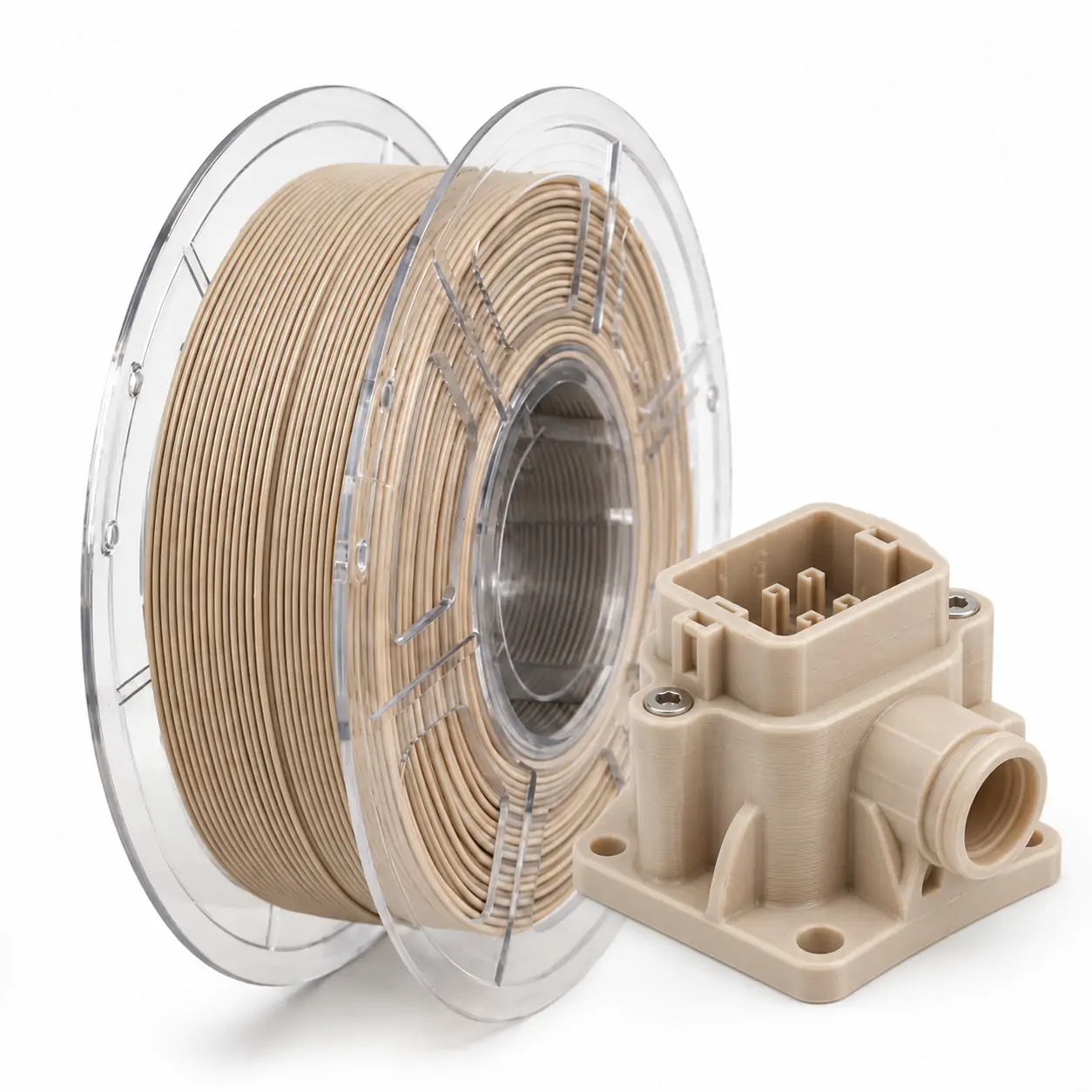
PEEK Series | Natural Unfilled Grade | OEM / ODM Support
Natural PEEK High-Temperature 3D Printer Filament (Polyether Ether Ketone) for Flanged Connector Housings & Centrifugal Impellers – SSSray Filamen PEEK untuk Pencetak 3D
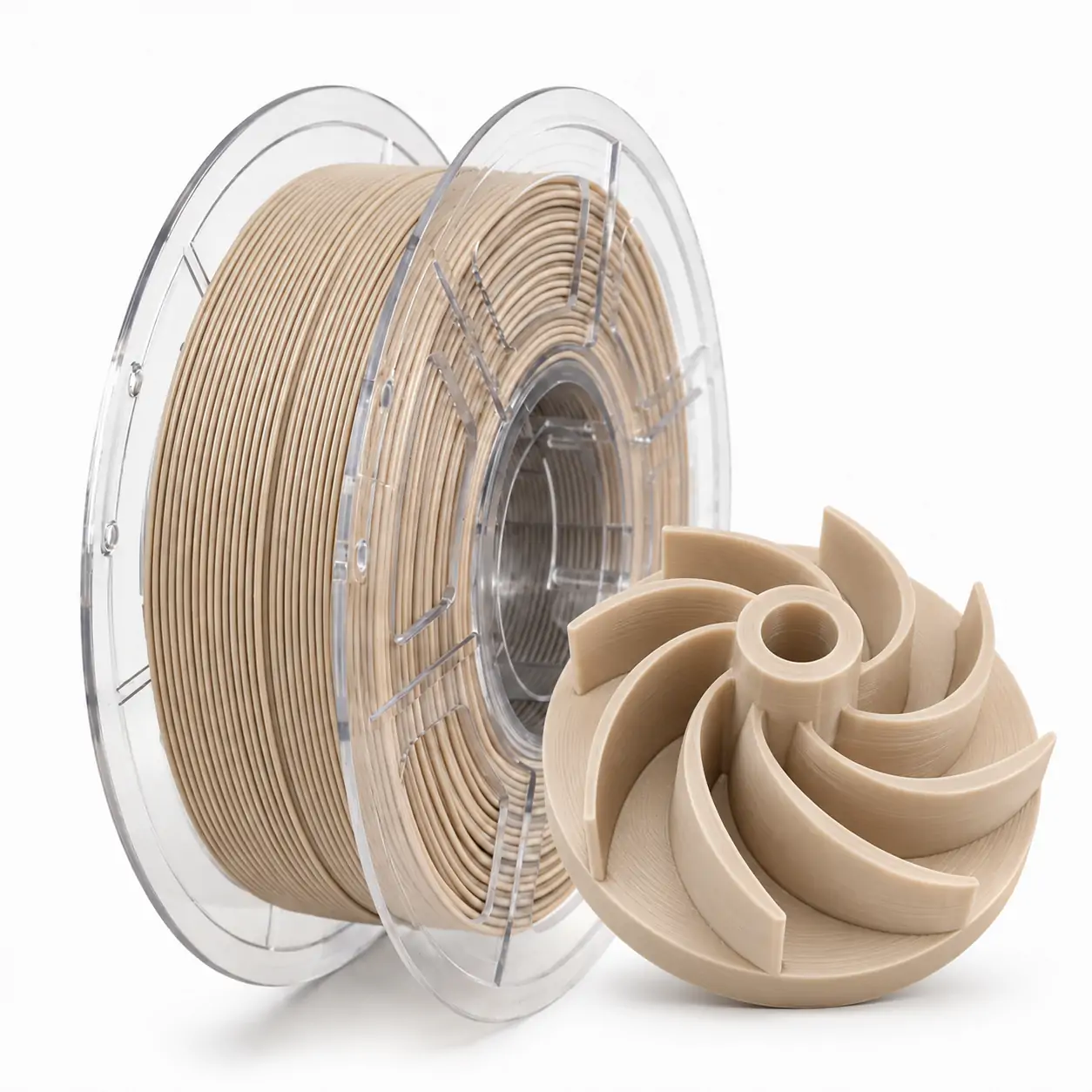
Natural unfilled PEEK filament for industrial FDM/FFF programs that need high-temperature capability, chemical resistance, dimensional stability, and electrically insulating polymer performance.
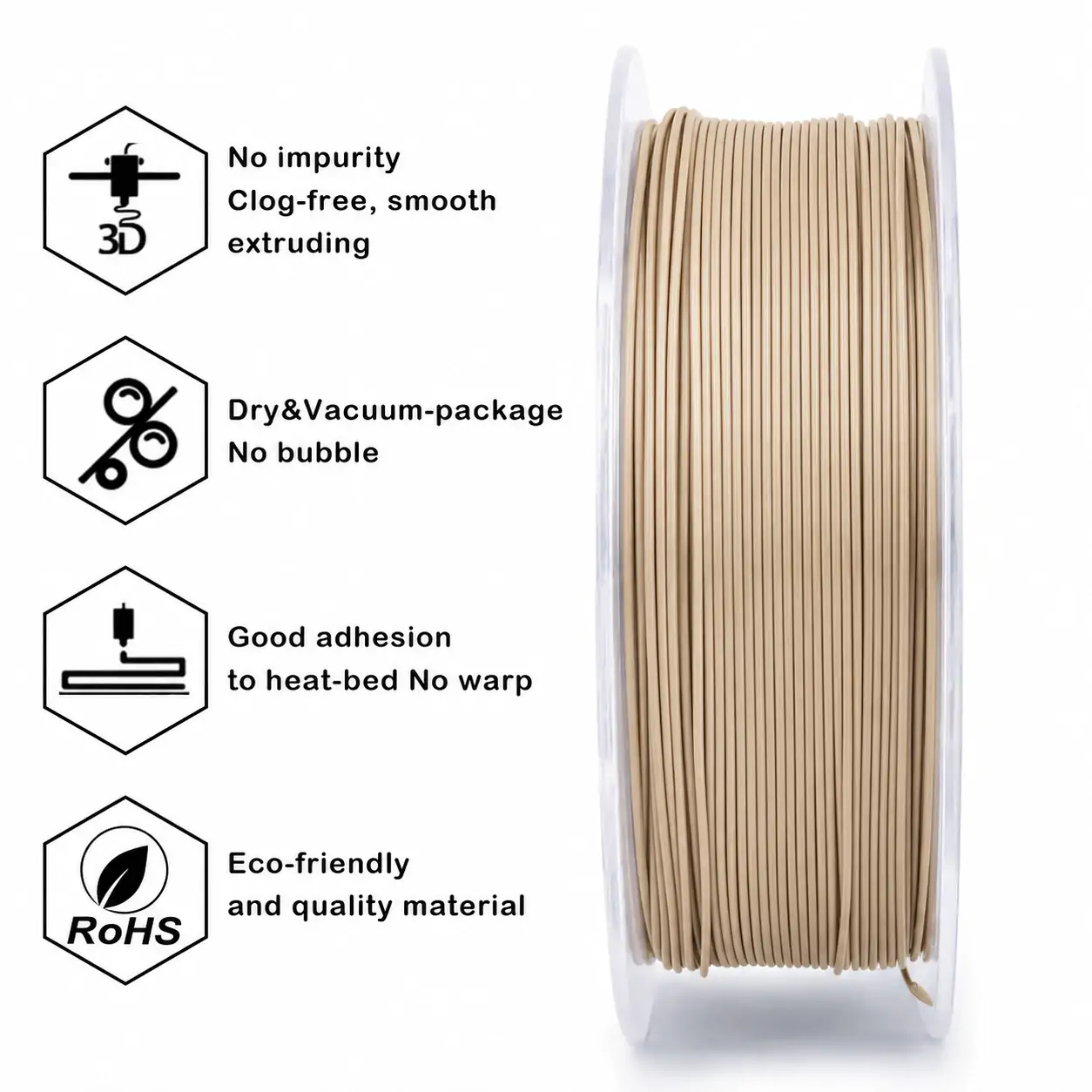
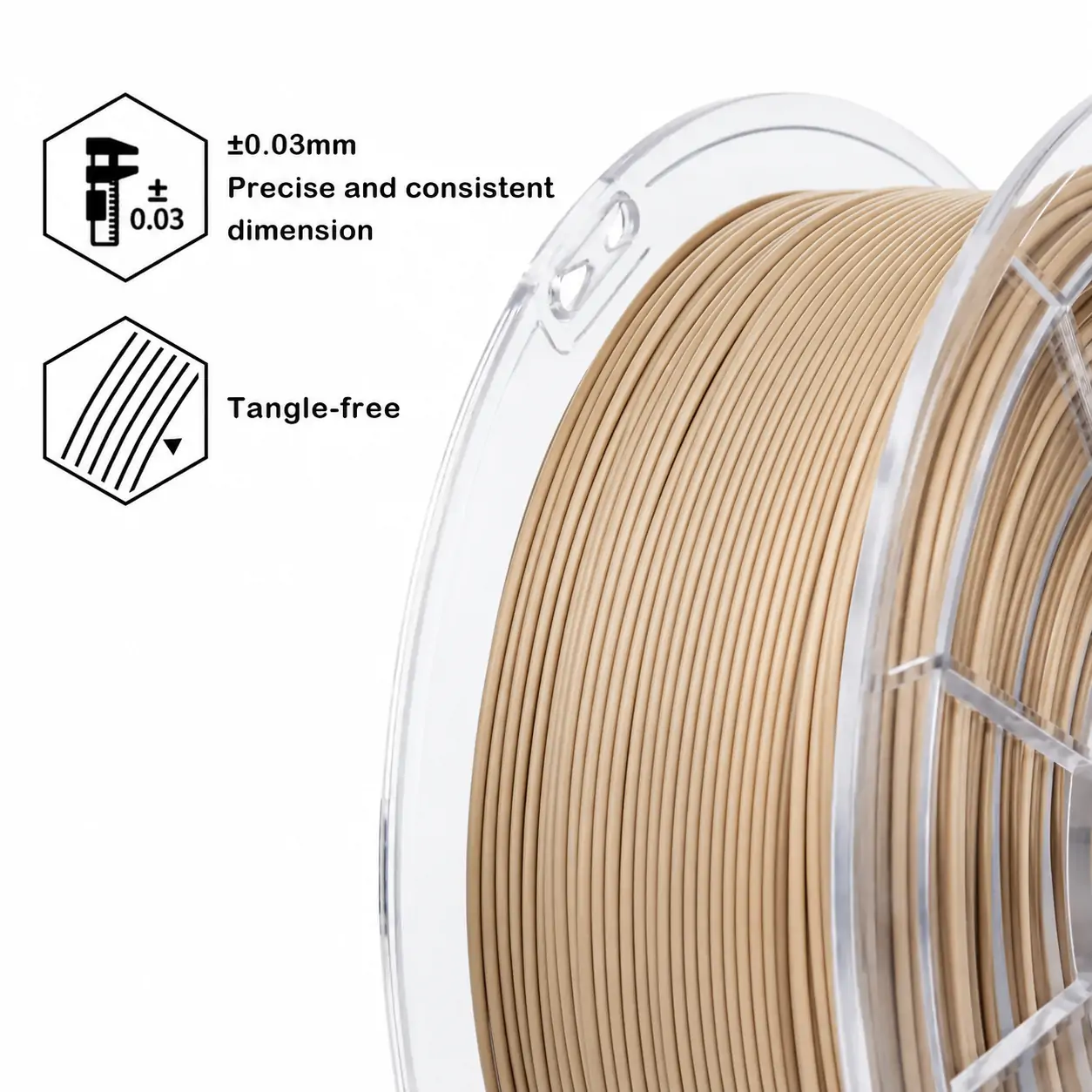
We supply this natural beige PEEK grade for buyers producing connector housings, impellers, fixtures, pump-related parts, and other demanding functional components on high-temperature printers. The filament is dried, vacuum packed with desiccant, and produced to a ±0.03mm diameter tolerance for controlled B2B supply.
MaterialNatural PEEK
GradeUnfilled
ColorNatural Beige
Diameter1.75mm
Tolerance±0.03mm
Net Weight1kg
Gross Weight1.3kg
Nozzle Start380–400°C
Bed / Chamber200–220°C / 180°C start
Print Speed15–40 mm/s
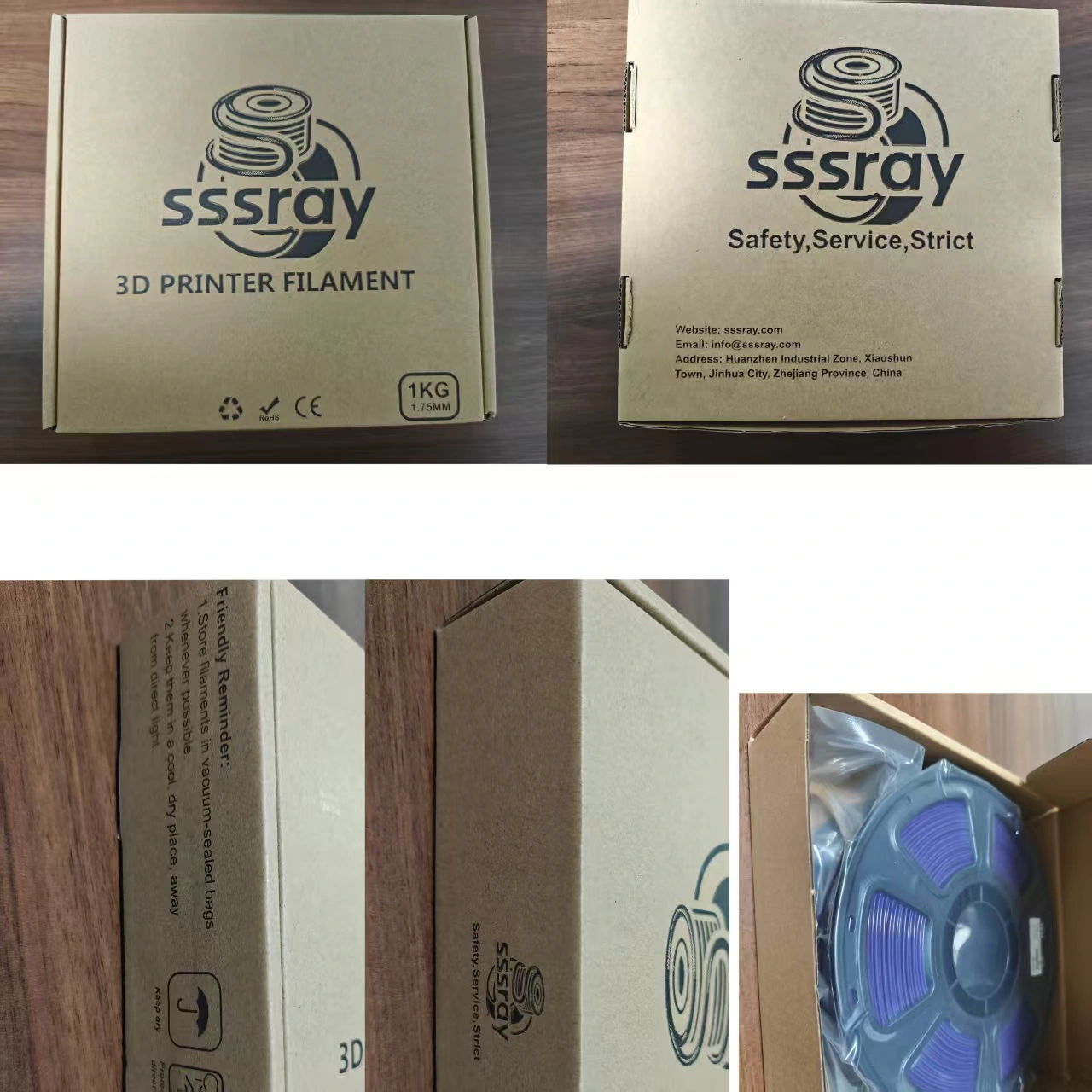
PackagingVacuum + Desiccant
Spool TypePlastic Spool
MOQ: Neutral packaging from 50 spools; OEM packaging typically 500–1,000 spools.
Lead Time: Standard 7–15 working days; customized orders typically 15–25 working days.
Product Overview
Natural PEEK High-Temperature 3D Printer Filament is our unpigmented, unfilled polyether ether ketone grade for industrial FDM/FFF buyers who need a high-performance polymer rather than a general-purpose desktop filament. The material belongs to the semi-crystalline PAEK family and is intended for high-temperature printers with an all-metal hotend, a heated build plate, and controlled enclosure temperature. In a properly crystallized print, the natural material develops the familiar opaque beige to pale-tan appearance associated with neat PEEK.
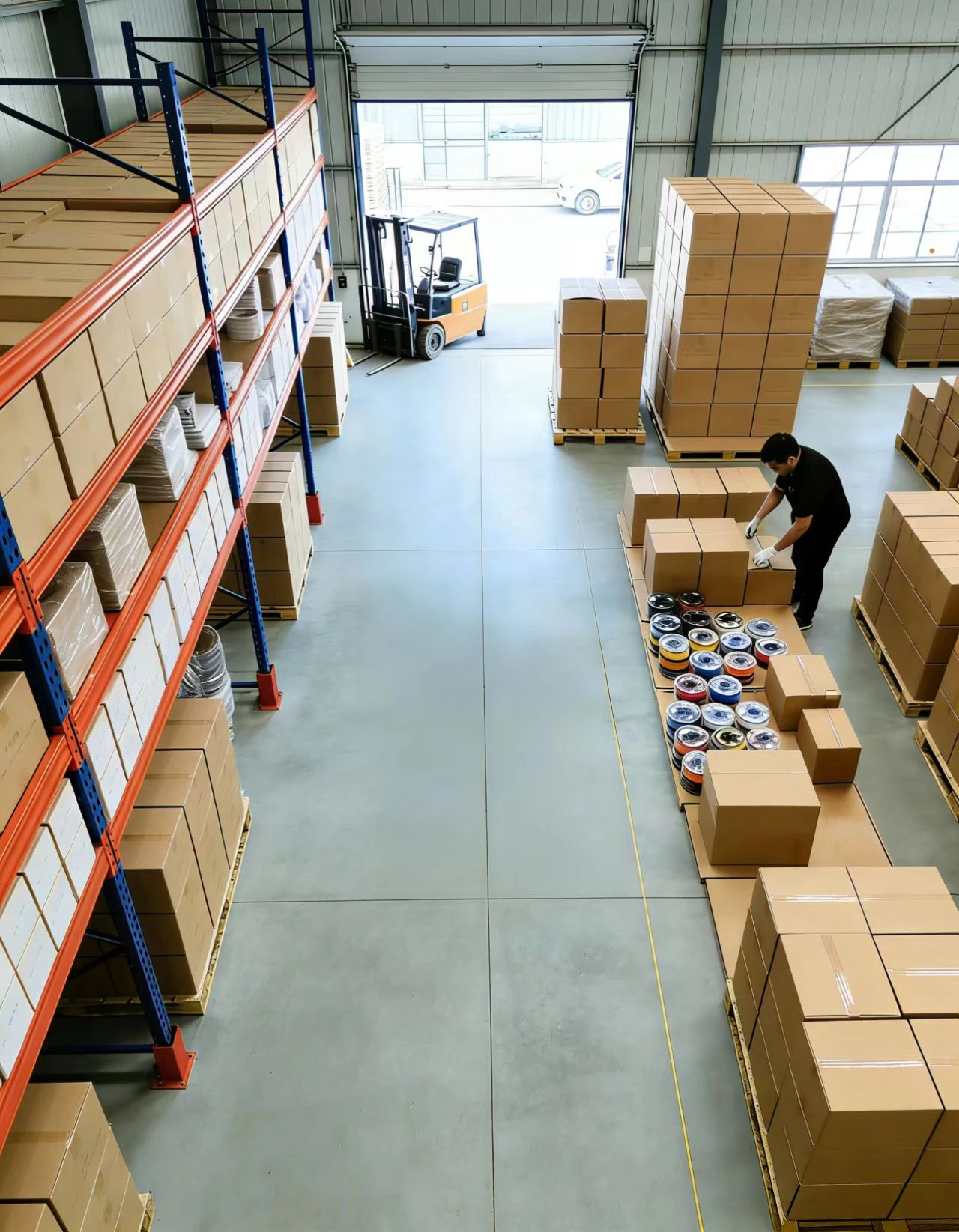
We position this grade for flanged connector housings, centrifugal impellers, pump and fluid-handling components, high-temperature jigs, electrical-insulation parts, and engineering prototypes where thermal stability, chemical resistance, wear behavior, and low moisture uptake are important. For wholesale and OEM programs, we supply 1.75mm as standard with ±0.03mm tolerance, dried vacuum packaging, batch-focused QC, neutral packaging from 50 spools, and private-label options for larger projects.
Built for Controlled High-Temperature Printing
PEEK only performs as intended when the printer can control the full thermal process. We therefore sell this grade as an industrial high-temperature filament, not as a drop-in material for ordinary desktop machines. Use a PEEK-capable hotend, a high-temperature build surface, controlled chamber heat, dry filament, and a slow initial profile; then optimize crystallinity, layer bonding, and dimensional accuracy around the part geometry.
Key Selling Points
Natural Unfilled PEEK
No carbon or glass fiber reinforcement in this SKU, preserving the base resin’s natural beige appearance and electrical-insulation profile.
High-Temperature Polymer
PEEK’s high melting point and semi-crystalline structure make it a practical candidate for demanding thermal and functional applications.
Functional Part Focus
Suited to connector housings, impellers, fluid-handling parts, fixtures, insulating components, and engineering prototypes.
Dried & Vacuum Packed
Each standard unit is prepared with moisture-control packaging to protect the filament during storage and export transport.
Export-Oriented B2B Supply
We support distributors, engineering-material resellers, industrial users, private-label brands, and OEM sourcing teams.
B2B Technical Support
We support sample testing, test protocols, batch QC records, and technical documents for distributor and industrial projects.
Commercial Value for Engineering Filament Programs
We supply Natural PEEK as the high-temperature tier for distributors, private-label brands, and industrial buyers that need capabilities beyond PC, PA, and standard engineering filaments. For new programs, we can start with samples and printer/application matching, then move directly into repeat bulk supply with agreed packaging, technical documents, and batch traceability.
How We Work
1
Application & Printer Match2
Grade & Specification Setup3
Sample Testing4
Profile & Packaging Alignment5
Bulk Production6
Batch QC & ShipmentMaterial Comparison Guide
| Material | Polymer Type | Typical Thermal Reference | Printing Environment | Common B2B Use |
|---|---|---|---|---|
| Natural PEEK | Semi-crystalline PAEK | Tg 143°C onset / about 150°C midpoint; melting about 343°C | High-temperature hotend, heated bed, controlled chamber; crystallinity management is important | High-temperature functional parts, insulating components, fluid-handling parts, fixtures |
| PEKK | Semi-crystalline / tunable PAEK | Grade-dependent crystallization behavior | High-temperature printer; some grades offer a wider processing window than traditional PEEK | Complex high-performance parts, aerospace and industrial development programs |
| PEI | Amorphous high-temperature polymer | No crystalline melting transition in normal use | High-temperature hotend and heated chamber | Fixtures, housings, tooling, heat-resistant functional parts |
| PPS | Semi-crystalline engineering polymer | High chemical and thermal resistance | Enclosed high-temperature workflow; grade-specific settings required | Chemical-service parts, electrical components, industrial fixtures |
| PC | Amorphous engineering polymer | Lower processing temperature than PEEK | Heated bed and enclosure recommended; easier hardware requirement | General engineering housings, fixtures, prototypes |
For buyers comparing this grade with PEI, PC, and other high-temperature materials, see our PEEK Filament 3D Printing Guide for printer requirements, material selection, and process planning.
Technical Specifications
| Product Name | Natural PEEK High-Temperature 3D Printer Filament (Polyether Ether Ketone) for Flanged Connector Housings & Centrifugal Impellers – SSSray Filamen PEEK untuk Pencetak 3D |
|---|---|
| Material | PEEK (Polyether Ether Ketone), natural, unpigmented, unfilled |
| Polymer Family | PAEK, semi-crystalline high-performance thermoplastic |
| Series | SSSray PEEK Series – Natural Unfilled Grade |
| Color / Finish | Natural beige to pale tan; opaque low-sheen appearance when properly crystallized |
| Filament Diameter | 1.75mm standard; 2.85mm on request |
| Tolerance | ±0.03mm |
| Net Weight | 1kg; 3kg / 5kg on request |
| Gross Weight | 1.3kg for standard 1kg unit |
| Spool Type | Plastic spool |
| Packaging | Dried, vacuum sealed with desiccant |
| Typical Neat PEEK Tg Reference | 143°C onset / approximately 150°C midpoint |
| Typical Neat PEEK Melting Reference | Approximately 343°C |
| Printer Requirement | Open-material high-temperature FDM/FFF system with PEEK-capable hotend, heated bed, and controlled chamber |
| Typical Applications | Flanged connector housings, centrifugal impellers, pump/fluid-handling parts, high-temperature fixtures, insulating components, engineering prototypes |
| RoHS | Compliant |
| OEM / ODM | Supported |
Recommended Print Settings
| Parameter | Recommended Guidance |
|---|---|
| Nozzle Temperature | Start at 380–400°C; 380–425°C is a practical optimization window on suitable high-temperature systems depending on flow, geometry, and hotend design |
| Build Plate Temperature | Start at 200–220°C for the crystalline route; the build plate is typically set about 20–40°C above chamber temperature |
| Heated Chamber | Start around 180°C for standard fast-crystallizing neat PEEK; 175–200°C is a practical crystalline-printing range, with chamber temperature kept above 150°C |
| Print Speed | 15–40 mm/s starting range; use slower settings for large cross-sections, high layer-bonding demand, or dimensional control |
| Nozzle Diameter | 0.4mm minimum starting reference; larger nozzles can improve stable high-temperature flow for larger parts |
| Layer Height | 0.10–0.25mm starting range for a 0.4mm nozzle |
| Cooling Fan | 0–10% starting point; keep part cooling low unless bridges or small features require controlled airflow |
| Retraction | Direct drive 0.5–1.5mm / Bowden 2–4mm starting reference; tune to the hotend and filament path |
| Wall Count | 3–5 perimeters for functional parts; increase where pressure, sealing, or machining allowance requires more wall stock |
| Infill | 20–40% for prototypes; 50–100% for higher structural demand after part-specific testing |
| First Layer Speed | 10–20 mm/s |
| Bed Adhesion | Use a PEEK-compatible high-temperature build surface and adhesive system matched to the printer and bed temperature |
| Drying | 120°C is the standard reference; use at least 4 hours for conditioned material and extend toward overnight drying when moisture exposure is unknown |
PEEK settings depend on chamber capability, part geometry, and crystallinity target. Start with the printer manufacturer’s PEEK profile where available, then tune the nozzle, bed, chamber, and speed around the actual part.
Print Optimization Guide
| Item | Guidance |
|---|---|
| Crystallinity & Color | Well-crystallized neat PEEK normally appears opaque beige. Amber-brown or translucent areas indicate a different crystallization state, so adjust the thermal profile before repeat production. |
| Warp Control | Preheat the chamber fully, reduce thermal gradients, use a stable first layer, and avoid unnecessary door opening during the print. |
| Layer Bonding | Use the highest stable chamber and melt conditions supported by the printer/material setup without sacrificing geometry. |
| Moisture Control | Dry before production prints and feed from a dry environment for long jobs. Make sure the spool is heat-rated before placing it in a 120°C dryer. |
| Large Functional Parts | Use slower outer walls and conservative volumetric flow to control dimensions on connector housings, impellers, and thick functional sections. |
| Post-Crystallization | If annealing is part of the production route, use a resin- and geometry-specific cycle and fixture dimension-critical parts to control distortion. |
Printer Capability & Starting Guidance
| Printer / Platform | Hardware Capability | Starting Guidance | PEEK Use Note |
|---|---|---|---|
| INTAMSYS FUNMAT PRO 610HT | Up to 500°C nozzle / 300°C chamber | Use the machine’s validated PEEK workflow; begin around 380–400°C nozzle with controlled bed/chamber conditions | Industrial platform designed for PEEK-class materials |
| INTAMSYS FUNMAT PRO 410 | High-temperature PEEK-capable platform; chamber up to 90°C on published model documentation | Use INTAMSYS PEEK profile and verify crystallinity / post-treatment for the target part | PEEK-capable industrial platform for controlled high-temperature printing |
| Prusa CORE One L+ + HT Hotend | Up to 400°C nozzle / 120°C bed / 60°C chamber | Use the HT Hotend and tune the thermal profile around the material and part geometry | Hardware can process selected PEEK workflows, but chamber temperature is below the preferred crystalline-printing range for traditional fast-crystallizing PEEK |
| Bambu Lab X1E | 320°C max hotend; 110–120°C max bed | Not recommended for this natural PEEK grade | Thermal limits are below the normal melt-processing window used for neat PEEK |
| Creality K2 Plus | 350°C max nozzle / 120°C bed / 60°C chamber | Not recommended for this natural PEEK grade | Nozzle and chamber limits are below the preferred process window for neat PEEK |
Performance Characteristics
| Characteristic | Material Behavior | Production Relevance |
|---|---|---|
| Thermal Behavior | High-melting semi-crystalline thermoplastic | Requires dedicated high-temperature printing hardware and controlled cooling |
| Chemical Resistance | PEEK is widely used where resistance to many fuels, solvents, and aggressive media is required | Useful for fluid-handling, industrial, and process-equipment parts |
| Electrical Insulation | Unfilled PEEK is an electrically insulating polymer | Useful for connector housings and insulating components where electrical requirements are defined at part level |
| Moisture Behavior | Lower moisture uptake than many polyamides, but dry filament is still important for extrusion quality | Supports stable long prints when storage and feed conditions are controlled |
| Crystallinity | Part color, shrinkage, stiffness, and layer performance can change with thermal history | Stable chamber conditions are essential for repeatable geometry and layer performance |
| Machining / Finishing | Printed PEEK parts can be drilled, machined, or finished when sufficient wall stock is designed in | Useful for connector interfaces, bores, and fixture surfaces requiring secondary operations |
Applications
| Application Focus | Why Natural PEEK Fits | Practical Notes |
|---|---|---|
| Flanged Connector Housings | Heat resistance, electrical insulation, chemical resistance, and precision-machinable polymer behavior | Design pin cavities, latch geometry, wall thickness, and dielectric spacing around the final assembly requirements |
| Centrifugal Impellers | High-performance polymer platform for lightweight rotating prototypes and chemically exposed fluid-handling concepts | Match balance, vane geometry, operating speed, fluid compatibility, and fatigue life to the real service conditions |
| Pump & Valve Components | Useful where chemical exposure and elevated temperature exceed commodity-filament capability | Seal surfaces and pressure-bearing geometry should be tested under real service conditions |
| Electrical Insulation Components | Unfilled PEEK provides an insulating base polymer without conductive fiber reinforcement | Confirm creepage, clearance, dielectric, flammability, and regulatory requirements for the final assembly |
| High-Temperature Jigs & Fixtures | Suitable for tooling concepts that need more thermal capability than PLA, PETG, ABS, or standard PC | Design around creep load, fixture contact pressure, and the actual process temperature |
| Engineering Prototypes & Low-Volume Parts | Allows teams to evaluate PEEK geometry and process behavior before committing to machined or molded production | Use the same printer profile and post-processing plan intended for repeat production |
Storage Guide
- Keep unopened spools vacuum sealed in a cool, dry location away from direct sunlight
- After opening, store the filament in a sealed dry box or moisture-controlled container
- Dry at 120°C before critical prints, especially after extended air exposure
- Confirm the plastic spool’s heat rating before placing the complete spool in a 120°C dryer; respool when necessary
- For long production jobs, feed from a dry environment to keep extrusion behavior consistent
OEM / ODM Services
We support natural PEEK projects for distributors, engineering-material brands, industrial users, and private-label programs. Available options include neutral packaging, custom labels, branded boxes, barcode and carton labeling, project-specific documentation sets, and selected spool-format planning. Because this SKU is natural unfilled PEEK, pigmentation, reinforcement, flame-retardant modification, or other formulation changes are handled as separate material-development projects rather than silently folded into the same grade.
MOQ Reference: Neutral packaging from 50 spools; OEM packaging typically 500–1,000 spools.
Quality Control
- Diameter and ovality checks against the specified 1.75mm ±0.03mm requirement
- Winding inspection for orderly payout and reduced cross-over risk
- Visual check for natural PEEK color consistency and surface contamination
- Moisture-control and vacuum-seal inspection before packing
- Batch identification and retained QC records for repeat B2B orders
- Packaging, label, carton, and shipment release checks before dispatch
Compliance & Technical Documents
- RoHS – this SKU is specified as RoHS compliant
- TDS – confirm the final product-specific revision with the commercial grade supplied for your project
- SDS / MSDS – available as part of the material handling and shipping documentation set for B2B orders
- Batch QC / COA support – available for B2B sample programs and repeat orders
- If your project needs REACH, CE-related documentation, SGS testing, or another market-specific file, send the required document list with the RFQ so we can quote the correct documentation package
Frequently Asked Questions
What is the MOQ for Natural PEEK filament?
Neutral packaging starts from 50 spools. OEM or private-label packaging typically starts from 500–1,000 spools depending on the packaging scope.
Can I print this PEEK on a normal desktop 3D printer?
No. This natural PEEK grade needs a high-temperature FDM/FFF system with a PEEK-capable hotend, a sufficiently hot build plate, and controlled chamber temperature. Mainstream printers limited to roughly 320–350°C at the nozzle are not suitable for this grade.
What starting temperature should I use?
For a PEEK-capable printer, start around 380–400°C nozzle, 200–220°C bed, and about 180°C chamber for the crystalline route. Standard fast-crystallizing neat PEEK is best processed with the chamber above 150°C, then tuned around the part geometry and printer.
Why can Natural PEEK prints look beige or amber-brown?
Natural PEEK changes appearance with crystallinity. Well-crystallized parts are normally opaque beige, while lower-crystallinity regions can look darker amber or more translucent. For repeat production, use a color-state change as a practical signal to check chamber temperature and cooling conditions.
Does the filament need drying before printing?
Yes. Use 120°C as the standard drying reference. A four-hour cycle is a common minimum for conditioned material, while longer or overnight drying is appropriate when moisture exposure is uncertain. Make sure the spool itself is heat-rated for the dryer temperature.
Can SSSray supply OEM or private-label Natural PEEK?
Yes. We support custom labels, branded boxes, carton labels, and project documentation for B2B programs. Any change to the polymer formulation, reinforcement, or pigmentation is handled as a separate material-development project.
What applications are a good fit for this grade?
Typical production targets include flanged connector housings, centrifugal impellers, pump and valve parts, electrical-insulation components, high-temperature jigs, fixtures, and other industrial functional parts.
What is the lead time?
Standard orders are typically 7–15 working days. Customized packaging or project-specific orders are typically 15–25 working days after specifications are confirmed.
Need a Natural PEEK Supply Program for Industrial Parts?
Send us your printer model, target part, annual volume, packaging requirement, and documentation list. We will align the sample, process window, and B2B supply plan before you scale the order.