Online time
Monday to Friday: 9AM - 8PM
Weekend: 10AM - 5PM

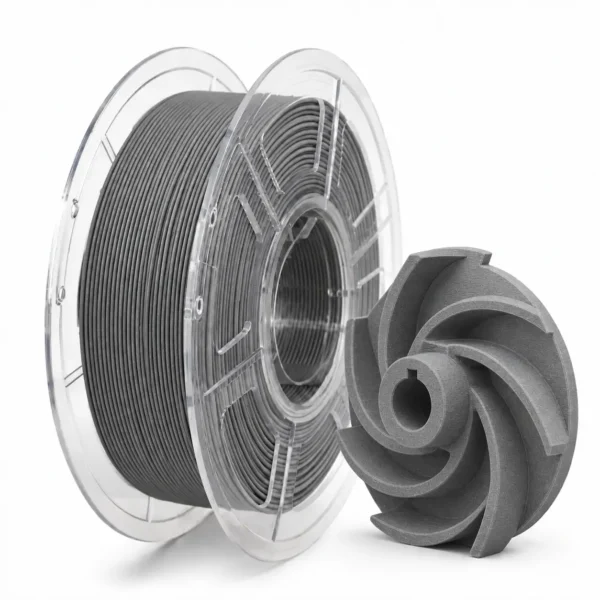
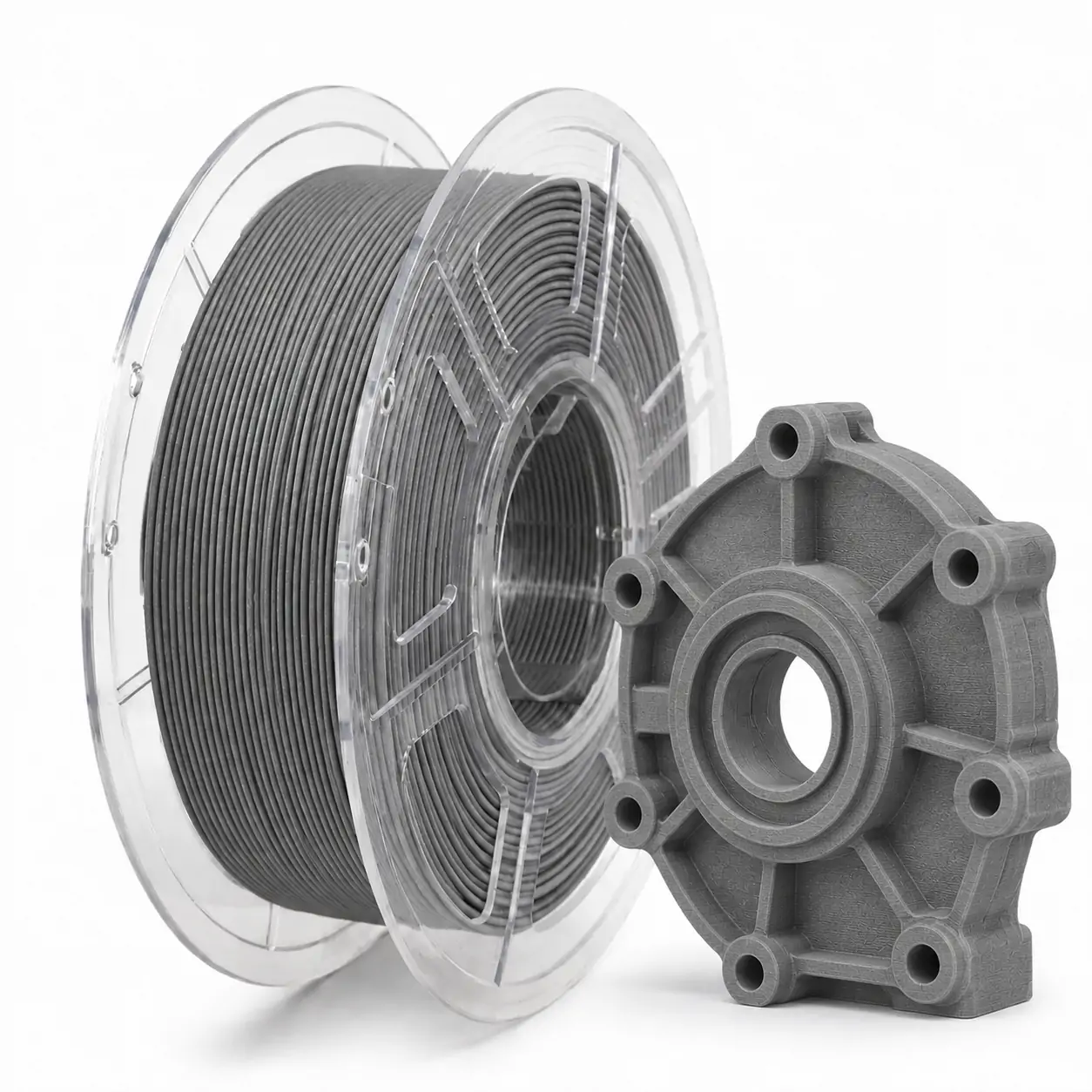
PPS-GF Engineering Composite | Industrial Supply | OEM / ODM Support
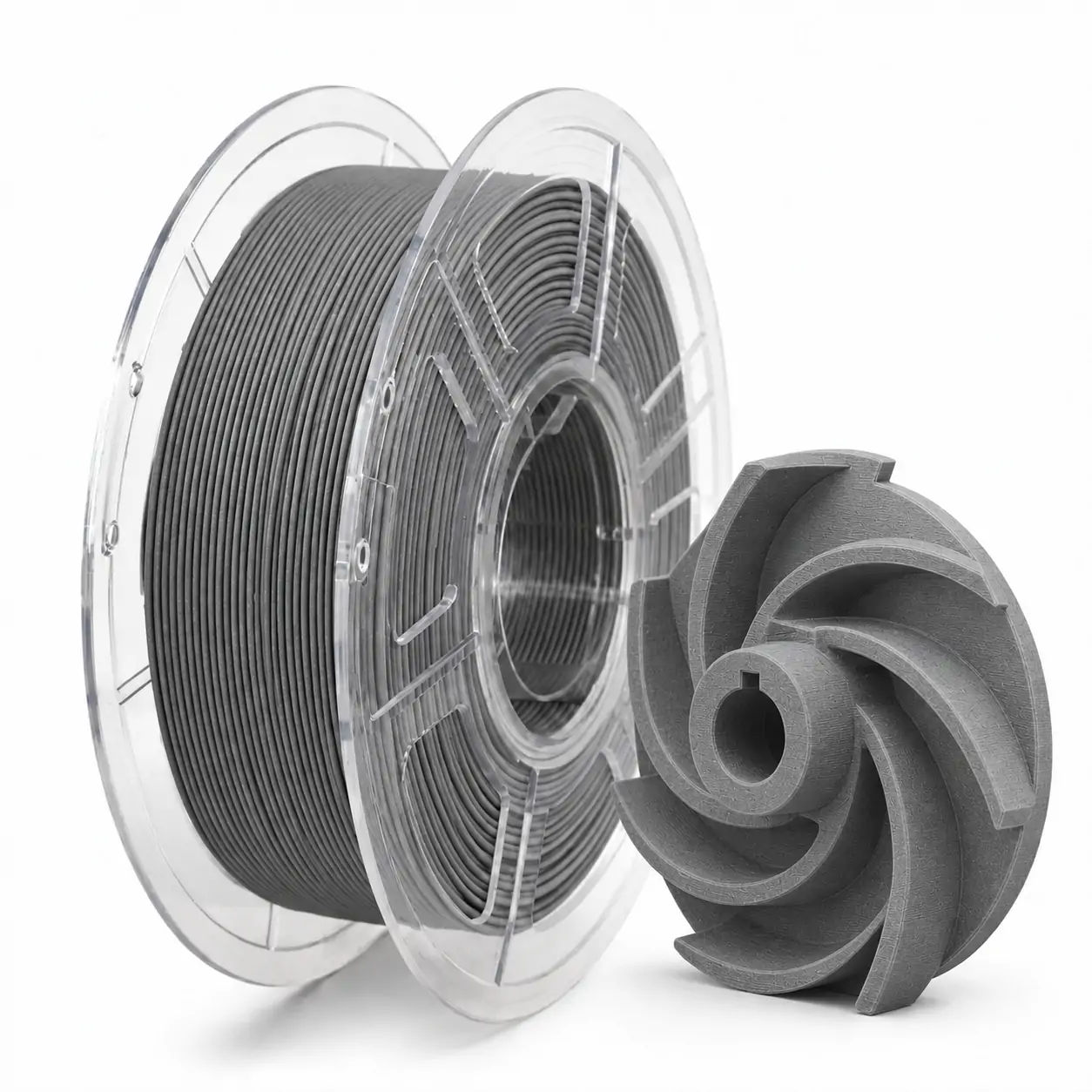
SSSray Glass-Filled PPS-GF Filament, Industrial Gray – ガラス繊維強化PPSフィラメント for 3D Printed Impellers & Bearing Housings
Industrial PPS reinforced with glass fiber for high-temperature functional parts, pump components, bearing housings, flanges and fixtures, with OEM / private-label supply for B2B orders.
SSSray supplies this PPS-GF for demanding FDM/FFF applications that need a controlled Industrial Gray appearance, wear-resistant-nozzle processing, dry-packed material and B2B supply support from sample testing through repeat orders.
Material
PPS-GF
Series
Engineering Composite
Color Effect
Industrial Gray
Diameter
1.75mm
Tolerance
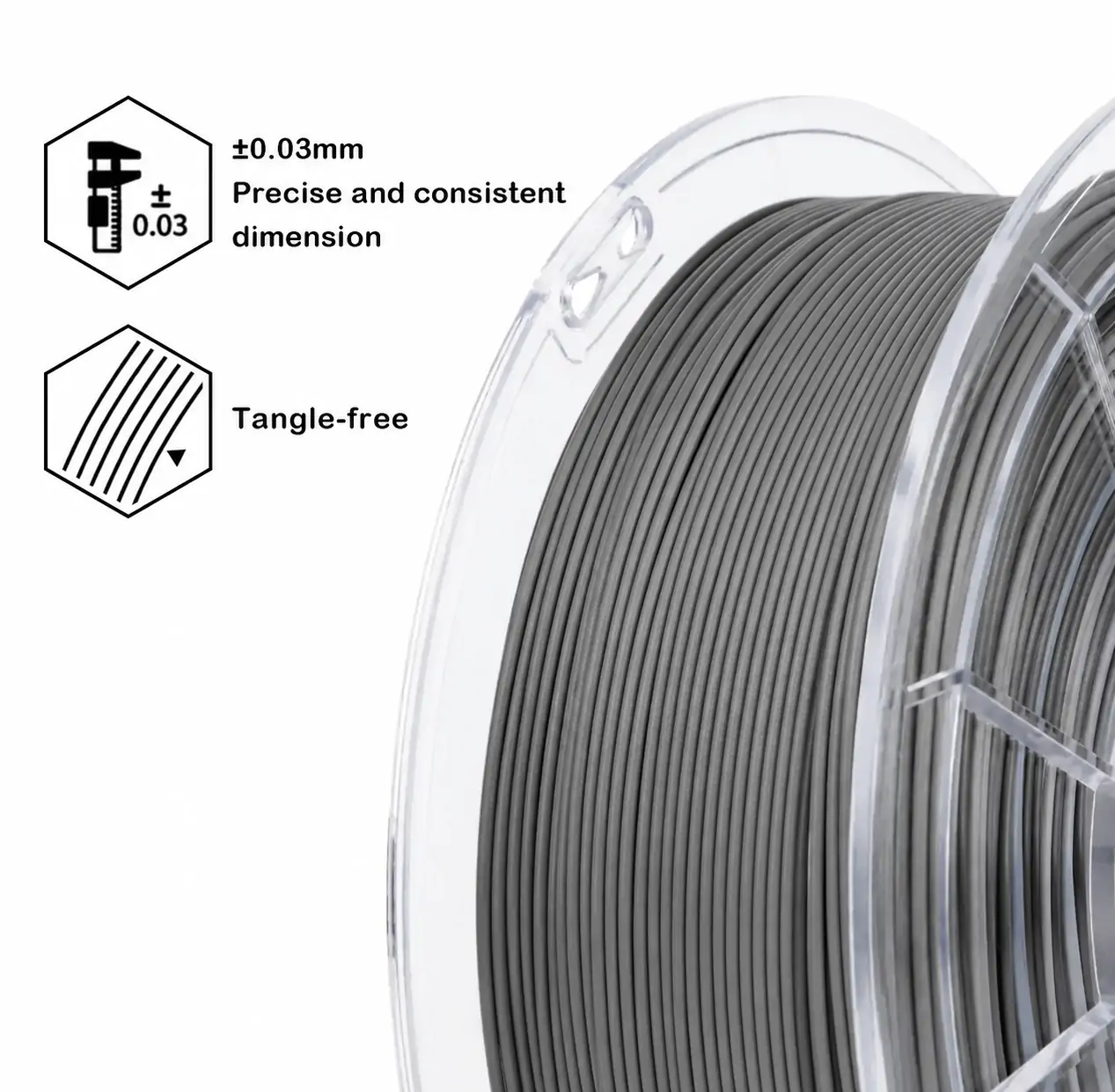
±0.03mm
Net Weight
1kg
Gross Weight
1.3kg
Nozzle Temp
310–350°C
Bed Temp
80–90°C
Print Speed
30–250 mm/s
Packaging
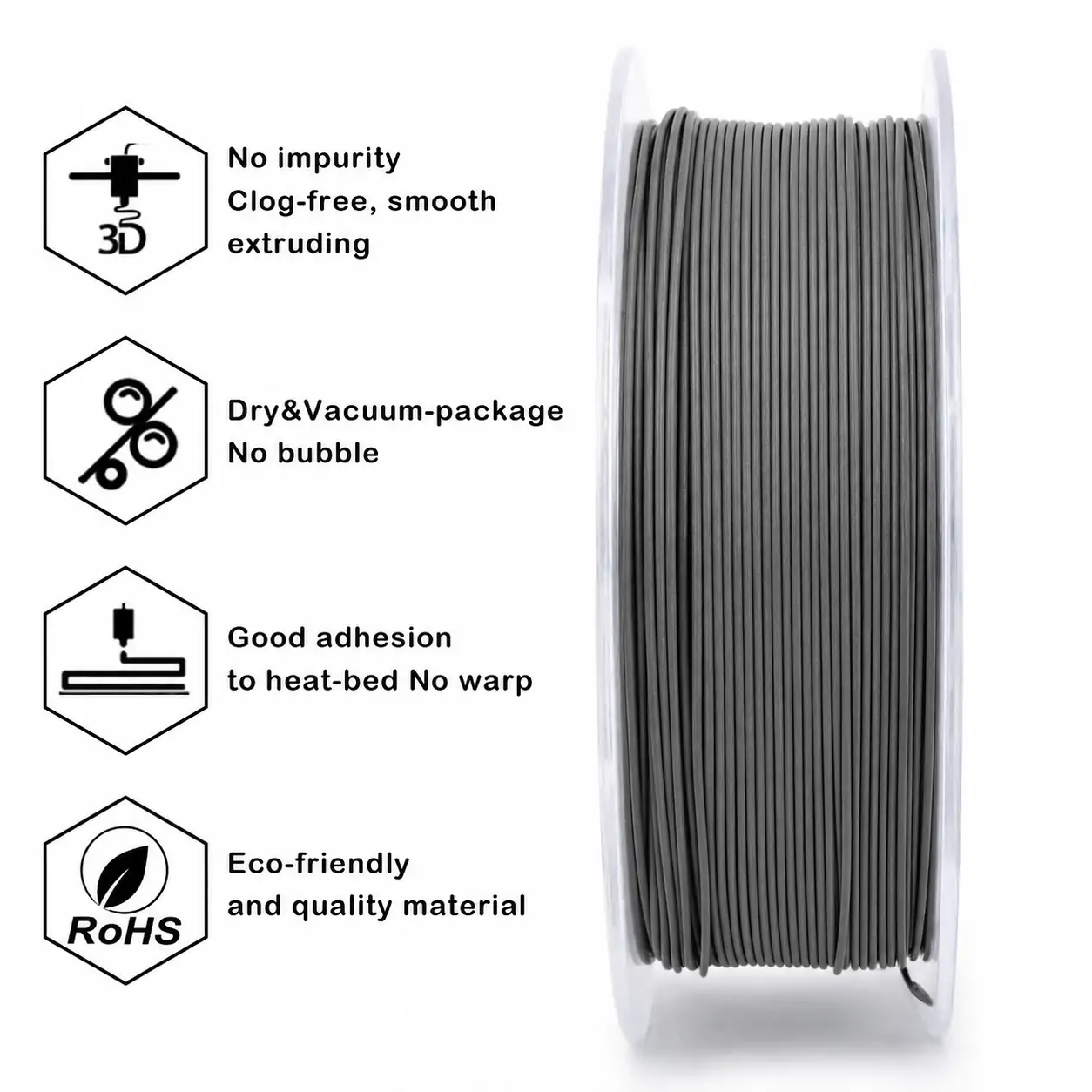
Vacuum + Desiccant
Spool Type
Plastic Spool
MOQ: Neutral packaging from 50 rolls; OEM packaging typically 500–1,000 rolls.
Lead Time: Standard 7–15 working days; customized orders typically 15–25 working days.
Product Overview
SSSray Glass-Filled PPS-GF Filament in Industrial Gray is a semi-crystalline PPS engineering composite reinforced with glass fiber for FDM/FFF production of mechanically stable parts exposed to elevated temperature, chemicals, dimensional load, or repeated service. The neutral gray tone sits between light gray and charcoal with no blue or warm cast. Filament on the spool has a soft matte to low-sheen appearance, while printed parts develop a fine fiber-flecked matte texture that suits impellers, bearing housings, flanges, mounting parts, jigs, fixtures, and industrial enclosures.
For B2B supply, we provide this PPS-GF with controlled filament diameter, dry sealed packing, wear-resistant-nozzle processing guidance and OEM/private-label options. Run it on 310°C+ high-temperature FDM/FFF equipment with an abrasion-resistant nozzle. For impellers, bearing housings and other service parts, send us the target heat, chemical, pressure, load and dimensional requirements so we can recommend a practical starting process window for the application.
PPS-GF Product Highlights
PPS High-Temperature Matrix
PPS is selected for demanding thermal and chemical environments where standard commodity filaments are not suitable.
Glass-Fiber Dimensional Control
Glass reinforcement supports stiffness and dimensional stability for housings, impellers, flanges, and fixtures.
Industrial Gray Surface
Neutral medium gray with a fine fiber-flecked matte texture for engineering parts and low-glare technical presentation.
Wear-Resistant Process Setup
Abrasive glass reinforcement calls for a hardened, ruby, or equivalent wear-resistant nozzle and a 310°C+ hotend.
B2B Supply from 50 Rolls
50-roll neutral-packaging MOQ, bulk order planning, FOB Ningbo / EXW terms, and B2B sample support.
OEM / ODM Supply
Private labels, branded cartons, custom labels, selected spool options, and engineering-material line development are supported.
Where PPS-GF Fits in an Engineering Filament Line
PPS-GF gives distributors and industrial buyers a reinforced engineering material positioned between conventional filaments and PEEK- or PEI-class products. It covers functional prototypes, jigs, fixtures, pump-related components, housings, flanges and selected end-use parts on capable 310–350°C FDM/FFF platforms. For B2B supply, this Industrial Gray SKU combines a 1kg standard format, 50-roll neutral-packaging MOQ, sample support, OEM packaging and FOB Ningbo / EXW terms. Where PEEK- or PEI-class performance is not required, PPS-GF provides a practical way to extend an engineering-filament range without moving every project to ultra-high-temperature polymer processing.
From Sample to Bulk Order
1
Target Part & Service Review
2
High-Temp Printer Check
3
Drying & Nozzle Setup
4
PPS-GF Sample Trial
5
Packaging & Batch Approval
6
Production & Shipment
For buyers who require documented material checks before bulk approval, review our 3D Printer Filament Qualification Program, Bulk & OEM Test Protocol, and Batch QC Data.
Material Comparison Guide
| Material | Reinforcement / Surface | Moisture & Dimensional Behavior | Typical Printing Conditions | Typical Use |
|---|---|---|---|---|
| PPS-GF | Glass fiber; matte, fiber-flecked surface | Low moisture uptake compared with nylon composites; high dimensional stability when process conditions are controlled | 310–350°C nozzle; high-temperature hotend; wear-resistant nozzle; cooling normally off | Impellers, housings, flanges, fixtures, electrical and chemical-service components |
| PPS-CF | Carbon fiber; usually black, lower-gloss technical surface | Low moisture uptake and dimensional stability; electrical behavior depends on formulation | High-temperature hotend and wear-resistant nozzle; similar PPS-class process window | Stiff tooling, brackets, structural housings, dimension-critical parts |
| PA-GF | Glass fiber; matte engineering surface | More moisture-sensitive than PPS; conditioning can change dimensions and mechanical behavior | High nozzle temperature, dry filament and enclosed printing commonly required | Jigs, fixtures, housings, automotive and machine components |
| PC-GF | Glass fiber; rigid engineering finish | Good dimensional behavior but less chemically resistant than PPS in many aggressive environments | High-temperature nozzle and heated bed; enclosure typically preferred | Rigid housings, tooling, brackets and heat-resistant functional parts |
Technical Specifications
| Product Name | SSSray Glass-Filled PPS-GF Filament, Industrial Gray – ガラス繊維強化PPSフィラメント for 3D Printed Impellers & Bearing Housings |
|---|---|
| Material | Polyphenylene Sulfide (PPS) reinforced with glass fiber |
| Series | SSSray Engineering Composite Series – PPS-GF Gray for Impeller, Housing & Mechanical Components |
| Color / Effect | Industrial Gray; neutral medium gray between light gray and charcoal, non-metallic, soft matte to low-sheen spool finish, fine fiber-flecked matte printed surface |
| Filament Diameter | 1.75mm standard; 2.85mm available upon request subject to production confirmation |
| Tolerance | ±0.03mm |
| Net Weight | 1kg (3kg / 5kg options upon request) |
| Gross Weight | 1.3kg |
| Spool Type | Plastic spool |
| Packaging | Vacuum sealed with desiccant |
| Printer Compatibility | 1.75mm high-temperature FDM/FFF systems capable of at least 310°C nozzle temperature and fitted with a wear-resistant nozzle |
| Typical Applications | Pump impellers, bearing housings, flanges, mounting parts, industrial enclosures, jigs, fixtures and functional mechanical components |
| OEM / ODM | Supported for labels, branded boxes, private-label packaging, selected spool options and engineering-filament supply |
| Compliance / Technical Documents | TDS / SDS are supplied for the confirmed SKU; applicable RoHS / REACH declarations, third-party reports and CE-related documents are prepared for the ordered material, target market and document scope |
Recommended Print Settings
| Parameter | Recommended Guidance |
|---|---|
| Recommended Nozzle Temperature | 330–350°C for initial test runs |
| Usable Nozzle Range | 310–350°C |
| Recommended Bed Temperature | 80–90°C |
| Bed Adjustment Window | 80–100°C depending on build surface, footprint and printer thermal behavior; start at 80–90°C |
| Recommended Print Speed | 40–120 mm/s for initial setup and functional parts |
| Usable Speed Range | 30–250 mm/s after checking flow, geometry and layer bonding |
| Retraction | Direct drive: 1–3mm at 20–40 mm/s starting point. For Bowden or remote high-temperature feed paths, keep bends gentle and tune retraction conservatively to reduce stress on the stiffer glass-filled filament. |
| Layer Height | 0.15–0.30mm; match layer height to nozzle size and fiber-filled flow behavior |
| Cooling Fan | 0% normally; introduce only minimal local cooling when bridge or overhang geometry requires it |
| Wall Count | 3–5 perimeters for functional parts; increase walls before relying on very high infill |
| Infill | 30–60% for functional prototypes and fixtures; higher infill only when part design and load case justify it |
| First Layer Speed | 15–25 mm/s |
| Bed Adhesion | Clean PEI or equivalent high-temperature plate; use a suitable high-temperature adhesive / release layer for large footprints when required |
| Nozzle | 0.4mm or larger wear-resistant nozzle; hardened steel, ruby or equivalent abrasion-resistant construction |
| Drying | 100°C × 10h after moisture exposure or before critical runs; print and store under dry conditions |
| Annealing Reference | 130°C × 10h when post-annealed performance is required; measure dimensional change on the actual geometry before production |
Print Optimization Guide
| Item | Guidance |
|---|---|
| Dryness First | Start high-temperature composite printing with dry filament; use sealed storage and print from a dry box for long production runs |
| Nozzle Wear Control | Glass fiber is abrasive. Start with a wear-resistant nozzle and inspect the bore during long production runs |
| First-Layer Stability | Use a clean high-temperature build surface, slow first layer and enough contact area; add brim or adhesive for large footprints when needed |
| Cooling Strategy | Keep part cooling off for normal walls to protect layer bonding; use only limited cooling for bridges or local geometry |
| Part Orientation | Orient impellers, housings and flanges around the real load path; mechanically test FDM parts for the intended load case |
| Annealing Control | If annealing is used, support critical geometry and measure post-process dimensional change before releasing a production profile |
Printer Brand Starting Settings
| Printer / Configuration | Nozzle | Bed | Speed | Starting Notes |
|---|---|---|---|---|
| Bambu Lab H2D | 330–350°C | 85–90°C | 40–100 mm/s | 350°C hotend and hardened nozzle suit PPS-GF printing; keep cooling off initially and check flow before increasing speed |
| Prusa CORE One L+ with HT Hotend | 330–350°C | 85–90°C | 40–80 mm/s | 400°C HT hotend, 120°C bed and active chamber up to 60°C make this the stronger Prusa platform for PPS-GF printing; use the supplied abrasion-resistant HT nozzle |
| Prusa CORE One+ with HT Hotend | 330–350°C | 85–90°C | 35–70 mm/s | 400°C HT hotend supports PPS-GF; the passive chamber is better suited to smaller parts and controlled geometry than large heat-demanding builds |
| Creality K2 Plus | 330–350°C | 85–95°C | 30–80 mm/s | 350°C nozzle ceiling and active chamber capability support PPS-GF printing; confirm nozzle wear resistance |
| QIDI Plus5 / Max4 | 330–350°C | 85–100°C | 30–100 mm/s | 370°C hotend and active 65°C chamber provide additional thermal headroom for large or warp-sensitive parts |
| Other Industrial FDM Systems | 330–350°C | 80–100°C | 30–100 mm/s | Use only printers with a 310°C+ all-metal hotend, wear-resistant nozzle and a build surface suitable for PPS-class materials |
Start with these SSSray settings, then tune flow, build surface, chamber behavior and speed on the target machine. Once the part passes your dimensional and mechanical checks, freeze the approved profile together with the SKU and batch record for repeat orders.
Performance Characteristics
| Characteristic | Material / Production Reference | Practical Note |
|---|---|---|
| Polymer Structure | Semi-crystalline PPS composite | Requires substantially higher processing temperature than PLA, PETG, ABS or ASA |
| Reinforcement | Glass fiber | Improves stiffness and dimensional stability while increasing nozzle abrasion |
| Surface | Fine fiber-flecked matte texture | Industrial Gray is non-metallic; light flecks are from glass reinforcement rather than metal powder |
| Cooling Behavior | Part cooling normally off | Supports layer bonding and reduces thermal gradients in PPS-GF processing |
| Moisture Handling | Dry storage required for stable processing | Vacuum packaging and desiccant support transport; critical runs should start with conditioned filament |
| Production Setup | High-temperature printer + wear-resistant nozzle | Check final mechanical, thermal and chemical suitability against the actual part and service environment |
Applications
| Application Focus | Practical Notes |
|---|---|
| Pump Impellers | Useful for functional prototypes and selected service parts where stiffness, heat and chemical exposure matter; check balance, fluid chemistry, pressure and fatigue for the intended service |
| Bearing Housings | Suitable for rigid housings and supports; check bearing fit, local heat, creep load and dimensional change after any annealing process |
| Flanges & Mounting Parts | Good fit for rigid mounting geometry and chemical-service fixtures; check sealing surfaces and bolt preload against the actual assembly |
| Industrial Enclosures | Useful where heat resistance, electrical insulation behavior and chemical stability are important; exact electrical properties depend on the final formulation |
| Jigs & Fixtures | Suitable for production aids exposed to higher process temperature than standard commodity polymers can tolerate |
| Automotive / Machinery Components | Appropriate for prototyping and functional components near heat, oils or chemicals; check the actual duty cycle and regulatory requirements |
Storage Guide
- Keep unopened rolls vacuum sealed until printing or production use
- After opening, store in a sealed dry box with fresh desiccant and minimize ambient exposure
- For critical runs or after moisture exposure, dry at 100°C for 10 hours before printing
- Print from a dry box during long jobs when shop humidity cannot be controlled
- Keep the spool away from dust, oil and direct sunlight, and reseal promptly after use
OEM / ODM Services
SSSray supplies PPS-GF OEM / ODM orders for distributors, engineering-material brands, importers, industrial users and sourcing teams. Available options include neutral packaging, custom labels, branded cartons, private-label artwork, selected spool specifications, standard or custom colors, and coordinated engineering-filament line development.
MOQ Reference: Neutral packaging from 50 rolls; OEM packaging typically 500–1,000 rolls. Customized PPS-GF formulations, fiber loading, colors, spool formats or document requirements must be confirmed project by project before quotation.
Quality Control
- Diameter and tolerance inspection against the approved production specification
- Winding appearance and spool-feed inspection before packing
- Color and Industrial Gray appearance check against the approved reference
- Vacuum-seal and desiccant inclusion inspection for each packed unit
- Batch traceability and retained production records for order follow-up
- Pre-shipment quantity, labeling, carton and customer-specific packaging review
Compliance & Technical Documentation
- TDS and SDS are supplied for the confirmed PPS-GF SKU and document revision
- RoHS / REACH declarations are supplied when applicable to the ordered SKU and destination-market requirement
- SGS or other third-party reports can be matched to the material, lot or declared test scope where available
- For CE-related customer documentation, we confirm whether CE requirements apply to the supplied material or finished-product scope before issue
- For regulated end-use projects, send the destination market and restricted-substance / document list with the RFQ so we can prepare the correct file set before production
Frequently Asked Questions
What is the MOQ for this PPS-GF filament?
Neutral packaging starts from 50 rolls. OEM or private-label packaging typically starts from 500–1,000 rolls depending on artwork, box, label, spool and customization requirements.
What printers can process PPS-GF?
Use a 1.75mm high-temperature FDM/FFF printer with an all-metal hotend capable of at least 310°C and a wear-resistant nozzle. Start at 330–350°C when more thermal headroom is needed for this material class.
Do I need a hardened nozzle?
Yes. Glass fiber is abrasive and can wear standard brass nozzles. Hardened steel, ruby or an equivalent wear-resistant nozzle is recommended for both test printing and production.
What drying condition should I start with?
For critical runs or after moisture exposure, start with 100°C for 10 hours, then keep the filament dry during printing and reseal it promptly after use.
Can PPS-GF be used for impellers and bearing housings?
Yes. PPS-GF is suitable for these application categories. For the actual part, check geometry, load, speed, fluid chemistry, temperature, pressure, fatigue, bearing fit and any post-annealing dimensional change.
What is special about Industrial Gray?
It is a neutral medium gray between light gray and charcoal with no metallic silver effect. Printed parts show a fine fiber-flecked matte texture, while the spool has a soft matte to low-sheen appearance.
Can you provide OEM / ODM and private-label packaging?
Yes. We support B2B orders with custom labels, branded boxes, private-label artwork, selected spool options and coordinated engineering-filament supply.
What compliance documents are available?
We prepare the document set for the exact PPS-GF SKU and destination market. Available files can include TDS, SDS, applicable RoHS / REACH declarations and relevant third-party reports; CE-related documentation is handled when it applies to the supplied product or end-use scope.
Need PPS-GF for an Industrial Project?
Send us your printer capability, target part, service temperature, chemical exposure, quantity and document requirements. We will recommend the starting print profile, sample option, bulk pricing and OEM / ODM scope for your project.


Related products
-

Industrial PA6-GF Glass Fiber Reinforced Nylon 3D Printing Filament 1.75mm 1kg – Heat Resistant, Dimensionally Stable for Engineering Fittings, Jigs & Fixtures
-
PA12-GF Glass Fiber Reinforced Nylon Filament 1.75mm 1kg – Industrial Grade Engineering Polyamide for Structural Manufacturing & Functional Prototyping
-
High-Strength ABS-GF Filament 1.75mm 1kg – Glass Fiber Reinforced Engineering Grade for Industrial Functional Parts| OEM/ODM Bulk Supply
-
Industrial PA12 Carbon Fiber Reinforced 3D Printing Filament 1.75mm 1kg – High Stiffness, Low Moisture Absorption for Lightweight Aerospace & Automotive Parts


