Online time
Monday to Friday: 9AM - 8PM
Weekend: 10AM - 5PM


ABS Standard Series | Functional Prototyping | OEM / ODM Supply
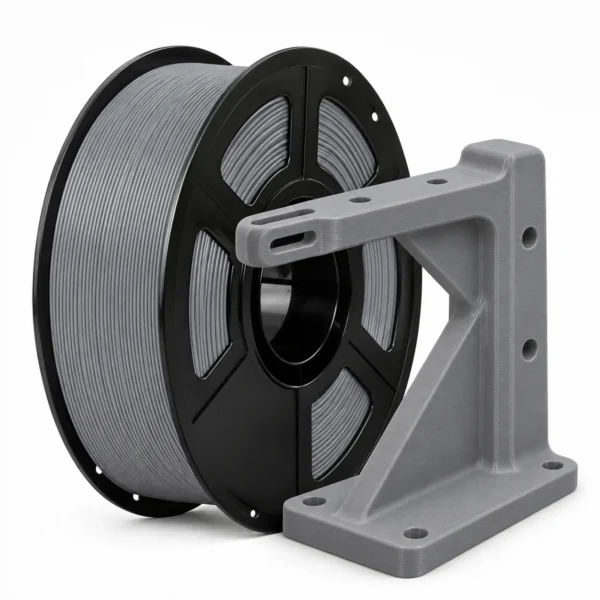
SSSray Industrial Gray ABS 3D Printer Filament – Grijs ABS-filament for Functional Prototypes
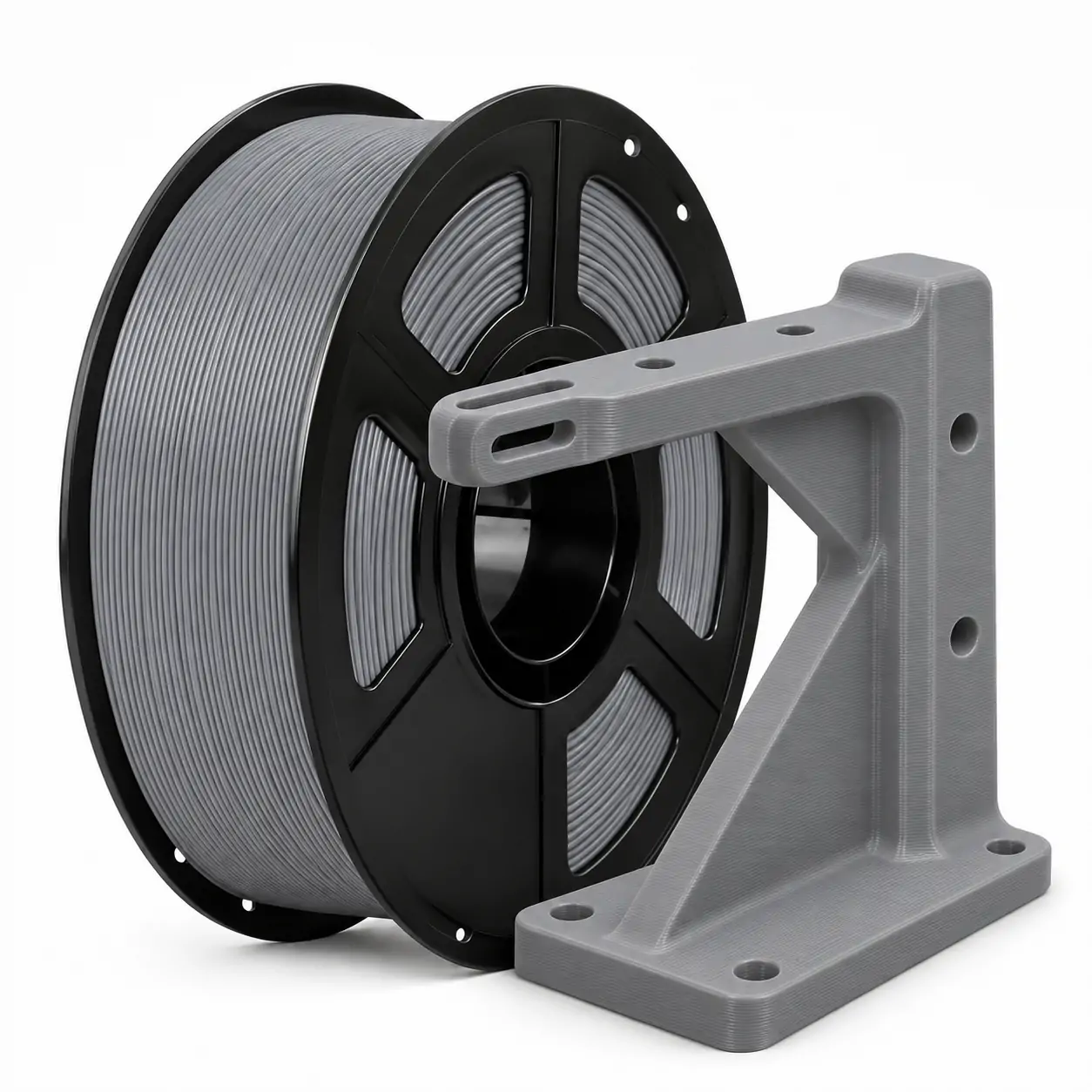
Impact-tough ABS for cantilever load-path studies, instrument-cluster prototypes, and post-machined workshop fixtures—in a practical industrial grijs shade.
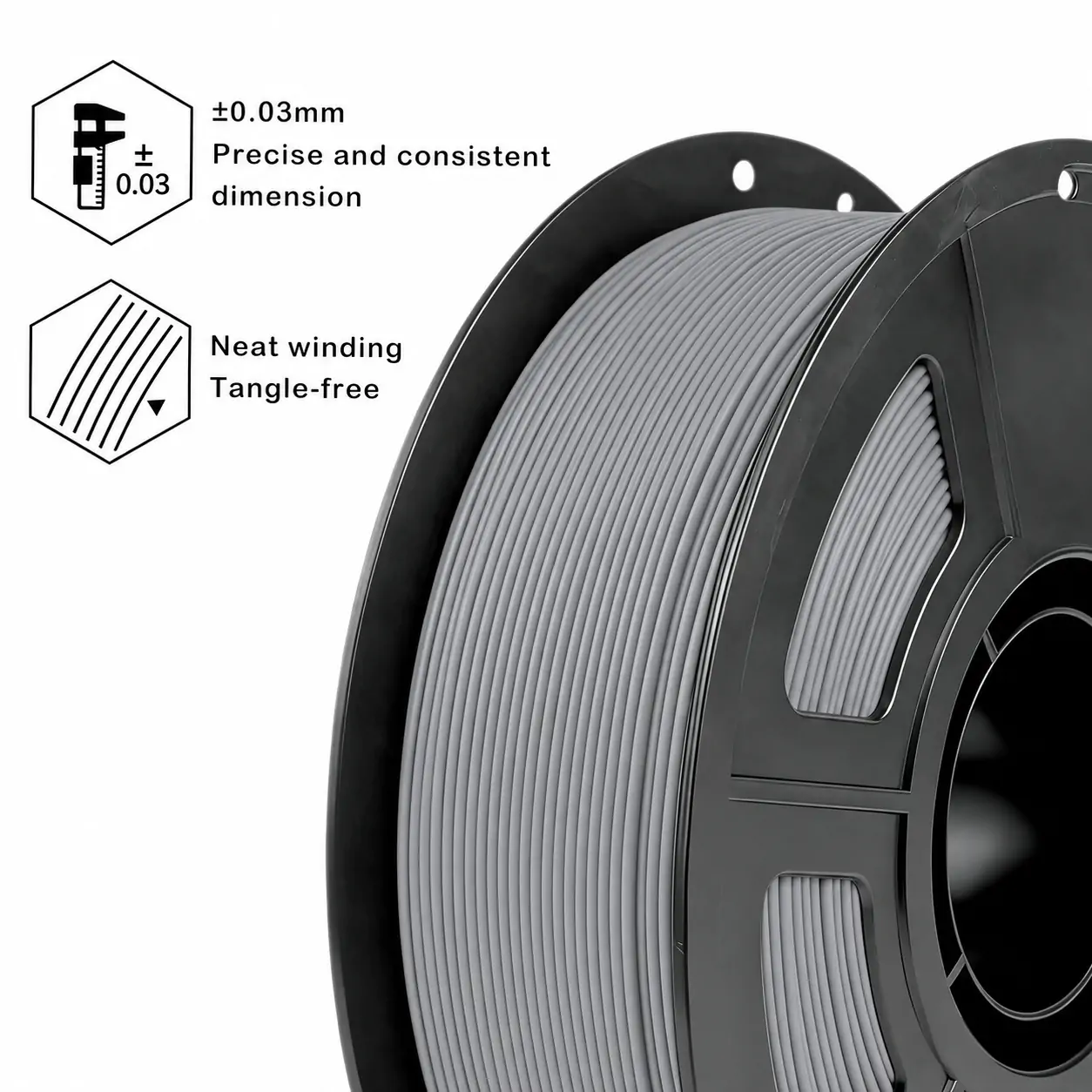
We manufacture Industrial Gray ABS with controlled ±0.03mm filament tolerance and a 40–250 mm/s process-speed window for tuned ABS-capable printers. Our standard ABS grade achieves typical XY tensile strength of 40 ± 2 MPa and an HDT of 88°C at 1.82 MPa under the stated test conditions. Every 1kg spool is vacuum sealed with desiccant for dependable sample trials and repeat wholesale supply.
MaterialABS
SeriesABS Standard
Color EffectIndustrial Gray / Low-Sheen
Diameter1.75mm
Tolerance±0.03mm
Net Weight1kg
Gross Weight1.3kg
Nozzle Temp220–240°C
Bed Temp90–100°C
Print Speed40–250 mm/s (tuned)
PackagingVacuum + Desiccant
Spool TypePlastic Spool
MOQ: Neutral packaging from 50 spools; OEM packaging typically 500–1,000 spools.
Lead Time: Standard 7–15 days; customized orders typically 15–25 days.
Product Overview
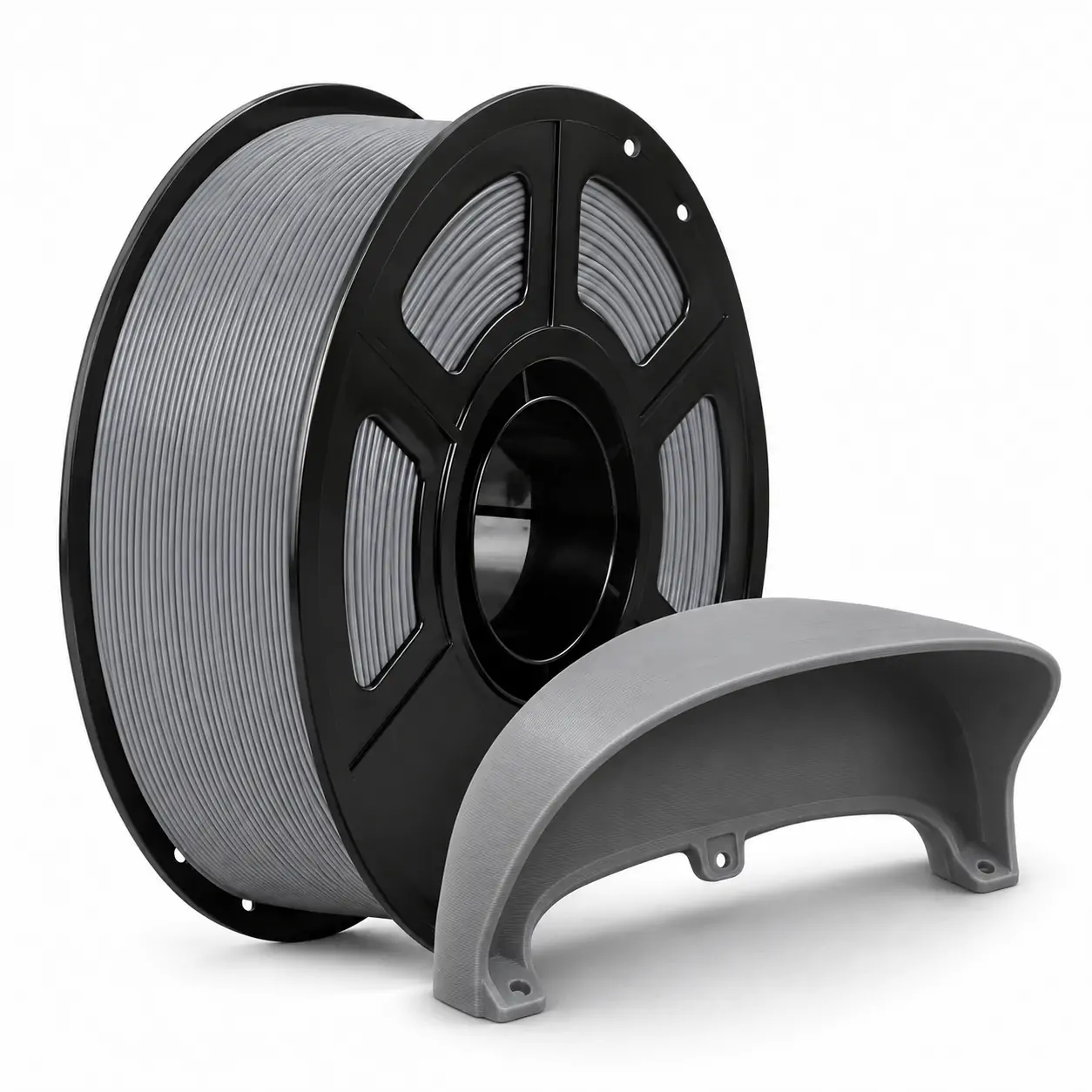
We manufacture SSSray Industrial Gray ABS for functional brackets, snap-fit housings, instrument-cluster prototypes, and workshop fixtures that require a consistent industrial grijs finish. The material combines impact toughness with heat resistance and practical post-processing: sand mating faces, drill mounting holes, tap bosses, or apply controlled acetone-vapor finishing to presentation parts.
Our 1.75mm ABS is held to ±0.03mm tolerance and vacuum sealed on 1kg plastic spools. With a heated bed and stable, ventilated enclosure, your team can tune print quality, dimensional fit, and faster internal paths to the printer’s available flow. We support application-led sample qualification and factory-direct wholesale or private-label supply. Share your printer model, part requirements, and monthly demand for an application-specific quotation.
Why This Product Stands Out
Functional ABS performance with factory-direct supply. We make this grade for indoor mechanical prototypes that need both a professional gray appearance and the freedom to drill, machine, sand, or finish the printed part. Our diameter controls, sealed packaging, and approved color master give distributors a clear specification for sampling and repeat replenishment.
Key Selling Points
Stable Diameter Control
We control 1.75mm filament to ±0.03mm, helping your printers maintain repeatable feeding and giving purchasing teams a clear reorder specification.
High-Throughput ABS Capability
Our 40–250 mm/s process window supports fine exterior walls and faster internal features when your enclosed printer has the required hotend flow capacity.
Impact & Heat Performance
Our Industrial Gray ABS combines impact toughness with heat resistance for indoor equipment housings, assembly aids, and handling-intensive functional prototypes.
Workshop-Ready Post-Processing
Finish a bracket after printing: sand the mating face, drill a mounting hole, tap the boss, or smooth a presentation shell with controlled ABS-compatible finishing.
Export-Oriented Supply
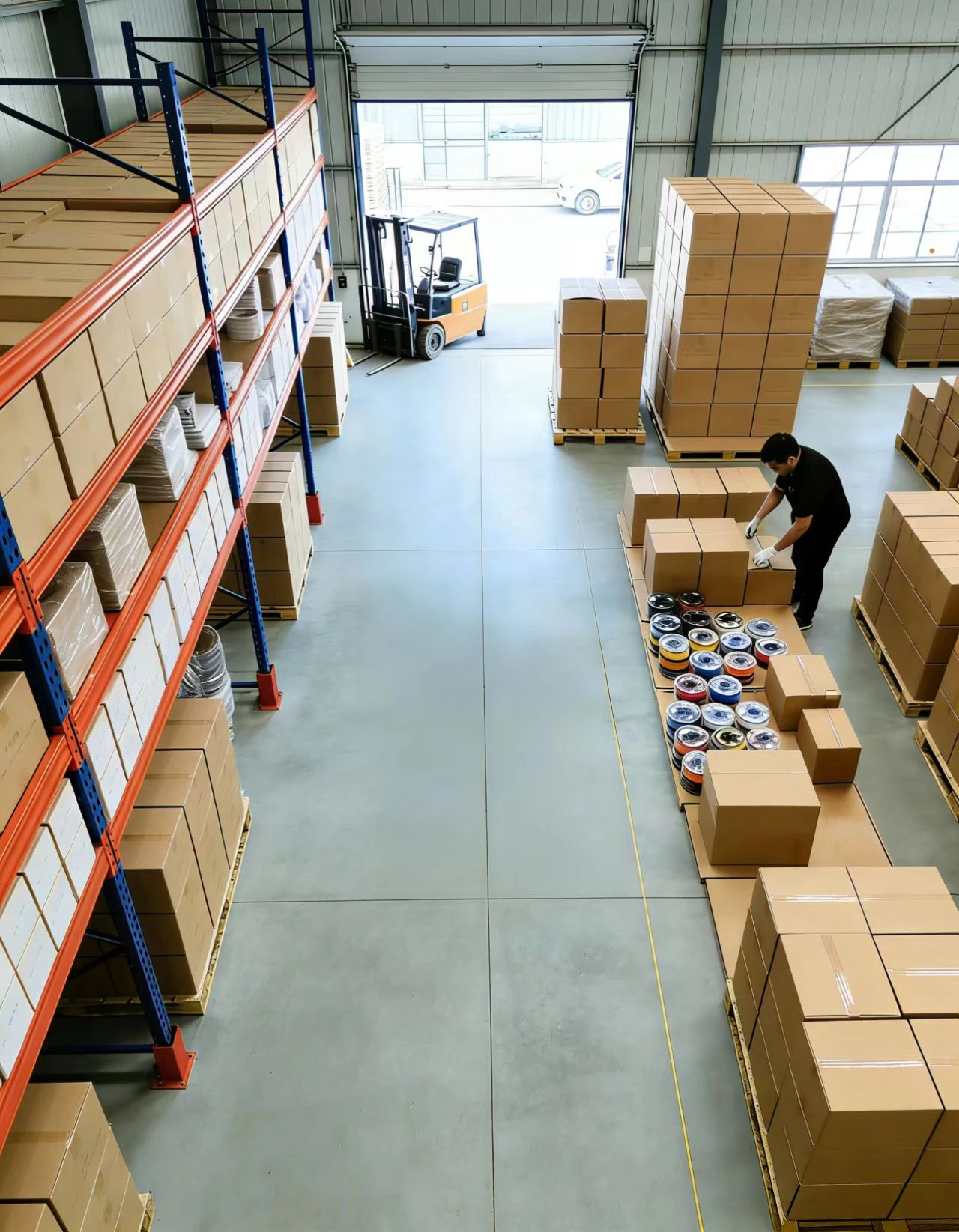
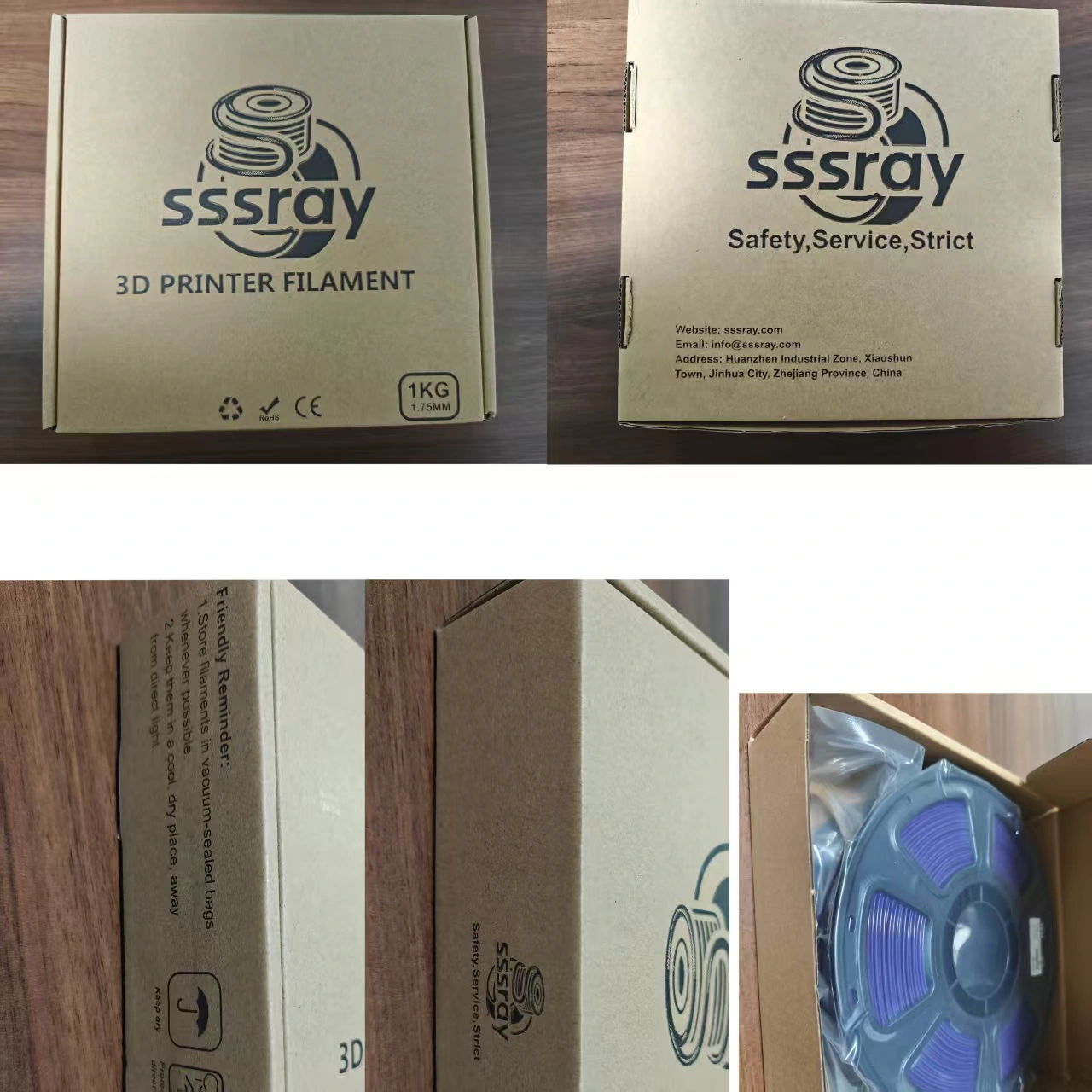
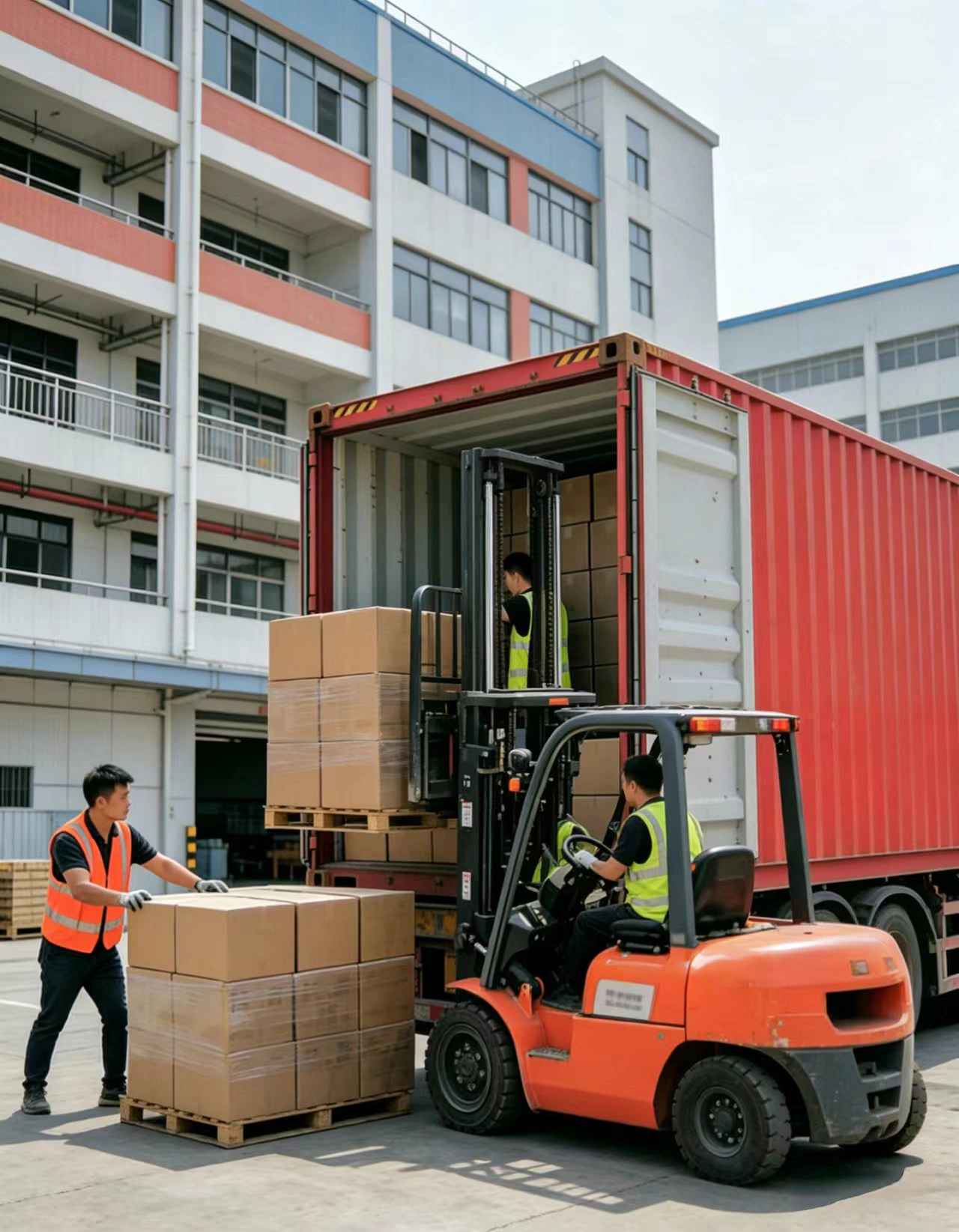
We pack 1kg spools under vacuum with desiccant, then prepare neutral or private-label cartons for importer stockrooms and international distribution.
OEM / ODM Ready
We coordinate your grijs color master, brand artwork, box labels, barcode details, and repeat-order lot references before volume production.
Key Features
| Feature | Practical Buyer Benefit |
|---|---|
| 40 ± 2 MPa XY Tensile Strength (Typical) | Gives your engineering team a tensile benchmark for printed bracket design and functional fitting trials |
| 88°C HDT at 1.82 MPa / 98°C at 0.455 MPa | Supports warm-environment fit checks and indoor equipment-housing development |
| 18–28 kJ/m² Notched Izod Impact (Typical) | Supports the development of impact-tough jigs, workshop fixtures, and repeatedly handled prototypes |
| 0.12–0.30mm Layer Height Capability | Allows fine instrument-shroud surfaces or thicker, faster deposition for larger internal features |
| ABS Machining & Solvent Finishing | Lets the workshop drill, tap, sand, paint, or apply controlled acetone finishing after printing |
| Industrial Gray / Grijs Color Master | Keeps customer-facing equipment mockups and repeat OEM replenishment aligned to an agreed shade |
Balanced Quality and Cost Efficiency
One consistent ABS grade can take your team from a functional fit check to a machined fixture or finished-looking gray enclosure. That reduces material changes during prototype development and gives distributors a practical offering for engineering workshops and education labs. We prepare neutral or brand-ready packaging around your approved color master and quote factory-direct on FOB Ningbo or EXW terms.
How We Work
1
Requirement Review
2
Specification Confirmation
3
Sample Evaluation
4
Packaging Discussion
5
Production Arrangement
6
Inspection & Shipment
Material Comparison Guide
| Material | Material Behavior | Printing Conditions | Common Applications | Key Difference |
|---|---|---|---|---|
| ABS (Industrial Gray) | Tough thermoplastic; prone to thermal contraction when cooling | Heated bed and draft-free enclosure; ventilation required | Indoor brackets, housings, tooling prototypes | Machinable and acetone-responsive; not intended for long-term UV exposure without qualification |
| PLA / PLA+ | Typically more dimensionally forgiving during printing; lower heat tolerance | Lower nozzle/bed temperatures; enclosure usually unnecessary | Fit checks, display prototypes, indoor models | Simpler setup, but limited for parts exposed to elevated temperatures |
| PETG | Ductile behavior; less shrinkage-driven warping than ABS during FDM printing | Heated bed, moderate cooling, adequate drying | General brackets, containers, machine covers | More forgiving than ABS for large parts, but different stiffness and post-processing behavior |
| ASA | ABS-family engineering behavior with improved weather/UV resistance | High bed temperature, enclosure, ventilation | Outdoor housings, weather-facing components | Prefer ASA for sustained outdoor exposure; ABS for cost-sensitive indoor functional work |
Technical Specifications
| Product Name | SSSray Industrial Gray ABS 3D Printer Filament – Grijs ABS-filament for Functional Prototypes |
|---|---|
| Material | Acrylonitrile Butadiene Styrene (ABS), Standard Series |
| Series | SSSray ABS Standard Series – Functional Parts & Prototyping |
| Color / Effect | Industrial Gray (Grijs), neutral medium gray, smooth low-sheen finish |
| Filament Diameter | 1.75mm standard; 2.85mm upon project confirmation |
| Tolerance | ±0.03mm |
| Density (Typical) | 1.04 g/cm³ (ISO 1183 / ASTM D792) |
| Tensile Strength (XY, Printed) | 40 ± 2 MPa (ISO 527-2 / ASTM D638) |
| Tensile Modulus (XY, Printed) | 2,300 MPa (ISO 527-2 / ASTM D638) |
| Elongation at Break (Printed) | 8–15% (ISO 527-2 / ASTM D638) |
| Notched Izod Impact (Printed) | 18–28 kJ/m² (ISO 180 / ASTM D256) |
| Heat Deflection (0.455 MPa / 1.82 MPa) | 98°C / 88°C (ISO 75-2 / ASTM D648) |
| Glass Transition (Tg) | 105.3°C (ISO 11357-2 / ASTM D3418) |
| Vicat Softening | 109°C (ISO 306 / ASTM D1525) |
| Net Weight | 1kg (2.2 lbs); 3kg / 5kg upon request |
| Gross Weight | 1.3kg |
| Spool Type | Plastic spool |
| Packaging | Vacuum sealed with desiccant |
| Printer Compatibility | Most 1.75mm FDM/FFF printers with an ABS-capable hotend, heated bed, and suitable enclosure (e.g. Bambu Lab X1C/P1S, Creality K1, enclosed Prusa systems) |
| Application Examples | Cantilever brackets, instrument cluster hood prototypes, indoor housings, tooling aids, jigs, and functional fit checks |
| OEM / ODM | Supported |
| Compliance / Documents | Download our public ABS TDS below; for grade-specific safety or compliance records, contact our team with your destination-market requirements |
Our published printed-material properties use XY-oriented specimens with 0.2mm layers and 100% infill; part geometry, orientation, and process settings influence finished-part performance.
Recommended Print Settings
| Parameter | Recommended Guidance |
|---|---|
| Recommended Nozzle Temperature | 220–240°C; start at 230°C for a standard 0.4mm nozzle |
| High-Flow Nozzle Tuning Range | 240–260°C on ABS-capable hotends when faster deposition requires more melt flow |
| Recommended Bed Temperature | 90–100°C; start at 95°C |
| Optional Bed Condition | 100–110°C for broad ABS footprints where the printer and build surface are rated for it; Creality K1/K1 Max: stay within 100°C |
| Recommended Print Speed | 60–150 mm/s on enclosed, tuned systems; use slower outer walls for critical surfaces |
| Usable Speed Range | 40–250 mm/s; the upper end targets high-flow infill and non-cosmetic features after flow and layer-bond tuning |
| Layer Height | 0.16–0.24mm for everyday 0.4mm-nozzle work; 0.12–0.30mm when tuned |
| Cooling Fan | 0% for the first 3 layers; typically 0–20% for walls, with up to 50% for short bridges if needed |
| Retraction | Direct Drive: 0.6–1.2mm at 25–40 mm/s; Bowden: 3–5mm at 25–45 mm/s, as starting values |
| Wall Count | 3–5 perimeters; adjust to load case and wall thickness |
| Infill | 15–25% for fit/appearance prototypes; 40–60% for selected functional test parts after load review |
| First Layer Speed | 15–25 mm/s with a tuned Z offset |
| Bed Adhesion | Smooth or textured PEI with a thin glue/release layer; glass with suitable ABS adhesive; brim for broad footprints |
| Enclosure | Recommended; retain stable chamber conditions, avoid drafts, and use appropriate fume extraction |
| Drying Guidance | 80°C for 4–6 h when moisture affected; use a temperature-rated dryer and spool holder rather than overheating the supplied plastic spool |
Print Optimization Guide
| Item | Guidance |
|---|---|
| Best Use Case | Prototype cantilever brackets, instrument hoods, assembly jigs, and indoor component covers |
| Surface Quality Focus | Use 0.16–0.20mm layers, a 40–70 mm/s outer wall, and a calibrated seam position on visible Industrial Gray faces |
| Dimensional Accuracy | Run a tolerance coupon before precision brackets; ABS thermal contraction requires geometry-specific compensation |
| Bed Adhesion | Preheat the enclosed bed, clean PEI, apply a thin release/adhesion layer, and add a 5–10mm brim for vulnerable corners |
| Humidity Control | Keep opened spools sealed with desiccant; dry at 80°C for 4–6 h when extrusion crackles, using a heat-rated spool holder |
| High-Speed Tuning | For 150–250 mm/s internal paths, increase melt-flow capacity as needed and reserve slower speeds for loaded walls, fit surfaces, and visual skins |
| Mechanical Use | Orient load paths across well-bonded walls, use 3–5 perimeters, and validate critical dimensions and loaded parts |
| Ventilation | Use enclosed printing with controlled exhaust/filtration; avoid directing room-air drafts over the active print |
Printer Brand Starting Settings
| Printer Brand | Nozzle | Bed | Speed | Notes |
|---|---|---|---|---|
| Bambu Lab X1C / P1S | 230–250°C | 95–100°C | 70–150 mm/s | Enclosed ABS profile; tune maximum volumetric flow before pushing faster infill |
| Prusa MK4S + Enclosure | 240–255°C | 100–105°C | 50–100 mm/s | Warm the enclosure, use a suitable PEI adhesive/release layer, and protect cosmetic outer walls |
| Creality K1 / K1 Max | 230–250°C | 95–100°C | 70–160 mm/s | Use enclosed printing and a tuned high-flow profile; heated bed maximum 100°C |
| QIDI Enclosed FDM Systems | 230–250°C | 95–105°C | 70–160 mm/s | Set chamber and bed within the selected model’s ratings; tune ABS flow and cooling |
| Flashforge Creator 5 Pro | 230–250°C | 100–110°C | 80–180 mm/s | Enclosed ABS setup; use higher speeds for internal paths after flow calibration |
Our 0.4mm-nozzle starting profiles are ready for first trials. Match speed to the machine’s melt-flow capacity, then keep the approved settings with your repeat-order production file.
Performance Characteristics
| Characteristic | Material Behavior | Production Guidance |
|---|---|---|
| XY Tensile Strength | 40 ± 2 MPa on XY-printed test specimens | Use our published tensile benchmark when sizing test brackets and selecting load orientation |
| Notched Izod Impact | 18–28 kJ/m² on printed test specimens | Evaluate our ABS for impact-tough tooling trials and frequently handled indoor housings |
| Heat Deflection | 98°C at 0.455 MPa; 88°C at 1.82 MPa | Select the relevant load condition when planning warm-environment instrument-shroud trials |
| Color Appearance | Industrial medium grijs with a smooth, restrained finish | Keep the agreed physical color master for OEM production and replenishment |
| Thermal Contraction | ABS contracts during cooling, particularly across wide, flat footprints | Hold enclosure temperature stable and add a brim around cantilever fixture bases |
| Layer Bonding & Speed | 40–250 mm/s process window; bonding depends on heat input, cooling, and flow | Run fast internal paths, then prioritize slower loaded walls and mating surfaces |
| Post-Processing | Supports sanding, drilling, tapping, painting, and controlled acetone finishing | Convert a printed geometry study into a clean, assembly-ready presentation sample |
| Outdoor Exposure | Standard ABS has lower long-term UV resistance than ASA | We recommend our ASA range for weather-facing housings and outdoor installations |
Applications
| Application Focus | Functional Requirement | Practical Notes |
|---|---|---|
| Cantilever Bracket Prototypes | Root thickness, mounting stiffness, and layer-oriented bending | We recommend 4–5 perimeters around the root and a controlled wall-speed trial before fixture deployment |
| Instrument Cluster Hood Prototypes | Dashboard-fit geometry, fastener alignment, and shadow-free surface presentation | Print the curved hood in grijs ABS, then sand and finish exposed edges for fit and presentation reviews |
| Indoor Instrument Enclosures | Screw bosses, ventilation slots, and cable-entry accuracy | Use ABS for drillable equipment-shell prototypes; specify a dedicated flame-retardant grade when your drawing requires a flame rating |
| Machined Jigs & Assembly Aids | Repeatable locating faces, clamping contact points, and replaceable inserts | Print with dense perimeter walls, machine the critical face, and record your approved fixture dimensions |
| Process & Finishing Trials | Compare infill speed, layer bonding, and acetone-finish response | Our engineering team can align a 0.4mm-nozzle test plan with your enclosure and finished-part requirements |
Storage Guide
- Store unopened Industrial Gray ABS spools in a cool, dry warehouse away from heat and direct sunlight
- Return partly used spools to sealed bags or dry boxes with fresh desiccant after printing
- Keep cartons off wet floors and protect packages from prolonged high-humidity exposure during transit
- When filament absorbs moisture, dry at 80°C for 4–6 hours in a calibrated dryer with a temperature-rated spool holder; keep the supplied plastic spool within its rated temperature
- For consistent gray surface finish across a repeat production run, condition all spools using the same drying and storage procedure
OEM / ODM Services
We support distributor and OEM programs with standard neutral ABS spools, brand-specific labels, fully printed retail boxes, agreed color masters, optional 2.85mm diameter, and project-based 3kg/5kg spools. For a gray engineering range, we can align labels, SKU naming, barcode placement, carton marks, and repeat-order shade references before scheduling production.
MOQ: Neutral packaging from 50 spools; OEM packaging typically 500–1,000 spools, subject to decoration and production scope. See our wholesale ABS & ASA program or private-label solutions.
Quality Control
- Confirm the ABS resin grade and Industrial Gray color reference against the purchase specification
- Check 1.75mm nominal diameter and ±0.03mm tolerance through the designated production controls
- Inspect winding pattern and spool flange condition before packaging
- Check vacuum bag seals and desiccant inclusion for each packaged unit
- Record lot identification and agreed color/printing checks for repeat-order traceability
- Verify labels, carton counts, and export shipping marks before dispatch
Compliance & Technical Documents
- ABS technical data: download our published ABS Technical Data Sheet (PDF) for material properties and starting print settings
- Safety documentation: access our TDS / SDS Download Center; tell our team your ordered grade if you need help identifying the corresponding SDS
- RoHS / REACH documentation: we confirm the material grade, market, and scope against available declarations or test records
- Independent testing: our team can identify available third-party reports by SKU, test method, and tested scope
- Buyer qualification: include your required document checklist with the RFQ so we can match records to the Industrial Gray ABS order
Frequently Asked Questions
What is the MOQ for this product?
Neutral Industrial Gray ABS orders start from 50 spools. OEM branded packaging typically requires 500–1,000 spools, depending on the label, carton, and customization brief. Tell us your target quantity and destination for an accurate quote.
Which printers can run this Industrial Gray ABS filament?
We supply this 1.75mm ABS for most open-material FDM/FFF printers with an ABS-capable hotend, heated bed, and enclosure. Bambu Lab X1C/P1S, Creality K1, Flashforge Creator 5 Pro, and enclosed Prusa setups are practical starting points; our printer table gives you the first settings to dial in.
Why choose Industrial Gray ABS for a cantilever bracket or instrument hood?
We recommend this ABS when you want to print the geometry, machine the mating surface, and present the same gray component to a customer. The cantilever bracket demonstrates load-path and fastening studies; the instrument hood lets your team review curvature, dashboard clearance, and surface finish in an automotive-style prototype.
Can SSSray provide OEM or private-label packaging?
Yes. We support custom labels, branded boxes, color-master matching, carton artwork, and agreed spool options. OEM packaging typically starts at 500–1,000 spools; we can review packaging files and batch color targets before scheduling.
Are sample orders available?
Yes. We offer up to three complimentary spools to approved B2B buyers, with freight paid by the buyer. Use the Request Sample button above to send our sales team your printer model, target bracket or hood design, company details, and destination—we will prepare an Industrial Gray ABS sample plan.
Can you provide an ABS TDS, SDS, or compliance report?
Yes. Download our published ABS TDS or browse the TDS / SDS Download Center. For grade-specific SDS, RoHS/REACH declarations, or third-party reports, send us your destination market and document checklist; we will match the available records to your order.
How do we control ABS warping and corner lift?
We recommend starting at a 95°C heated bed with a draft-free enclosure, minimal part cooling, and clean PEI plus an appropriate glue/release layer. Add a 5–10mm brim to broad cantilever bases. For Creality K1/K1 Max, stay within the 100°C bed rating; raise adhesion area before increasing temperature.
What is the lead time?
Standard orders are typically 7–15 days after specifications and payment are confirmed. Custom colors, labels, or boxes typically take 15–25 days, subject to final artwork and production scheduling.
Looking for a Reliable Industrial Gray ABS Supplier?
Send us your printer model, target application, destination, and order volume. We will quote SSSray Industrial Gray ABS directly from our factory, confirm the grijs color reference, and arrange the appropriate sample, neutral-pack, or private-label supply option on FOB Ningbo or EXW terms.
Related products
-

Jet Black Flame Retardant ABS, 난연 ABS 필라멘트 블랙 – SSSray ABS-FR 3D Printer Filament for Louvered Module Housings & Hinged Split Clamps
-
Premium UV-Resistant ASA Carbon Fiber Filament 1.75mm 1KG | High-Stiffness CF-ASA for Outdoor Aerospace & Automotive Prototypes | Industrial OEM Supply
-
Engineering ABS+ Pro 3D Printing Filament 1.75mm 1KG (Flesh Skin Tone) | High-Toughness Bionic ABS for Robotic Grippers, Prosthetic Prototypes, Ergonomic Parts & OEM | SSSray
-
High-Strength ABS-GF Filament 1.75mm 1kg – Glass Fiber Reinforced Engineering Grade for Industrial Functional Parts| OEM/ODM Bulk Supply