Online time
Monday to Friday: 9AM - 8PM
Weekend: 10AM - 5PM

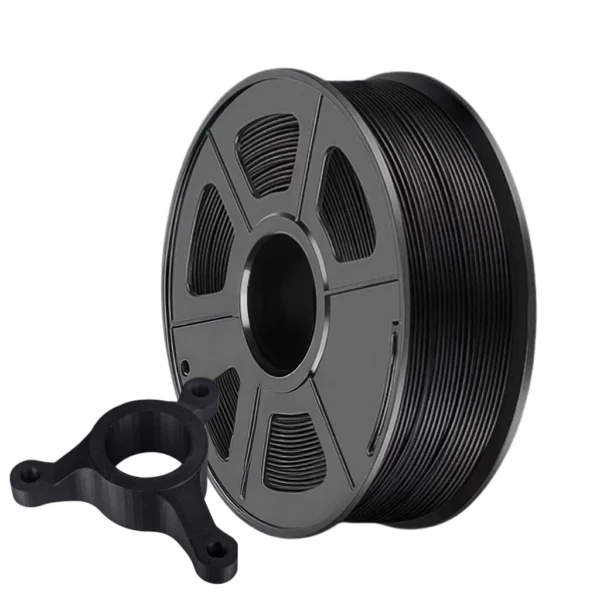

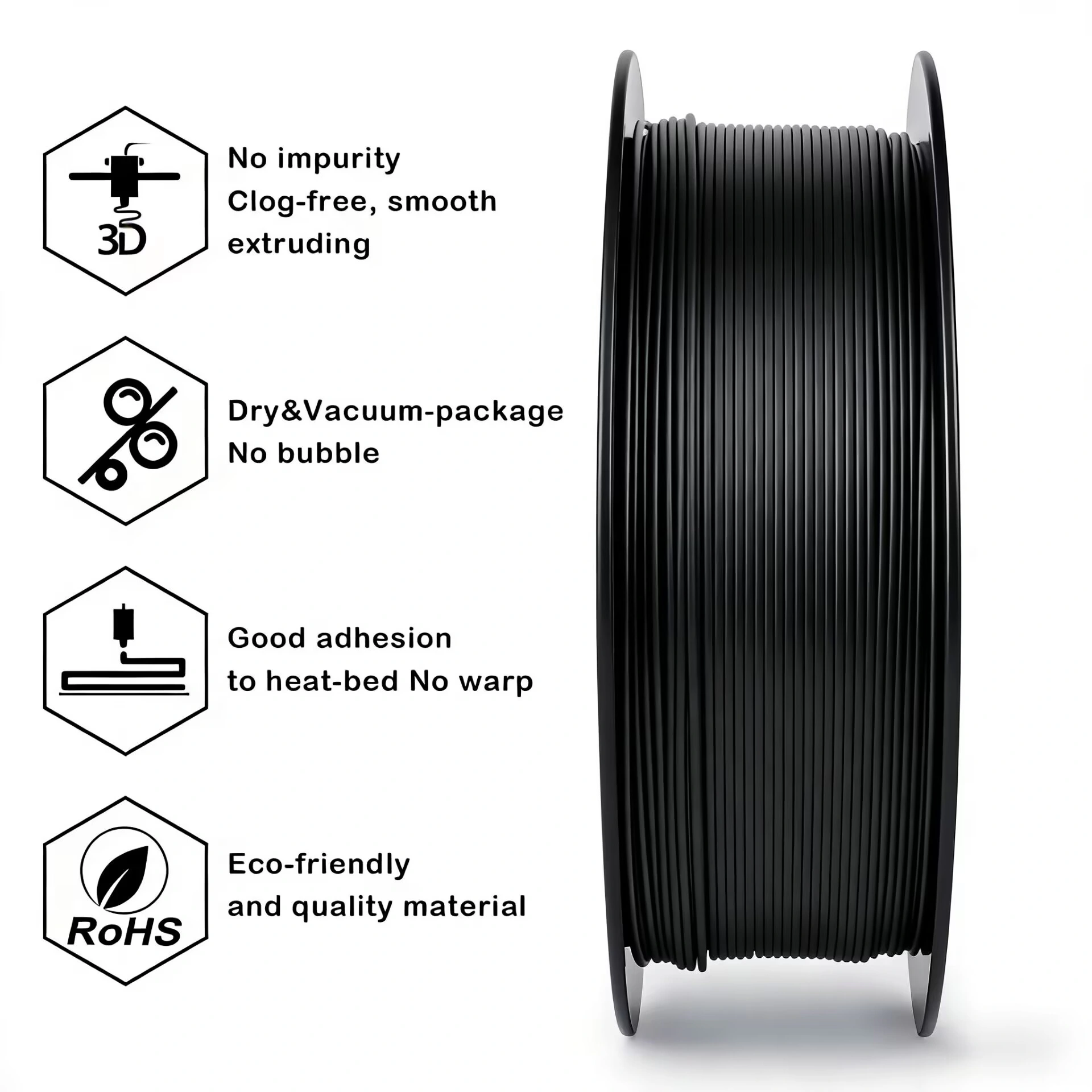
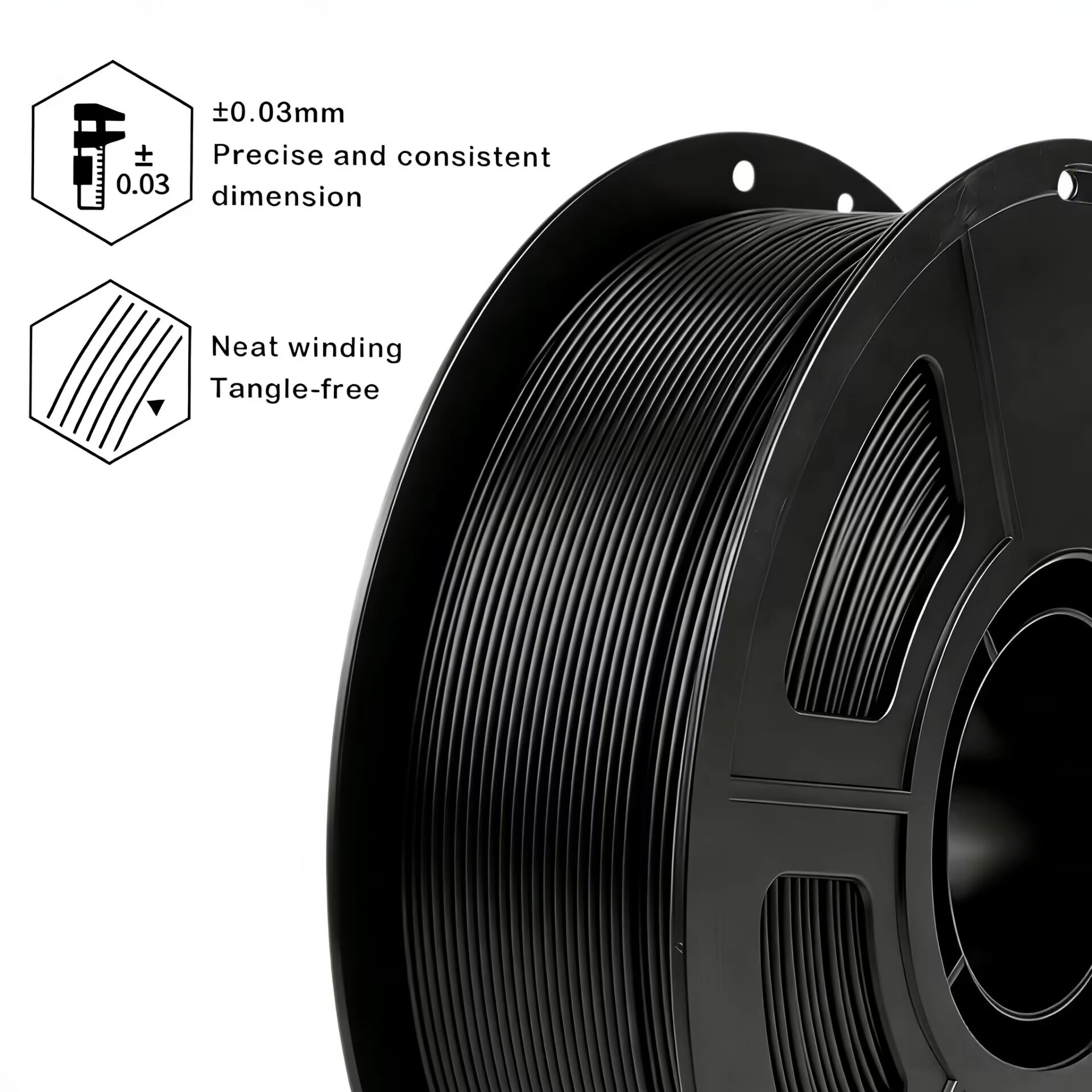
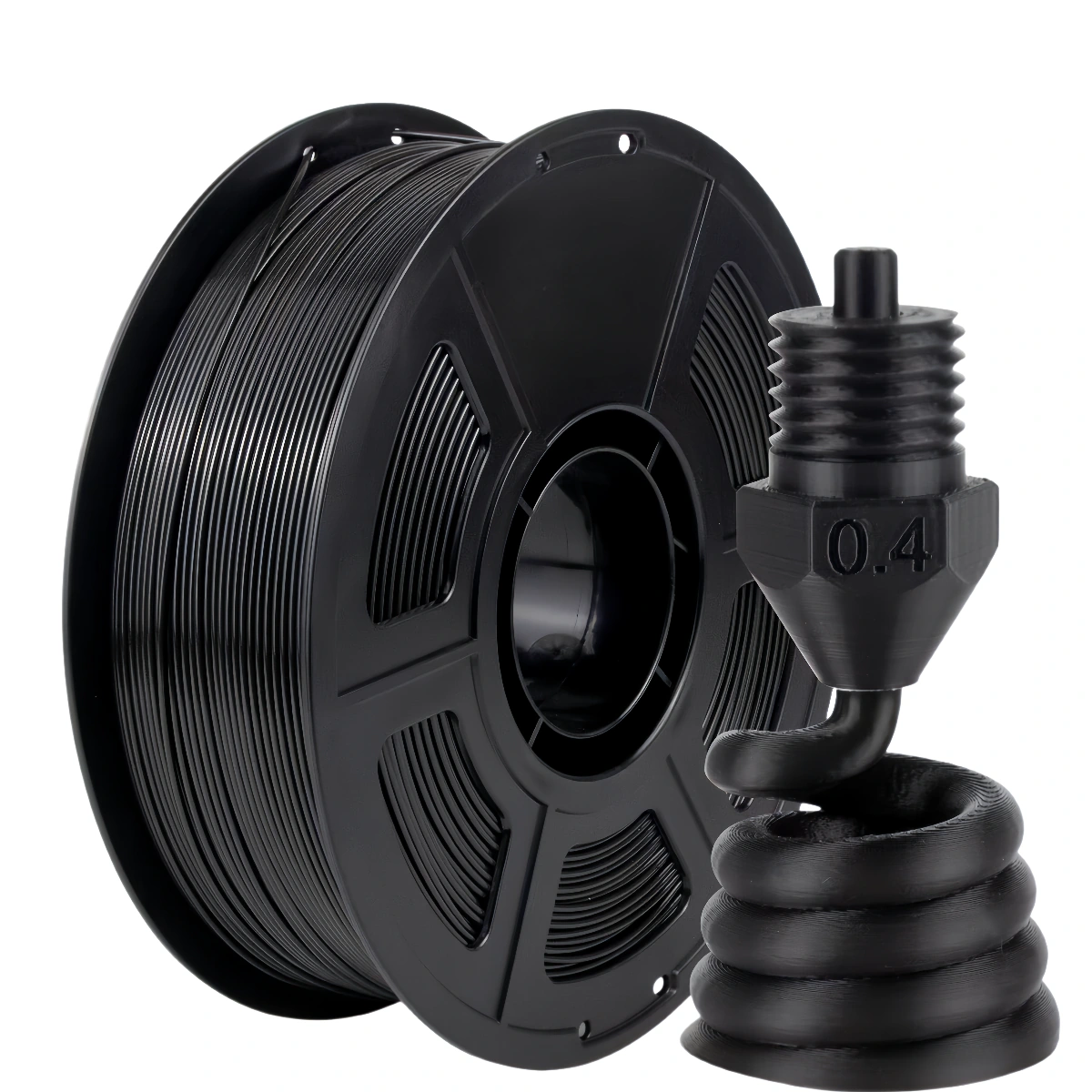
Engineering Series | ESD-Safe Filament | Wholesale Supply | OEM / ODM Support
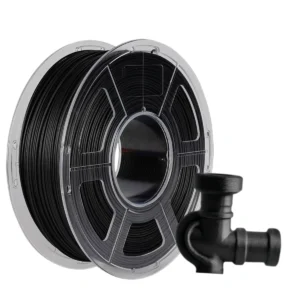
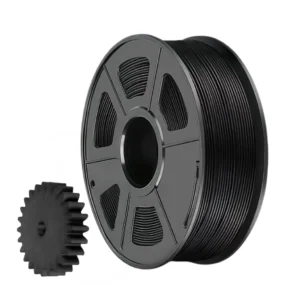
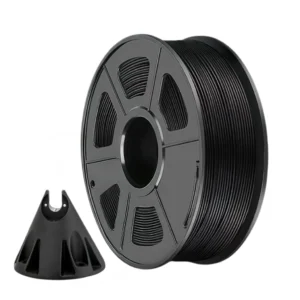
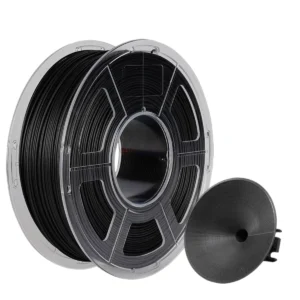
Industrial ESD-Safe ABS Filament 1.75mm 1KG – RoHS Compliant High-Tolerance Filament for Cleanroom & Automation Parts
Professional ABS-ESD filament for distributors, wholesalers, industrial buyers, and OEM/ODM partners requiring electrostatic discharge protection for sensitive electronics manufacturing.
Industrial ESD-Safe ABS is engineered for electronics manufacturing environments where electrostatic discharge protection is critical. The material provides stable surface resistivity of 10⁶–10⁹ Ω/sq for controlled static dissipation, preventing damage to sensitive components during handling and assembly operations. Features stable diameter control, smooth extrusion under recommended settings, and heat resistance up to 96°C HDT.
MaterialABS-ESD
SeriesEngineering Filament
Color EffectBlack Matte
Diameter1.75mm
Tolerance±0.03mm
Net Weight1kg
Gross Weight1.35kg
Nozzle Temp220–240°C
Bed Temp90–100°C
Print Speed40–150 mm/s
ESD Range10⁶–10⁹ Ω/sq
Spool TypePlastic Spool
MOQ: Neutral packaging from 50 rolls; OEM packaging typically 500–1,000 rolls.
Lead Time: Standard 7–15 working days; customized orders typically 15–25 working days.
Product Overview
Industrial ESD-Safe ABS Filament 1.75mm 1KG is a specialized ABS formulation designed for electronics manufacturing environments requiring electrostatic discharge protection. The material provides controlled static dissipation with surface resistivity of 10⁶–10⁹ Ω/sq, preventing electrostatic buildup that could damage sensitive electronic components during assembly, testing, and handling operations.
This ESD-safe filament is engineered for semiconductor manufacturing equipment parts, conveyor system components for electronics handling, cleanroom equipment accessories, and ESD-safe work surface fixtures. With heat deflection temperature of 96°C and glass transition of 103.8°C, it offers reliable thermal performance for production environments. The black matte finish provides professional appearance suitable for industrial and cleanroom applications.
Why This Product Stands Out
Industrial ESD-Safe ABS addresses a critical requirement in electronics manufacturing: preventing electrostatic discharge that can damage sensitive components. Unlike standard ABS, this material provides controlled surface resistivity of 10⁶–10⁹ Ω/sq, ensuring safe static dissipation without being overly conductive. This makes it ideal for jigs, fixtures, and tooling used in PCB assembly, semiconductor processing, and electronics testing environments where both material performance and ESD protection are essential.
Key Selling Points
ESD Protection
Surface resistivity 10⁶–10⁹ Ω/sq for controlled static dissipation.
96°C Heat Resistance
HDT of 96°C @ 0.455 MPa for demanding production environments.
Cleanroom Compatible
Suitable for cleanroom environments and sensitive electronics manufacturing.
Export-Oriented Supply
Supports distributors, industrial buyers, and OEM/ODM partners globally.
RoHS Compliant
Meets EU Directive 2015/863/EU on hazardous substance restrictions.
OEM / ODM Ready
Custom specifications and private-label development support available.
Key Features
| Feature | Practical Buyer Benefit |
|---|---|
| ESD-Safe Formulation | Surface resistivity 10⁶–10⁹ Ω/sq prevents electrostatic damage to sensitive components |
| 1.75mm Standard Diameter | Compatible with most 1.75mm open-material FDM printer ecosystems |
| ±0.03mm Tolerance | Supports consistent feeding and extrusion quality |
| 96°C HDT | Suitable for production environments with elevated temperatures |
| Anti-Static Spool Material | Spool itself contributes to overall ESD-safe handling solution |
| RoHS / CE Certified | Meets international safety and environmental standards |
Balanced Quality and Cost Efficiency
Industrial ESD-Safe ABS provides a practical solution for electronics manufacturing environments that need both ABS performance characteristics and electrostatic discharge protection. Compared to specialty ESD polymers, this material offers familiar ABS printability with the addition of controlled static dissipation properties. This makes it accessible for a wider range of FDM printer configurations while meeting the ESD requirements of semiconductor, PCB assembly, and electronics testing applications.
Why Choose This Product
- ESD protection with surface resistivity 10⁶–10⁹ Ω/sq for safe static dissipation
- Heat deflection temperature of 96°C for demanding production environments
- Glass transition of 103.8°C for thermal stability during processing and use
- Smooth extrusion under recommended print settings
- Suitable for enclosed printers with heated chambers (45–60°C recommended)
- Black matte finish for professional industrial appearance
- Anti-static spool material for complete ESD-safe handling solution
How We Work
1
Requirement Review
2
Specification Confirmation
3
Sample Evaluation
4
Packaging Discussion
5
Production Arrangement
6
Inspection & Shipment
Material Comparison Guide
| Material | ESD Protection | Ease of Printing | Heat Resistance | Typical Use |
|---|---|---|---|---|
| ABS-ESD | ★★★★★ | ★★★★☆ | 96°C HDT | Electronics manufacturing, cleanroom, tooling |
| Standard ABS | Not ESD-safe | ★★★☆☆ | 90–100°C HDT | Functional prototypes, general engineering |
| ABS+ / PLA+ | Not ESD-safe | ★★★★☆ | 95–105°C HDT | Enhanced strength applications |
| PC / PC-ABS | Not ESD-safe | ★★☆☆☆ | 110–130°C HDT | High-temperature engineering |
Technical Specifications
| Product Name | Industrial ESD-Safe ABS Filament 1.75mm 1KG |
|---|---|
| Material | ABS with Electrostatic Discharge Protection (ABS-ESD) |
| Series | Engineering Filament |
| Color / Effect | Black Matte |
| Filament Diameter | 1.75mm (±0.03mm tolerance) |
| Net Weight | 1kg (2.2 lbs) |
| Gross Weight | 1.35kg |
| Density | 1.08 g/cm³ (ISO 1183 / ASTM D792) |
| Melt Flow Rate (220°C / 10kg) | 8–15 g/10min (ISO 1133) |
| Roundness Deviation | ≤0.02mm |
| Spool Type | Plastic spool (anti-static material) |
| Packaging | Vacuum sealed with desiccant |
| Tensile Strength (XY) | 32±3 MPa (ISO 527-2 / ASTM D638) |
| Tensile Modulus (XY) | 1,488 MPa (ISO 527-2 / ASTM D638) |
| Elongation at Break | 3–6% (ISO 527-2 / ASTM D638) |
| Flexural Strength (XY) | 62 MPa (ISO 178 / ASTM D790) |
| Flexural Modulus (XY) | 2,280 MPa (ISO 178 / ASTM D790) |
| Izod Impact Strength (Notched) | 5–8 kJ/m² (ISO 180) |
| Charpy Impact Strength (Notched) | 6–9 kJ/m² (ISO 179-1) |
| Shore D Hardness | 80 (ISO 868 / ASTM D2240) |
| Surface Resistivity | 10⁶–10⁹ Ω/sq (ASTM D257 / IEC 62631) |
| Glass Transition Temperature (Tg) | 103.8°C (ISO 11357-2 / ASTM D3418) |
| HDT @ 0.455 MPa | 96°C (ISO 75-2 / ASTM D648) |
| HDT @ 1.82 MPa | 83°C (ISO 75-2 / ASTM D648) |
| Vicat Softening Temperature | 98°C (ISO 306 / ASTM D1525) |
| Water Absorption (24h) | 0.1–0.3% (ISO 62) |
| Continuous Use Temperature | ≤80°C |
| Printer Compatibility | Most 1.75mm FDM printers with enclosed chamber recommended |
| Typical Applications | Electronic component enclosures, semiconductor equipment parts, conveyor system components, cleanroom fixtures, PCB assembly tooling, ESD-safe work surfaces |
| OEM / ODM | Supported |
| Certifications | RoHS, SDS/MSDS, TDS, CE; SGS on request |
Recommended Print Settings
| Parameter | Recommended Guidance |
|---|---|
| Recommended Nozzle Temperature | 220–240°C |
| Optimal Nozzle Temperature | 230°C |
| Recommended Bed Temperature | 90–100°C |
| Optimal Bed Temperature | 95°C |
| Recommended Print Speed | 40–150 mm/s |
| First Layer Speed | 15–25 mm/s |
| Layer Fan Speed | 0–20% (reduce on first 3 layers) |
| Chamber Temperature | 45–60°C (enclosed printer preferred) |
| Nozzle Material | Hardened steel or tungsten carbide recommended |
| Retraction Distance | 0.5–1.5 mm |
| Retraction Speed | 25–45 mm/s |
| Drying Conditions | 80°C for 4–6 hours (if moisture absorbed) |
| Bed Adhesion | PEI / glass / textured build plate with adhesive |
Print Optimization Guide
| Item | Guidance |
|---|---|
| Best Use Case | Electronics manufacturing jigs, fixtures, enclosures, cleanroom tooling |
| Enclosure Requirement | Enclosed printer with heated chamber (45–60°C) strongly recommended |
| Bed Adhesion | Clean build surface with adhesive; PEI plate recommended for best results |
| Humidity Control | Dry at 80°C for 4–6 hours if exposed to moisture before printing |
| Nozzle Wear | Hardened steel or tungsten carbide nozzle recommended for extended use |
| Warping Prevention | Maintain consistent chamber temperature; reduce layer fan during printing |
Printer Brand Starting Settings
| Printer Brand | Nozzle | Bed | Chamber | Notes |
|---|---|---|---|---|
| Bambu Lab X1 / P1S | 220–240°C | 90–100°C | 45–60°C | Enclosed models; use as starting reference |
| Prusa MK4/MK4S | 220–240°C | 90–100°C | 45–60°C | Enclosure recommended for ABS |
| Creality K1/K1 Max | 220–240°C | 90–100°C | 45–60°C | Enclosed chamber beneficial |
| Anycubic i3 Mega S | 220–240°C | 90–100°C | N/A | Consider enclosure upgrade for ABS |
| Ultimaker S3/S5 | 220–240°C | 90–100°C | 45–60°C | Partly enclosed; optional enclosure and filtration accessories vary by model |
These values are printer-specific starting references only, not guaranteed universal settings. Final results depend on nozzle size, build surface, slicer configuration, and model geometry. Enclosure and chamber heating are strongly recommended for ABS-ESD printing.
Performance Characteristics
| Characteristic | Assessment | Notes |
|---|---|---|
| ESD Protection | ★★★★★ | 10⁶–10⁹ Ω/sq surface resistivity |
| Printability | ★★★★☆ | Requires enclosure and controlled environment |
| Heat Resistance | ★★★★☆ | HDT 96°C for demanding environments |
| Mechanical Strength | ★★★★☆ | 32 MPa tensile strength for functional parts |
| Surface Quality | ★★★★☆ | Good matte finish with proper settings |
| Cleanroom Suitability | ★★★★★ | Designed for electronics manufacturing |
Applications
| Application | Suitability | Notes |
|---|---|---|
| Electronics Enclosures | ★★★★★ | ESD-safe housings for sensitive components |
| Semiconductor Equipment Parts | ★★★★★ | Manufacturing line tooling and fixtures |
| PCB Assembly Fixtures | ★★★★★ | Guides, holders, and handling tools |
| Cleanroom Equipment | ★★★★★ | Accessories and components for controlled environments |
| Conveyor System Components | ★★★★☆ | Material handling for electronics |
Storage Guide
- Store in a cool, dry environment (15–30°C, below 50% RH)
- Reseal after use; keep vacuum-sealed when not in use
- Keep away from direct sunlight and heat sources
- Use desiccant in humid climates to prevent moisture absorption
- Dry at 80°C for 4–6 hours if moisture exposed before printing
OEM / ODM Services
SSSray supports OEM / ODM cooperation for distributors, industrial buyers, and sourcing teams requiring ESD-safe materials. Service options include neutral packaging, custom specifications, custom labels, and project-based private-label support for electronics manufacturing applications.
MOQ Reference: Neutral packaging from 50 rolls; OEM packaging typically 500–1,000 rolls.
Quality Control
- Surface resistivity verification for ESD compliance
- Diameter control management throughout production
- Winding appearance and tension inspection
- Vacuum packaging integrity verification
- Desiccant inclusion check per unit
- Batch consistency follow-up for order matching
Certifications
- RoHS – Restriction of Hazardous Substances (EU Directive 2015/863/EU)
- SDS / MSDS – Safety Data Sheet available
- TDS – Technical Data Sheet available
- CE – European Conformity marking
- SGS test report available on request (fees may apply)
Frequently Asked Questions
What is the MOQ for this product?
Neutral packaging typically starts from 50 rolls. OEM packaging usually ranges from 500 to 1,000 rolls depending on customization scope.
What does “ESD-safe” mean for this ABS filament?
ESD-safe means the material has controlled surface resistivity of 10⁶–10⁹ Ω/sq (ohms per square), which allows safe static dissipation without being overly conductive. This prevents electrostatic buildup that could damage sensitive electronic components during handling, assembly, and testing operations.
What are the ESD specifications of this material?
The material provides surface resistivity of 10⁶–10⁹ Ω/sq measured per ASTM D257 and IEC 62631 standards. This range is considered optimal for ESD protection in electronics manufacturing—it dissipates static charge fast enough to prevent damage while not conducting electricity too readily.
Is an enclosed printer required for ABS-ESD?
An enclosed printer with heated chamber (45–60°C) is strongly recommended for ABS-ESD printing. This helps reduce warping, improves layer adhesion, and maintains consistent printing conditions. Modern enclosed printers such as Bambu Lab X1 and P1S models can provide a more controlled printing environment for this material.
What are the recommended print settings?
Recommended nozzle temperature is 220–240°C (optimal 230°C), and bed temperature is 90–100°C (optimal 95°C). Print speed of 40–150 mm/s is recommended. Layer fan should be 0–20%, reduced on the first 3 layers. Chamber temperature of 45–60°C is beneficial. Hardened steel or tungsten carbide nozzles are recommended due to potential abrasive particles in ESD formulations.
What is the heat resistance of ABS-ESD?
The Heat Deflection Temperature (HDT) is 96°C at 0.455 MPa and 83°C at 1.82 MPa (ISO 75-2 / ASTM D648). The Glass Transition Temperature (Tg) is 103.8°C (ISO 11357-2 / ASTM D3418). Continuous use temperature should not exceed 80°C.
Are sample orders available?
Qualified buyers may apply for sample support based on project needs and review. Typically up to 3 sample rolls are available after initial evaluation.
What is the lead time?
Standard orders are typically 7–15 working days. Customized orders are typically 15–25 working days depending on production arrangement and customization scope.
Looking for a Reliable ESD-Safe ABS Supplier?
Contact SSSray for bulk pricing, sample evaluation, OEM / ODM discussion, and export-oriented supply support for your Industrial ESD-Safe ABS filament needs.
Additional Information
| Color | Black Matte |
|---|---|
| Filament Diameter | 1.75mm |
| Spool Weight | 1kg Net Weight |
| Gross Weight | 1.35kg |
| Material | ABS with Electrostatic Discharge Protection (ABS-ESD) |
| Packaging | Vacuum sealed with desiccant |
| Spool Type | Plastic spool (anti-static material) |
| Standard Tolerance | ±0.03mm |
| Brand | SSSray |
| Product Series | Engineering Filament |
Packaging Gallery

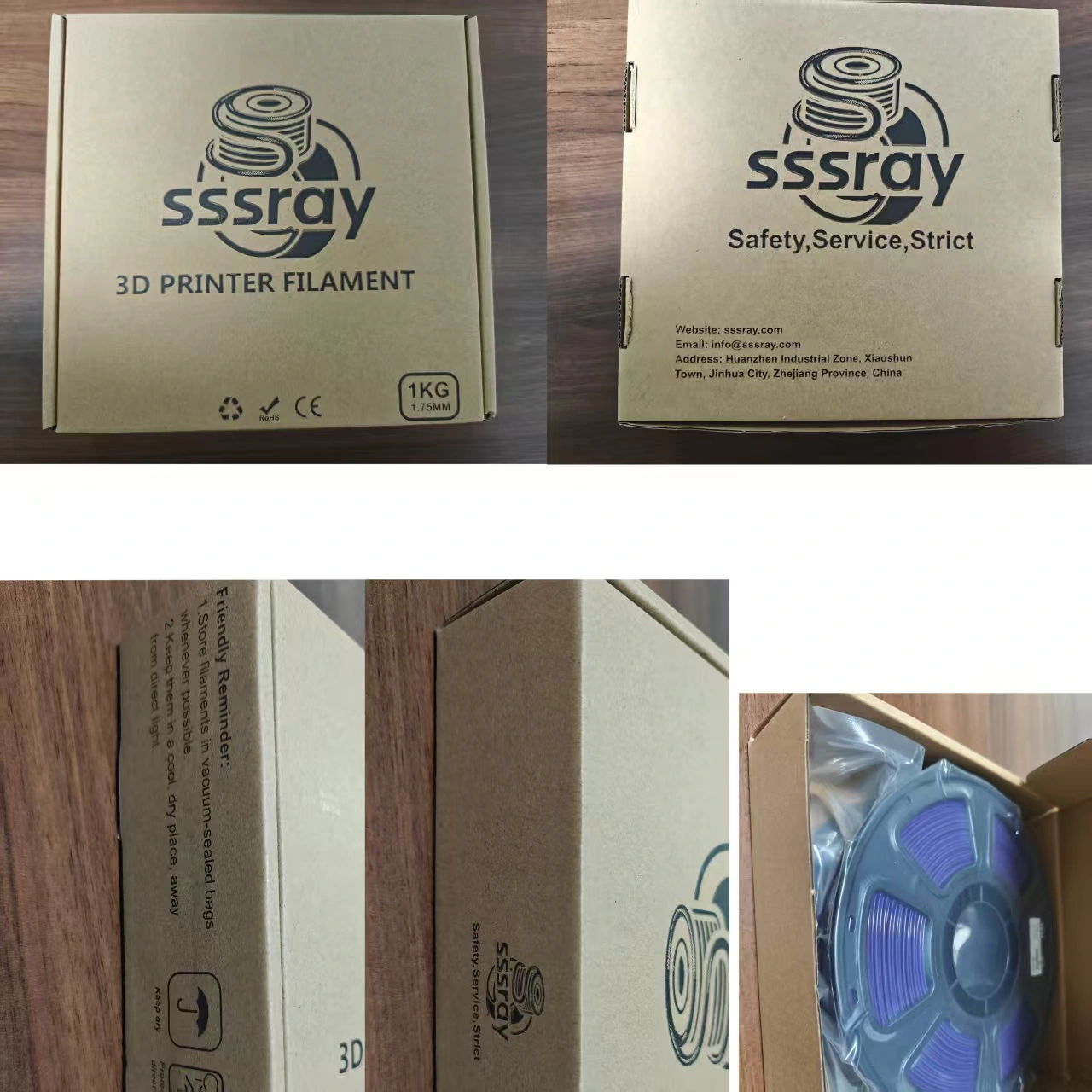

Our Protection Measures
- Vacuum-sealed bag packaging
- Desiccant included in each unit
- Individual box support available
- Export carton packing for bulk orders
- Shipment-ready outer carton preparation
Carton Reference
| Packing Reference | Typical Description |
|---|---|
| Inner Unit | 1 roll / box |
| Master Carton Quantity | Based on order arrangement and packaging format |
| Carton Type | Export standard carton |
| Carton Dimensions | May vary depending on spool style and box format |
| Palletization | Available upon shipment planning |
| Labeling | Neutral / custom OEM labels available |
Carton dimensions and packing quantity may vary depending on packaging style, spool type, and customization requirements.
B2B Supply Terms
| MOQ | Neutral packaging from 50 rolls; OEM packaging typically 500–1,000 rolls |
|---|---|
| Available Colors | Black standard; custom colors available upon request |
| Diameter Options | 1.75mm standard; 2.85mm for selected products or upon request |
| Spool Design | Standard anti-static plastic spool or customized options |
| Sample Orders | Qualified buyers may receive sample support after review |
| Payment Methods | T/T for all orders; PayPal for small trial orders |
| L/C Terms | Considered only for selected large-volume existing customers after evaluation |
| Trade Terms | FOB Ningbo / EXW |
| Standard Payment Terms | 30% deposit, 70% balance before shipment |
| Lead Time | Standard 7–15 working days; customized 15–25 working days |
| Port of Loading | Ningbo, China |
| OEM / ODM | Supported |