Online time
Monday to Friday: 9AM - 8PM
Weekend: 10AM - 5PM

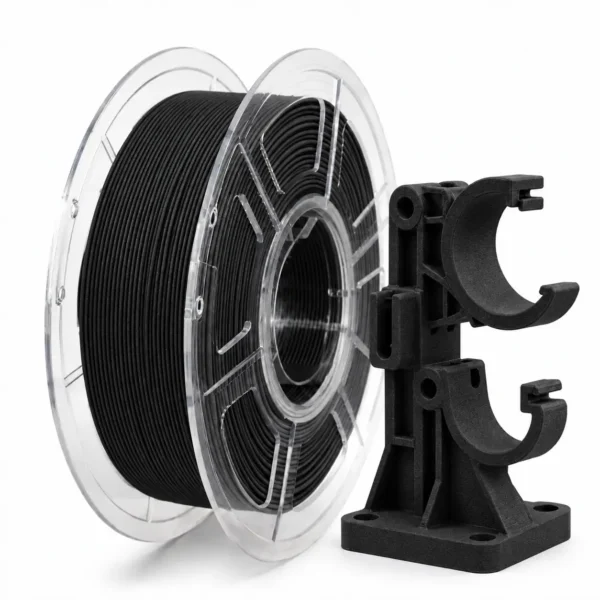
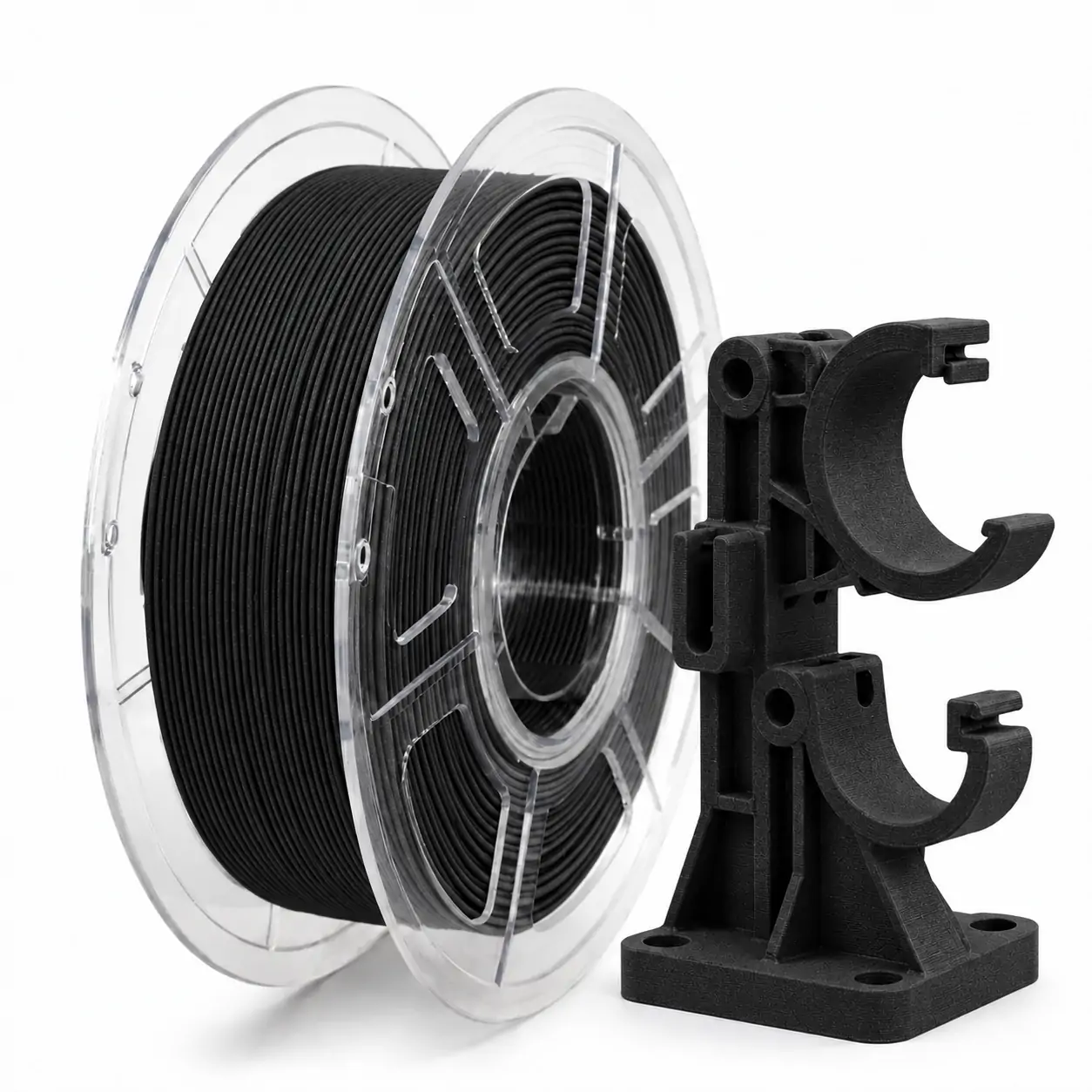
Engineering Composite Series | PPS-GF20 | Wholesale & OEM / ODM
SSSray PPS-GF Glass Fiber Reinforced 3D Printing Filament in Jet Black – černý PPS filament se skelným vláknem for Jigs, Fixtures & Mounting Brackets
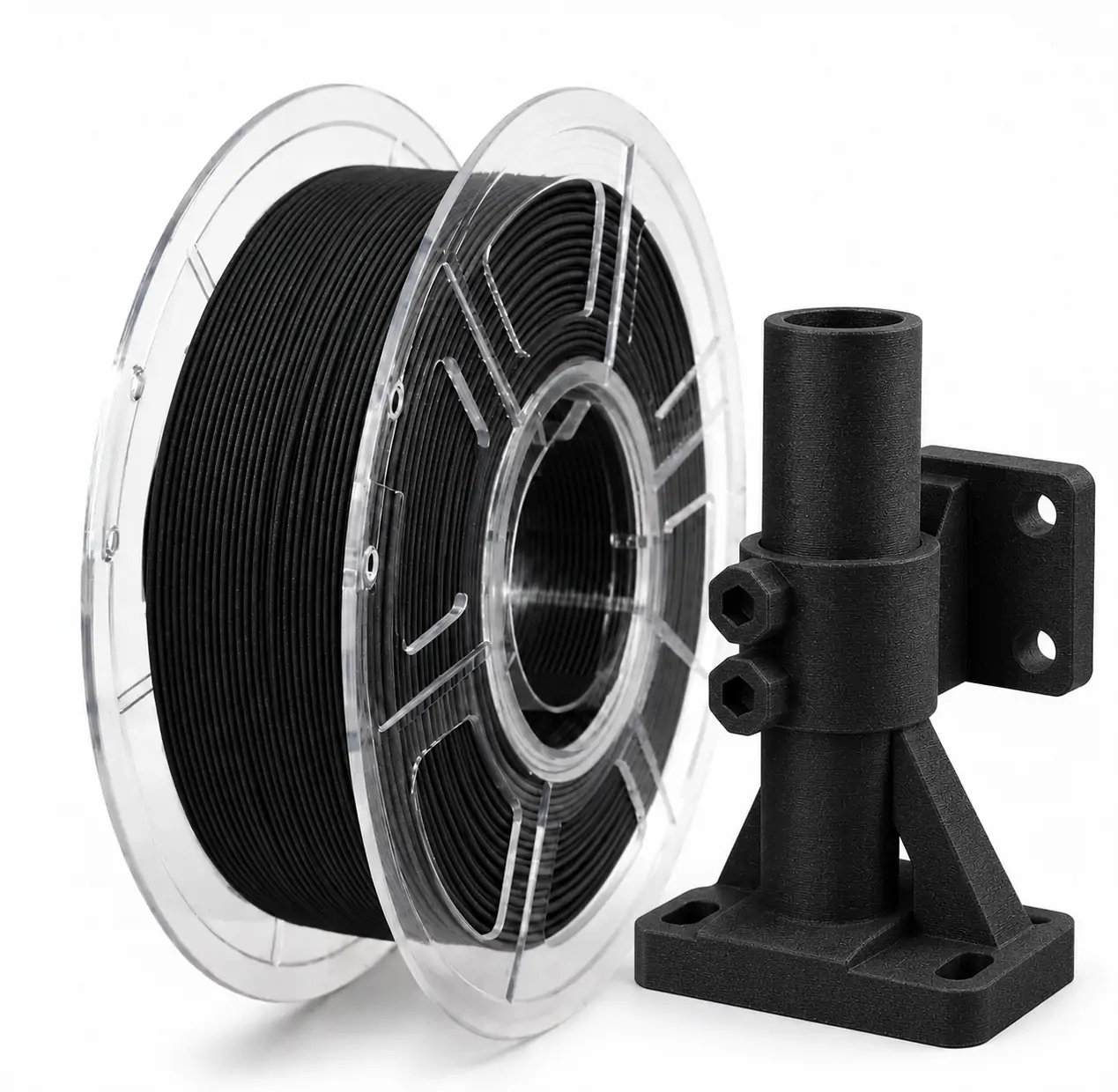
Jet Black PPS-GF20 with 20 wt% glass fiber for industrial jigs, fixtures, clamps, mounting brackets, tooling components, and high-temperature functional parts.
We supply this PPS-GF20 grade for buyers who need the heat and chemical resistance of PPS together with the stiffness and dimensional control of glass-fiber reinforcement. The soft-matte Jet Black surface gives production tooling, brackets, clamps, and machine-side components a clean industrial finish.
MaterialPPS-GF20
Glass Fiber20 wt%
SeriesEngineering Composite
Color EffectJet Black / Soft Matte
Diameter1.75mm
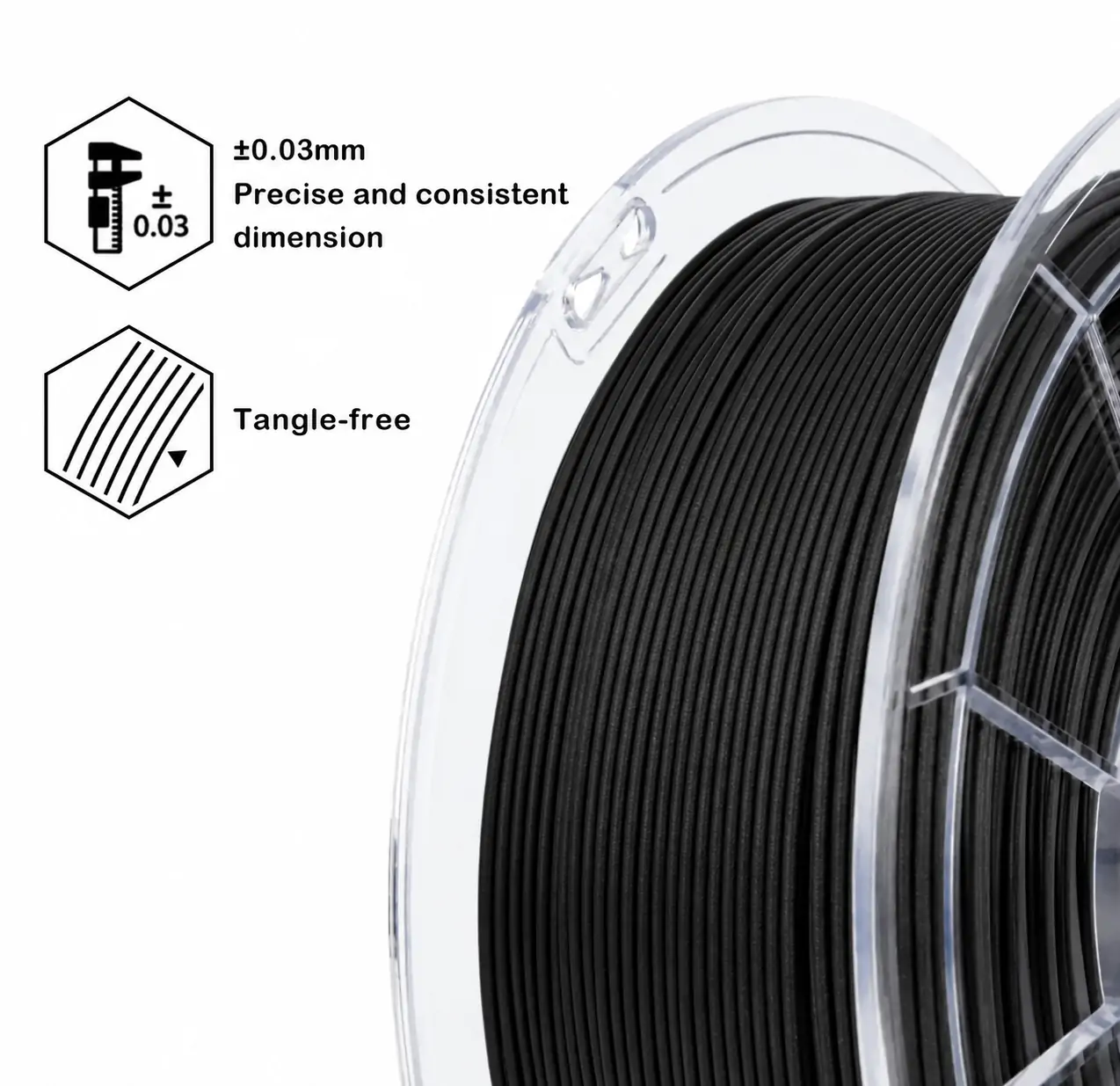
Tolerance±0.03mm
Net Weight1kg
Gross Weight1.3kg
Nozzle Temp330–350°C
Bed Temp80–100°C
Print Speed40–150 mm/s · Up to 250
ChamberActive Heating Not Required
Drying100°C × 8–10h
NozzleWear-Resistant 0.6mm Recommended
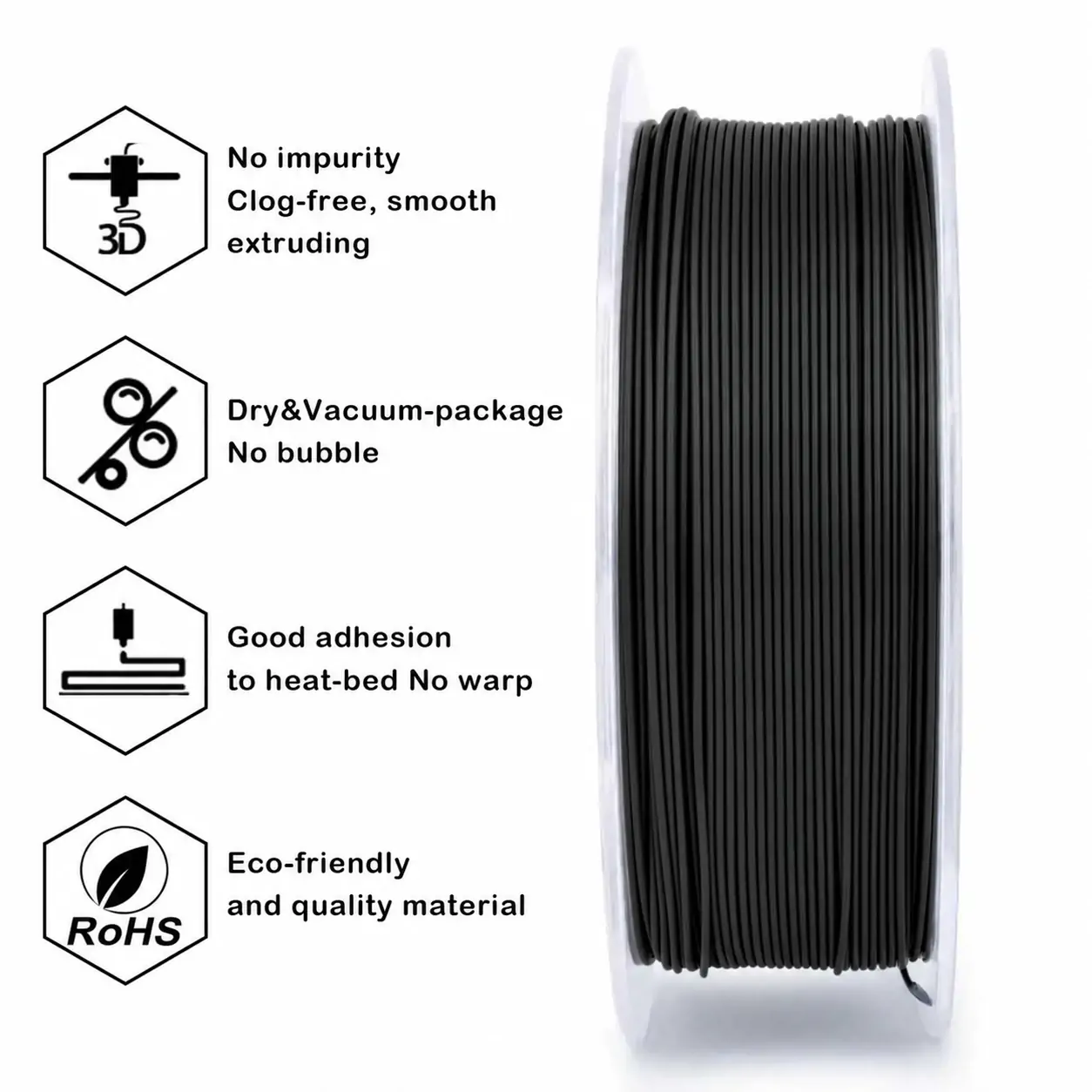
PackagingVacuum + Desiccant
Spool TypePlastic Spool
MOQ: Neutral packaging from 50 rolls; OEM packaging typically 500–1,000 rolls.
Lead Time: Standard 7–15 days; customized orders typically 15–25 days.
Product Overview
SSSray PPS-GF20 Jet Black is a 20 wt% glass-fiber reinforced polyphenylene sulfide filament made for industrial FDM/FFF parts that need stiffness, dimensional stability, heat resistance, chemical resistance, and repeatable fit. The glass fiber helps control shrinkage and improves rigidity compared with unfilled PPS, making this grade particularly useful for jigs, fixtures, clamps, mounting brackets, tooling aids, and production-support components. Jet Black is a deep neutral black with a soft-matte finish and a fine, even fiber texture rather than a glossy, silk, metallic, or carbon-fiber appearance.
We supply PPS-GF20 in a standard 1kg format with ±0.03mm diameter tolerance, vacuum sealing with desiccant, neutral-packaging MOQ from 50 rolls, and OEM/private-label support. For printing, use a high-temperature open-material system capable of at least 310°C together with a wear-resistant nozzle. Active heated chamber control is not required for baseline printing, which makes PPS-GF20 easier to qualify than many buyers expect from a PPS composite.
Why This PPS-GF20 Stands Out
We supply this grade for industrial buyers who need more than a high-temperature material name on the label. PPS-GF20 combines a PPS matrix with 20% glass fiber to give jigs, fixtures, clamps, brackets, and tooling components a useful combination of rigidity, dimensional control, low moisture sensitivity, chemical resistance, and high-temperature capability. Just as important for production teams, the baseline process does not depend on an 80–120°C actively heated chamber. A suitable 310°C+ hotend, wear-resistant nozzle, controlled first layer, dry material, and stable enclosure are enough to establish the starting process on qualified equipment.
Key Selling Points
20% Glass Fiber Reinforcement
Improves rigidity and dimensional control for fixtures, locating parts, brackets, clamps, and repeatable production tooling.
Up to 250 mm/s Process Window
Supports a much wider production-speed window than traditional low-speed PPS workflows when flow, nozzle size, and part quality are properly qualified.
No Active Heated Chamber Required
Baseline PPS-GF20 printing can run without active chamber heating; an enclosure remains useful for large or dimensionally critical parts.
Jet Black Soft-Matte Finish
Deep neutral black with a fine glass-fiber texture for professional-looking tooling, brackets, mounts, and machine-side parts.
Factory-Direct B2B Supply
Neutral packaging, batch-oriented order handling, FOB Ningbo / EXW terms, and qualification samples support distributor and industrial purchasing programs.
OEM / ODM Engineering Programs
We support private labels, branded boxes, custom spool presentation, carton labels, barcodes, and project-based packing specifications.
Key Features
| Feature | Practical Buyer Benefit |
|---|---|
| PPS + 20 wt% Glass Fiber | Gives industrial buyers a rigid, dimensionally stable composite for tooling and functional parts |
| 310–350°C High-Temperature Processing | Fits current high-temperature open-material FDM / FFF platforms |
| 40–150 mm/s Recommended Speed | Provides a productive starting range without locking PPS-GF20 into traditional slow-print assumptions |
| 20–250 mm/s Usable Process Window | Allows higher-throughput qualification on machines with sufficient hotend flow and stable extrusion |
| No Active Heated Chamber Required | Lowers the equipment barrier for PPS-GF20 qualification while still allowing enclosure control for large parts |
| Vacuum Sealed with Desiccant | Protects filament condition during storage and international transport |
Commercial Value for Industrial Programs
We recommend PPS-GF20 when the cost of fixture movement, part replacement, chemical exposure, or heat-related deformation matters more than simply buying the lowest-cost filament per kilogram. For jigs, mounting brackets, clamps, inspection aids, and machine-side components, PPS-GF20 gives industrial buyers a practical step above commodity engineering materials without automatically forcing them into an ultra-high-temperature PEEK-class printing system. For distributors and private-label brands, that creates a higher-value engineering SKU with a clear application story instead of another generic black filament.
How We Work
1
Application Review
2
Specification Confirmation
3
Sample Qualification
4
Packaging & Label Approval
5
Production & Batch QC
6
Inspection & Shipment
Material Comparison Guide
| Material | Reinforcement / Structure | Typical Printing Conditions | Typical Use | Key Difference |
|---|---|---|---|---|
| PPS-GF20 | PPS + 20 wt% glass fiber | 310–350°C hotend, wear-resistant nozzle, fan off; active heated chamber not required | Jigs, fixtures, mounting brackets, clamps, industrial tooling aids | High stiffness and dimensional stability without carbon-fiber electrical conductivity |
| PPS-CF | Carbon-fiber reinforced PPS | High-temperature hotend, dry filament, wear-resistant nozzle, controlled cooling | Stiff structural parts, tooling, engineering components | Carbon-fiber reinforcement for buyers prioritizing CF stiffness and appearance |
| PPA / PA-GF | Glass-fiber reinforced polyamide family | High-temperature nozzle, intensive drying, wear-resistant nozzle | Fixtures, housings, functional mechanical parts | Broad engineering use but generally higher moisture sensitivity than PPS composites |
| Unfilled PPS | Semi-crystalline PPS without fiber reinforcement | High-temperature hotend; stable enclosure beneficial | Chemical-resistant parts, electrical components, specialized prototypes | Lower nozzle abrasion but less reinforcement-driven stiffness and dimensional control |
Technical Specifications
| Product Name | SSSray PPS-GF Glass Fiber Reinforced 3D Printing Filament in Jet Black – černý PPS filament se skelným vláknem for Jigs, Fixtures & Mounting Brackets |
|---|---|
| Material | PPS-GF20: Polyphenylene Sulfide reinforced with 20 wt% glass fiber |
| Material Structure | Semi-crystalline engineering thermoplastic composite for FDM / FFF printing |
| Series | SSSray Engineering Composite Series – PPS-GF Black for Jigs, Fixtures & Tooling Components |
| Color / Effect | Jet Black; deep neutral black, soft matte, fine and even glass-fiber texture |
| Filament Diameter | 1.75mm standard; 2.85mm available on request |
| Tolerance | ±0.03mm |
| Net Weight | 1kg (3kg / 5kg formats available on request) |
| Gross Weight | 1.3kg for standard 1kg spool package |
| Spool Type | Plastic spool |
| Packaging | Vacuum sealed with desiccant |
| Recommended Nozzle | Wear-resistant nozzle; hardened steel 0.6mm recommended for routine production |
| Printer Compatibility | 1.75mm open-material FDM / FFF systems capable of sustained 310°C+ nozzle temperature with a wear-resistant nozzle |
| Typical Applications | Jigs, fixtures, clamps, mounting brackets, tooling aids, inspection fixtures, machine-side supports, and functional industrial components |
| OEM / ODM | Supported |
Recommended Print Settings
| Parameter | Recommended Guidance |
|---|---|
| Recommended Nozzle Temperature | 330–350°C |
| Usable Nozzle Range | 310–350°C |
| Recommended Bed Temperature | 90°C |
| Usable Bed Range | 80–100°C |
| Recommended Print Speed | 40–150 mm/s |
| Usable Speed Range | 20–250 mm/s after flow, layer bonding, and dimensional quality are qualified on the target printer |
| Retraction | Direct drive 1–3mm at 20–40 mm/s; Bowden 2–3mm at 20–40 mm/s as an initial tuning range |
| Layer Height | 0.16–0.28mm for functional parts; 0.20–0.24mm is a practical production starting range |
| Cooling Fan | 0% for normal printing; keep cooling off unless a specific bridge or small feature requires localized tuning |
| Wall Count | 3–5 perimeters for jigs, fixtures, and brackets |
| Infill | 40–60% for engineering parts; increase toward 100% for qualification specimens or geometry that requires it |
| First Layer Speed | 15–25 mm/s |
| Bed Adhesion | Clean PEI or compatible high-temperature build surface with a suitable adhesion / release layer where required |
| Chamber | Active heated chamber is not required for baseline PPS-GF20 printing; use a stable enclosure for larger or dimensionally critical parts |
| Drying | 100°C for 8–10 hours before critical qualification runs or after humidity exposure; keep sealed or print from a dry box during long jobs |
Print Optimization Guide
| Item | Guidance |
|---|---|
| Nozzle Selection | Use hardened steel, tungsten carbide, ruby, or another wear-resistant nozzle; 0.6mm is our preferred production starting point for glass-fiber flow and nozzle life |
| Printer Requirement | Use a high-temperature hotend capable of at least 310°C. Active chamber heating is not required for the baseline profile. |
| Drying Discipline | For critical production, dry at 100°C for 8–10 hours and keep the spool protected from ambient humidity during extended printing |
| First Layer | Establish a slow, uniform first layer and stable bed contact before increasing production speed |
| Cooling | Keep the part-cooling fan off for most PPS-GF20 geometry to protect interlayer bonding |
| Large Fixtures | Use an enclosure and stable internal temperature for large footprints, thick tooling, or dimensionally critical parts; active heating can be used as an additional tuning tool where the printer provides it |
| Dimensional Tuning | Qualify hole size, boss fit, clamp clearance, and mating features on the target printer before releasing the bulk production profile |
| Optional Annealing | 130°C for 10 hours is a practical post-print reference when higher crystallinity, layer adhesion, or heat performance is required |
Printer Brand Starting Settings
| Qualification Platform | Nozzle | Bed | Speed | Starting Setup |
|---|---|---|---|---|
| Bambu Lab H2D | 330–350°C | 80–90°C | 60–150 mm/s | Use a wear-resistant 0.6mm nozzle, fan off, and enclosed build environment. The H2D 350°C hotend covers the PPS-GF20 working range; active chamber heating is not required for the baseline profile. |
| Prusa CORE One Family + HT Hotend | 330–350°C | 80–90°C | 40–120 mm/s | Use the HT Hotend and the PPS-GF-compatible modified H idler. Keep cooling off and start with a controlled first layer before increasing throughput. |
| Creality K2 Plus | 330–350°C | 80–100°C | 40–120 mm/s | K2 Plus provides a 350°C hotend and enclosed platform. Use a wear-resistant nozzle; chamber heating is optional for larger parts. K2 and K2 Pro 300°C-class hotends are not the target for this profile. |
| QIDI Plus4 / Plus5 | 330–350°C | 80–100°C | 50–150 mm/s | 370°C-class hotend and fiber-capable hardware provide sufficient thermal margin. Start without aggressive part cooling; use chamber heat only when geometry benefits from tighter thermal control. |
Start with these settings for PPS-GF20 qualification, then tune speed, flow, first layer, and dimensions around the actual nozzle, part geometry, and production target.
Performance Characteristics
| Characteristic | Material Behavior | Production Reference |
|---|---|---|
| Dimensional Stability | 20% glass-fiber reinforcement helps suppress shrinkage and improve geometry retention | Useful for locating features, clamp geometry, brackets, and repeatable fixture interfaces |
| Rigidity | Glass fiber increases stiffness compared with unfilled PPS | Useful where fixture deflection and bracket stability need tighter control |
| Thermal Behavior | PPS is a high-temperature semi-crystalline engineering polymer | Suitable for high-temperature tooling and functional components once the required service load and temperature are established |
| Chemical Environment | PPS is widely used where resistance to many fuels, oils, solvents, acids, and bases is required | For chemical-process projects, send us the chemical, concentration, temperature, and exposure time so the qualification route can match the application |
| Moisture Sensitivity | Lower moisture sensitivity than many PA-based engineering composites | Dry material still gives the cleanest extrusion and most repeatable surface during high-temperature printing |
| Surface Appearance | Soft matte with fine, diffuse glass-fiber texture | Jet Black gives jigs and machine-side components a consistent industrial appearance |
| Nozzle Abrasion | Glass fiber is abrasive | Use a wear-resistant nozzle for both qualification and production |
Applications
| Application Focus | Practical Notes |
|---|---|
| Assembly Jigs & Fixtures | For locating, holding, positioning, drilling, checking, and repeatable production-support tools |
| Mounting Brackets | Useful for rigid machine-side brackets, sensor mounts, guides, and support structures within the designed load and temperature range |
| Clamps & Cradles | Glass-fiber stiffness supports clamp profiles, pipe cradles, fixture blocks, and components where geometry retention matters |
| Inspection & Gauging Aids | Suitable for custom checking fixtures, nests, positioning blocks, and low-volume dimensional aids |
| Chemical-Process Tooling | Relevant for supports and fixtures exposed to oils, fuels, solvents, and process chemicals after the target exposure condition is confirmed |
| Industrial Maintenance Parts | Useful for low-volume replacement supports, guards, brackets, and production aids where PPS-GF20 matches the operating environment |
Storage Guide
- Keep unopened spools in the original vacuum-sealed package with desiccant until qualification or production use
- After opening, store PPS-GF20 in a sealed dry box; below 20% RH is a strong target for long high-temperature print runs
- Dry at 100°C for 8–10 hours before critical production or after humidity exposure; confirm the plastic spool or drying holder is suitable for the drying temperature
- Keep the filament away from direct sunlight, water, oil, dust, and high-humidity storage areas
- For repeat production, record drying condition together with printer profile and batch identification
OEM / ODM Services
We manufacture PPS-GF20 for distributors, engineering-material suppliers, industrial buyers, and private-label programs. Available project options include neutral packaging, private labels, branded boxes, custom carton marks, spool presentation, barcode / SKU labeling, and customer-specific packing instructions. If you need a custom color or specification, send us the application, annual volume, and target requirements so we can confirm the development route before sampling.
MOQ Reference: Neutral packaging from 50 rolls; OEM packaging typically 500–1,000 rolls. Standard orders are normally 7–15 days; customized programs are typically 15–25 days after specification and artwork approval.
Quality Control
- Diameter control against the agreed ±0.03mm specification
- Winding appearance and spool-condition inspection before packing
- Glass-fiber grade and production-lot identification control
- Moisture-control handling and vacuum-seal / desiccant verification
- Packaging, label, barcode, and carton-mark inspection for OEM / private-label orders
- Batch identification and QC record support for qualified bulk-order programs
Technical & Compliance Documents
We match the document package to the PPS-GF20 SKU and your purchasing requirement. Tell us the destination market, application, required documents, and order scope when requesting a quotation so our sales team can confirm the correct technical and compliance files before the order is released.
- PPS-GF20 TDS for technical evaluation
- SDS / MSDS for material handling and safety documentation
- Applicable market-compliance documents confirmed for the ordered SKU
- Third-party testing available where the report applies to the supplied grade or commissioned batch
- Batch QC records available according to the agreed bulk-order inspection scope
Frequently Asked Questions
What is the MOQ for this PPS-GF20 filament?
Neutral packaging starts from 50 rolls. OEM / private-label packaging typically starts from 500–1,000 rolls depending on label, box, spool, and carton customization.
Can I print PPS-GF20 on a standard 300°C desktop printer?
For normal production, use a high-temperature system that can sustain at least 310°C. The practical working range is 310–350°C, so a 300°C-limited hotend does not give enough thermal margin for the recommended PPS-GF20 process.
Does PPS-GF20 require an actively heated chamber?
No. Active chamber heating is not required for the baseline PPS-GF20 profile. An enclosed and thermally stable build environment is still useful, especially for larger fixtures, thick sections, and dimensionally critical parts.
What nozzle should I use?
Use a wear-resistant nozzle because 20% glass fiber is abrasive. We recommend a hardened steel 0.6mm nozzle as the production starting point; tungsten carbide, ruby, and other suitable wear-resistant nozzle materials can also be used.
How fast can PPS-GF20 print?
Start production qualification at 40–150 mm/s. On high-flow, high-temperature systems the material can be tuned within a wider 20–250 mm/s process window after extrusion flow, layer bonding, surface quality, and dimensions are confirmed.
How should PPS-GF20 be dried?
For critical qualification or after humidity exposure, dry at 100°C for 8–10 hours and keep the spool sealed or in a dry box during long printing. Confirm that the spool or drying holder is rated for the selected drying temperature.
Can SSSray provide OEM or private-label packaging?
Yes. We support custom labels, branded boxes, carton marks, barcode / SKU labeling, spool presentation, and project-specific packing instructions for qualified OEM / ODM programs.
Are qualification samples available?
Verified B2B buyers can apply for up to 3 complimentary sample spools for material qualification. Send us your printer, application, planned order, destination, and test objective so we can prepare the correct sample route.
Need PPS-GF20 for Industrial Jigs, Fixtures or Mounting Parts?
Send us your printer model, application, annual volume, packaging requirement, and qualification target. We will match the PPS-GF20 sample, starting profile, commercial terms, and OEM / ODM route to your project.