Online time
Monday to Friday: 9AM - 8PM
Weekend: 10AM - 5PM



SSSray PLA-CF Carbon Fiber Series | Wholesale Supply | OEM / ODM Support
Carbon Fiber PLA 3D Printer Filament 1.75mm by SSSray, PLA-CF Slate Gray – filamento PLA com fibra de carbono cinza – for Topology-Optimized Brackets & Vented Enclosures
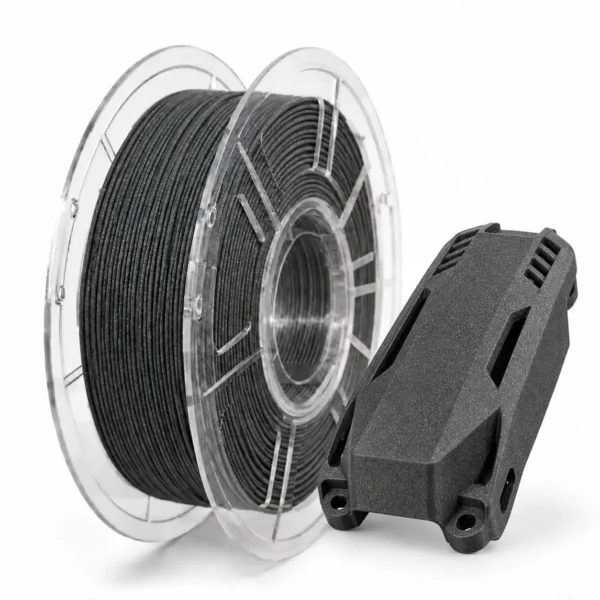
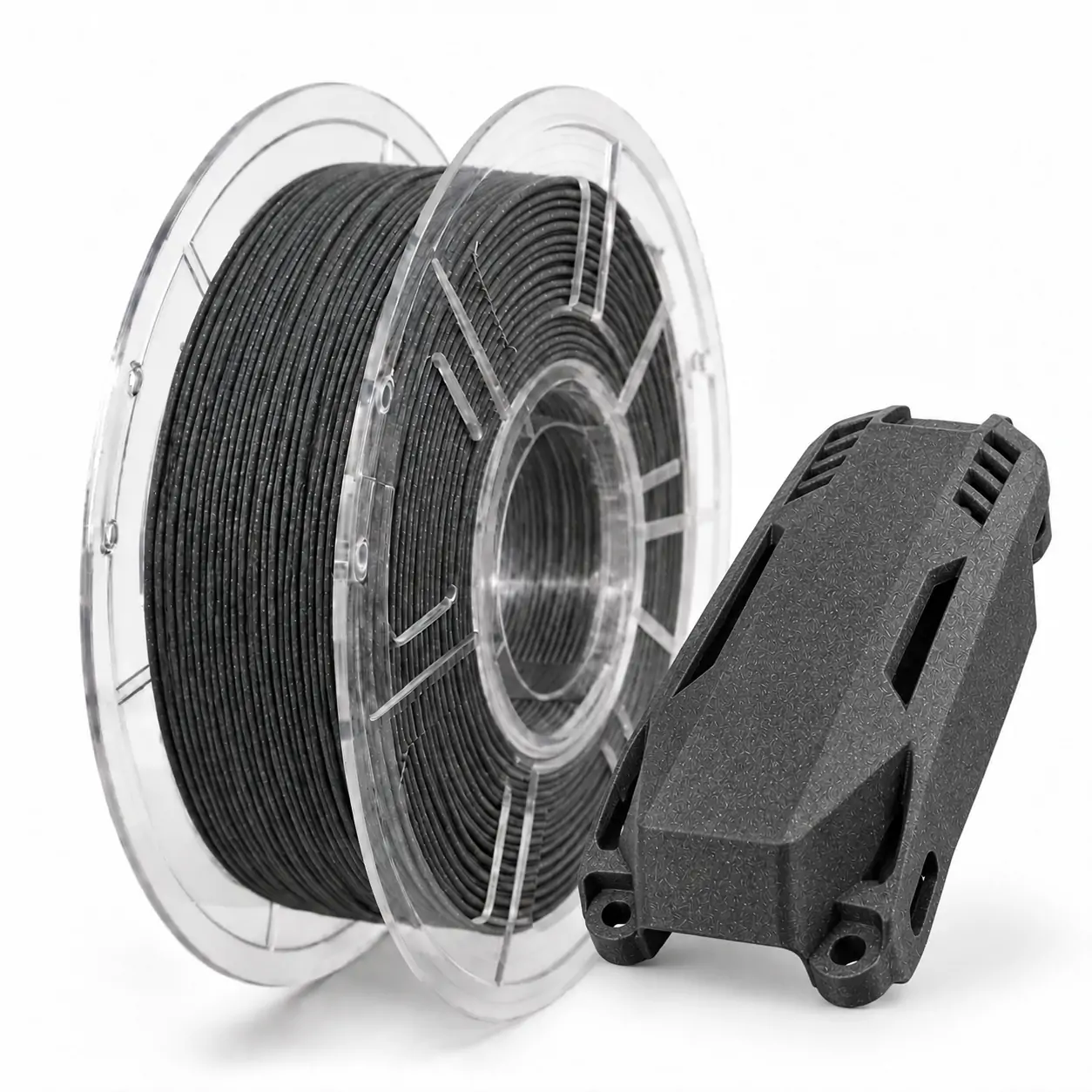
Slate gray carbon-fiber reinforced PLA for rigid, matte FDM parts, wholesale programs, private label projects, and OEM / ODM supply.
Built for buyers who want a darker industrial gray with a low-reflection fibrous finish, this PLA-CF combines stable ±0.03mm diameter control with stiff part behavior, clean visual definition, and practical printing on open-material FDM platforms. Use a hardened nozzle for production printing.
MaterialPLA-CF
SeriesSSSray PLA-CF Carbon Fiber Series
Color EffectSlate Gray Matte
Diameter1.75mm
Tolerance±0.03mm
Net Weight1kg
Gross Weight1.3kg
Nozzle Temp210–230°C
Bed Temp45–60°C
Print Speed60–150 mm/s
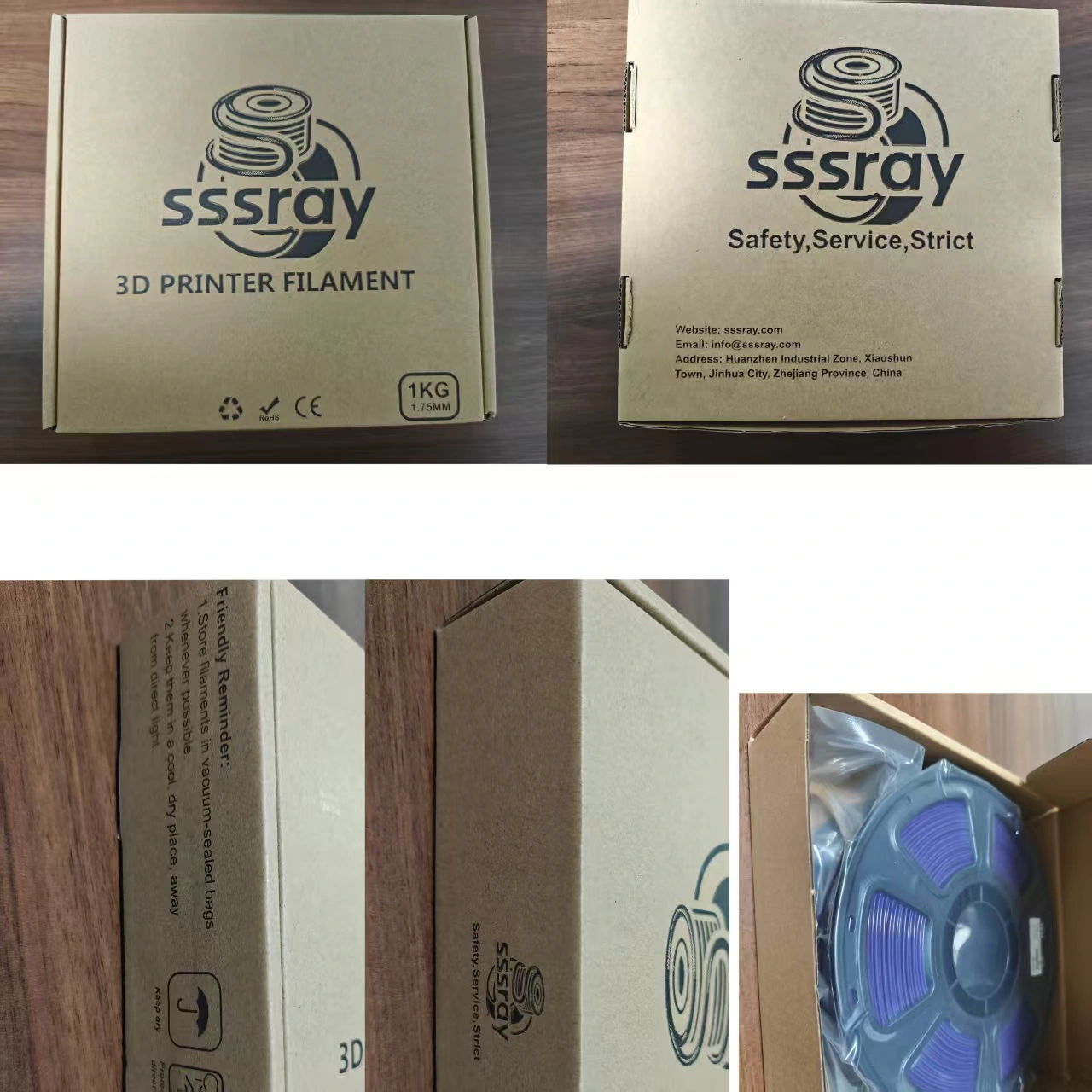
PackagingVacuum + Desiccant
Spool TypePlastic Spool
MOQ: Neutral packaging from 50 rolls; OEM packaging typically 500–1,000 rolls.
Lead Time: Standard 7–15 days; customized orders typically 15–25 days.
Product Overview
SSSray Slate Gray PLA-CF is a carbon-fiber reinforced PLA filament developed for FDM/FFF parts where stiffness, controlled geometry, and a technical matte finish matter more than gloss or decorative color effects. The cool charcoal-gray tone sits slightly lighter than black, with fine carbon-fiber flecks that create a low-reflection, evenly fibrous surface on printed parts. It is especially suited to topology-optimized brackets, vented protective enclosures, fixtures, covers, structural prototypes, and industrial-looking housings that need clean edge definition and restrained visual texture.
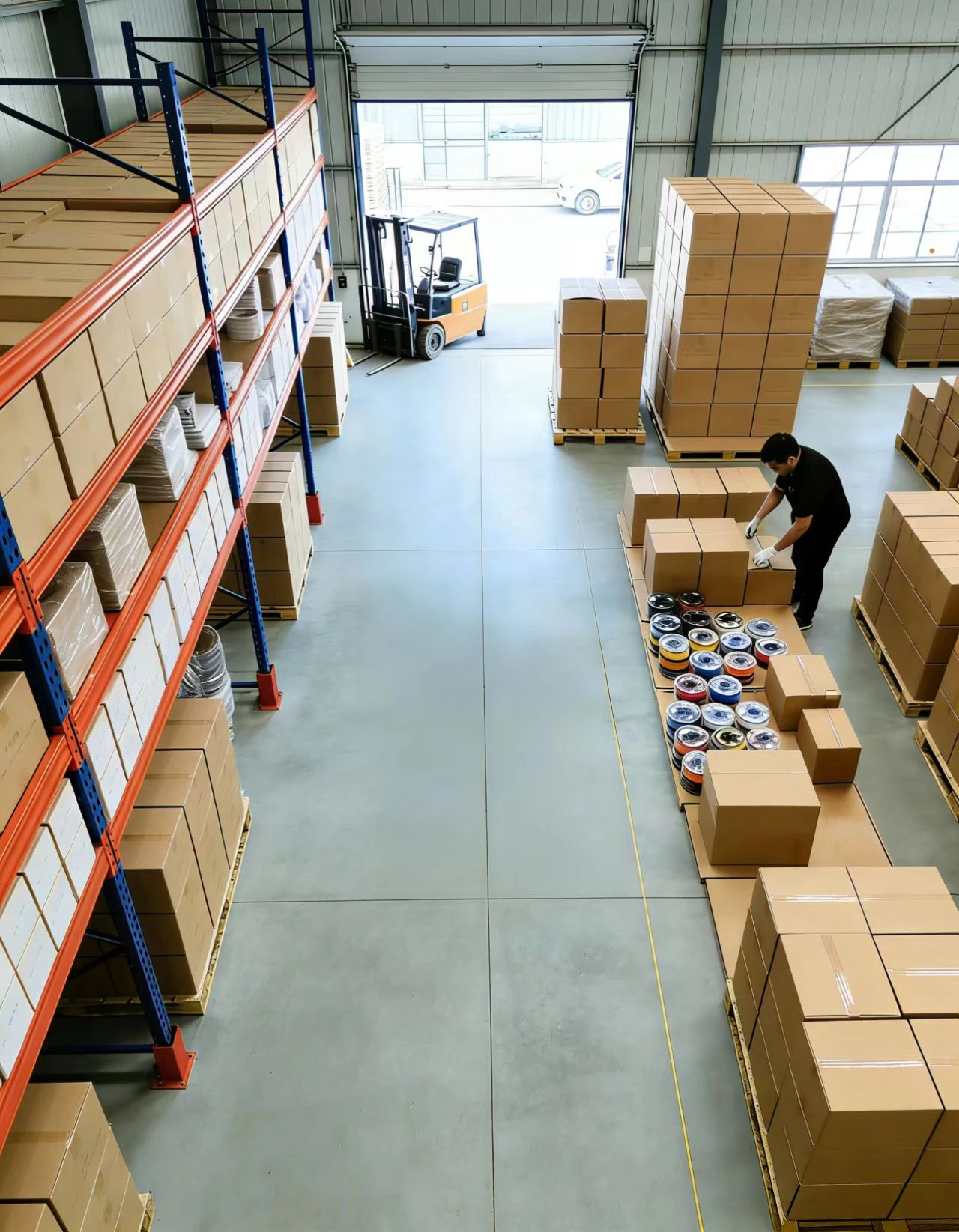
For wholesale and private-label programs, we supply the material in a standard 1kg format with ±0.03mm diameter tolerance, plastic spool, vacuum-sealed packaging with desiccant, neutral-packaging orders from 50 rolls, and OEM packaging programs typically from 500–1,000 rolls. For production use, a hardened nozzle is strongly recommended because carbon-fiber-filled filament is abrasive.
Key Selling Points
Stable Diameter Control
±0.03mm diameter tolerance supports steady feeding and repeatable extrusion across production-oriented print jobs.
Stiff Carbon-Fiber Fill
Chopped carbon fiber increases the rigid, dimensionally controlled feel expected from PLA-CF functional parts.
Slate Gray Matte Finish
Cool charcoal-gray color with fine fiber speckle gives brackets and enclosures a restrained industrial appearance.
Clean Geometry Definition
Low-reflection surfaces help ribs, vents, cutouts, and topology-optimized forms remain visually easy to inspect.
Wholesale-Ready Format
1kg plastic spool, vacuum bag, and desiccant fit standard distributor and private-label supply programs.
OEM / ODM Support
Custom labels, branded boxes, color matching, spool options, and project-based private-label programs are available.
Balanced Quality and Cost Efficiency
Slate Gray PLA-CF gives distributors, print farms, education suppliers, and private-label programs a rigid carbon-fiber PLA option that remains practical on standard PLA-class FDM equipment. The matte fibrous finish, stable feeding window, and accessible processing requirements make it suitable for functional prototypes, engineering sample kits, brackets, enclosures, and scalable OEM supply without the higher chamber-temperature requirements associated with many PA-CF or high-temperature polymers.
How We Work
1
Application & Volume Review2
Color & Specification Confirmation3
Sample Qualification4
Label & Packaging Approval5
Production & Batch QC6
Final Inspection & ShipmentMaterial Comparison Guide
| Material | Surface / Part Behavior | Typical Printing Condition | Nozzle Requirement | Typical Use |
|---|---|---|---|---|
| PLA-CF | Rigid feel, matte fibrous finish, low-reflection surface | PLA-class temperatures; open printer generally suitable | Hardened ≥0.4mm; 0.6mm preferred for lower clog risk | Rigid brackets, jigs, fixtures, vented enclosures, structural prototypes |
| Standard PLA | Smoother non-fiber finish; easier fine-detail printing | Low-temperature, low-warping workflow | Standard brass or wear-resistant nozzle | Models, prototypes, educational and general-purpose parts |
| PETG-CF | Matte composite finish with a more ductile PETG base | Higher nozzle and bed temperatures than PLA-CF | Hardened nozzle recommended | Functional housings, brackets, fixtures, parts needing more ductility |
| PA-CF | Engineering composite with higher temperature/toughness potential, formulation dependent | Higher print temperature; strict drying and moisture control | Hardened nozzle required | Engineering fixtures, machine components, demanding functional parts |
Technical Specifications
| Product Name | Carbon Fiber PLA 3D Printer Filament 1.75mm by SSSray, PLA-CF Slate Gray – filamento PLA com fibra de carbono cinza – for Topology-Optimized Brackets & Vented Enclosures |
|---|---|
| Material | PLA-CF (Polylactic Acid base with chopped carbon fiber) |
| Series | SSSray PLA-CF Carbon Fiber Series |
| Color / Effect | Slate Gray; dark cool charcoal gray, slightly lighter than black, matte and low-reflection with fine carbon-fiber flecks |
| Filament Diameter | 1.75mm standard; 2.85mm available upon request for qualified projects |
| Tolerance | ±0.03mm |
| Net Weight | 1kg standard; 3kg / 5kg options available upon request |
| Gross Weight | 1.3kg for standard 1kg spool pack |
| Spool Type | Plastic spool |
| Packaging | Vacuum sealed with desiccant |
| Recommended Nozzle | Wear-resistant hardened steel / tungsten carbide / ruby; ≥0.4mm, with 0.6mm preferred for lower clog risk |
| Printer Compatibility | Most open-material 1.75mm FDM/FFF printers capable of PLA temperatures and suitable for abrasive filament |
| Typical Applications | Topology-optimized brackets, vented enclosures, protective covers, jigs, fixtures, rigid prototypes, technical housings |
| OEM / ODM | Supported |
Recommended Print Settings
| Parameter | Recommended Guidance |
|---|---|
| Recommended Nozzle Temperature | 210–230°C |
| Usable Nozzle Range | 190–245°C after flow, speed, and surface-finish tuning |
| Recommended Bed Temperature | 45–60°C |
| Usable Bed Range | 35–65°C depending on build plate and first-layer calibration |
| Recommended Print Speed | 60–150 mm/s |
| Usable Speed Range | 40–200 mm/s with adequate hotend flow and temperature tuning |
| Nozzle Diameter | ≥0.4mm hardened nozzle; 0.6mm preferred for lower clog risk |
| Layer Height | 0.20–0.28mm recommended for 0.4–0.6mm nozzles |
| Cooling Fan | 50–100% after the first layers; 0–30% on first layer |
| Direct-Drive Retraction | 0.8–1.2mm at 30–40 mm/s starting point |
| Bowden Retraction | 3–5mm at 25–35 mm/s starting point; tune for tube length and hotend |
| Wall Count | 3–5 perimeters for rigid functional parts |
| Infill | 20–30% prototypes / 40–60% higher-demand rigid parts |
| First Layer Speed | 20–30 mm/s |
| Bed Adhesion | Clean PEI / textured PEI / glass with suitable release or adhesion layer as required |
| Drying | 55°C for 6–8 hours when moisture exposure is suspected; store sealed with desiccant after opening |
Print Optimization Guide
| Item | Guidance |
|---|---|
| Nozzle Wear Control | Use a hardened or other wear-resistant nozzle for regular PLA-CF production; brass wears quickly with carbon fiber |
| Clog Risk Reduction | Keep nozzle diameter at 0.4mm minimum; use 0.6mm when long runs and lower restriction matter more than fine detail |
| Slate Gray Surface Quality | Use moderate outer-wall speed and stable cooling to keep the cool charcoal tone even and the matte fiber texture consistent |
| Topology-Optimized Brackets | Use 3–5 walls and orient major loads along continuous extrusion paths where the design permits |
| Vented Enclosures | Reduce outer-wall speed around thin ribs, vents, and screw features when edge definition is the priority |
| Moisture Control | Reseal the spool promptly after printing; dry before production if popping, rough extrusion, or excessive stringing appears |
| Temperature at Higher Speeds | Increase nozzle temperature progressively when raising speed; avoid using speed alone as the production target |
Printer Brand Starting Settings
| Printer Brand / Platform | Nozzle | Bed | Speed | Starting Notes |
|---|---|---|---|---|
| Bambu Lab X1 / P1 / A1 Series | 215–230°C | 50–60°C | 80–150 mm/s | Use a hardened nozzle; increase temperature before pushing toward higher flow rates |
| Prusa MK4 / CORE One | 210–225°C | 50–60°C | 50–90 mm/s | Use hardened ≥0.4mm nozzle; 0.6mm is preferred for lower clog risk |
| Creality K1 / K1 Max | 215–230°C | 50–60°C | 80–150 mm/s | Start below maximum machine speed and calibrate flow before acceleration |
| Anycubic Kobra Series | 210–225°C | 50–60°C | 50–100 mm/s | Use wear-resistant nozzle and verify first-layer adhesion on the installed build plate |
| ELEGOO Neptune Series | 210–225°C | 50–60°C | 50–100 mm/s | Use hardened nozzle and tune retraction for the installed extruder path |
Start with these production settings, then fine-tune for nozzle material and size, hotend flow capacity, build surface, slicer profile, and part geometry.
Performance Characteristics
| Characteristic | PLA-CF Behavior | Production Reference |
|---|---|---|
| Surface Appearance | Matte, low-reflection, fine fibrous texture | Useful where layer lines and glare should be visually reduced |
| Rigidity | Higher rigid feel than unfilled PLA is typical for chopped-CF formulations | Useful for brackets, fixtures, covers, and dimensional prototypes |
| Warping Tendency | Generally low when first-layer adhesion and cooling are controlled | Open-printer workflows are practical for many parts |
| Abrasiveness | High relative to unfilled PLA | Use hardened or other wear-resistant nozzle for repeated printing |
| Heat Resistance | PLA-CF retains the heat-resistance limits of its PLA base and is not intended for high-temperature service | Use it where the required service temperature stays within the qualified range for the printed part |
| Moisture Sensitivity | Lower than nylon-CF but dry storage still improves extrusion consistency | Vacuum seal with desiccant and reseal after opening |
Applications
| Application Focus | Practical Notes |
|---|---|
| Topology-Optimized Brackets | Matte fiber texture and rigid part behavior suit lattice, ribbed, and weight-reduced bracket geometries |
| Vented Protective Enclosures | Slate gray keeps vents, ribs, screw bosses, and panel geometry visible without a glossy surface |
| Jigs & Fixtures | Useful for dimensional prototypes, assembly aids, and low-temperature shop-floor tooling |
| Machine Guards & Covers | Suitable for non-high-temperature protective covers where stiffness and a technical appearance are valued |
| Technical Prototypes | Good fit for design review models that need a carbon-fiber look and more rigid handling than standard PLA |
| Retail / Private-Label Composite Lines | Slate Gray adds a differentiated neutral SKU alongside common black PLA-CF offerings |
Storage Guide
- Keep unopened spools in the original vacuum-sealed bag with desiccant until use
- After opening, store in a sealed dry box or resealable barrier bag with fresh desiccant
- Keep away from direct sunlight, heat sources, and prolonged high-humidity exposure
- Dry at 55°C for 6–8 hours when moisture-related popping, rough extrusion, or stringing is observed
- Allow a dried spool to cool in a dry environment before resealing for storage
OEM / ODM Services
We support distributors, wholesalers, importers, private-label brands, education suppliers, and industrial buyers with scalable PLA-CF programs. Available project options include neutral packaging, custom labels, branded retail boxes, barcode and market-language labeling, custom color matching, spool-format discussion, mixed-SKU planning, and private-label product-line development.
MOQ Reference: Neutral packaging from 50 rolls; OEM packaging typically 500–1,000 rolls. Standard lead time is 7–15 days, while customized projects are typically 15–25 days after specification and artwork confirmation.
Quality Control
- Diameter and ovality checks against the confirmed ±0.03mm specification
- Winding appearance and cross-over inspection before final packing
- Color and surface appearance comparison for Slate Gray batch consistency
- Extrusion check using a wear-resistant nozzle and defined PLA-CF process window
- Vacuum-seal and desiccant inclusion inspection before carton packing
- Final label, quantity, packaging, and shipment-readiness review against the approved order specification
Compliance & Technical Documents
- We confirm SKU-specific TDS / SDS availability against the final formulation and order specification
- We provide RoHS, REACH, CE, SGS, or other compliance documents when they are available and applicable to the confirmed SKU or formulation
- For destination-market or customer-specific documentation requirements, include the required standard in the RFQ before production
- We match available technical documents to the confirmed color, diameter, packaging, labeling, and batch requirements
Frequently Asked Questions
What is the MOQ for Slate Gray PLA-CF?
Neutral packaging starts from 50 rolls. OEM packaging typically starts from 500–1,000 rolls depending on label, box, spool, color, and project requirements.
Why should I use a hardened nozzle with PLA-CF?
Chopped carbon fiber is abrasive and accelerates wear on standard brass nozzles. For repeatable production, use hardened steel, tungsten carbide, ruby, or another wear-resistant nozzle. A 0.4mm nozzle is the practical minimum, while 0.6mm is preferred when lower clog risk matters more than fine detail.
What is different about the Slate Gray color?
Slate Gray is a dark cool charcoal gray that sits slightly lighter than black. It has a matte, low-reflection surface with fine carbon-fiber flecks, helping vents, ribs, edges, and topology-optimized geometry remain visually defined.
What applications fit this PLA-CF best?
It is designed for rigid brackets, vented enclosures, protective covers, jigs, fixtures, technical prototypes, and industrial-looking housings. Because the base polymer is PLA, this material is intended for low-to-moderate temperature applications rather than high-temperature service. Confirm suitability against the actual service temperature of the printed part.
Can SSSray provide OEM or private-label packaging?
Yes. We support custom labels, branded boxes, barcode and language labeling, custom color programs, spool-format discussion, and private-label product-line development.
Are samples available for B2B qualification?
Verified B2B buyers can apply for up to 3 complimentary spools for qualification based on the project and requested specification.
What print settings should I start with?
Start around 210–230°C nozzle temperature, 45–60°C bed temperature, and 60–150 mm/s. Use a hardened nozzle and tune temperature upward before increasing flow and speed.
What is the standard lead time?
Standard orders are typically 7–15 days. Customized OEM / ODM orders are typically 15–25 days after the required specifications and packaging details are confirmed.
Need a Slate Gray PLA-CF Supply Program?
Build a differentiated PLA-CF line with a cool Slate Gray matte finish, production-oriented print guidance, and flexible B2B supply terms. Contact SSSray for bulk pricing, sample qualification, private-label packaging, and OEM / ODM project review.