Online time
Monday to Friday: 9AM - 8PM
Weekend: 10AM - 5PM


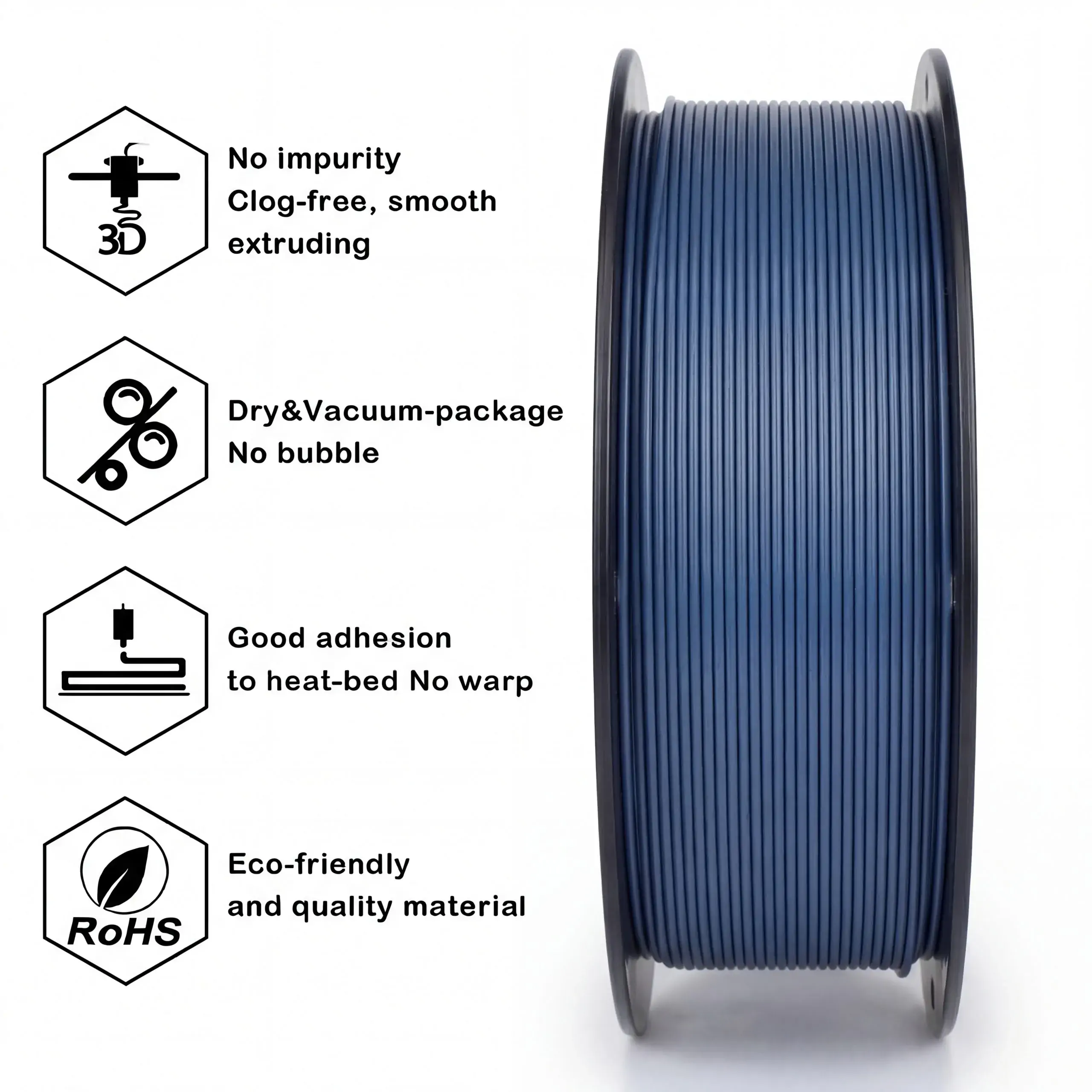
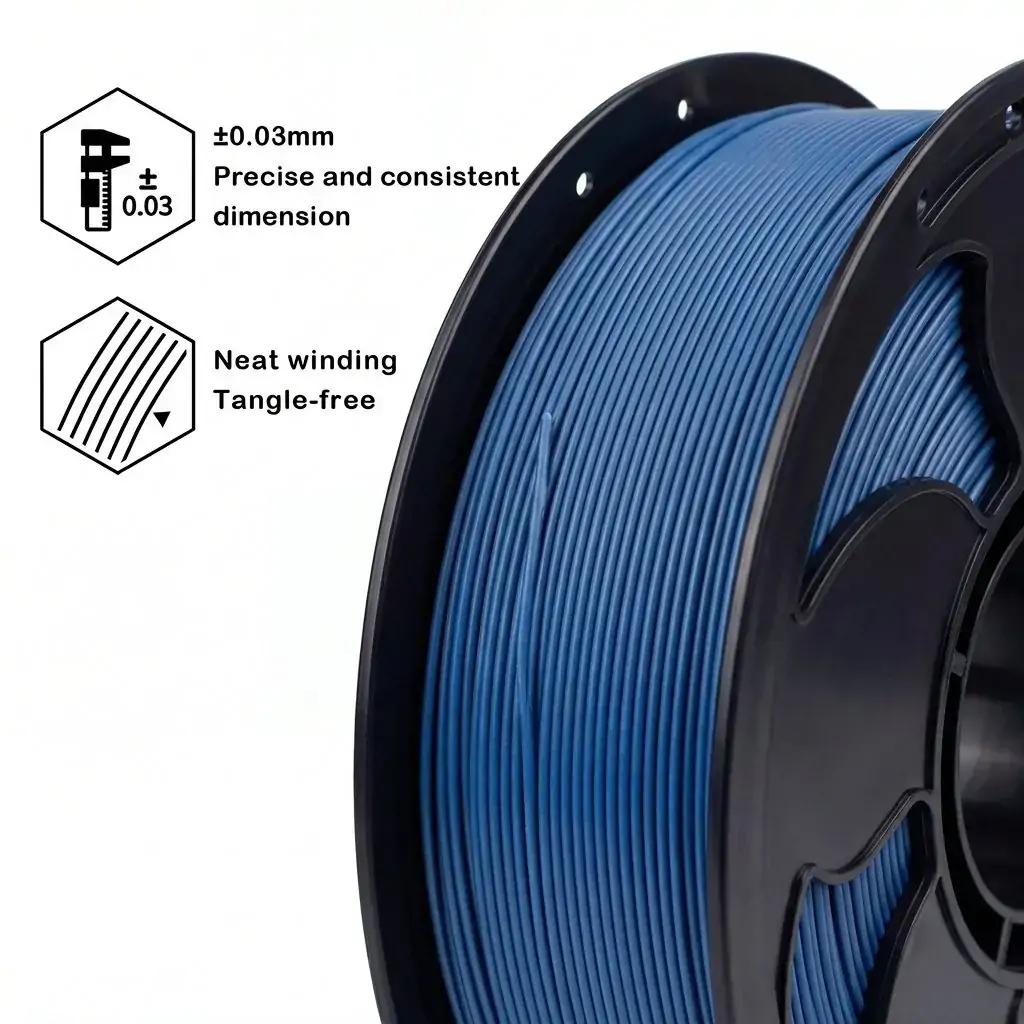
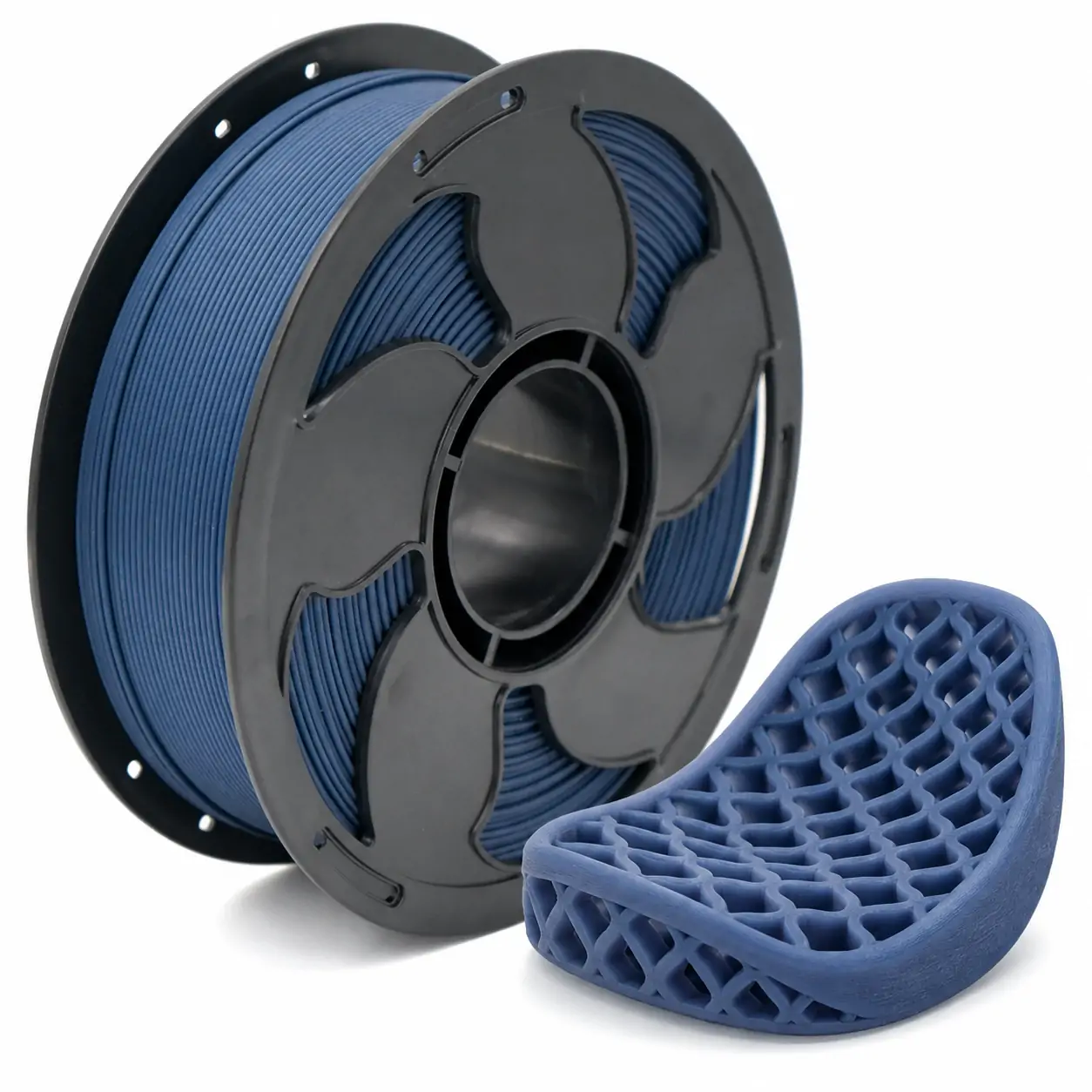
TPU 64D Application Series | Wholesale Supply | OEM / ODM Support
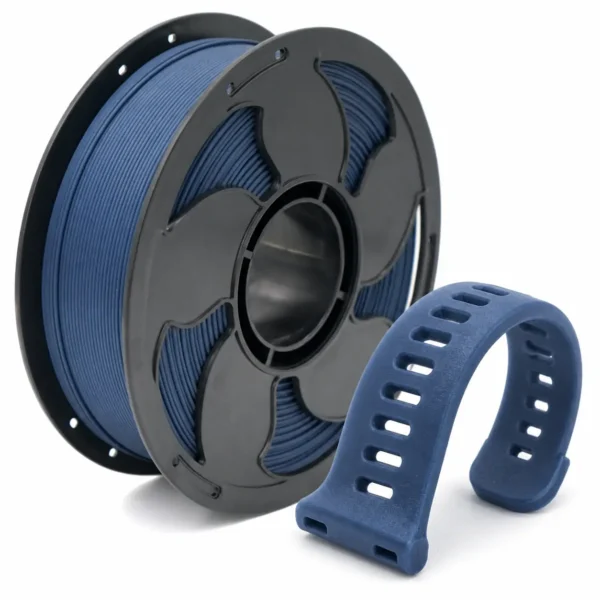
SSSray Slate Blue TPU 64D 3D Printer Filament – TPU-Filament Blau for Lattice Insoles & Wearable Parts
Semi-rigid TPU 64D filament for structured flexible parts, wearables, lattice components, distributors, private-label programs, and OEM/ODM buyers.
Built for applications that need more shape retention than soft TPU, this Slate Blue 64D grade combines controlled flex, resilient return, stable feeding, and a low-sheen satin surface. We supply it in export-ready 1kg spools with batch-focused QC, neutral packaging, and private-label options.
MaterialTPU 64D
SeriesTPU 64D Application
Color EffectSlate / Dusty Blue
Diameter1.75mm
Tolerance±0.03mm
Net Weight1kg
Gross Weight1.3kg
Nozzle Temp225–235°C
Bed Temp40–50°C
Print Speed40–80 mm/s
PackagingVacuum + Desiccant
Spool TypePlastic Spool
MOQ: Neutral packaging from 50 spools; OEM packaging typically 500–1,000 rolls.
Lead Time: Standard 7–15 working days; customized orders typically 15–25 working days.
Product Overview
SSSray Slate Blue TPU 64D 3D Printer Filament – TPU-Filament Blau for Lattice Insoles & Wearable Parts is a semi-rigid thermoplastic polyurethane filament developed for buyers who need a controlled balance of flex, shape retention, abrasion-tolerant use, and repeatable FDM processing. With a specified Shore hardness of 64D, it sits on the firmer side of the TPU range, making it well suited to structured support lattices, supportive wearable components, resilient clips, firm straps, protective pads, and functional parts that should bend while retaining defined geometry. The Slate Blue / Dusty Blue color is opaque with a low-sheen satin finish, giving finished parts a clean technical appearance rather than a glossy toy-like surface.
For B2B programs, we supply standard 1.75mm, 1kg plastic spools with ±0.03mm diameter tolerance, vacuum sealing and desiccant. Neutral packaging starts from 50 spools, while OEM packaging typically starts from 500–1,000 spools. Custom labels, branded boxes, color matching, spool options, qualification samples, and batch-focused QC support are available for distributor and private-label projects.
Structured Flexibility Without the Soft-TPU Handling Penalty
Choose TPU 64D when the printed part must flex and recover while keeping its geometry under repeated use. Compared with softer 85A–95A TPU grades, the firmer 64D structure supports a more stable filament path, defined lattice walls, and stronger shape retention in straps, support zones, clips, pads, and wearable structures. The Slate Blue satin finish gives distributors and private-label lines a technical, understated color option for functional applications.
Key Selling Points
Shore 64D Structure
Firmer TPU behavior for parts that need controlled bend, recovery, and geometry retention.
Stable Extrusion Path
±0.03mm diameter control supports consistent feeding and repeatable profile tuning.
Slate Blue Satin Finish
Opaque dusty-blue color with low sheen for wearable, footwear, and technical lifestyle parts.
Structured Lattice Ready
Useful for support lattices where cell geometry and controlled flex matter more than plush softness.
Wholesale Supply Format
1kg retail-ready spool format with neutral packaging from 50 spools and export carton support.
OEM / Private Label
Custom color, label, box, spool presentation, and project-based qualification support.
Key Features
| Feature | Practical Buyer Benefit |
|---|---|
| Shore 64D Hardness | Provides semi-rigid elastomer behavior with higher shape retention than soft TPU grades |
| Slate Blue / Dusty Blue | Adds a restrained technical color for footwear, wearable, and functional product lines |
| Opaque Low-Sheen Satin Surface | Produces a clean, non-glossy appearance on visible parts |
| ±0.03mm Diameter Tolerance | Supports stable feeding and repeatable extrusion setup for production-oriented printing |
| Vacuum Seal + Desiccant | Helps control moisture exposure during storage and export transport |
| OEM / ODM Supply | Supports private-label packaging, custom labels, color matching, and channel-specific programs |
Commercial Value for B2B Programs
SSSray TPU 64D gives distributors a firmer flexible-material option beyond standard 95A TPU while keeping the resilience and repeated-bend capability buyers expect from polyurethane filament. This Slate Blue grade is positioned for structured wearables, firm straps, support lattices, protective components, clips, pads, and other resilient functional parts. The standard 1kg spool, 50-spool neutral MOQ, and OEM packaging pathway support a practical sample-to-bulk route for distributors and private-label programs.
Why Buyers Add TPU 64D to Their Range
- Shore 64D gives a firmer TPU option for structured flexible parts
- Slate Blue satin appearance differentiates the SKU from common black and bright-color TPU
- ±0.03mm diameter tolerance supports consistent feeding and profile repeatability
- Suitable for lattice structures, firm straps, wearable components, pads, clips, and protective parts
- Vacuum-sealed 1kg spool format fits mainstream retail and distribution workflows
- Neutral packaging starts from 50 spools for lower-risk market qualification
- OEM / ODM options support custom labels, boxes, colors, and private-label programs
How We Work
1
Application & Market Review2
Grade & Color Confirmation3
Sample Qualification4
Packaging & Label Approval5
Batch Production & QC6
Final Inspection & ShipmentMaterial Comparison Guide
| Material | Flex Behavior | Shape Retention | Typical Feed / Print Behavior | Typical Application Focus |
|---|---|---|---|---|
| TPU 64D | Semi-rigid elastomer; controlled bend and recovery | Higher than soft TPU | Firmer filament path than 85A–95A grades; direct or short-path feeding preferred | Structured lattices, firm wearables, straps, clips, pads, resilient functional parts |
| TPU 95A | Flexible and noticeably softer | Lower than 64D TPU | Requires tighter flexible-filament feeding control and lower retraction | Flexible covers, gaskets, soft grips, bumpers, general elastic parts |
| TPU 85A | Soft and highly flexible | Lower | More sensitive to feed-path resistance and extrusion compression | Soft cushions, highly flexible wearables, impact pads |
| PETG | Rigid thermoplastic with limited flex | High | Conventional rigid-filament feeding | Brackets, housings, general functional parts requiring stiffness |
Technical Specifications
| Product Name | SSSray Slate Blue TPU 64D 3D Printer Filament – TPU-Filament Blau for Lattice Insoles & Wearable Parts |
|---|---|
| Material | TPU 64D (Thermoplastic Polyurethane) |
| Series | SSSray TPU 64D Application Series – Wearables & Structured Flexible Parts |
| Shore Hardness | 64D |
| Color / Finish | Slate Blue / Dusty Blue – opaque, low-sheen satin finish |
| Filament Diameter | 1.75mm standard; 2.85mm available on request |
| Tolerance | ±0.03mm |
| Net Weight | 1kg (2.2 lbs); 3kg and 5kg formats available on request |
| Gross Weight | 1.3kg |
| Spool Type | Plastic spool |
| Packaging | Vacuum sealed with desiccant |
| Printer Compatibility | Most 1.75mm open-material FDM / FFF printers; direct-drive or short-path extrusion is preferred for TPU |
| Typical Applications | Structured insole support lattices, firm wearable parts, watch bands, protective pads, clips, grips, resilient functional components |
| OEM / ODM | Supported |
| Technical Documentation | SKU-matched TDS / SDS and applicable compliance documentation supplied by project and production grade |
Recommended Print Settings
| Parameter | Recommended Guidance |
|---|---|
| Recommended Nozzle Temperature | 225–235°C |
| Usable Nozzle Range | 220–240°C |
| Recommended Bed Temperature | 40–50°C |
| Usable Bed Range | 30–60°C depending on build surface |
| Recommended Print Speed | 40–80 mm/s |
| Usable Speed Range | 30–120 mm/s after flow and feeding validation |
| Layer Height | 0.16–0.28mm with a 0.4mm nozzle |
| Cooling Fan | 50–80% after the first 2–3 layers; increase for bridges and small details |
| Retraction – Direct Drive | 0.5–1.5mm at 20–35 mm/s as a starting range |
| Retraction – Bowden | 2–4mm at 20–30 mm/s; keep the filament path low-resistance |
| Wall Count | 2–4 perimeters; more walls increase part stiffness |
| Infill | 15–25% for more flex / 30–50% for structured support |
| First Layer Speed | 20–30 mm/s |
| Bed Adhesion | Smooth PEI, textured PEI, or glass; use a thin release layer where TPU bonds too strongly |
Print Optimization Guide
| Item | Guidance |
|---|---|
| Feeding Path | Use a direct-drive or short, low-friction filament path. Avoid unnecessary tube bends and excessive spool drag. |
| Lattice Flex Tuning | Reduce wall count and infill to increase flexibility; increase walls and infill when the part needs more support and shape retention. |
| Surface Quality | Use 0.16–0.20mm layers and moderate speed when visible wearable surfaces require cleaner detail. |
| Stringing Control | Start with low retraction, dry filament, and stable nozzle temperature before increasing retraction distance. |
| Moisture Control | If popping, bubbles, or fuzzy extrusion appear, dry the spool before printing and keep it sealed with desiccant during storage. |
| Bed Release | TPU can bond strongly to some smooth surfaces; use a compatible release layer rather than forcing the part off the plate. |
| Production Profile Lock | Print the target production model, confirm nozzle temperature, flow, cooling, wall count, and infill, then lock the approved profile for repeat batches. |
Printer Brand Starting Settings
| Printer Brand | Nozzle | Bed | Speed | Starting Notes |
|---|---|---|---|---|
| Bambu Lab | 225–235°C | 30–40°C | 50–100 mm/s | Use 60–80 mm/s as the first production profile for visible lattice surfaces, then raise speed after extrusion and corner quality are stable |
| Prusa | 225–235°C | 40–50°C | 40–70 mm/s | Start near 50 mm/s with a short retraction profile, then tune flow and acceleration for the target part |
| Creality | 225–235°C | 40–50°C | 50–80 mm/s | Direct-drive machines can start around 60 mm/s; lock the final profile after checking feeding, flow, and lattice-wall definition |
| Anycubic | 225–235°C | 40–50°C | 40–70 mm/s | Start around 50–60 mm/s and tune flow before long lattice or strap production runs |
| Elegoo | 225–235°C | 40–50°C | 40–70 mm/s | Start around 50–60 mm/s with moderate acceleration, then confirm first-layer release and outer-wall quality |
Use these values as SSSray starting profiles. Final settings should be locked after a short flow, stringing, and first-layer qualification on the buyer’s printer and target model.
Performance Characteristics
| Characteristic | Reference | Production / Application Meaning |
|---|---|---|
| Shore Hardness | 64D | Semi-rigid TPU behavior with controlled bending rather than soft rubber-like compression |
| Diameter Control | ±0.03mm | Supports repeatable feed and extrusion setup across qualified batches |
| Surface Appearance | Opaque, low-sheen satin | Technical Slate Blue finish for visible wearable and functional parts |
| Flex Response | Structured / controlled flex | Wall count, lattice geometry, and infill can be used to tune part stiffness |
| Warping Behavior | Low under tuned TPU settings | Stable first layer, moderate bed temperature, and controlled cooling reduce edge lift |
| Moisture Sensitivity | Hygroscopic elastomer | Dry storage and sealed packaging help maintain extrusion surface quality |
Applications
| Application Focus | Practical Notes |
|---|---|
| Structured Insole Support Lattices | Best suited to firmer arch and support zones, geometry-retaining lattice elements, and designs where controlled deflection and shape retention are the priority. |
| Wearable Components | Useful for firm flexible shells, bands, supports, guards, and housings that require controlled bend and dimensional stability. |
| Watch Bands & Straps | Works best for firmer strap designs where dimensional stability is preferred over soft-rubber feel. |
| Protective Pads & Bumpers | Suitable for resilient pads, edge protection, impact-contact parts, and equipment interfaces. |
| Clips, Grips & Tool Interfaces | Useful for parts that need repeated flex, friction, or resilient engagement without the stiffness of PETG. |
| Functional Lattice Prototypes | Allows designers to tune mechanical response through cell geometry, walls, infill, and part thickness. |
Storage Guide
- Keep unopened spools in the original vacuum bag with desiccant until use
- After opening, store in an airtight dry box or resealable barrier bag with fresh desiccant
- Dry the spool before production printing if extrusion shows popping, bubbles, or fuzzy surface texture
- Keep filament away from direct sunlight, high humidity, and unnecessary open-air exposure
- For repeat B2B jobs, store the qualified batch under consistent conditions and record the print profile used
OEM / ODM Services
We support distributors, importers, e-commerce brands, 3D printing stores, and industrial sourcing teams with private-label TPU programs. Options include neutral packaging, custom spool labels, branded retail boxes, barcode / SKU labels, custom color matching, carton marks, documentation matching, and project-specific packaging development. Standard supply uses a 1kg plastic spool; 3kg, 5kg, and 2.85mm programs can be discussed for suitable projects.
MOQ: Neutral packaging from 50 spools. OEM packaging typically starts from 500–1,000 spools depending on box, label, color, and spool customization.
Quality Control
- Diameter and ovality checks against the ±0.03mm production target
- Winding and spool-edge inspection before packing
- Slate Blue color and low-sheen surface consistency check against the approved reference
- Extrusion / flow check using the qualified TPU processing window
- Moisture-control, vacuum-seal, desiccant, and package-integrity inspection
- Batch number and order traceability for repeat B2B supply and complaint follow-up
For qualification projects, buyers can also review our 3D Printer Filament Test Protocol and Batch QC Data workflow.
Technical Documentation & Compliance Support
- TDS – matched to the confirmed TPU 64D production grade and current revision
- SDS / MSDS – supplied for the matched material grade and shipment requirement
- RoHS / REACH documentation – supplied only when applicable to the confirmed grade and buyer market
- Third-party test reports – matched to the exact SKU or arranged according to project requirements
- Buyer document pack – specification, packing details, batch information, and available compliance files aligned before bulk shipment
Frequently Asked Questions
What is the MOQ for Slate Blue TPU 64D?
Neutral packaging starts from 50 spools. OEM packaging typically starts from 500–1,000 spools depending on the label, box, spool, color, and artwork requirements.
How does 64D TPU feel compared with 95A TPU?
64D is noticeably firmer and more shape-retaining than standard 95A TPU. It still bends and recovers, but it is positioned for structured flexible parts rather than soft rubber-like components.
Is TPU 64D suitable for lattice insoles?
Yes for structured insole support lattices and firmer arch or support zones where geometry retention matters. Final flex can be tuned through lattice cell geometry, wall count, infill, and part thickness.
What print settings should buyers start with?
Start around 225–235°C nozzle, 40–50°C bed, and 40–80 mm/s. Use a 0.4mm nozzle, conservative retraction, and a direct or short filament path, then lock the final profile after a short qualification print.
Can this TPU 64D run through AMS or CFS systems?
Hardness improves feed stability, but feeder compatibility depends on the exact printer, path geometry, and filament formulation. Qualify this SKU on the intended system before using it for unattended or multi-material production.
Does TPU 64D need drying?
Keep the filament sealed and dry. If you see popping, bubbles, rough extrusion, or increased stringing, dry the spool before production printing and keep it in low-humidity storage during long jobs.
Can SSSray provide custom color and private-label packaging?
Yes. We support custom color matching, spool labels, branded boxes, carton marks, barcode / SKU labels, and other OEM / ODM requirements for qualified B2B programs.
Are qualification samples and technical documents available?
Qualified buyers can apply for up to three sample spools for evaluation. Current TDS, SDS / MSDS, packing data, and applicable compliance documents are matched to the confirmed production grade before bulk ordering.
Build a TPU 64D Program for Your Market
Send us your target application, annual volume, packaging plan, and printer platform. We can support sample qualification, bulk pricing, Slate Blue supply, custom colors, OEM / ODM packaging, and repeat-order batch control.
Additional Information
| Color | Slate Blue / Dusty Blue – opaque, low-sheen satin |
|---|---|
| Filament Diameter | 1.75mm standard; 2.85mm on request |
| Spool Weight | 1kg Net Weight |
| Gross Weight | 1.3kg |
| Material | TPU 64D (Thermoplastic Polyurethane) |
| Packaging | Vacuum sealed with desiccant |
| Spool Type | Plastic spool |
| Standard Tolerance | ±0.03mm |
| Brand | SSSray |
| Product Series | TPU 64D Application Series – Wearables & Structured Flexible Parts |
Packaging Gallery
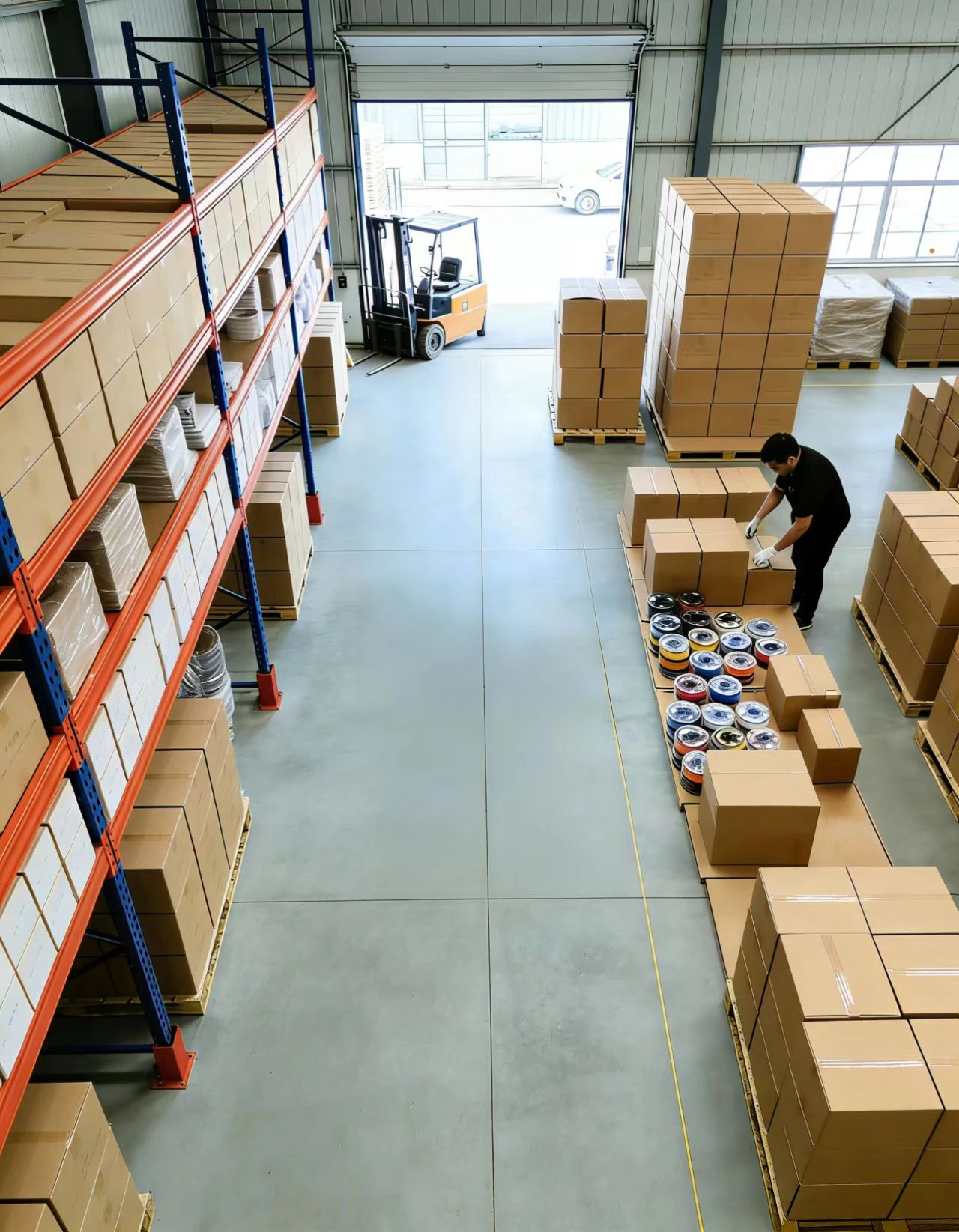
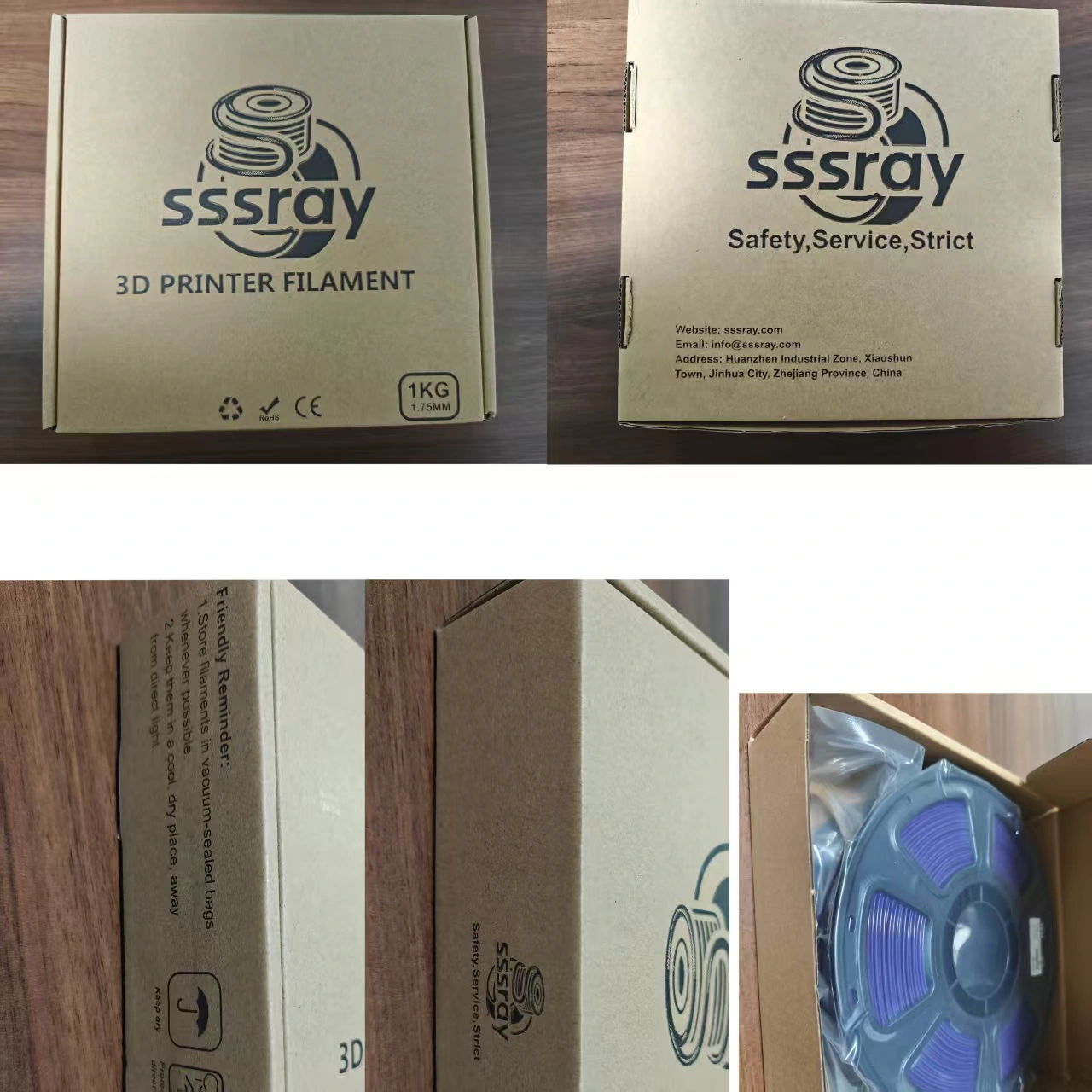

Our Protection Measures
- Each 1kg spool is vacuum sealed with desiccant before carton packing
- Retail box and spool label are checked against the confirmed SKU and artwork
- Master cartons are selected to protect spool edges and reduce movement in transit
- Outer carton marks can follow neutral, SSSray, or approved OEM labeling requirements
- Final carton count, dimensions, and pallet plan are confirmed before shipment booking
Carton Reference
| Packing Reference | SSSray Packing Practice |
|---|---|
| Inner Unit | 1 × 1kg spool, vacuum sealed with desiccant and packed in the confirmed retail box |
| Master Carton Quantity | Set to the approved 1kg spool and retail-box configuration, then locked into the packing specification for repeat production orders |
| Carton Type | Export-grade corrugated master carton selected for the approved packing format |
| Carton Dimensions | Fixed in the approved packing specification and repeated for subsequent lots unless the spool or retail-box format changes |
| Palletization | Pallet pattern and carton count are prepared to the final order volume, shipping route, and buyer warehouse requirements |
| Labeling | Neutral, SSSray, barcode / SKU, carton mark, or approved OEM label format |
Once the packaging is approved, we lock the master-carton quantity, carton dimensions, labeling, and pallet pattern into the production packing specification for repeat orders.
B2B Supply Terms
| MOQ | Neutral packaging from 50 spools; OEM packaging typically 500–1,000 spools |
|---|---|
| Available Colors | Slate Blue standard program plus standard and custom color options |
| Diameter Options | 1.75mm standard; 2.85mm available on request |
| Spool Design | Standard plastic spool; custom spool and label options for qualified OEM projects |
| Sample Orders | Qualified B2B buyers can apply for up to 3 free sample spools after project review |
| Payment Methods | T/T for all orders; PayPal available for small trial orders |
| L/C Terms | Available only for evaluated large-volume customers and approved transactions |
| Trade Terms | FOB Ningbo / EXW |
| Standard Payment Terms | 30% deposit, 70% balance before shipment |
| Lead Time | Standard 7–15 days; customized orders 15–25 days |
| Port of Loading | Ningbo, China |
| OEM / ODM | Supported for labels, boxes, colors, spool presentation, and private-label programs |
Related products
-

SSSray Jet Black TPU 72D 3D Printer Filament for Functional Parts – filamento TPU preto para impressão 3D
-
SSSray Olive Green TPU 64D Semi-Rigid 3D Printer Filament – filamento TPU 64D para impressão 3D for Functional Wheels & Structured Parts
-
SSSray Ivory TPU 90A Flexible 3D Printer Filament – filamento TPU flexible for Cushioning Parts & Functional Prototypes
-
Wholesale PEBA 90A Flexible Filament 1.75mm 1kg – High-Rebound TPU Alternative 3D Printer Filament for Shoe Insoles & Gaskets | OEM Manufacturer