Online time
Monday to Friday: 9AM - 8PM
Weekend: 10AM - 5PM

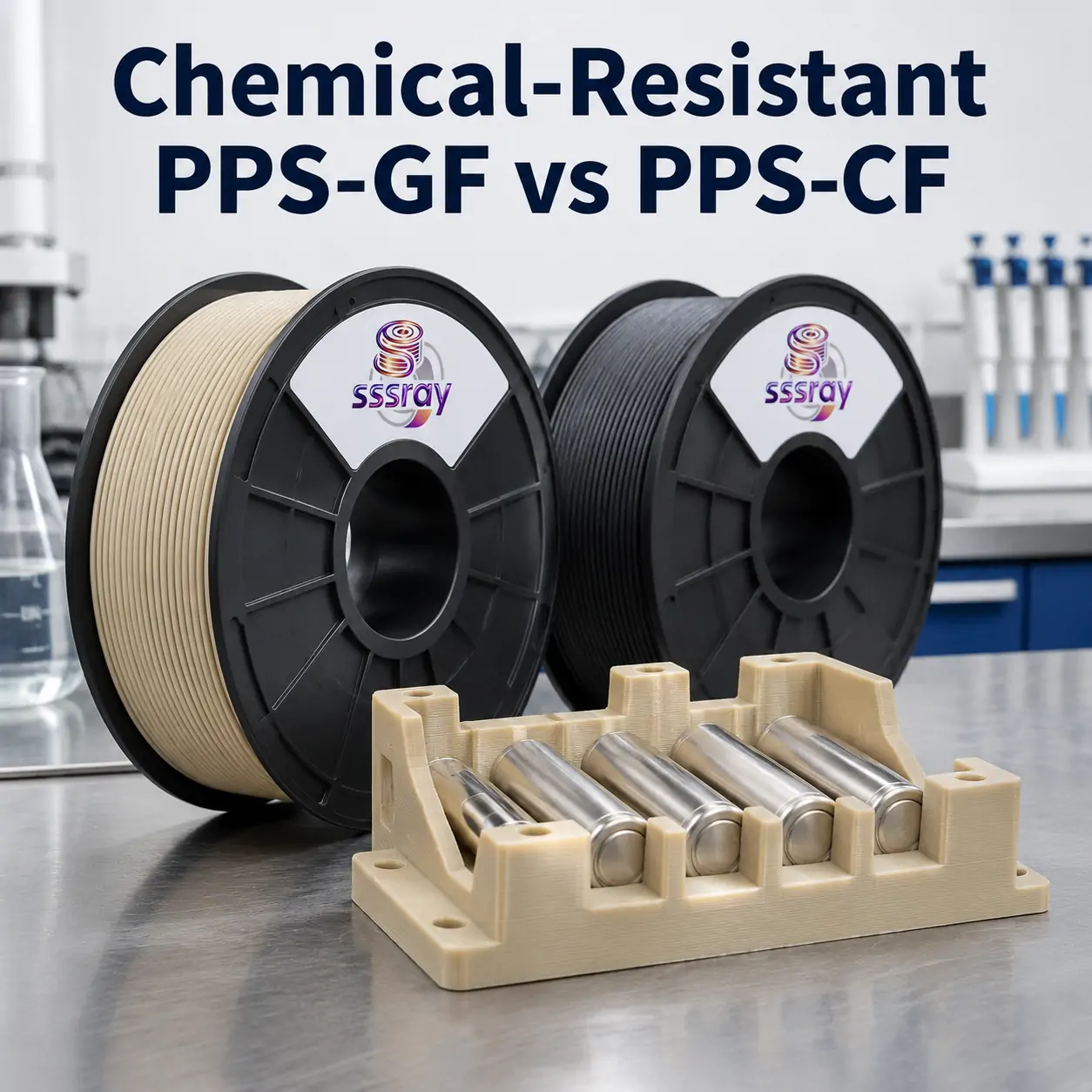
TL;DR: PPS-GF vs PPS-CF for Chemical-Resistant Fixtures
For plating, battery, laboratory and industrial fixtures, PPS is a strong choice in the chemical resistant filament category, but the fiber changes the buying decision. Shortlist PPS-GF when electrical isolation is part of the fixture’s job; shortlist PPS-CF when stiffness and heat under load matter more and the part does not need to act as an insulator. Approve either grade against the exact chemical, concentration, temperature, contact time, printed wall thickness and annealing state.
Default shortlistPPS-GF for insulating fixtures, nests, housings and tooling where chemical resistance and dimensional stability must coexist.
Choose PPS-CF whenThe part is electrically non-isolating and stiffness or HDT under load is the dominant requirement.
Chemistry limitDo not treat PPS as universally resistant: IDEX rates nitric, chromic, hydrochloric and hydrofluoric acids, hydrogen peroxide and chlorine C for PPS.
Key evidenceUse printed-specimen data: ISO 175 immersion, dielectric breakdown where required, HDT at 1.8 MPa, dimensions after annealing and a lot-linked COA.
Procurement ruleApprove one exact grade and process window. “PPS-CF” or “PPS-GF” is a material family label, not a finished-part specification.
Why PPS-GF vs PPS-CF Is a Procurement Decision
At SSSray, we do not rank chemical-resistant filament for an industrial fixture by one property. PPS matrix chemistry, fiber type, printed anisotropy, annealing state and electrical role all change whether a grade is suitable.
PPS is attractive because the polymer combines low moisture sensitivity with broad resistance to many solvents, fuels, oils and process chemicals. Current filled PPS grades compared below use high-temperature FFF process windows around 300–350 °C, while published thermal data reach well above common nylons. That does not make every PPS grade interchangeable, and it does not make a printed part automatically resistant to every acid or oxidizer.
The most important split is electrical. Polymaker publishes 6.05 kV/mm dielectric strength for its 20% glass-fiber PPS and 0.45 kV/mm for its 10% carbon-fiber PPS. Meanwhile, Bambu Lab publishes 235 °C HDT at 1.8 MPa for its PPS-CF, showing why carbon-filled grades can be compelling for hot, stiff tooling. The correct material depends on the fixture’s job, not on which datasheet has the largest headline number.
At SSSray, our buyer sequence is practical: define the service environment; screen PPS chemistry by medium; choose GF or CF by electrical function; compare grade-specific printed data; lock the printing and annealing recipe; then tie the approved sample to lot records for repeat orders.
Where a source reports a typical value, SSSray keeps the source condition attached. A TDS-reported UL 94 V-0 test result is also kept separate from a third-party certification or listing unless the cited supplier explicitly provides that certification.
Key Takeaways for PPS Fixture Buyers
- Electrical isolation decides the fiber. Polymaker publishes 6.05 kV/mm dielectric strength for Fiberon PPS-GF20 and 0.45 kV/mm for PPS-CF10. If the fixture must isolate current, qualify a GF grade on the printed wall thickness rather than assuming every PPS-CF is insulating.
- A surface-resistance reading is not a breakdown test. Polymaker reports an over-range surface value above 10¹² Ω for both grades, yet their dielectric strengths differ by more than an order of magnitude.
- Carbon-filled PPS can win heat under load. Bambu Lab reports 235 °C HDT at 1.8 MPa for PPS-CF; Polymaker PPS-GF20 reports 125.8 °C after its 130 °C / 10 h anneal and 219.6 °C after the higher 230 °C anneal.
- PPS is broad-spectrum, not universal. IDEX rates PPS A in acetone, IPA, THF, NMP and sodium hydroxide, but C in nitric, chromic, hydrochloric and hydrofluoric acids, hydrogen peroxide and chlorine.
- Glass fiber adds a second chemistry check. Published glass-fiber research shows hot alkali attack at 95 °C and HF is a known glass etchant, so a PPS-GF matrix rating alone is not enough for wetted HF or hot-caustic service.
- Printed density can cut fixture mass sharply. Polymaker PPS-GF20 is 1.36 g/cm³ versus 2.15 g/cm³ for PTFE and 7.9 g/cm³ for Outokumpu Core 304 stainless, before geometry changes are considered.
- Printer requirements are grade-specific. Polymaker lists room-temperature chamber conditions for its filled PPS grades; Prusa’s unfilled PPS guidance requires an actively heated chamber of at least 65 °C; Bambu high-temperature printer capability varies by platform.
- Annealing is part of the specification. Published PPS post-heat-treatment windows span roughly 120–250 °C. Record time, temperature, supports and post-anneal dimensions with the approved lot.
1. Chemical Resistant Filament for Fixtures: Where PPS Can Replace PTFE, PVDF and Stainless Steel
We shortlist printed PPS when a fixture needs chemical resistance, stiffness above typical commodity polymers, low moisture sensitivity and rapid design iteration. We retain PTFE in strongly oxidizing or HF-wetted zones and metal where the load path requires metal-level stiffness. The actual process chemistry still controls the final material choice.
Prusa’s current PPS guidance describes PPS as highly resistant to acids, alkalis and organic solvents and notes that it is not soluble in any known solvent below 200 °C. For our procurement screen, that puts PPS on the shortlist when moisture, heat or a particular solvent limits common nylons, polyesters or PVDF. The exact process chemistry still has to be qualified.
For printed fixtures, geometry adds value that a resin chart cannot show. Internal drain channels, conformal nests, curved flow paths and rapid revision cycles can reduce machining operations and make first-article changes faster. The trade-off is that printed roads, fiber ends and Z-direction interfaces become part of the qualification problem.
Four reasons fixture teams move from machined stock to printed PPS
- Consolidate geometry: internal channels, sensor features, locating ribs and cable paths can be built into one printed body instead of split into multiple machined pieces.
- Shorten revision cycles: a nest or masking fixture can be reprinted after a fit check without reopening a machining program for every design iteration.
- Reduce handling mass: lower density matters when fixtures are repeatedly lifted, changed by operators or carried by robots.
- Separate functions: hybrid designs can use PPS-GF for the structural insulating body and retain PTFE or metal inserts only where chemistry, wear or load requires them.
How much lighter is a printed PPS fixture?
Figure 1 compares published material densities. Read it only as equal-volume mass: a real printed fixture may need thicker walls or ribs than a steel part, so final part mass must be calculated from the actual geometry.
Density of fixture materials (lower = lighter, g/cm³ at room temperature)
At equal volume, PPS-GF20 is about 83% lighter than Core 304 stainless, 37% lighter than PTFE and 24% lighter than PVDF. The comparison is useful for handling and robot-payload estimates, but it is not a structural equivalence claim.
PPS vs PTFE, PVDF and steel: where the incumbents should stay
- PTFE: keep it in HF-wetted and strongly oxidizing service where PPS screening data are unfavorable. Ensinger lists PTFE at 2.15 g/cm³, very good chemical resistance and continuous service up to 260 °C.
- PVDF: keep it for many acid-service applications, but check the exact solvent. Arkema lists N-methyl-2-pyrrolidone as an active solvent for Kynar PVDF, while IDEX rates PPS A in NMP.
- Stainless steel: keep it for high-load frames, wear points and structural members. Core 304 is about 7.9 g/cm³ and electrically conductive, so insulating inserts may still be required around cells, sensors or plating current.
RFQ inputPut chemical, concentration, maximum temperature, contact time, cleaning cycle, load and electrical role on every RFQ.
Wrong substitutionCopying a PTFE fixture into PPS only because both materials are described as chemically resistant.
Fixture testImmerse printed coupons in the real medium under a defined ISO 175 plan, then compare mass, dimensions and mechanical retention to controls.
2. Is PPS Filament Chemical Resistant? Media-by-Media Screening for Plating, Battery and Lab Fixtures
We treat PPS as a broadly chemical-resistant polymer, not as a universal acid-proof filament. In the current IDEX chemical-compatibility guide, PPS is rated A in acetone, isopropyl alcohol, tetrahydrofuran, NMP and sodium hydroxide, while nitric acid, chromic acid, hydrochloric acid, hydrofluoric acid, hydrogen peroxide and chlorine are rated C.
IDEX rating key: A = little to no interaction; B = slight interaction; C = not recommended. These letters are material/chemical screening ratings, not temperature ratings or finished-part approvals. Keep the concentration and exposure notes attached to each chemical entry.
IDEX is a screening source, not a finished-part approval. Concentration and temperature are not stated for many PPS rows, and printed parts add layer interfaces and exposed fiber ends that a resin-level chart does not capture. Use the chart to decide what deserves testing, then qualify the exact grade in the actual bath.
Table 1 combines the IDEX PPS rating with the additional filler question that matters for GF and CF composites.
On mobile, swipe horizontally to review every column.
| Medium | Typical fixture exposure | IDEX PPS rating | GF / CF consideration | Buyer decision |
|---|---|---|---|---|
| Sulfuric acid | Acid copper and nickel plating | A; IDEX notes prolonged exposure may weaken material | Exposed E-glass can be attacked under some acid conditions; CF avoids the glass-specific mechanism | Candidate; test at bath concentration and temperature |
| Sodium hydroxide | Alkaline cleaners and etch | A; prolonged exposure may weaken material | Hot NaOH can attack E-glass; published work studied dissolution at 95 °C | GF only after hot-caustic coupon testing |
| Hydrochloric acid | Pickling and activation dips | C | PPS matrix rating is the primary limit | Do not approve from a generic PPS claim; test or retain a fluoropolymer wetted zone |
| Nitric acid | Strip baths and passivation | C | Oxidizing chemistry is unfavorable to PPS | Reject as a default PPS wetted material; use a qualified alternative |
| Chromic acid / dichromates | Chrome plating and etch | C | PPS matrix rating is the primary limit | Keep PTFE/PFA or another proven wetted material unless a specific test proves otherwise |
| Hydrogen peroxide / peroxyacetic acid | Micro-etch and sterilization | C | Oxidizing chemistry is the primary concern | Reject as a default; test only if the process case justifies it |
| Sodium hypochlorite, 5% | Disinfection and cleaning | A; prolonged exposure may weaken material | Composite surface and cycle count still matter | Candidate; qualify repeated cleaning cycles |
| Hydrofluoric acid | Glass etch and some battery-side contamination scenarios | C | HF also attacks glass fiber | Do not use PPS-GF as a default HF-wetted material |
| LiPF₆ carbonate electrolyte | Cell filling and formation fixtures | Not listed by IDEX | Trace water can generate HF; exposed glass fiber makes a wetted GF fixture a separate qualification case | GF is suitable for dry-side insulating nests only after the actual electrolyte-contact boundary is defined |
| NMP | Electrode-slurry handling | A; IDEX notes elevated temperature or prolonged exposure may reduce resistance | No obvious filler-specific attack from the cited sources | Strong PPS candidate; verify printed-part retention at process temperature |
| Acetone, IPA, THF, toluene | Lab automation and cleaning | A; IDEX adds elevated-temperature caveats for some solvents | Low filler-specific concern compared with oxidizers or HF | Strong candidate; qualify the actual cleaning cycle |
| Jet fuel, hydraulic fluid, motor oil | Test rigs and machine-side fixtures | A | Electrical role may matter more than filler chemistry | Strong candidate after load and temperature checks |
The pattern is useful but should not be over-simplified: PPS screens well against many solvents and process fluids, while strong oxidizing or halogen-acid conditions require much more caution. A filled printed part must then pass its own exposure test.
Test boundary: ISO 175:2010 evaluates changes after full-surface immersion of unrestrained plastic specimens; it does not cover environmental stress cracking (ESC). A fixture that remains under assembly stress needs a separate loaded-part or ESC assessment selected using ISO 22088-1:2006 guidance. The 2006 edition remains published while revision work is underway. An ISO 175 immersion result alone does not establish stress-cracking resistance.
Why oxidizers deserve a separate screen
PPS contains sulfur linkages in the polymer backbone. Oxidizing conditions can change sulfur chemistry even when ordinary solvents do not dissolve the polymer. That is why a buyer should not classify a process only as “acid” or “base”; the oxidizing character, concentration, temperature and exposure duration all belong in the qualification plan.
Glass fiber adds its own chemistry question
In a printed composite, glass fibers are not completely buried behind a perfect resin skin. Fiber ends and microvoids can be exposed at the surface. Bashir et al. measured E-glass dissolution in hot NaOH and KOH at 95 °C and discuss HF as an effective glass etchant.
Battery electrolyte is a different case from a generic solvent chart. LiPF₆ can form HF in the presence of trace water, so a dry-side insulating nest and an electrolyte-wetted fixture should not share the same approval. Carbon fiber removes the glass-attack mechanism but introduces a different electrical-risk question.
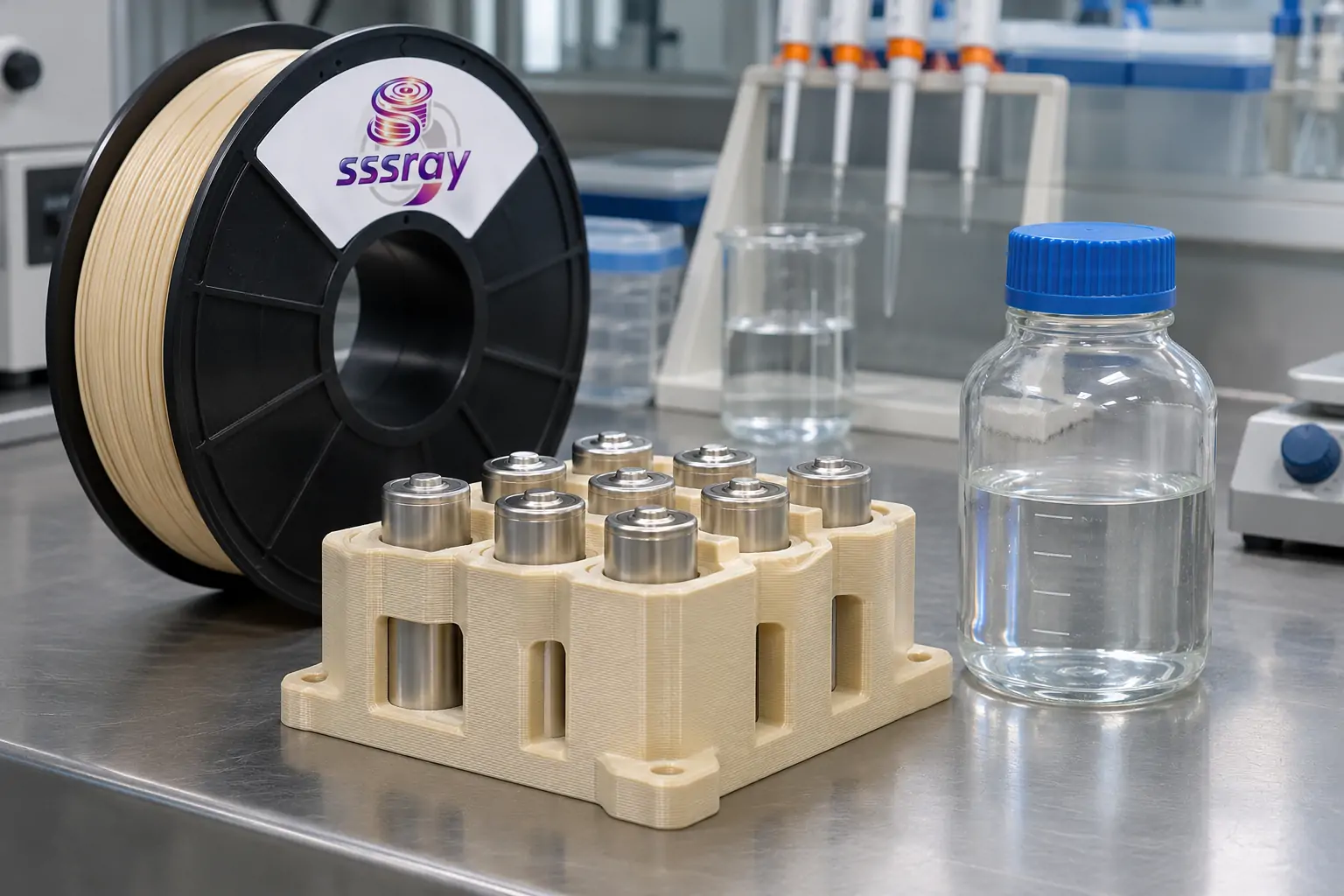
Exposure planAsk for a medium-specific exposure plan on the exact printed grade, not a one-line “acid and base resistant” declaration.
Weak supplier claimTransferring an unfilled-resin chemical chart directly to a printed GF or CF part without checking filler and layer-interface effects.
Coupon testUse a defined ISO 175 program with controls; report concentration, temperature, time, mass change, dimensions and retained mechanical property.
3. PPS-GF vs PPS-CF: Why Electrical Isolation Can Decide the Fixture Material
When the fixture itself must provide electrical isolation, we start with PPS-GF. We do not approve PPS-CF as an insulator from a material-family name or a surface-meter reading alone; the decision requires grade-specific breakdown and resistivity data from printed specimens.
Carbon fiber can create conductive or semi-conductive pathways depending on loading, fiber network, surface resin and print structure. Glass fiber raises stiffness without adding a carbon network. The result is visible in published PPS data: the two Polymaker grades can both show an over-range surface reading while their dielectric breakdown values remain very different.
Table 2 keeps the electrical values attached to the exact grade and test state.
On mobile, swipe horizontally to review every column.
| Grade | Reinforcement | Dielectric strength | Dielectric constant | Surface value as published | Specimen / source state |
|---|---|---|---|---|---|
| Polymaker Fiberon PPS-GF20 | 20 wt% glass fiber | 6.05 kV/mm | 2.62 at 1 kHz; 2.71 at 1 MHz | >10¹² Ω, over-range | Printed specimens; TDS specimens annealed 130 °C / 10 h |
| Polymaker Fiberon PPS-CF10 | 10 wt% carbon fiber | 0.45 kV/mm | 4.64 at 1 kHz; 3.74 at 1 MHz | >10¹² Ω, over-range | Printed specimens; TDS specimens annealed 125 °C / 16 h; dielectric values from Polymaker Wiki |
| Treed PPS Carbon | 15% carbon fiber, as listed by Filament2Print | Not published in the cited listing | Not published | 10³ Ω | DIN IEC 60093 value as published by Filament2Print; use only as evidence of grade-to-grade spread |
Polymaker’s PPS-CF10 dielectric strength is about 13 times lower than its PPS-GF20 value even though both TDS files publish an over-range surface value above 10¹² Ω. A different carbon-filled PPS is published around 10³ Ω. That spread is exactly why “carbon-fiber PPS” cannot be treated as one electrical specification.
What this means for plating, battery and lab fixtures
- Plating racks and masks: if the printed body must remain electrically isolating, specify that requirement directly and qualify the finished wall thickness. Do not rely on fiber type alone.
- Battery nests and busbar fixtures: the relevant question is the isolation voltage and creepage/clearance design of the real assembly. Use printed-coupon breakdown data at the intended thickness.
- Lab automation near capacitive or RF sensing: Polymaker publishes a lower dielectric constant for PPS-GF20 than PPS-CF10. That can reduce dielectric loading in some geometries, but the complete sensor assembly still needs validation.
- Where CF is right: hot, stiff, electrically non-isolating parts such as machine-side brackets, fixtures and tooling supports. If static dissipation is required, specify an explicit resistance range rather than assuming any CF grade is ESD-safe.
Drawing inputMark “electrical isolation required: yes/no” on the drawing and include the working voltage, wall thickness and test method in the RFQ.
Electrical errorApproving a PPS-CF part as an insulator because a surface-resistance meter reads over-range.
Electrical testFor insulating fixtures, measure dielectric breakdown plus surface and volume resistance on the exact printed, conditioned and annealed state.
4. PPS-GF vs PPS-CF Filament Data and a Buyer’s Selection Matrix
Our starting point is PPS-GF when the fixture must provide electrical isolation, and PPS-CF when stiffness and heat under load dominate in an electrically non-isolating part. We then choose the exact grade from printed-specimen data because the spread between brands can be as important as the GF-versus-CF label.
Published PPS-GF and PPS-CF grade data side by side
Table 3 compares four current manufacturer data sets. Conditions differ, so values are not normalized into a fake single ranking. Keep the test method, print orientation, conditioning and annealing state attached to every RFQ value; that is what makes a supplier comparison actionable.
On mobile, swipe horizontally to review every column.
| Property | Polymaker PPS-GF20 | Polymaker PPS-CF10 | Bambu Lab PPS-CF | Longshan / Aliz PPS-CF |
|---|---|---|---|---|
| Reinforcement | 20 wt% glass fiber | 10 wt% carbon fiber | Carbon fiber; percentage not stated in cited guide | Carbon fiber; percentage not stated on cited page |
| Density | 1.36 g/cm³, ISO 1183 | 1.29 g/cm³, ISO 1183 | 1.26 g/cm³ | 1.27 g/cm³, ISO 1183 |
| Tensile strength X-Y / Z | 64.1 ± 2.1 / 22.9 ± 0.8 MPa | 59.4 ± 1.3 / 32.0 ± 5.1 MPa | 87 ± 5 / 24 ± 3 MPa | 77 ± 4 / 30.5 ± 2 MPa |
| Flexural / bending modulus X-Y | 4,110.7 ± 124.9 MPa | 4,646.9 ± 136.9 MPa | 7,160 ± 280 MPa | 6,265 ± 200 MPa |
| HDT at 0.45 / 1.8 MPa | 236.3 / 125.8 °C | 252.5 / 133.0 °C | 264 / 235 °C | 245.2 / 220.1 °C in X-Y |
| Water absorption / condition | 0.11% equilibrium, 70% RH / 23 °C | 0.225% equilibrium, 70% RH / 23 °C | 0.05% saturated value in Bambu guide, 55% RH / 25 °C | 0.02%, ISO 62, 50% RH / 23 °C as published |
| Flammability statement | TDS reports UL 94 V-0 at 1.5 mm | TDS reports UL 94 V-0 at 1.5 mm; Polymaker Wiki states that PPS-CF10 has no UL 94 certification at this time | Use the current Bambu document package for the exact claim; do not infer a V-class from “flame-retardant” wording | Page states it can achieve UL 94 V-0; thickness / listing evidence is not shown in the cited table |
| Published specimen state | Mechanical / thermal TDS specimens annealed 130 °C / 10 h | Mechanical / thermal TDS specimens annealed 125 °C / 16 h | Bambu published printed-filament data; use its current TDS/profile for the test state | Printed specimens on Bambu P1S: 330 °C nozzle, 100 °C bed, 25 °C ambient, 10% fan, 50 mm/s, 0.4 mm nozzle; conditioned 24 h before testing |
| Source | Fiberon PPS-GF20 TDS V1.1 | Fiberon PPS-CF10 TDS V1.1 + Polymaker electrical Wiki | Bambu Lab filament guide / PPS-CF documentation | Longshan / Aliz PPS-CF product test table |
The published CF grades in this direct-manufacturer comparison span roughly 59–87 MPa in X-Y tensile strength, so “PPS-CF” is not a single mechanical specification. Bambu and Longshan publish much higher HDT at 1.8 MPa than the low-temperature-annealed Polymaker grades, while Polymaker PPS-GF20 provides the clearest published dielectric evidence in this set.
For cost context only, a July 2025 All3DP launch article reported Polymaker PPS-GF20 at US$66 per 500 g versus US$345 per 500 g for one 3DXTech PEEK product listing. Treat that as a dated launch-price comparison, not a current market price table; SSSray bulk pricing is quoted against quantity, packaging, destination and qualification scope.
Against PA-CF, PPS also separates itself on moisture and heat. Bambu’s filament guide lists 0.05% saturated water absorption for PPS-CF versus 2.35% for PA6-CF under the guide’s stated conditions, and 264 °C versus 186 °C HDT at 0.45 MPa. The exact printed-part decision still depends on toughness, cost and printer capability.
Selection matrix for procurement
Table 4 converts the data into a purchasing decision and includes a rejection trigger. That last column matters: industrial material selection improves when buyers know when not to force a grade into the application.
On mobile, swipe horizontally to review every column.
| Option | Best use case | Key specification | Advantage | Primary risk | How to verify | When to reject | SSSray sourcing note |
|---|---|---|---|---|---|---|---|
| PPS-GF | Insulating fixtures, battery nests, sensor supports, chemical-environment tooling | Dielectric breakdown on printed coupons; HDT at 1.8 MPa; medium-specific immersion | Combines PPS chemistry with an insulating fiber system | HF / hot-caustic attack on exposed glass; abrasive to soft nozzles | Electrical test + ISO 175 + post-anneal dimensions | HF-wetted service or any chemical exposure that fails the coupon plan | SSSray Natural Sand Beige PPS-GF: 1.75 mm ±0.03 mm, 1 kg, 310–350 °C nozzle, 90–100 °C bed; neutral MOQ 50 rolls |
| PPS-CF | Hot, stiff, electrically non-isolating brackets and tooling | Grade-specific tensile/modulus, HDT at 1.8 MPa and electrical behavior | High stiffness and strong heat-under-load performance in several published grades | Electrical behavior varies strongly by formulation; Z toughness may be low | Printed X-Y/Z mechanical data plus resistivity / breakdown where relevant | Any fixture that must provide electrical isolation without grade-specific proof | SSSray PPS-CF: HDT 120 °C at 0.455 MPa and 110 °C at 1.82 MPa under ISO 75-2; qualify lot-specific electrical and application data before use near live conductors |
| Unfilled PPS | Parts where exposed reinforcing fiber is undesirable | Warp, flatness and layer adhesion on the actual printer | No glass- or carbon-fiber exposure at the surface | Higher warpage risk; printer thermal requirements can be stricter | First-article dimensional study and Z-direction test | Large flat fixtures that cannot meet tolerance after thermal qualification | Application review required |
| Machined PTFE | HF- or strong-oxidizer-wetted zones | Creep and dimensional stability under clamp load | Very broad chemical resistance and 260 °C continuous-service figure from Ensinger | Cold flow, higher density and slower machining of complex shapes | Load-hold creep check and fit verification | Load-bearing locating features that cannot tolerate creep | Not supplied by SSSray; often useful as a wetted insert inside a printed fixture |
| Machined PVDF | Many acid-service parts at moderate temperature | Exact solvent list and service temperature | Excellent chemical resistance; 1.78 g/cm³ stock-shape density | Selected solvents such as NMP can dissolve PVDF | Manufacturer compatibility data + process-fluid test | NMP service unless the exact grade is specifically qualified | Not supplied by SSSray; compare against PPS for NMP-facing tooling |
| 304 / 316 stainless | High-load structural frames and wear points | Load path, corrosion grade and insulation strategy | High structural stiffness and established metal design practice | Conductive and heavy; may still need polymer isolators | Mechanical design review + electrical isolation check | Electrically live zones with no insulation strategy | Not supplied by SSSray; combine with printed PPS-GF inserts where appropriate |
If a fixture spans two rows, use a hybrid design. A steel frame with PPS-GF insulating nests or a PPS body with a PTFE wetted insert is often a better engineering answer than forcing one material to win every requirement.
Include the chemical and concentration, maximum service temperature, contact time, electrical-isolation requirement, wall thickness, printer model, annual volume and destination. SSSray typically replies within 1 business day with the recommended qualification route, sample/document scope and quotation inputs.
5. PPS 3D Printing and PPS Annealing: Chamber, Drying and Heat-Treatment Windows
We set PPS printing conditions by grade. Filled grades can be formulated for lower chamber demand than neat PPS, but production still requires a high-temperature hotend, a wear-resistant nozzle, controlled dry storage and a written annealing recipe tied to the tested properties.
Can you print PPS without a heated chamber?
Yes for some filled grades, not for all PPS. Polymaker’s PPS-GF20 and PPS-CF10 TDS files list room-temperature chamber conditions. By contrast, Prusa’s unfilled PPS guidance calls for a heated chamber of at least 65 °C, a 330–370 °C nozzle and a 120–150 °C bed.
Bambu hardware also shows why a material-side chamber window must be matched to the actual printer. The current PPS-CF TDS lists a 60–90 °C chamber window, but Bambu’s own test specimens were printed on an X1E at 60 °C. The X1E specification lists a 60 °C maximum controlled chamber temperature and identifies PPS / PPS-CF/GF as ideal materials, while the H2D Pro uses a 65 °C actively heated chamber and 350 °C nozzle. Treat 60–90 °C as a material-side window, then use the printer-specific validated profile rather than assuming every compatible machine can reach 90 °C.
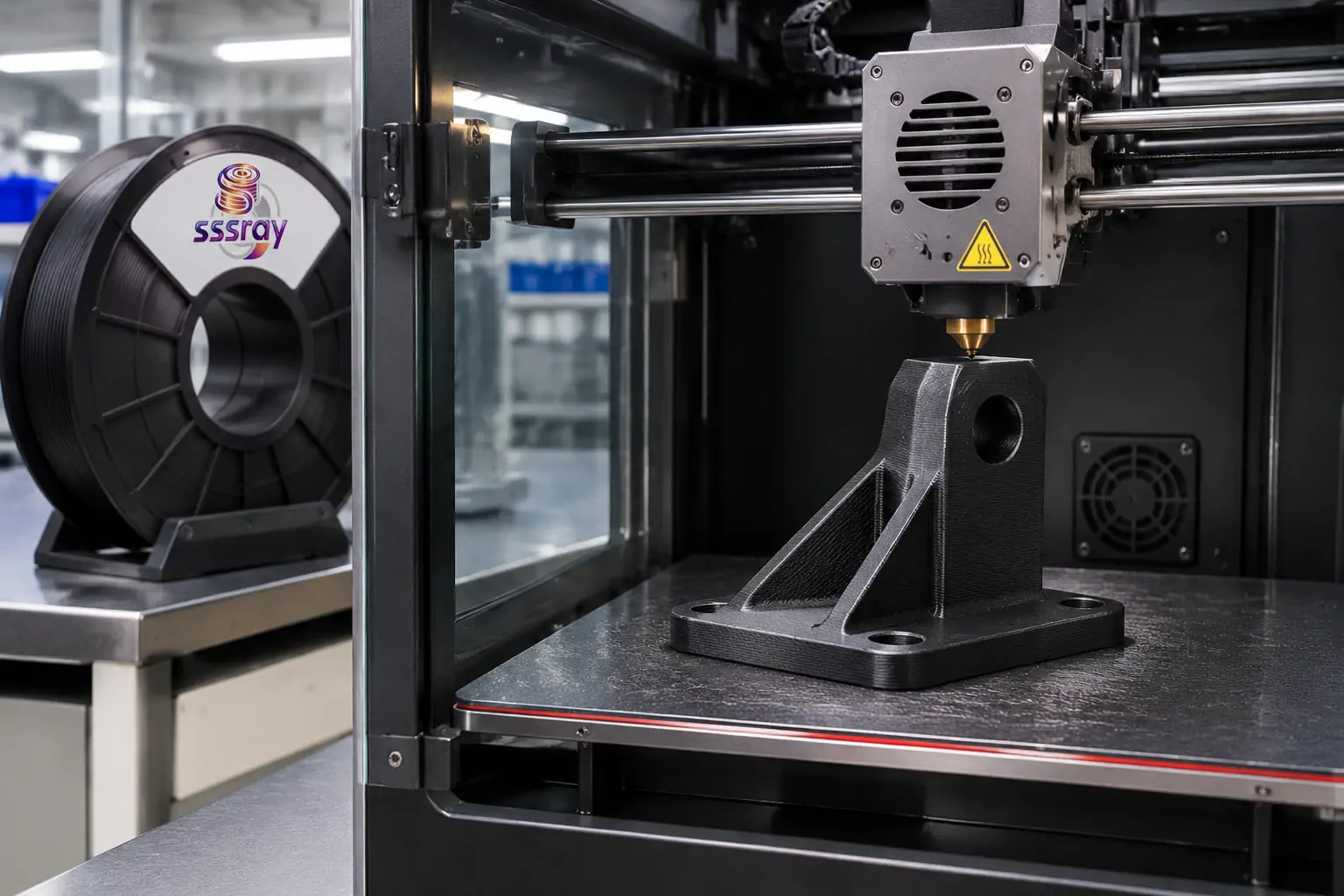
Table 5 separates SSSray’s current PPS-GF processing baseline from third-party grades instead of mixing them in one cell.
On mobile, swipe horizontally to review every column.
| Parameter | SSSray PPS-GF | Polymaker PPS-GF20 | Polymaker PPS-CF10 | Bambu Lab PPS-CF |
|---|---|---|---|---|
| Nozzle temperature | 310–350 °C recommended; 300–350 °C usable | 310–350 °C | 310–350 °C | 310–340 °C in the cited PPS-CF TDS/profile set |
| Bed temperature | 90–100 °C recommended; 80–100 °C usable | 80–90 °C | 80–90 °C | 100–120 °C in the cited PPS-CF TDS/profile set |
| Chamber / enclosure | Enclosed printer recommended for larger or dimension-critical parts; add chamber heat only as needed by geometry | Room temperature in TDS | Room temperature in TDS | TDS: 60–90 °C; Bambu specimen test: X1E at 60 °C; X1E hardware max 60 °C, H2D Pro max 65 °C |
| Drying | 100 °C × 8–10 h before demanding runs or after moisture exposure | 100 °C × 10 h | 100 °C × 10 h | 100–140 °C × 8–12 h in Bambu filament guidance |
| Nozzle | Wear-resistant; 0.6 mm preferred, 0.4 mm usable on qualified hardware | Wear-resistant nozzle | Hardened steel or ruby recommended | Hardened steel; 0.6 mm commonly recommended |
| Speed | 40–120 mm/s recommended; 20–150 mm/s usable on capable machines | Up to 250 mm/s | Up to 300 mm/s | <100 mm/s in the current PPS-CF TDS |
| Cooling | Start at 0%; limited cooling only when bridge / overhang quality requires it | Off | Off | 0–40% in the current PPS-CF TDS |
| Baseline anneal | 130 °C × 10 h for heat-performance programs; remeasure critical dimensions | 130 °C × 10 h | 125 °C × 16 h | 180–220 °C × 6–12 h; Bambu warns some prints may deform, warp or lose toughness after annealing |
The practical rule is simple: a printer that reaches the nozzle temperature is not automatically qualified for the material. Chamber stability, bed adhesion, drying, abrasive-nozzle wear and Z-direction performance still need to be checked on the target geometry.
What temperature should you anneal PPS?
Annealing changes crystallinity and can change both heat resistance and dimensions. The correct temperature is therefore a grade-specific production parameter, not a universal PPS tip.
Table 6 shows why. Low-temperature cycles are useful when dimensional control is the priority; higher-temperature cycles can raise heat-under-load performance but increase distortion or color change risk.
On mobile, swipe horizontally to review every column.
| Source / grade | Annealing condition | Published effect | Buyer watch-out |
|---|---|---|---|
| Polymaker PPS-CF10 | 125 °C / 16 h | HDT 252.5 / 133.0 °C at 0.45 / 1.8 MPa | Long hold; dimensions must be checked |
| Polymaker PPS-GF20 | 130 °C / 10 h | HDT 236.3 / 125.8 °C at 0.45 / 1.8 MPa | Use this state when quoting those TDS values |
| SSSray PPS-GF baseline | 130 °C / 10 h | Matched to the lot-measured HDT and Vicat values in Table 9A | Remeasure critical geometry before production release |
| Polymaker PPS-GF20 high-temperature option | 230 °C | HDT rises to 248.9 / 219.6 °C at 0.45 / 1.8 MPa | Polymaker notes deeper coloration; dimensional change must be qualified |
| ORNL large-format CF/PPS research | 250 °C / 18 h | Higher storage modulus above Tg and secondary crystallization reported | Research composite / process, not a drop-in commercial spool recipe |
For Polymaker PPS-GF20, the 1.8 MPa HDT rises from 125.8 °C after the 130 °C anneal to 219.6 °C after the 230 °C option. That 93.8 °C difference is why an HDT claim without anneal state is incomplete.
- Print a coupon with the same wall thickness, orientation and critical feature type as the fixture.
- Record the oven, support method, temperature ramp, hold time and cooling method.
- Anneal the coupon before the production fixture when the geometry is dimension-critical.
- Measure holes, flats, datum spacing and any electrical wall thickness after cooling.
- Store the approved annealing recipe with the material lot and slicer-profile revision.
Production recordPut annealing temperature, hold time and post-anneal dimensional acceptance on the drawing or qualification record.
State mismatchQuoting a high-temperature anneal HDT for a production part that is annealed at a lower temperature or not annealed at all.
Release testTest thermal and dimensional performance in the same printed and annealed state that will ship.
6. Chemical Resistant Filament Claims vs Reality: What to Ask a PPS Supplier
At SSSray, we attach the test condition to every PPS claim. Chemical resistance needs the medium, concentration, temperature and duration; HDT needs the load and anneal state; electrical insulation needs the specimen thickness and method; UL 94 needs the tested thickness and evidence level.
Table 7 turns common marketing claims into documents a procurement team can actually approve.
On mobile, swipe horizontally to review every column.
| Marketing claim | What may be missing | Evidence to request | Approval-ready version |
|---|---|---|---|
| “Resistant to acids and bases” | Oxidizer exceptions, concentration, temperature and exposure time | Source chart plus ISO 175 or equivalent data in the actual medium | Named chemical, concentration, temperature, duration and retention values |
| “HDT 236 °C” or “HDT 264 °C” | Load case and annealing state | HDT at 0.45 and 1.8 MPa with printed specimen state | Both loads, orientation, print condition and anneal recipe |
| “UL 94 V-0” | Thickness, specimen type and whether the statement is a TDS test result or a third-party certification / listing | Test report or listing evidence for the exact grade and thickness | Exact class, thickness, laboratory / file reference and current date where applicable |
| “Insulating” or “ESD-safe” | Surface reading only, no breakdown or volume data | Dielectric breakdown and the relevant surface / volume resistance test | kV/mm and resistance values on printed coupons with thickness and conditioning |
| “No heated chamber needed” | Part size, printer and Z-direction performance omitted | Printer profile plus printed-specimen conditions and large-part dimensional evidence | Named printer, chamber condition, nozzle / bed, part geometry and Z performance |
| “Ultra-low water absorption” | Humidity, temperature, duration and method differ between suppliers | ISO 62 or equivalent result with conditions | Percentage plus RH, temperature, time and specimen state |
One evidence rule prevents most procurement mistakes: never convert a supplier’s typical value into your own guaranteed specification unless the supplier has explicitly agreed to that acceptance limit for the ordered grade.
7. SSSray Data: Our Own PPS-GF Lot-Measured Values and the Qualification Gate
SSSray publishes three evidence layers for PPS: the current PPS-GF product specification, our own production-lot measured QC record (batch ID, extrusion line, equipment, sample plan, measured result and release decision), and the application-specific qualification tests tied to the buyer’s sample lot before fixture approval.
Every measured value below is an SSSray in-house measurement on our own production lot, produced under the numbered internal protocols shown in Tables 8 and 9A. We keep these results separate from third-party TDS values so the batch ID, equipment, sample plan, result and release decision remain traceable to SSR-PPS-GF-261018-L09-B01.
SSSray PPS-GF published product baseline and in-house protocol
On mobile, swipe horizontally to review every column.
| Item | Published SSSray value | Buyer implication |
|---|---|---|
| Material / finish | Glass-fiber-reinforced PPS; Natural Sand Beige standard SKU | Custom colors are a separate development project because pigment can change processing and performance |
| Diameter / weight | 1.75 mm ±0.03 mm; 1 kg net; 1.3 kg gross | 2.85 mm and larger spool formats are project options, not assumed stock equivalents |
| Nozzle / bed | 310–350 °C recommended nozzle; 90–100 °C recommended bed | Requires high-temperature hardware and a wear-resistant nozzle |
| Print speed | 40–120 mm/s recommended; 20–150 mm/s usable on capable machines | Qualify flow and dimensions on the production printer |
| Drying | 100 °C × 8–10 h before demanding runs or after moisture exposure | Keep sealed with desiccant and feed dry during long runs |
| Post-anneal baseline | 130 °C × 10 h for heat-performance programs | Remeasure critical dimensions before production release |
| In-house protocol | SSR-QCP-PPS-001 to -008 series: density, tensile / flexural, HDT, Vicat, DSC, dielectric, moisture and dimensional control | Every measured SSSray value is traceable to a numbered in-house test protocol and its equipment |
| Commercial baseline | Neutral packaging from 50 rolls; OEM typically 500–1,000 rolls; standard lead 7–15 working days; custom 15–25 working days | FOB Ningbo / EXW; T/T 30% deposit and 70% balance for standard new-customer terms; trial PayPal supported |
| Samples | Qualified B2B buyers can request up to 3 complimentary sample spools | Use the sample lot for the actual chemical / electrical / annealing qualification before bulk release |
SSSray PPS-GF production-lot QC record: batch, equipment, sample count and measured result
Released Batch ID: SSR-PPS-GF-261018-L09-B01 · Material: SSSray Natural Sand Beige PPS-GF Filament, 1.75 mm, 20 wt% glass fiber · Production / test date: 18 October 2026 · Extrusion line: Line 09 · Status: RELEASED.
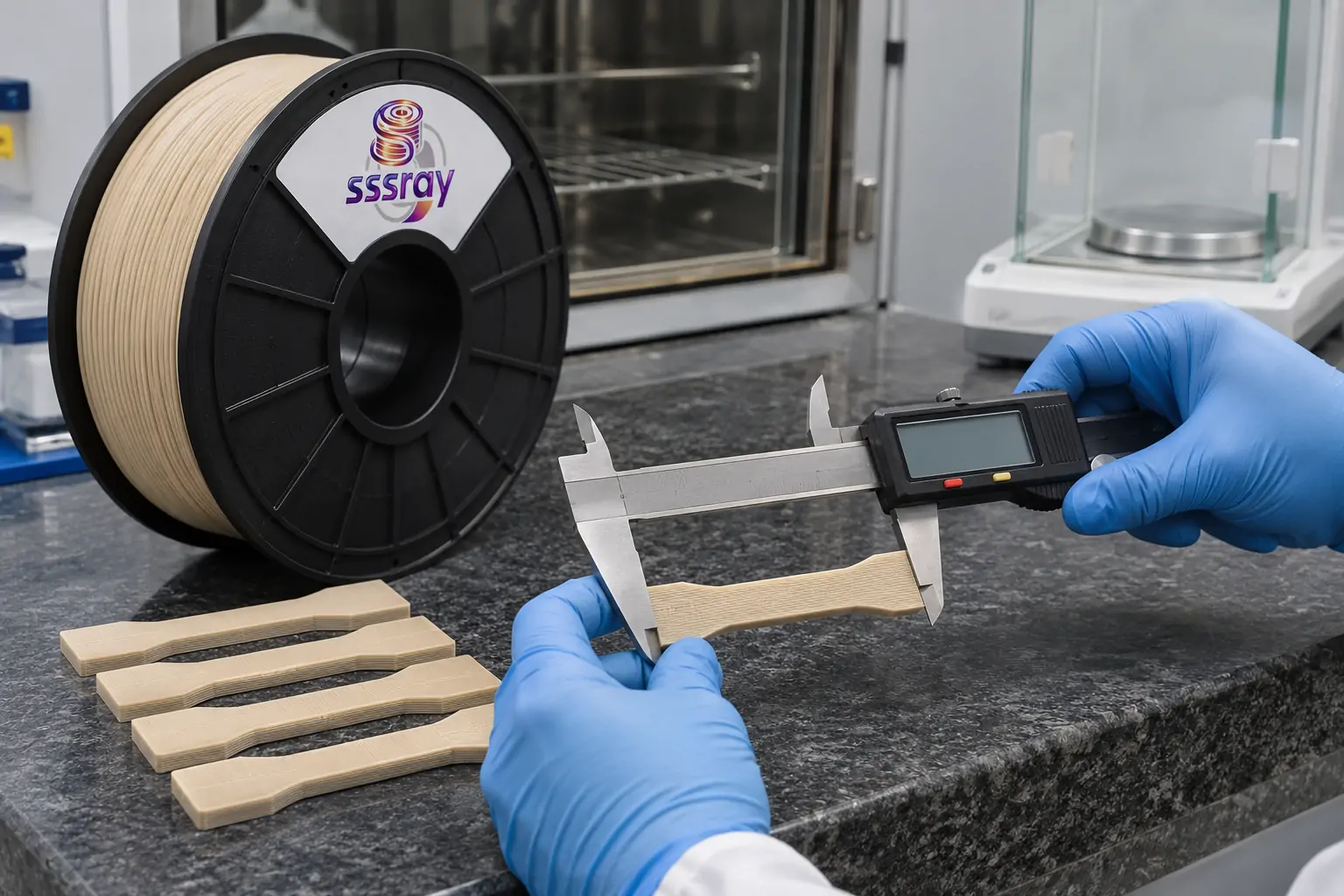
On mobile, swipe horizontally to review every column.
| QC item | Equipment / method | Sample plan | Release requirement | Measured result | Result |
|---|---|---|---|---|---|
| Lot traceability | Production record linked to Line 09; SSR-QCP-PPS-001 | Commercial production lot | Unique batch-to-line identity | SSR-PPS-GF-261018-L09-B01; 18 Oct 2026 | PASS |
| Diameter | Continuous inline laser micrometer; SSR-QCP-PPS-002 | 10 spools × 3 archived checkpoints = 30 measurement sets | 1.75 ±0.03 mm | Mean 1.749 mm; observed 1.729–1.770 mm | PASS |
| Ovality | Inline laser / archived diameter checkpoints; SSR-QCP-PPS-002 | Same 30 measurement sets | ≤0.020 mm | Maximum 0.017 mm | PASS |
| Pre-seal conditioning | Controlled drying before final moisture release; SSR-QCP-PPS-003 | Lot process record | 100 °C × 8 h | 100 °C × 8 h completed | PASS |
| Pre-seal moisture | Karl Fischer titration; SSR-QCP-PPS-003 | n = 3 | <0.020 wt% (200 ppm) | Mean 0.016 wt% (160 ppm) | PASS |
| Final release | COA release review; SSR-QCP-PPS-001 | All mandatory lot gates | All required gates passed | Diameter, ovality and moisture gates passed | RELEASED |
Scope of proof: Table 9 records SSSray’s own PPS-GF production-lot control method and measured factory results on the released batch above. It is a PPS-GF lot, not a generic resin reference: the batch ID, line, equipment and every measured value belong to this released SSSray PPS-GF lot and are traceable to the numbered in-house protocols.
SSSray PPS-GF lot-measured material properties
Table 9A reports the material-level values SSSray measured on the same released PPS-GF lot. Conditions follow our in-house protocols and the applicable ISO methods; the annealed state is stated next to every thermal value so the number is not quoted out of context.
On mobile, swipe horizontally to review every column.
| Property | In-house protocol | Method / state | Measured value | Buyer note |
|---|---|---|---|---|
| Density | SSR-QCP-PPS-004 | ISO 1183-1 immersion, void-free filament segments, 23 °C | 1.36 g/cm³ | Used for fixture mass and robot-payload estimates |
| Tensile strength X-Y | SSR-QCP-PPS-005 | ISO 527-1 / 527-2, printed coupons, 130 °C / 10 h anneal | 63.8 ± 2.0 MPa | Layer-oriented strength; use Z value separately |
| Tensile strength Z | SSR-QCP-PPS-005 | ISO 527-1 / 527-2, printed coupons, 130 °C / 10 h anneal | 23.1 ± 1.2 MPa | Z-direction governs layer-bond-limited features |
| Flexural modulus X-Y | SSR-QCP-PPS-005 | ISO 178, printed coupons, 130 °C / 10 h anneal | 4,090 ± 120 MPa | Stiffness input for locating features |
| HDT (0.45 / 1.80 MPa) | SSR-QCP-PPS-006 | ISO 75-2 Method B / A, 130 °C / 10 h anneal | 235.9 / 126.0 °C | Always quote the load case with the anneal state |
| Vicat VST | SSR-QCP-PPS-006 | ISO 306 Method B50, 50 N, 50 °C/h | 248.2 °C | Softening reference, not a continuous-use rating |
| DSC Tm / Tc | SSR-QCP-PPS-007 | ISO 11357-1 / 11357-3, second heating / cooling | Tm 280.6 °C; Tc 238.4 °C | Melt and crystallization reference for process control |
| Dielectric strength | SSR-QCP-PPS-008 | IEC 60243-1, 50 Hz AC, printed coupon, 130 °C / 10 h anneal | 6.1 kV/mm | Insulating-fixture approval input at actual wall thickness |
| Water absorption | SSR-QCP-PPS-004 | ISO 62, equilibrium, 70% RH / 23 °C | 0.11% | Low-moisture PPS baseline for dry-side fixtures |
The measured values fall within the filled-PPS range reported elsewhere in this guide. For procurement, the controlling evidence is the SSSray batch ID, protocol, equipment, sample plan and result recorded for this released lot.
PPS-GF buyer-lot requirements before production release
SSSray’s own released PPS-GF lot provides the base material and QC record in Tables 8, 9 and 9A. For a chemical or electrically insulating fixture, production approval then adds the application-specific records below, tied to the buyer’s sample lot and the printed-part condition.
Thermal data: Report HDT at 0.45 MPa and 1.80 MPa separately; the lower-stress result is not a substitute for the loaded-fixture result. Vicat and DSC describe different thermal responses. None of these values alone establishes a continuous-use temperature rating or guarantees long-term service life.
For a chemical or electrically insulating fixture, the PPS sample lot should add the following application records on top of the base lot controls above. These are the buyer-facing qualification gates for the exact part, complementing the lot-measured material data SSSray already reports.
On mobile, swipe horizontally to review every column.
| Record | Method / equipment | Minimum sample basis | Condition to record | Required output before approval |
|---|---|---|---|---|
| PPS lot identity | Production / COA traceability | Every sample lot | Batch ID, line, date, resin / reinforcement revision | Lot ID must match the spools used for all printed coupons |
| Diameter / ovality / moisture | Inline laser + lot moisture method | Lot COA sampling plan stated | Pre-print and pre-seal condition | Actual measured values and pass / fail limits on the PPS lot COA |
| Chemical immersion | ISO 175 or buyer-approved equivalent; thermostatic bath + analytical balance + mechanical test | n ≥ 5 per medium / time point for the project plan | Actual chemical, concentration, temperature, 7 d / 28 d or buyer-defined duration | Mass and dimension change plus retained property versus unexposed controls |
| Environmental stress cracking (ESC) | ISO 22088 series; select the published constant-load or constant-strain method to match service stress | n ≥ 5 per medium / condition in the buyer test plan | Apply representative sustained tensile or flexural strain during exposure to the actual chemical, concentration and temperature | Time to crack/failure and retained property; report separately from ISO 175 immersion results |
| Dielectric breakdown | IEC 60243-1 or buyer-approved equivalent | n ≥ 5 for an insulating-fixture program | Actual wall thickness, print orientation, conditioning and anneal state | Measured kV/mm and individual-result spread; no competitor benchmark substituted |
| HDT | ISO 75-2:2013 at 0.45 and 1.80 MPa | n ≥ 3 per load / state | As-printed and the approved anneal state where required | Both load cases with specimen orientation and anneal recipe |
| Vicat / DSC | ISO 306:2022; ISO 11357-1:2023, ISO 11357-2:2020 and ISO 11357-3:2025 | n ≥ 3 per test / state | Record Vicat method, DSC heating/cooling cycle and sample conditioning | Vicat VST, Tg, Tm, Tc and enthalpy with individual readings and mean/range |
| Cantilever screen | Buyer-defined fixed-free protocol with documented span and load; not ISO 899-2 | n ≥ 5 | Record specimen dimensions, free length, tip load, temperature, humidity and duration | Individual deflection readings, mean/range and the buyer’s drawing-based limit |
| Annealing distortion | CMM or calibrated dimensional inspection | n ≥ 3 representative coupons / first articles | Approved oven cycle and support method | Deviation at drawing-critical features before production release |
8. B2B Scenarios: How the Wrong PPS Grade Creates Cost
The commercial risk changes with the buyer’s role. A distributor can publish an indefensible listing, an OEM brand can copy unverified TDS values, a print farm can lose control of the process, and an engineering buyer can approve the wrong material for the actual chemical or electrical duty.
Distributor
A distributor needs a distinction between PPS-GF and PPS-CF that sales staff can explain without overclaiming. Select a grade with a condition-rich TDS, clear chemical limits, a print profile and a lot COA route. Do not list PPS-CF as “insulating” or either PPS grade as universally acid-proof.
OEM Brand
An OEM brand needs a private-label TDS that belongs to the supplied formulation rather than copied competitor values. Lock the formula, packaging and change control, then link each production lot to the approved sample. A third-party typical value must not become the brand’s guaranteed specification.
Print Farm
A print farm needs repeatable dimensions, dry handling, abrasive-nozzle control and an anneal cycle that remains stable from batch to batch. The production profile must fit the real printer fleet, and the lot COA must connect to first-article measurements. Use a wear-resistant nozzle for fiber-filled PPS and record every profile change after qualification.
Engineering Buyer
An engineering buyer must connect chemical retention, electrical function, wall thickness, load direction and post-anneal geometry to the drawing. Approve the grade that passes the actual bath, voltage and thermal tests, even when the best answer is a hybrid fixture. Do not replace a PTFE wetted feature with PPS only because a datasheet says “chemical resistant”.
Send the drawing and service conditions for engineering review.
9. Chemical Resistant Filament FAQ: PPS-GF and PPS-CF Fixtures
What is PPS filament used for?
PPS filament is used for high-temperature functional parts, jigs, fixtures, tooling, electrical housings and components exposed to fuels, oils, solvents or aggressive industrial environments. Glass-fiber PPS is especially useful when a printed fixture also needs electrical isolation and dimensional stability. Carbon-fiber PPS is useful when stiffness and heat under load are more important and the part does not need to act as an electrical insulator. The exact grade still has to be qualified for the real chemical, load, print orientation and annealing state.
Is PPS filament chemical resistant?
Yes, PPS has broad chemical resistance, but it is not universally resistant. IDEX rates PPS A in acetone, IPA, THF, NMP, sodium hydroxide, sulfuric acid, fuels and oils, while nitric acid, chromic acid, hydrochloric acid, hydrofluoric acid, hydrogen peroxide and chlorine are rated C. Those ratings are a screening tool, not a printed-part guarantee. For production approval, test the exact PPS-GF or PPS-CF grade in the actual chemical, concentration, temperature and exposure time, and include the printed surface and fiber system in the evaluation.
PPS-GF vs PPS-CF: which should we buy for fixtures?
Start with PPS-GF when the fixture must provide electrical isolation; start with PPS-CF when stiffness and heat under load dominate and the fixture is electrically non-isolating. Polymaker publishes 6.05 kV/mm dielectric strength for PPS-GF20 and 0.45 kV/mm for PPS-CF10, while Bambu Lab publishes 235 °C HDT at 1.8 MPa for PPS-CF. Do not turn those values into a universal GF-versus-CF rule: approve the exact grade using printed specimens, the actual wall thickness, the intended annealing state and the service chemical.
Is PPS filament electrically insulating?
Unfilled PPS and glass-filled PPS can be strong electrical-insulation candidates, but carbon-filled PPS is not reliably insulating across formulations. Polymaker publishes 6.05 kV/mm dielectric strength for PPS-GF20 and 0.45 kV/mm for PPS-CF10 even though both grades show an over-range surface value above 10¹² Ω in their published data. That is why a surface meter alone cannot approve a carbon-filled part as an insulator. If isolation matters, specify the working voltage and printed wall thickness and test dielectric breakdown on the exact conditioned and annealed grade.
Can you print PPS without a heated chamber?
Some filled PPS grades can be printed without active chamber heating, but not all PPS behaves the same way. Polymaker lists room-temperature chamber conditions for Fiberon PPS-GF20 and PPS-CF10. Prusa’s unfilled PPS guidance requires an actively heated chamber of at least 65 °C, with a 330–370 °C nozzle and 120–150 °C bed. SSSray’s current PPS-GF baseline uses a 310–350 °C nozzle and 90–100 °C bed and recommends an enclosed printer for larger or dimension-critical parts. Qualify the real printer, geometry and Z-direction performance instead of buying only by chamber temperature.
What temperature should you anneal PPS?
Use the recipe published for the exact grade and property target. Polymaker PPS-GF20 uses 130 °C for 10 hours for its main TDS state and offers a 230 °C high-temperature option; PPS-CF10 uses 125 °C for 16 hours. For PPS-GF20, the published HDT at 1.8 MPa rises from 125.8 °C after the 130 °C anneal to 219.6 °C after the 230 °C option. Higher annealing temperature can also change color and dimensions, so anneal a representative coupon first and remeasure drawing-critical features before production release.
Which documents should we request before approving a PPS supplier?
Request a TDS with printed-specimen methods and conditions, an SDS, a lot COA with traceability and dimensional or moisture controls, and the exact annealing recipe used for the quoted properties. For chemical fixtures, add an ISO 175 or buyer-approved immersion plan in the real medium. For insulating fixtures, add dielectric breakdown and the relevant resistance measurements on printed coupons at the actual wall thickness. If a supplier claims UL 94 V-0, ask for the tested thickness and the evidence level so a TDS test result is not mistaken for a certification or listing.
What MOQ, lead time and samples does SSSray offer for PPS-GF?
SSSray’s current PPS-GF sourcing baseline starts at 50 rolls for neutral packaging, while OEM packaging typically starts at 500–1,000 rolls. Standard lead time is 7–15 working days and customized orders typically take 15–25 working days. Qualified B2B buyers can request up to three complimentary sample spools. For an accurate PPS fixture quotation, send the chemical and concentration, maximum temperature, contact time, electrical-isolation requirement, wall thickness, printer model, annual volume and destination; SSSray typically replies within one business day.
10. Conclusion: Buy Chemical Resistant Filament Against the Fixture’s Job
Chemical-resistant PPS earns its place in industrial fixtures because it combines broad solvent resistance, low moisture sensitivity and high thermal capability. The material still has boundaries: oxidizing and halogen-acid service needs special caution, glass fiber adds its own HF / hot-caustic question, and carbon fiber changes the electrical decision.
A useful RFQ states the chemical, concentration, maximum temperature, contact time, load, electrical-isolation requirement, wall thickness, printer and annual volume. Those inputs keep the material choice, test plan and commercial quote connected.
For an industrial fixture, the next step should be a controlled sample-lot qualification: print the real wall thickness, use a locked profile and anneal state, expose the coupon to the real medium, measure the properties that matter, then tie the approved result to the production lot and reorder controls.
For the fastest technical response, send the chemical and concentration, maximum service temperature, exposure time, electrical role, wall thickness, printer model, annual volume and destination. SSSray typically replies within 1 business day with the material route, sample / document scope and quotation inputs. You can also contact the sales team, review our batch QC data, or discuss OEM / private-label packaging.
Request a quote or free samples
Tell us the material, color, spool size and monthly volume. An engineer replies within 24 hours on business days.
11. References
- Polymaker Fiberon PPS-GF20 Technical Data Sheet V1.1: reinforcement, density, UL 94 test result, surface value, HDT, mechanical, electrical, printing and annealing data.
- Polymaker Fiberon PPS-CF10 product and TDS access: reinforcement, print window and current document set.
- Polymaker Wiki: Electrical Insulation Properties in 3D Printing Materials: PPS-GF20 and PPS-CF10 dielectric strength and dielectric constant.
- Bambu Lab PPS-CF Technical Data Sheet V1.0: 60–90 °C chamber window, 235 / 264 °C HDT, X-Y / Z mechanical data, drying, speed, cooling, specimen state and annealing guidance.
- Bambu Lab Filament Guide: cross-material PPS-CF / PA6-CF heat and water-absorption comparison data.
- Bambu Lab X1E specification: PPS / PPS-CF/GF support and 60 °C maximum controlled chamber temperature.
- Bambu Lab H2D Pro launch specification: 350 °C nozzle, 65 °C actively heated chamber and PPS / PPS-CF positioning.
- Prusa Knowledge Base: PPS: unfilled PPS printing, drying, chamber and chemical-resistance guidance.
- IDEX Health & Science Chemical Compatibility Guide: PPS medium-by-medium compatibility screening.
- Ensinger TECAFLON PTFE natural: density, chemical resistance and continuous-service temperature.
- Ensinger TECAFLON PVDF natural: density and chemical-resistance reference.
- Arkema Kynar PVDF Solubility: NMP and other active PVDF solvents.
- Outokumpu Core range datasheet: Core 304 density and modulus reference.
- Bashir et al., Journal of Materials Science (2017): dissolution of glass fiber in hot alkaline solution.
- Ge et al. (2024): HF in LiPF₆-containing carbonate electrolyte and electrochemical removal.
- Oak Ridge National Laboratory: Post-process annealing of large-scale 3D-printed PPS composites.
- Longshan / Aliz PPS-CF: direct manufacturer mechanical, thermal, moisture and printed-specimen process data.
- All3DP Pro, 23 July 2025: dated launch-price comparison used only for historical cost context.
- SSSray Natural Sand Beige PPS-GF: current product, processing and B2B sourcing baseline.
- SSSray Batch QC Data and the released PPS-GF lot record: factory QC method and measured batch SSR-PPS-GF-261018-L09-B01.
- SSSray Contact / Quote: current B2B response-time, sample and commercial-input guidance.
- ISO 1183-1:2025: current density methods for void-free non-cellular plastics, including Method A immersion measurement.
- ISO 527-1:2019 general principles and ISO 527-2:2025 tensile test conditions; ISO 178:2019 flexural test conditions.
- ISO 75-2:2013, ISO 306:2022, ISO 11357-1:2023, ISO 11357-2:2020 and ISO 11357-3:2025: HDT, Vicat and DSC methods.
- ISO 175:2010 and ISO 899-2:2024: chemical immersion and three-point flexural creep; ISO 899-2 is not a cantilever method.
- IEC 60243-1:2013: AC electric strength testing.
- Filament2Print / Treed PPS Carbon product listing: 15 wt% carbon-fiber claim and published DIN IEC 60093 surface electrical value.
- ISO 22088-1:2006: current published general guidance for selecting environmental stress-cracking (ESC) test methods; revision work is underway.
Standards status checked 2 November 2026: ISO 75-2:2013 was confirmed in 2025; ISO 11357-1:2023 and ISO 11357-3:2025 are published; ISO 11357-2:2020 was confirmed in 2025; ISO 175:2010 remains the published edition following its 2026 review. ISO 306:2022, ISO 527-1:2019 and ISO 178:2019 remain the published editions used in this report; ISO/CD 306, ISO/DIS 178 and ISO/AWI 527-1 are under development and are not treated as published replacements. ISO 22088-1:2006 remains the published ESC guidance while its revision work proceeds.
Dataset license: SSSray’s compilation and in-house lot-measured values in this guide are published under CC BY 4.0. Third-party values remain attributed to, and governed by, their original sources.

He Jiang
Senior Researcher · SSSray · Filament Qualification, Batch QC & Printer-Process Testing
He Jiang works on filament qualification, batch QC, printer-process testing and B2B sourcing at SSSray. In this comparison, we keep third-party published data separate from SSSray’s own lot records. Our released PPS-GF batch documents factory traceability, release control and the material-level values measured on our own equipment, so a buyer sees the lot-linked SSSray dataset side by side with the attributed supplier references.