Online time
Monday to Friday: 9AM - 8PM
Weekend: 10AM - 5PM

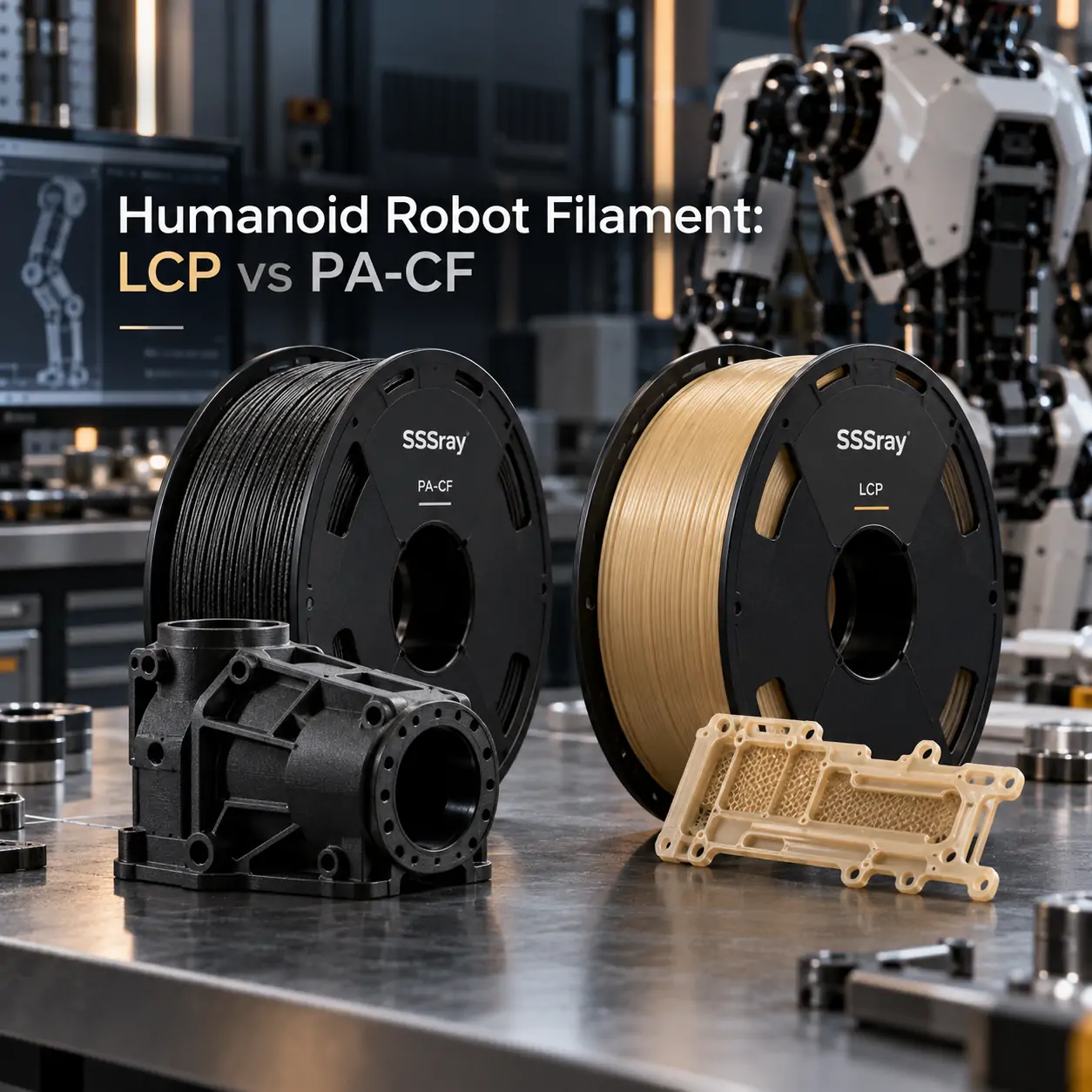
TL;DR: Buy PA-CF for Humanoid Robot Parts Now, Qualify LCP for the Hot, Thin Ones
For humanoid robot 3D printing filament in 2026, the practical split is simple. Carbon fiber nylon (PA-CF) is the material you can order, print and reorder today for housings, brackets and shells. LCP filament is the new high-heat option: Sumitomo Chemical announced it on September 1, 2026 and plans samples this year, so treat it as a qualification project, not a stock item. For current commercial humanoid programs, we keep primary lower-body load paths in metal unless the buyer has part-level validation for a polymer design.
Best optionA low-moisture PA-CF (PA12 or PA612 base) for most actuator housings and covers; PA6-CF only where parts stay dry and run hot.
When not to use itGear teeth, output flanges and lower-body load paths. Also skip plastic where the aluminum case is the motor’s heat sink.
Key specificationPrinted X-Y and Z strength, wet-state modulus, and HDT at both 0.45 and 1.8 MPa, not one headline number.
Verify the supplierAsk how “wet” specimens were conditioned, and for a lot COA that matches the approved sample within an agreed tolerance.
Procurement warningThe stiffest dry grade can be the softest wet one: one published PA6-CF20 falls from 8,636 to 2,508 MPa after water conditioning.
Abstract
Humanoid robots have moved from stage demos to shipments. Omdia counted about 13,000 units shipped worldwide in 2025, and Counterpoint Research reported first-half 2026 shipments up nearly 300% year on year. That growth pushes a very practical question into purchasing departments: which printed materials are safe to put next to a joint?
At SSSray, we do not treat the claim that LCP and PA-CF already “dominate” physical AI hardware as a purchasing fact. In September 2026, the robotics technical lead at Kingfa, one of China’s largest plastics compounders, put total engineering-plastics use at roughly 6–10 kg per humanoid, mostly in upper-body parts, and said no company has yet replaced metal with plastic in load-bearing lower-body parts such as thighs. Meanwhile, LCP filament for FFF printers only reached the announcement stage on September 1, 2026.
So the useful question is not which material wins. It is which part gets which material, and how you prove it before a bulk order.
Three misreadings cause most of the expensive mistakes. First, buyers read dry datasheet stiffness as service stiffness. Second, they treat heat deflection temperature (HDT) as a continuous-use rating. Third, they assume “strength comparable to aluminum” also means stiffness, fatigue life and heat-sinking comparable to aluminum.
The B2B decision logic therefore runs from the joint to the spool. Start with the housing temperature, the load direction, the cycle count and the humidity. Then pick the material class. Only then lock the spool specification, the documents and the reorder terms.
At SSSray, we qualify this decision in five working steps: separate documented facts from rumor, compare dry and conditioned PA-CF data with LCP reference data, map each material to the robot zone, check the printed-versus-CNC cost crossover, and finish with our seven-checkpoint Joint-to-Spool supplier approval. The same logic carries into our own lot records and reorder controls.

He Jiang
Senior Researcher · SSSray · 3D Printing Filament Manufacturing · Jinhua, Zhejiang
He Jiang is a senior researcher at SSSray, a 3D printing filament manufacturer in Jinhua, Zhejiang, China. His work for SSSray focuses on engineering-filament qualification, moisture conditioning, batch QC, printed directional performance and supplier documentation for B2B programs. For robotics and other demanding applications, he connects material selection with lot traceability, printer conditions and repeat-supply controls so buyers can qualify PA-CF, LCP and other engineering filaments against the actual part and production environment.
Key Takeaways
- “Dominate” is ahead of the evidence. Plastics are estimated at roughly 6–10 kg per humanoid today, mostly upper-body. For current commercial programs, primary lower-body load paths remain metal; printed parts are better targeted at housings, covers, mounts and hands.
- PA-CF is a purchase; LCP is a project. PA-CF has printed-specimen datasheets from several makers. Sumitomo’s LCP filament was announced on September 1, 2026, with samples planned this year and no printed-property table yet.
- Check wet stiffness before dry stiffness. In one maker’s printed-specimen data, PA6-CF20 keeps only 29% of its dry Young’s modulus after water conditioning, while PA612-CF15 keeps 78% and PA12-CF10 keeps 95%.
- Ask how “wet” was made. Those figures use 60 °C water immersion for 48 hours, an accelerated water-conditioned state rather than room-air service. Another maker reports saturation at 25 °C / 55% RH. The two are not comparable.
- HDT is not a continuous rating. One robot-grade frameless motor line is designed around an 85 °C winding limit and can sustain 155 °C. Match HDT at 1.8 MPa to the measured housing temperature, then add a creep check.
- A plastic housing removes a heat sink. Swapping an aluminum motor case for polymer can lower continuous torque, even when the polymer itself survives the heat.
- Directionality must be treated as a design input. Published PA-CF grades show Z tensile strength at about 49–67% of X-Y. For LCP, Sumitomo’s injection-molded E6008 reference shows 136 MPa flexural strength in the machine direction versus 61 MPa transverse; that MD/TD result is not an FFF Z-axis value, so printed LCP needs its own directional coupons.
- Fatigue is strongly matrix-influenced. Published fatigue limits for printed short-carbon-fiber nylon sit around 48–67 MPa on favorable layups; moisture and temperature belong in qualification because both can soften the nylon matrix.
- Printing wins on revisions, CNC on volume. In our illustrative model, a printed PA-CF bracket beats machined aluminum below about 84 parts per design revision.
1. Physical AI Materials in 2026: Where 3D Printed Parts Really Sit in a Humanoid
Direct answer: printed polymers are documented in housings, covers, shells, hands and research platforms. They are not documented in the main load paths of commercial humanoid legs. Any material plan built on “plastics replace metal everywhere” starts from a rumor.
Think of a humanoid as three kinds of parts. Some carry the robot (hip, knee, ankle). Some hold things in place (motor housings, sensor mounts). Others simply cover (shells, fairings). Printed filament competes mainly in the last two groups.
Tesla Optimus manufacturing materials: confirmed versus assumed
We use Table 1 to separate five popular claims from what primary or named sources actually document as of October 2026.
On mobile, swipe horizontally to review every column.
| Popular claim | What is documented | What it means for a buyer |
|---|---|---|
| “Humanoids are shipping in volume” | About 13,000 units shipped in 2025 (Omdia); H1 2026 shipments up nearly 300% year on year (Counterpoint Research) | Demand is real, but concentrated in a handful of makers |
| “Optimus is built from PEEK, LCP or PA-CF” | Tesla has not published a bill of materials. Its December 2023 Gen 2 reveal announced a 10 kg weight saving without naming a material, as Humanoids Daily noted in September 2026 | Do not quote or stock on rumor; ask for the material call-out on the drawing |
| “Plastic is replacing metal across the robot” | Kingfa’s robotics lead: roughly 6–10 kg of engineering plastics per humanoid, starting with face, upper-arm and chest parts; no plastic yet in load-bearing lower-body parts | Target housings, covers and upper-body shells first |
| “LCP filament is available” | Sumitomo Chemical and Gutenberg announced an FFF LCP filament on September 1, 2026, with samples planned in 2026; SOLIZE and Daicel opened an LCP print verification service in April 2026 | Sample stage; expect a project quotation, not a price list |
| “PA-CF is proven for robot parts” | Printed-specimen datasheets exist from several makers; one printer vendor reports a PPA-CF torso about 40% lighter and 70% cheaper than aluminum (customer unnamed) | Proven as a material class; your part still needs its own coupons |
Which humanoid robot companies use 3D printed components?
Commercial makers rarely disclose part-level processes. Even so, a few cases are documented:
- UC Berkeley’s Berkeley Humanoid Lite: an open-source platform with 3D-printed cycloidal gearboxes and body parts, at a stated hardware cost under $5,000.
- Sumitomo Chemical: a printed LCP robot-hand housing shown with its September 2026 announcement, with robot design by HALMONIUM.
- Gutenberg: a NEDO-backed program with Tokyo University of Science on lightweight, high-strength FFF robot parts.
In addition, the molding supplier ENGEL observes that parts adequate as CNC-machined or 3D-printed prototypes become a bottleneck once volumes rise. So printing is today’s route for rapid prototyping of humanoid design and for low-volume production in robotics. It is a bridge; plan the hand-over.
Procurement implicationSize your filament program around housings, mounts, covers and fixtures, not around whole-robot tonnage forecasts.
Mistake to avoidOpening a “humanoid-grade” SKU because of a brand rumor, with no part drawing behind it.
How to verifyAsk the robot team for three things: the part list by zone, the housing temperature, and the build volume per revision.
2. LCP vs PA-CF Robot Parts: Two Different Ways to Get Stiff
Direct answer: PA-CF gets its stiffness from chopped carbon fibers inside a nylon matrix. LCP gets much of its directional performance from rigid molecular domains that align with flow. Published PA-CF data shows a clear Z-axis penalty; printed LCP is also highly directional, but resin MD/TD data cannot be substituted for an FFF Z-axis result. The other major difference is water: nylon absorbs it and softens, while Sumitomo’s E6008 LCP reference lists 0.02% water absorption.
Why LCP reinforces itself
Picture logs floating down a river. They turn to point along the current. Liquid crystal polymer chains do the same in a nozzle, so the printed bead behaves like a bundle of aligned fibers. ETH Zürich researchers showed this for FFF in a 2018 Nature paper, and the spin-off NematX reports up to 25 GPa modulus and 650 MPa tensile strength along the print direction.
However, alignment cuts both ways. Sumitomo’s injection-molding anisotropy table for SUMIKASUPER E6008 lists flexural strength of 136 MPa in the machine direction (MD) and 61 MPa transverse (TD), with flexural modulus of 12.2 GPa versus 4.4 GPa. E6008 is a 40% glass-fiber-reinforced injection-molding grade, so those values are a directional resin reference, not printed-filament proof. For an LCP filament RFQ, request printed X/Y/Z or an equivalent orientation matrix from the exact grade and target machine.
Why PA-CF changes with humidity
Nylon chains carry amide groups that hold water molecules. Absorbed water pushes the chains apart and works like a plasticizer. The carbon fibers stay stiff, but the matrix around them softens, so the part flexes more under the same load.
Table 2 compares published values. Check the “data basis” column first: printed and molded values cannot be mixed.
On mobile, swipe horizontally to review every column.
| Material | Data basis | Stiffness reference, dry → wet (MPa) | Directional strength reference (MPa) | HDT / DTUL at 0.45 / 1.8 MPa (°C) | Water uptake |
|---|---|---|---|---|---|
| PA12-CF10 (Polymaker Fiberon) | Printed, annealed specimens | 3,311 → 3,131 (Young’s modulus, X-Y) | Tensile: 77.4 X-Y / 52.2 Z | 131 / 105 | 2.92% specimen moisture after 60 °C water, 48 h |
| PA612-CF15 (Polymaker Fiberon) | Printed, annealed specimens | 5,136 → 3,990 (Young’s modulus, X-Y) | Tensile: 91.9 X-Y / 48.3 Z | 175 / 114 | 2.57% specimen moisture after 60 °C water, 48 h |
| PA6-CF20 (Polymaker Fiberon) | Printed, annealed specimens | 8,636 → 2,508 (Young’s modulus, X-Y) | Tensile: 109.3 X-Y / 54.0 Z | 215 / 173 | 5.30% specimen moisture after 60 °C water, 48 h |
| PAHT-CF (Bambu Lab, PA12-based) | Printed specimens, maker’s store listing | 4,230 → 3,640 (bending modulus, X-Y) | Bending: 125 X-Y dry / 61 Z dry | 194 / not publicly listed | 0.88% saturated at 25 °C / 55% RH |
| LCP-GF40 (SUMIKASUPER E6008 reference) | 40% glass-fiber injection-molding grade, not printed filament | Flexural modulus 12,200 MD / 4,400 TD | Flexural: 136 MD / 61 TD | 312 / 279 | 0.02% (ISO 62) |
Two cautions apply. First, Polymaker’s “wet” state means annealed specimens soaked in 60 °C water for 48 hours. Read it as an accelerated water-conditioned state, not as room-air service. Second, the LCP row is molded resin data; Sumitomo has not yet published printed properties for its new filament.
Young’s modulus of printed PA-CF, dry versus water-conditioned (X-Y, MPa)
The ranking flips. Dry, PA6-CF20 has the highest Young’s modulus of the three. After the stated 60 °C / 48 h water conditioning, it has the lowest. Our own Q1 2026 controlled-humidity record shows the same procurement direction under a different method: at 23 °C and 50% RH, PA6-CF reached 2.40% moisture at 720 h while PA12-CF reached 0.85%. Those two tests are not numerically interchangeable, but both show why nylon base and conditioning method belong in the purchase specification.
Procurement implicationWrite the polyamide base, fiber content and the conditioning method into the PO. “PA-CF” alone is not a specification.
Mistake to avoidComparing one maker’s immersion data with another maker’s 55% RH data as if they were the same test.
How to verifyPrint X-Y and Z coupons, condition half of them, and test both sets on the same machine.
3. Robot Actuator Housing Filament: What Withstands Motor Heat Continuously?
Direct answer: use the measured polymer-housing temperature, not the motor winding rating, as the screening input. If the housing itself reaches about 85 °C, dry PA612-CF15 and PA6-CF20 show more published margin at the tougher 1.8 MPa HDT load than PA12-CF10. If the housing approaches 155 °C, the shortlist moves toward PA6-CF-class, PPA/PAHT-class nylons or LCP, followed by creep and part-level thermal validation.
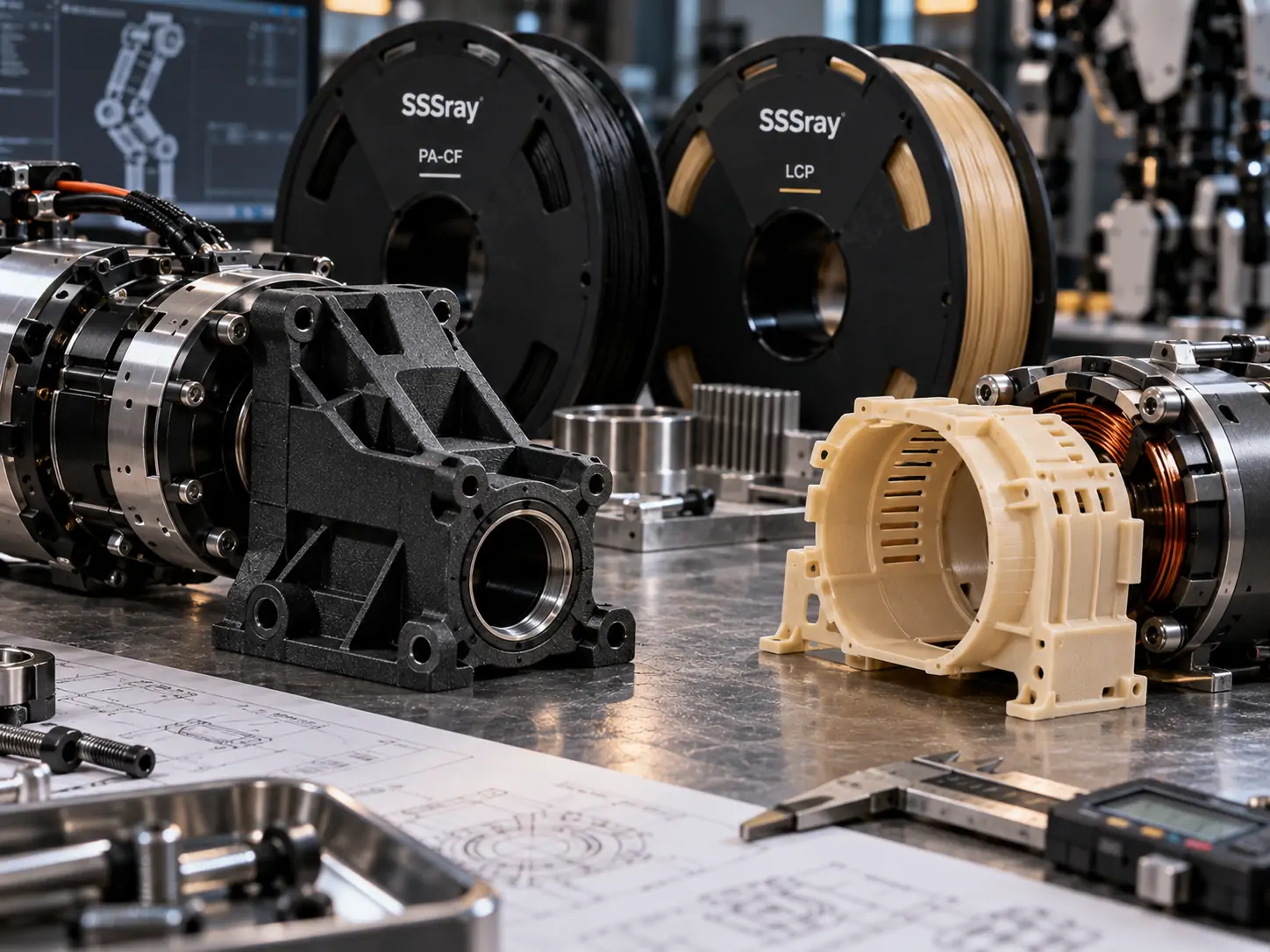
The numbers behind a heat-resistant robot servo housing
Kollmorgen states that its TBM2G frameless motors, a series aimed at robot joints, are designed to perform without exceeding 85 °C and can sustain a 155 °C winding temperature continuously. Those are winding temperatures, not polymer-housing temperatures. The housing surface can be much cooler, but a compact joint can narrow the gap, so the thermocouple measurement on the actual housing is the number that belongs in the material screen.
- If the housing reaches 85 °C: published HDT at 1.8 MPa leaves a screening margin of 20 °C for PA12-CF10, 29 °C for PA612-CF15 and 88 °C for PA6-CF20.
- If the housing itself reaches 155 °C: PA6-CF20 is the only one of those three examples whose published dry 1.8 MPa HDT clears that temperature, by 18 °C. That is still a screening result, not a continuous-use approval.
- LCP reference: SUMIKASUPER E6008, a 40% glass-fiber injection-molding reference grade, lists 279 °C DTUL at 1.82 MPa. Printed-filament performance still needs grade- and orientation-specific proof.
HDT is a short-duration deflection test under a specified load, not a continuous-use rating. For robot parts, we use it as a screening value and then check creep or hot-modulus behavior at the measured housing temperature to see whether dimensional drift accumulates during service.
The heat-sink problem that datasheets leave out
An aluminum motor case does two jobs. It holds the stator, and it carries heat away. 6061 aluminum conducts heat at roughly 167 W/m·K. Many unfilled engineering polymers are around two orders of magnitude lower, while thermally conductive filled grades can be materially higher and must be checked by formulation and direction.
Consequently, a printed housing that survives the temperature may still raise it. The windings run hotter at the same torque, so continuous torque has to come down. Sumitomo says its LCP technology achieves high thermal conductivity, but it has not published a value. Until a number with a test direction exists, treat thermal claims as open questions.
Dimensional stability of actuator parts
Bearing seats and gear center distances are where dimensional stability earns its keep. Three effects move them:
- Moisture swelling: nylon grows slightly as it takes on water, and the bore changes with it.
- Post-print crystallization: Polymaker anneals its nylon specimens at 100 °C for 16 hours, and parts can shift during that step.
- Directional shrinkage: molded E6008 LCP shrinks 0.18% along the flow and 1.16% across it, so even a “stable” polymer is stable in one direction first.
The practical fix is sequence. Anneal first, condition second, then ream critical bores or press in metal sleeves.
Procurement implicationRequest HDT at both loads plus a creep or hot-modulus value at your housing temperature.
Mistake to avoidApproving a plastic motor case on HDT alone, without re-checking continuous torque.
How to verifyTape a thermocouple to the housing, run rated continuous torque to steady state, and compare with the grade’s 1.8 MPa HDT.
4. Wear Resistance and Repetitive Motion: Choosing a Robot Joint Material
Direct answer: PA-CF handles repetitive motion well as a housing, link or bracket when the cyclic stress stays far below its static strength. It should not be the sliding surface or the gear tooth without a dedicated test. Published fatigue limits for printed short-carbon-fiber nylon sit around 48–67 MPa on favorable layups.
Can PA-CF handle repetitive motion stress in actuators?
A 2026 study in the International Journal of Fatigue from Louisiana State University tested printed, quasi-isotropic short-carbon-fiber PA12. It placed the fatigue limit at 48–54 MPa and found the damage was matrix-dominated: micro-cracking, fiber–matrix debonding and fiber pull-out, with little fiber breakage. An earlier study from the same group reached 67 MPa after optimizing print settings.
Likewise, a 2023 Politecnico di Milano paper concluded that the nylon matrix governs fatigue in printed short-fiber polyamide. So whatever softens the matrix, mainly moisture and heat, also shortens fatigue life. And none of these figures describe the Z direction.
Wear resistance of a robot joint material
Carbon fiber can reduce friction and wear in some nylon systems, but the result depends on process, reinforcement and counterface. One study of laser-sintered PA12 measured about 25% lower friction and 15–40% better wear resistance with carbon fiber. However, an FFF study on PA6 found glass-fiber samples showed lower friction and volume loss than carbon-fiber ones. Reinforcement type also changes how much the steel counterface is damaged.
Therefore, design the sliding pair on purpose: use a bushing, a bearing or a hardened sleeve, and keep fiber-filled nylon off soft aluminum shafts.
How to qualify materials for load-bearing robot joints
- Define the duty: peak and continuous torque, cycles per day, housing temperature and humidity.
- Find the weak axis. Orient the part so layer lines do not cross the main tensile load.
- Print X-Y and Z coupons from the same spool lot and the same profile as the part.
- Test dry and conditioned sets for tensile and flexural properties, then repeat at the housing temperature.
- Run a fatigue block on the real part at the real load ratio, and record stiffness drift as well as failure.
- Freeze the grade, lot rules, print profile and re-test triggers in the purchase specification.
How does LCP compare to metal for robot hand components?
A hand is many small, thin parts packed around small motors. That suits LCP on paper: very low water uptake and high heat resistance. Sumitomo states strength comparable to aluminum alloys; its footnote ties that to a fracture-strength test under certain conditions.
Stiffness is a different matter. Even the 25 GPa reported by NematX along the print direction is well below the roughly 69 GPa of 6061 aluminum. As a result, an LCP finger link needs thicker sections or ribs. Its real advantages over metal are weight, electrical insulation near sensors and printable internal channels.
Procurement implicationAsk suppliers for fatigue or creep data on printed specimens, with orientation and conditioning stated.
Mistake to avoidCopying a metal part’s wall thickness into a polymer design and expecting the same cycle life.
How to verifyCycle the real part on a rig and log deflection every few thousand cycles, not just the break point.
5. Humanoid Robot 3D Printing Filament by Body Zone
Direct answer: match the material to the zone’s limiting factor. Humid housings want a low-moisture PA-CF. Hot, dry housings can use PA6-CF. Hot and humid zones need PPA or PAHT-class grades. Thin, hot hand parts are the natural LCP trial. Load paths stay metal.
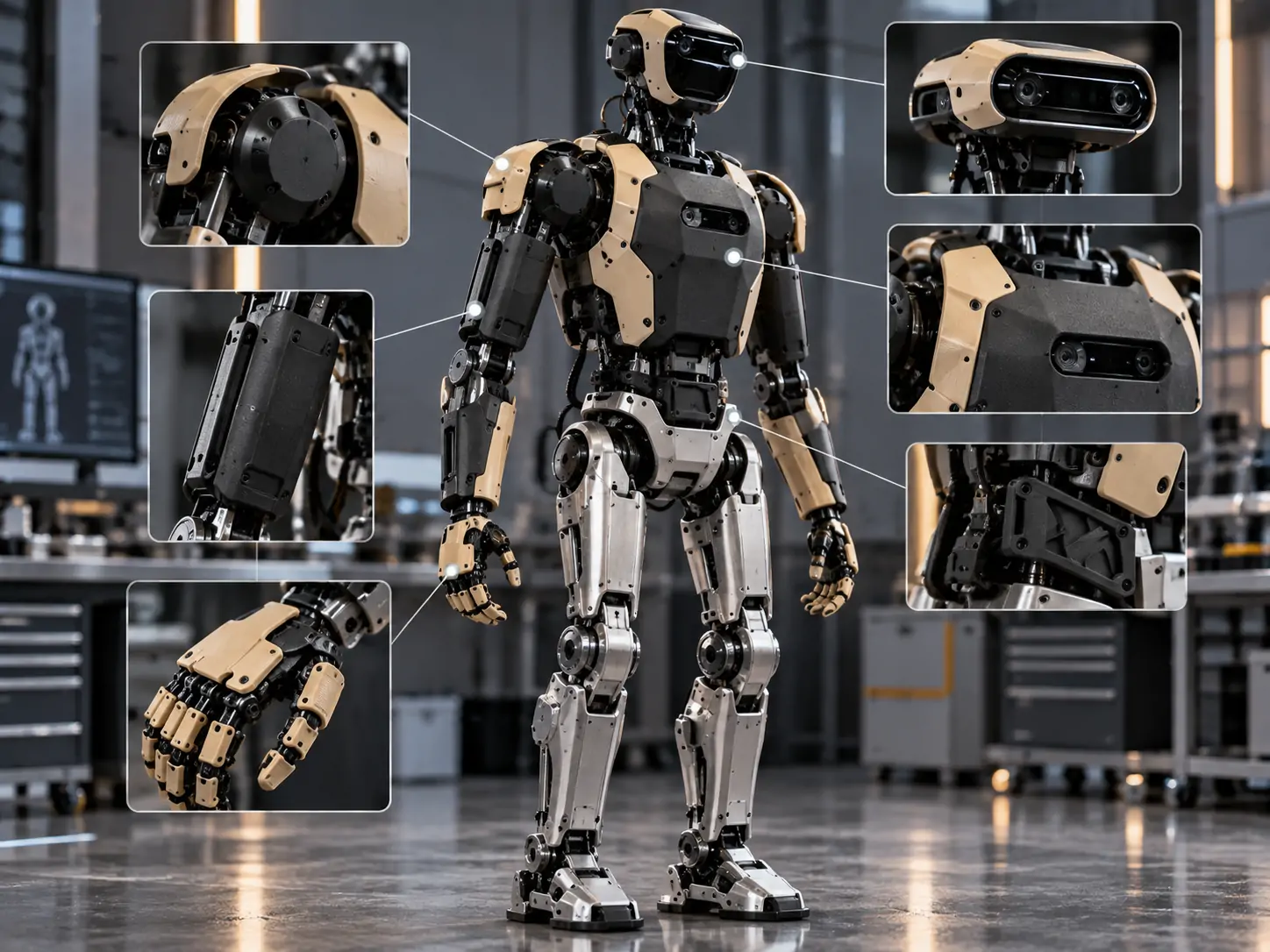
Table 3 is built for purchasing: best use, the number to ask for, and when to walk away.
On mobile, swipe horizontally to review every column.
| Option | Best use case | Key spec | Advantage | Risk | How to verify | When to reject | SSSray sourcing note |
|---|---|---|---|---|---|---|---|
| Low-moisture PA-CF (PA12 or PA612 base) | Actuator covers, sensor mounts, forearm and shin shells, cable guides | Wet-state modulus retention; HDT at 1.8 MPa (published examples: 105–114 °C) | Stiffness remains more stable than PA6-CF under the cited conditioning | Lower heat ceiling; Z strength about half to two-thirds of X-Y | Z coupons plus conditioned modulus | No wet data, or no conditioning method stated | Quoted per RFQ through custom engineering filament |
| PA6-CF / PA6/66-CF | Hot, dry housings near the motor; assembly-line jigs and fixtures | HDT at both loads (published example: 215 / 173 °C); dry modulus | Highest dry stiffness and heat resistance among common nylons | Stiffness can collapse when saturated | Conditioned coupons; sealed or coated design review | Humid service with no sealing plan | PA6/66-CF is listed in our carbon fiber range |
| PPA-CF / PAHT-CF | Housings that are both hot and humid; gearbox-adjacent covers | HDT (published example: 194 °C at 0.45 MPa) with low saturated uptake (0.88%) | Balances heat and moisture stability | Hotter printing; higher price | HDT at both loads; creep at service temperature | Only one HDT number offered | PPA-CF is listed in our carbon fiber range |
| LCP filament | Thin-wall hand and finger housings; hot insulators; sensor housings | Printed directional strength; E6008 resin reference DTUL 279 °C at 1.82 MPa; 0.02% water absorption | Heat, low moisture pickup and thin-wall potential in one material route | Sample-stage supply; strong directionality; machine-specific process | Coupons printed on the target machine; exact grade ID | Resin datasheet offered as printed-part proof | Qualification project and sample availability confirmed per RFQ |
| Machined metal (keep) | Gear teeth, output flanges, hip, knee and ankle load paths, heat-sinking motor cases | Alloy, temper and drawing tolerances | Stiffness, fatigue life and heat conduction | Weight; cost per design change | Standard metrology | Not applicable | Outside filament scope |
How much weight is really saved? At equal volume, PA-CF at 1.03–1.17 g/cm³ is about 57–62% lighter than aluminum at 2.70 g/cm³. Yet aluminum is roughly 8 to 21 times stiffer than the printed grades in Table 2, so walls get thicker. That is why field figures are lower: Kingfa cites up to about 50% with redesign, and one vendor case cites 40%.
SSSray sourcing note: our carbon fiber range lists PA6/66-CF and PPA-CF on 1 kg, 3 kg and 5 kg spools. For robot programs we usually suggest sampling two bases side by side, because one coupon set answers more than any single datasheet.
6. 3D Printed vs CNC Robot Parts: Cost-Benefit for Low-Volume Production
Direct answer: printing wins while the design is still changing and batches are small. CNC wins once the design freezes and volume climbs. In our illustrative model, the crossover is about 84 parts per design revision.
The model and its inputs
This is an illustrative model, not measured data. Replace every input with your own quotes. The part is a 150 g actuator bracket.
- Printed PA-CF: $9.00 filament (0.15 kg at $60/kg), $21.00 machine time (7 h at $3/h), $8.00 operator time (20 min at $24/h) and $2.00 for drying and nozzle wear. At a 90% accepted-part yield, that is $44.44 per good part, plus $60 of one-time profile setup.
- CNC 6061 aluminum: $8 stock, $25 machining (25 min at $60/h) and $5 deburring and inspection, so $38 per part, plus $600 of one-time programming and fixturing.
The formula is simple: cost per part = unit cost + one-time setup ÷ batch size.
Cost per part versus batch size: printed PA-CF and CNC aluminum
Printed PA-CF ($44.44 + $60 ÷ n)CNC 6061 aluminum ($38 + $600 ÷ n)
Rapid prototyping of a humanoid design: revisions are the real cost driver
Robot hardware changes often. Suppose a bracket goes through six revisions at ten parts each. In this model, CNC costs $5,880, because the $600 setup repeats every time. Printing costs about $3,027. The saving comes from the setup line, not from the material.
On the other hand, the model leaves out performance. If the printed part forces a torque derating or a thicker wall, add that cost. And once volume passes the crossover, plan the move to machining or molding early.
Procurement implicationQuote filament by cost per accepted part, including yield, drying and nozzle wear.
Mistake to avoidComparing a filament price per kilogram with a machined part price.
How to verifyLog accepted parts, rejects and print hours for one revision, then rerun the formula.
7. Bulk Filament Procurement for Robotics R&D Labs: The Joint-to-Spool Framework
A robot part fails at the joint, but the cause often sits on the spool. The Joint-to-Spool Framework follows seven checkpoints from application to reorder. One fail can cancel the other six.
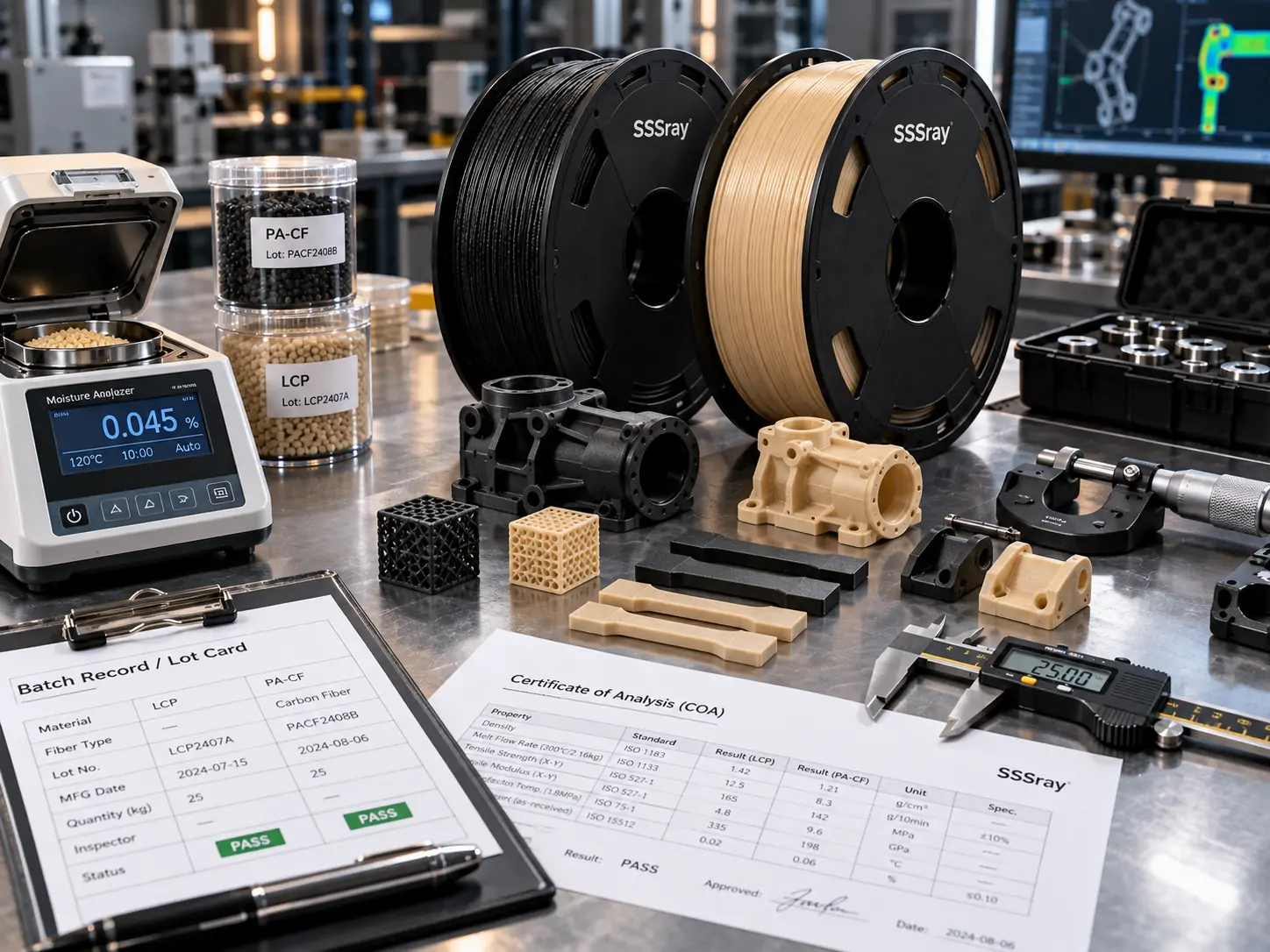
On mobile, swipe horizontally to review every column.
| Checkpoint | Why it matters | What to ask | Pass / fail signal | Hidden risk |
|---|---|---|---|---|
| Application requirement | Zone, temperature and load direction decide the material class | What is the housing temperature at continuous torque? Which way does the load run? | Pass: measured values. Fail: “it gets warm.” | A plastic case can raise the temperature it was chosen for |
| Material performance | Printed, directional and conditioned values differ from brochure values | X-Y and Z data? Wet-state method? HDT at both loads? | Pass: numbers with method. Fail: one dry tensile figure. | Conditioning methods are not comparable across makers |
| Printability | Robot labs print on specific machines, often unattended | Which printers and nozzles? Drying window? Annealing step? | Pass: a named profile that repeats. Fail: “prints on any machine.” | Published TDS notes a brass nozzle lasting about 9 hours on PA6-CF20 |
| Compliance | Robots ship to regulated markets and sit near people | RoHS and REACH files for the exact grade? Flame rating with thickness? | Pass: current, lot-linked files. Fail: generic resin certificate. | A resin-level rating does not transfer to a printed part automatically |
| Supplier reliability | New materials attract traders without process control | Who extrudes it? What is measured inline? Can we audit? | Pass: named factory, diameter log. Fail: no traceable origin. | LCP offered “from stock” while upstream samples are only starting |
| Landed cost | Yield, drying and nozzles change the real price | Cost per accepted part? Sample cost? Freight and duty? | Pass: line-item quote. Fail: price per kilogram only. | One rejected batch of joint housings stops a build |
| Reorder stability | The approved profile only fits the approved formulation | Will you notify us before changing resin, fiber or sizing? | Pass: written change control, retained sample. Fail: silent substitution. | Problems surface on the third lot, after the design is frozen |
Score each checkpoint pass, conditional or fail. Approve a supplier only when nothing fails and every “conditional” has a written action and an owner.
8. Supplier Claims vs Reality for Robot-Grade Filament
Robotics is a fashionable label, so marketing copy fills up with adjectives. Table 5 turns each claim into a document request.
On mobile, swipe horizontally to review every column.
| Vague marketing claim | What it might hide | Document, sample or test to request | What verifiable supplier evidence looks like |
|---|---|---|---|
| “Humanoid-grade” or “used in robots” | No named customer, part or test | The application, the part zone and the validation performed | A stated use case with coupon data, or an honest “not yet validated” |
| “Strength comparable to aluminum” | One direction, one test, no stiffness figure | Test standard, orientation, alloy compared and modulus | X/Y/Z strength and modulus with the method named |
| “Low moisture absorption” | No condition, or incomparable conditioning | Uptake and wet-state modulus with temperature, humidity and time | Dry and conditioned values from one method |
| “Heat resistant to 200 °C” | HDT at the light 0.45 MPa load only | HDT at 0.45 and 1.8 MPa; hot modulus or creep | Both HDT values and a continuous-use statement with its basis |
| “Wear resistant” | No counterface, load or speed | Wear test method, counterface material and result | Pin-on-disc or part-level data, including counterface condition |
| “LCP in stock” | Unclear grade or origin | Exact grade ID, upstream source and lot documents | Grade traceability and a written sample and lead-time quotation |
9. SSSray First-Hand Data and Robot-Part Coupon Protocol
Direct answer: we do not ask a robotics buyer to trust a material label alone. Our public evidence separates two questions that are often mixed together: how a PA-CF grade changes after humidity exposure, and how a production lot leaves our extrusion line. The first record below is PA-CF material-behavior data. The second is a PA6/66 engineering-nylon production-lot QC record used to show our lot-control method; it is not presented as PA-CF performance data.
SSSray 30-day PA-CF moisture record
In Q1 2026 we ran four SSSray production batches through a controlled 23 °C / 50% RH exposure series based on ISO 62:2008 Method 4 for controlled humid-air exposure. Samples were 0.5 mm printed tensile bars stored open on a rack, with 50% RH maintained by saturated magnesium nitrate solution. We weighed each grade on a calibrated moisture balance at seven time points; the table reports the mean of n=3 samples per grade.
On mobile, swipe horizontally to review every column.
| Exposure time | PA12-CF (15%) | PA6-CF (15%) | PA-CF V0 (PA66 base) | PPA-CF (15%) |
|---|---|---|---|---|
| 0 h, as sealed | <0.10% | <0.10% | <0.10% | <0.10% |
| 6 h | 0.10% | 0.18% | 0.12% | 0.06% |
| 24 h | 0.20% | 0.55% | 0.32% | 0.12% |
| 72 h | 0.38% | 1.05% | 0.60% | 0.22% |
| 168 h | 0.55% | 1.55% | 0.90% | 0.32% |
| 336 h | 0.72% | 2.00% | 1.20% | 0.42% |
| 720 h | 0.85% | 2.40% | 1.45% | 0.50% |
Test record: Q1 2026 SSSray PA-CF controlled-humidity series · ISO 62:2008 Method 4 basis · 23 °C · 50% RH · calibrated moisture balance · seven time points · mean n=3 samples per grade. Full public record: SSSray PA12-CF vs PA6-CF 30-Day Moisture Test.
For a humanoid program, the buyer takeaway is not that one percentage is a universal service limit. It is that the nylon base changes the speed and magnitude of moisture uptake. We use this record to decide which grades deserve dry-versus-conditioned mechanical coupons before a housing or bracket moves into repeat production.
Public SSSray production-lot QC record
The lot below is a separate commercial PA6/66 engineering-nylon record. We publish it here because it shows the production evidence we can attach to an engineering-filament qualification: a batch ID, line identity, instrument, sampling plan, conditioning step, measured values and release result. It must not be read as a carbon-fiber mechanical-property record.
On mobile, swipe horizontally to review every column.
| QC item | Public lot record | Release requirement | Result |
|---|---|---|---|
| Public Batch ID | SSR-PA6-66-260918-L07-B01 | Unique production-lot traceability | PASS |
| Material / date / line | SSSray PA6/66 Engineering Nylon Filament, 1.75 mm · September 18, 2026 · Line 07 | Lot-to-line record before packing | PASS |
| Diameter measurement | Continuous inline laser micrometer | 1.75 ±0.03 mm | PASS |
| COA audit sample | 10 spools × 3 archived laser checkpoints = 30 measurement sets | Representative checkpoints remain inside tolerance | PASS |
| Measured diameter | Mean 1.751 mm; observed range 1.731–1.772 mm | 1.72–1.78 mm | PASS |
| Maximum ovality | 0.018 mm | ≤0.020 mm | PASS |
| Pre-seal conditioning | 80 °C × 8 h | Controlled drying before moisture release | PASS |
| Moisture measurement | Karl Fischer titration, n=3; mean 0.017 wt% (170 ppm) | <0.020 wt% (200 ppm) | PASS |
| Final lot release | Diameter, ovality and moisture gates passed | All mandatory production QC gates passed | RELEASED |
Public verification: the complete lot record is published in our PA6 buyer guide and connected to our Batch QC Data & Factory COA program. For a robotics RFQ, the approved sample and production lot still receive their own grade-specific qualification record.
Robot-part coupon protocol for a qualified PA-CF or LCP project
After the material route and target printer are fixed, we use the protocol below to define the directional and conditioned evidence needed for a robot-part qualification. For SSSray qualification work, this protocol defines the coupon method; lot release still depends on the measured production record above.
Protocol ID: SSSRAY-ROBOT-COUPON-2026-10-R01 · Material: qualified 1.75 mm PA-CF or LCP filament · Sampling plan: n=5 specimens per orientation and per condition, with sample IDs tied to the approved filament lot and print profile.
On mobile, swipe horizontally to review every column.
| Control point | SSSray test condition | Acceptance / record requirement | Why it is controlled |
|---|---|---|---|
| Filament diameter | Inline laser gauge plus lot-linked audit check | Within the approved diameter tolerance; raw log retained with the lot | Flow variation changes strength in fiber-filled prints |
| Directional strength | ISO 527-2, X-Y and Z, n=5 each | Mean, spread and Z/X-Y ratio reported | Layer orientation is a structural design input |
| Moisture effect | Dry versus conditioned sets; conditioning method fixed in the project record | Mass gain and retained modulus reported together | Different conditioning methods cannot be compared as one wet-state number |
| Heat margin | ISO 75 at 0.45 and 1.8 MPa plus flexural or creep screening at the measured housing temperature | Buyer-defined margin and deformation limit | HDT alone is not a continuous-use rating |
| Bore stability | Critical bore measured after printing, post-treatment and conditioning | Change recorded in millimeters; buyer sets the fit limit | Bearing fit decides whether the housing survives assembly |
| Reorder stability | Repeat agreed release checks on every new production lot | Approved change-control and re-test trigger in writing | A frozen print profile depends on a controlled formulation and lot process |
10. B2B Scenarios: Who Buys Robot Filament, and Where It Goes Wrong
Distributor
Situation: robotics labs and startups ask for “something for humanoid parts.”
Bad choice: one generic PA-CF SKU, sold on its dry tensile number.
Consequence: housings loosen in humid sites; returns arrive as “bad batch.”
Better choice: two clearly labeled bases, one low-moisture and one high-heat, each with wet-state data and a drying window.
Verification: lot COA checked against the listing on every inbound shipment.
Next step with SSSray: review the wholesale range and documents.
OEM Brand
Situation: a robot or printer brand wants a private-label engineering line.
Bad choice: printing “aluminum-like strength” on the box from a resin datasheet.
Consequence: a customer’s joint part fails across the layers, and the claim becomes a liability.
Better choice: label claims limited to tested, directional, printed values.
Verification: coupon report on the brand’s own printer before artwork approval.
Next step with SSSray: plan a private-label engineering SKU.
Print Farm
Situation: prints batches of 20–50 actuator covers per revision for a robot maker.
Bad choice: switching spool brands between revisions to save a few dollars.
Consequence: bores drift, press fits change and a batch is scrapped.
Better choice: one approved lot rule, sealed-dryer feeding and a bore check per build plate.
Verification: accepted-part yield logged per revision.
Next step with SSSray: set up a production-lot trial.
Engineering Buyer
Situation: needs a hand or wrist housing that runs hot in a tight space.
Bad choice: ordering LCP because of a headline, with no machine able to print it.
Consequence: weeks lost; the part goes back to machined aluminum.
Better choice: run PA6-CF or PPA-CF now, and trial LCP in parallel on a qualified machine.
Verification: thermocouple run plus X/Y/Z coupons for both routes.
Next step with SSSray: send the part brief for an engineering review.
11. PA-CF and LCP Print and Sourcing Specs at a Glance
Print settings: published starting points
On mobile, swipe horizontally to review every column.
| Parameter | PA-CF (published Polymaker Fiberon values) | LCP filament |
|---|---|---|
| Nozzle temperature | 280–300 °C (PA6-CF20, PA12-CF10); 250–300 °C (PA612-CF15) | Not publicly specified by Sumitomo for this filament; confirm against the qualified filament and printer profile |
| Bed temperature | 40–50 °C | Not publicly specified by Sumitomo for this filament; confirm per grade and machine |
| Enclosure | Room-temperature chamber listed for these grades | Not publicly specified by Sumitomo for this filament; confirm against the qualified printer profile |
| Drying | 100 °C for 10 h; store below 20% RH | Not publicly specified for the new filament; 0.02% is an E6008 resin reference, not a filament handling instruction |
| Nozzle material | Hardened steel or ruby; brass lasts about 9 hours on PA6-CF20 | Not publicly specified by Sumitomo for this filament; confirm against the qualified process profile |
| Common failure | Wet-spool bubbling, weak layers, bore drift after annealing | Not publicly characterized for the new Sumitomo filament; directionality and interlayer performance must be qualified on the target machine |
| Fix | Dry per TDS, print from a sealed dryer, anneal at 100 °C for 16 h before finishing bores | Qualify orientation and process on the target machine before design freeze, then lock the approved profile |
Sourcing specs: LCP filament availability, lead time and what to put in the RFQ
On mobile, swipe horizontally to review every column.
| Item | What to specify | SSSray reference |
|---|---|---|
| MOQ | Qualification versus production quantity | From 50 spools under the qualification program; LCP confirmed per quotation |
| Lead time | Production, packing and transit, in writing | Standard carbon fiber orders 7–15 working days; customized 15–25 working days after specs are confirmed; LCP per quotation |
| Sample approval | Sample ID, lot, X-Y and Z coupon results | B2B qualification samples tied to a sample ID |
| Tolerance | Diameter and ovality, with method and raw data | ±0.03 mm diameter |
| Documentation | Lot COA, TDS, SDS; RoHS or REACH by destination | COA, TDS, SDS; RoHS and REACH on request |
| Packaging | Vacuum barrier bag, desiccant, spool that survives drying | Vacuum packing with desiccant; 1 kg, 3 kg and 5 kg spools |
| Reorder control | Change notice for resin, fiber, sizing or additives | Reorder spec linked to the approved sample |
12. Humanoid Robot 3D Printing Filament FAQ for B2B Buyers
Which filament can withstand robot motor heat continuously?
Start with the measured polymer-housing temperature, not the motor’s winding label. If the housing itself reaches 85 °C, published 1.8 MPa HDT values leave about 29 °C of screening margin for PA612-CF15 and 88 °C for PA6-CF20, while PA12-CF10 leaves 20 °C. If the housing approaches 155 °C, the shortlist shifts toward PA6-CF, PPA-CF, PAHT-CF or LCP. In your RFQ, request HDT at both loads plus hot-modulus or creep data, because HDT is a short-duration deflection test, not a continuous-use rating.
How does LCP compare to metal for robot hand components?
LCP is lighter, electrically insulating and has very low water uptake, and Sumitomo reports strength comparable to aluminum alloys under specified test conditions. It is not as stiff: NematX reports up to about 25 GPa along the print direction, versus roughly 69 GPa for 6061 aluminum. Sumitomo’s E6008 injection-molding reference also shows strong MD/TD anisotropy, but that is not an FFF Z-axis value. For a hand, use ribs and bead orientation deliberately, then qualify the exact printed grade with directional coupons before replacing a machined part.
Can PA-CF handle repetitive motion stress in actuators?
Yes for housings, links and brackets, if the cyclic stress stays well below static strength. Published fatigue limits for printed short-carbon-fiber nylon run from about 48 to 67 MPa on favorable layups, and the damage is driven by the nylon matrix. Because moisture and heat soften that matrix, test conditioned parts at operating temperature. Do not use those figures for the Z direction, gear teeth or sliding surfaces without a dedicated test on your own part.
What is the cost-benefit of 3D printed vs CNC robot parts?
Printing is cheaper while batches are small and the design keeps changing; CNC is cheaper once the design freezes. In our illustrative model of a 150 g bracket, printed PA-CF costs $50.44 per part at ten parts against $98.00 for machined aluminum, and the lines cross near 84 parts. Over six revisions of ten parts, printing saves about $2,853. Ask suppliers to quote cost per accepted part, and rerun the formula with your own yield and machine rates.
Which humanoid robot companies use 3D printed components?
Documented examples are mostly research and demonstration platforms. UC Berkeley’s open-source Berkeley Humanoid Lite uses 3D-printed gearboxes and body parts, Sumitomo Chemical showed a printed LCP robot-hand housing in September 2026, and Gutenberg runs a NEDO-backed program on printed robot components. Commercial makers seldom disclose part-level processes, and Tesla has not published a bill of materials for Optimus. Treat any unnamed “used by a leading humanoid brand” claim as unverified until you see the part and the test.
How should a robotics R&D lab set up bulk filament procurement?
Buy by approved lot, not by brand name. First qualify two bases with X-Y and Z coupons, dry and conditioned. Then fix the grade, the print profile and the acceptance tolerance in the purchase specification, and require a COA with every lot. Order spool sizes you can finish within your drying routine, and keep a retained sample from each lot. Finally, add a written change-notice clause, so a new resin or fiber cannot quietly invalidate a frozen design.
What is LCP filament availability and lead time for industrial orders?
As of October 2026 it is a sample-stage material. Sumitomo Chemical announced its FFF filament on September 1, 2026 and plans to begin providing samples this year; no public price list or standard lead time exists. NematX offers proprietary LCP filament tied to its own printer platform. SSSray can quote an LCP qualification project and confirm sample availability, exact grade, MOQ and lead time in writing. Budget for qualification time on a machine that can actually process it.
How do you qualify materials for load-bearing robot joints?
Work from the joint outward. Measure torque, cycles, housing temperature and humidity, then orient the part so layer lines do not cross the main tensile load. Print X-Y and Z coupons from the production lot, test them dry, conditioned and hot, and run a fatigue block on the real part while logging stiffness drift. Only then freeze the grade, lot rules and print profile in the purchase specification. For current commercial humanoid programs, we keep primary hip, knee and ankle load paths in metal unless the polymer design has part-level validation.
13. Conclusion: Choose Humanoid Robot 3D Printing Filament Joint by Joint
Choosing humanoid robot 3D printing filament in 2026 is not a contest between LCP and PA-CF. It is a sorting job. PA-CF is the material you can specify, buy and reorder now, as long as you pick the nylon base by humidity and heat. LCP is the promising route for thin, hot, dry-stable parts, but it is still at the sample stage and needs directional proof.
The decision logic is short. First, measure the joint: housing temperature, load direction, cycles and humidity. Next, match the zone to a material class and keep metal in the load paths. Then demand printed X-Y and Z data, wet-state stiffness with its method, and HDT at both loads. Finally, run the Joint-to-Spool Framework so documents and reorders stay under control.
Your next step is a small, controlled comparison: two nylon bases, one locked profile, dry and conditioned coupons, and a thermocouple on the real housing. That test will settle more than any headline.
Prefer to start with paperwork? Request the TDS, COA and MSDS, compare materials across our 3D printer filament supplier range, ask about OEM packaging, or request a bulk quote with your part zone, printer and monthly volume.
Request a quote or free samples
Tell us the material, color, spool size and monthly volume. An engineer replies within 24 hours on business days.
14. References
- Sumitomo Chemical: LCP filament for 3D printers, news release, September 1, 2026.
- Sumitomo Chemical: SUMIKASUPER E6008 grade data and LCP anisotropy data: injection-molding reference, water absorption, DTUL and MD/TD behavior.
- MONOist: SOLIZE PARTNERS and Daicel LCP 3D printing development, April 2026.
- Gantenbein et al., Three-dimensional printing of hierarchical liquid-crystal-polymer structures, Nature 561 (2018), and NematX: Nematic 3D Printing technology and directional mechanical values.
- Polymaker Fiberon technical data sheets: PA6-CF20, PA612-CF15 and PA12-CF10.
- Bambu Lab: PAHT-CF product data.
- Kollmorgen: TBM2G frameless motors: winding temperature limits.
- Gasgoo, September 16, 2026: interview with Kingfa robotics technical general manager Yu Fei on plastics use and lower-body load paths; Humanoids Daily, September 25, 2026: Optimus material-rumor fact check.
- Omdia figures via AGIBOT release, January 2026, and Counterpoint Research, August 2026: humanoid shipment data.
- Mohammadi, Azizian-Farsani and Khonsari, International Journal of Fatigue 211 (2026); Azizian-Farsani et al., Progress in Additive Manufacturing; and Politecnico di Milano, International Journal of Fatigue (2023).
- Gadelmoula and Aldahash, Polymers (2023), and Bolat and Ergene, wear of FFF-printed PA6 composites.
- Chi et al., Berkeley Humanoid Lite (arXiv:2504.17249); ENGEL: humanoid robotics and injection molding; and INTAMSYS: PPA-CF humanoid case. Test methods cited: ISO 527-2, ISO 178, ISO 75 and ISO 1110.
- SSSray: PA12-CF vs PA6-CF 30-Day Moisture Test: Q1 2026 controlled-humidity data, 23 °C / 50% RH, n=3 per grade.
- SSSray: PA6 buyer guide and public production-lot record: batch SSR-PA6-66-260918-L07-B01; SSSray Batch QC Data & Factory COA.
